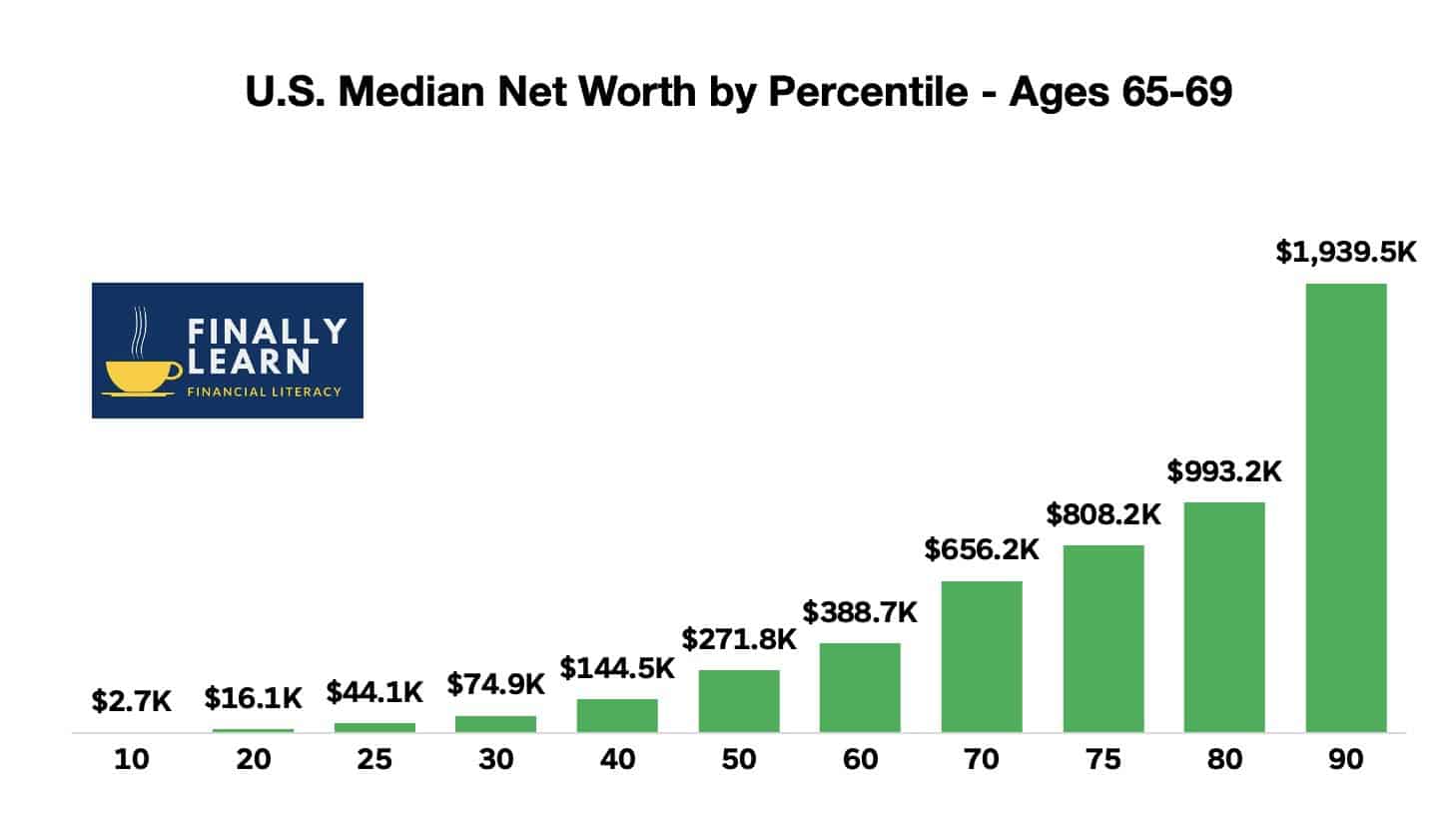
To have an "above average" net worth in 2026, your total assets must exceed the mean net worth for your age group, which is significantly higher than the median due to wealth concentration. For example, an above-average net worth for those aged 35–44 typically exceeds $600,000, while the median sits closer to $150,000.
Determining whether you are "on track" financially requires more than a simple comparison to your peers. Net worth—the total value of everything you own minus everything you owe—is a primary metric for long-term financial health. However, because the top 10% of households hold a disproportionate share of total wealth, the "average" (mean) figure is often skewed upward. To truly understand if you are ahead of the curve, you must examine both mean and median benchmarks while accounting for your specific life stage, geographic cost of living, and retirement goals.
Understanding the Difference: Mean vs. Median Net Worth
When discussing wealth benchmarks, the distinction between "mean" and "median" is critical. The mean net worth is calculated by taking the total wealth of a group and dividing it by the number of people in that group. Because the wealthiest individuals have net worths in the billions, they pull the average significantly higher. In contrast, the median net worth represents the exact middle point of the population; half the people have more, and half have less.
To be considered "above average," you are technically aiming to surpass the mean. However, many financial planners suggest that if you are significantly above the median, you are already performing better than the "typical" household. In 2026, the gap between these two figures remains wide, reflecting ongoing trends in asset appreciation and income inequality.
Achieving an above-average status usually indicates that an individual has successfully leveraged compound interest, home equity, or business ownership. While the median reflects the reality of the majority, the average reflects the standards of the financially successful. Aiming for the average ensures you are building a robust safety net that accounts for inflation and rising healthcare costs.
2026 Net Worth Benchmarks by Age Group
Net worth tends to follow a predictable arc, peaking just before retirement. In the early years, high levels of student debt and entry-level salaries often result in low or even negative net worth. By mid-career, home equity and retirement contributions begin to accelerate wealth building.
The following table provides projected benchmarks for 2026 based on historical data trends from the Federal Reserve’s Survey of Consumer Finances, adjusted for recent economic growth and inflation.
| Age Bracket | Median Net Worth (2026 Est.) | Average Net Worth (2026 Est.) | "Above Average" Target |
|---|---|---|---|
| Under 35 | $45,000 | $220,000 | $250,000+ |
| 35–44 | $165,000 | $640,000 | $700,000+ |
| 45–54 | $290,000 | $1,150,000 | $1,300,000+ |
| 55–64 | $410,000 | $1,850,000 | $2,000,000+ |
| 65–74 | $460,000 | $2,100,000 | $2,300,000+ |
| 75+ | $375,000 | $1,900,000 | $2,000,000+ |
Note: These figures are estimates intended for benchmarking and do not represent guaranteed financial outcomes.
The Early Years (Under 35)
For those under 35, "above average" wealth is often dictated by the absence of high-interest consumer debt and the presence of early career momentum. While the average is $220,000, this is heavily skewed by young entrepreneurs and those with significant family assistance. If you have a positive net worth of any kind in your 20s, you are often ahead of your peers.
The Accumulation Phase (35–54)
This is the most critical window for net worth growth. Between ages 35 and 54, the average net worth nearly doubles as individuals enter their peak earning years. An above-average individual in this bracket likely owns a home with significant equity and has a disciplined approach to 401(k) or IRA contributions.
The Preservation and Retirement Phase (55+)
As individuals approach 65, the focus shifts from accumulation to preservation. An above-average net worth of $2 million or more is often necessary to sustain a lifestyle that mirrors pre-retirement earnings, especially considering that Social Security is designed to replace only a portion of income.
What Influences "Above Average" Financial Status?
Several variables dictate whether an individual can reach and sustain an above-average net worth. It is rarely a result of salary alone; rather, it is a combination of lifestyle choices and investment discipline.
1. Asset Allocation and Compounding
Those with above-average wealth typically hold a higher percentage of their net worth in "appreciating assets" like stocks, real estate, and private businesses. According to the U.S. Securities and Exchange Commission (SEC), the power of compound interest is the single most effective tool for long-term wealth creation. Individuals who start investing in their 20s, even with smaller amounts, often surpass those who start in their 40s with much larger contributions.
2. Education and Earning Potential
There is a direct statistical correlation between educational attainment and net worth. Data from the U.S. Bureau of Labor Statistics (BLS) consistently shows that individuals with advanced degrees earn significantly more over their lifetime, providing more "dry powder" for investments. However, this is only true if the cost of the education does not result in insurmountable debt that cancels out the earnings premium.
3. Geographic Location
A $1 million net worth in a low-cost-of-living area provides a different standard of living than the same amount in San Francisco or New York City. However, "above average" benchmarks are often set by those in high-income hubs. While your net worth might be high, your "relative wealth"—how that money performs against local costs—is equally important for being "on track."
Strategies to Reach and Maintain Above-Average Net Worth
If your current numbers fall below the average for your age, there are specific levers you can pull to accelerate your progress by 2026 and beyond.
Maximizing Tax-Advantaged Accounts
One of the fastest ways to build an above-average net worth is to minimize the "tax drag" on your investments. Utilizing employer-sponsored 401(k) plans, especially those with matching contributions, provides an immediate 100% return on the matched portion. Furthermore, Health Savings Accounts (HSAs) offer a triple tax advantage: tax-deductible contributions, tax-free growth, and tax-free withdrawals for medical expenses.
Controlling Lifestyle Creep
"Lifestyle creep" occurs when an individual’s standard of living rises as their income increases. While it is natural to want a nicer home or car, those with above-average net worths often maintain a "burn rate" (spending level) that is significantly lower than their income. By diverting raises and bonuses directly into investments rather than increased consumption, you can exponentially increase your net worth over a decade.
Strategic Debt Management
Not all debt is created equal. Above-average individuals distinguish between "low-interest, productive debt" (like a 4% mortgage) and "high-interest, destructive debt" (like 20% credit card interest). Paying down high-interest debt is functionally the same as earning a guaranteed 20% return on your money. In 2026, with interest rates likely stabilized but higher than the 2010s, managing the cost of capital is essential.
Common Pitfalls and How to Correct Your Course
Many people fail to reach the "average" benchmark not because of low income, but because of specific financial behaviors. Identifying these early is the key to correcting your course.
- Excessive Cash Holdings: Inflation erodes the purchasing power of cash. Those who keep too much of their net worth in standard savings accounts during inflationary periods see their real net worth decline. Experts generally recommend keeping only 3–6 months of expenses in cash.
- Over-Allocation in a Single Asset: Relying solely on home equity or a single company stock for your net worth is risky. Diversification across different sectors and asset classes protects your wealth from market volatility.
- Ignoring Fees: High-fee mutual funds or expensive financial advisors can strip away hundreds of thousands of dollars in potential growth over a 30-year career. Low-cost index funds are often the preferred vehicle for those seeking to match or beat market averages.
The Role of Debt in Net Worth Calculations
It is important to remember that net worth is a "snapshot" of a specific moment. A person with $1 million in assets and $900,000 in debt has a net worth of $100,000. Conversely, someone with $200,000 in assets and $0 debt has a net worth of $200,000.
To move into the above-average category, you must focus on both sides of the ledger. Reducing liabilities (mortgages, student loans, car notes) is just as effective at increasing net worth as growing your investment portfolio. However, in a low-interest environment, it is sometimes mathematically superior to invest extra cash rather than paying off low-interest debt early. This decision should be based on your risk tolerance and the current market return projections for 2026.
FAQs About Net Worth Benchmarks
Does net worth include my primary residence?
Yes, net worth includes the market value of your primary residence minus any remaining mortgage balance. While some economists argue that a home is a "lifestyle asset" rather than a "pure investment" because you always need a place to live, it remains the largest component of net worth for the majority of "above average" households in the United States.
How much net worth do I need to be in the top 1%?
In 2026, the threshold for the top 1% of households is estimated to be approximately $13 million to $15 million, depending on the specific economic data used. This is significantly higher than the "above average" mean of roughly $1.5 million to $2 million for older age brackets.
Is a negative net worth common in your 20s?
Yes, it is very common for young professionals to have a negative net worth due to student loans. Being "on track" in your 20s often means your net worth is trending toward zero or becoming slightly positive. The key is the trajectory of your wealth rather than the starting number.
How often should I calculate my net worth?
Calculating your net worth once or twice a year is sufficient for most people. Frequent checking can lead to emotional reactions to market volatility. Annual tracking allows you to see the long-term trend and adjust your savings or spending habits accordingly.
Does net worth include the value of my car?
Technically, yes, because a car is an asset. However, because cars are rapidly depreciating assets, many people choose to exclude them from their "retirement net worth" or "investable net worth" calculations to get a more conservative and realistic view of their financial independence.
Your Next Steps for Financial Growth
To determine if you are truly on track for an above-average net worth, you should perform a "financial audit" of your current standing. Begin by listing every asset—bank accounts, retirement funds, brokerage accounts, and real estate—and subtract every liability. If you find you are below the average for your age group, do not be discouraged. Use the average as a target rather than a source of stress.
Focus on increasing your savings rate by even 1% or 2% each year. In 2026, the tools for automation and low-cost investing are more accessible than ever before. Consistent, automated contributions to diversified portfolios, combined with a strategy to pay down high-interest debt, will naturally pull your net worth toward and eventually above the average. Remember that wealth building is a marathon; the goal is to reach your peak net worth at the moment you choose to stop working, ensuring your assets can provide for you indefinitely.