Aaron Rodgers’ path to becoming a four-time NFL Most Valuable Player and Super Bowl champion is one of professional sports' most compelling underdog narratives. Despite receiving zero Division I scholarship offers out of high school and enduring a painful slide on draft night, Rodgers leveraged early career slights to build one of the most efficient passing careers in football history.
The Early Disregard: High School Rejections and the JuCo Route
The perception of Aaron Rodgers as a dominant, natural talent obscures his reality as a high school prospect. Growing up in Chico, California, Rodgers attended Pleasant Valley High School, where he put up impressive statistical numbers and set school passing records. However, during his senior year in 2001, he stood just 5-foot-10 and weighed roughly 165 pounds. College recruiters from major Football Bowl Subdivision (FBS)—then Division I-A—programs systematically overlooked him, prioritizing taller quarterbacks with traditional NFL frames.
Rodgers famously applied to the University of Illinois as a walk-on candidate, hoping his academic credentials and passion would earn him a roster spot. Illinois declined to offer him a spot, leaving Rodgers with no Division I options upon graduation in 2002. Facing the real possibility that his competitive football career was over, he contemplated quitting the sport entirely to pursue an academic path toward law or medicine.
- Pleasant Valley High School (Chico, CA)
- Zero FBS Offers / Rejected by Illinois
- Butte Community College (Oroville, CA)
- Discovered by Cal Head Coach Jeff Tedford
- University of California, Berkeley (Cal Golden Bears)
- 2005 NFL Draft: Slips to #24 Overall
- Green Bay Packers (3 Years Backup Behind Brett Favre)
- Super Bowl XLV Champion & 4x NFL MVP
Instead of stepping away, Rodgers enrolled at Butte Community College, a local junior college located in nearby Oroville, California. Playing JuCo football required an immediate adjustment in mindset and environment: minimalist facilities, long bus rides, and no guaranteed path to national exposure. Rodgers led the Butte Roadrunners to a 10-1 record and a NorCal Conference championship, showcasing quick decision-making, exceptional arm strength, and a high football IQ that began to outpace his physical growth.
The Cal Breakthrough: How Jeff Tedford Discovered Rodgers
Aaron Rodgers’ transition from junior college obscurity to a national prospect occurred largely by coincidence. In 2002, University of California, Berkeley (Cal) head coach Jeff Tedford visited Butte College to evaluate tight end Garrett Cross. While analyzing film and watching practice, Tedford noticed the precise ball placement, quick release, and mechanics of Butte's freshman quarterback.
Recognizing unpolished elite talent, Tedford offered Rodgers a scholarship to transfer to Cal for the 2003 season. Rodgers accepted, securing his long-sought path to major college football.
- 2003 Cal Season:
- Took over as starter mid-season
- Led Golden Bears to 8-6 record, including Insight Bowl win
- 2004 Cal Season:
- Led Cal to 10-2 overall record
- Completed 23 consecutive passes vs. #1 USC (NCAA record tie)
- Threw 24 TDs against 8 INTs with a 66.1% completion rate
Under Tedford’s rigorous quarterback coaching—renowned for producing first-round draft selections—Rodgers refined his footwork, throwing motion, and pre-snap pre-read mechanics. Taking over the starting role mid-way through the 2003 season, he led Cal to an 8-6 record, culminating in an Insight Bowl victory over Virginia Tech.
By his junior season in 2004, Rodgers had established himself as one of the elite quarterbacks in the country. He tied an NCAA record by completing 23 consecutive passes against the top-ranked University of Southern California (USC) Trojans in a narrow 23-17 loss at the Los Angeles Memorial Coliseum. Rodgers finished the 2004 season completing 66.1% of his passes for 2,566 yards, 24 touchdowns, and just 8 interceptions. His rapid development transformed him from an unranked junior college transfer into a projected top pick in the 2005 NFL Draft.
The 2005 Draft Room Slide: A Moment That Defined a Career
Entering the 2005 NFL Draft, the debate for the #1 overall pick centered on two quarterbacks: Alex Smith from the University of Utah and Aaron Rodgers from Cal. The San Francisco 49ers—Rodgers’ childhood team—held the top pick. Ultimately, 49ers head coach Mike Nolan selected Smith, citing concerns over Rodgers' system familiarity under Tedford and a perceived cockiness during interviews.
What followed remains one of the most agonizing live-television draft slides in modern sports history. Invited to the green room in New York City as a top prospect, Rodgers sat in front of national cameras as team after team passed on him.
2005 NFL DRAFT - FIRST ROUND PASSES
- Pick #1: San Francisco 49ers — Selected QB Alex Smith
- Picks #2-23: Passed on Aaron Rodgers (Teams cited scheme concerns, handling of Tedford QBs, or existing QB commitments)
- Pick #24: Green Bay Packers — Selected QB Aaron Rodgers
Several factors contributed to his fall:
- The "Tedford QB" Stigma: Previous quarterbacks coached by Jeff Tedford (such as Akili Smith, Joey Harrington, and Kyle Boller) struggled in the NFL, leading talent evaluators to question whether Rodgers was simply a product of a quarterback-friendly system.
- Position Needs: Teams picking in the top 20 either had established veteran quarterbacks or prioritized defense and offensive line positions.
- Mechanical Concerns: Some scouts criticized Rodgers for holding the football too high near his ear, questioning whether his throwing motion would translate against faster NFL pass rushes.
Rodgers remained in the green room for nearly four hours until the Green Bay Packers selected him with the 24th overall pick. When interviewed immediately following his selection, Rodgers delivered a famous response when asked about his disappointment: "How disappointed are you that you're not a 49er?" Rodgers answered, "Not as disappointed as the 49ers will be that they didn't draft me."
Waiting in the Shadow: The Brett Favre Transition Era
Drafted by Green Bay, Rodgers did not step immediately onto the field as a starter. Instead, he entered a high-pressure environment sitting behind icon Brett Favre, a three-time MVP who showed little initial interest in mentoring his eventual replacement.
For three seasons (2005 through 2007), Rodgers served as a backup. This period was marked by intense scrutiny from local media and fans, many of whom viewed Rodgers as an unnecessary pick for a team that was competing for playoff positions with Favre.
RODGERS' THREE-YEAR APPRENTICESHIP (2005–2007)
- Phase 1: Mechanical Overhaul
- Lowered ball carriage position to shorten release time.
- Rebuilt footwork sync to match NFL passing concepts.
- Phase 2: Mental Mastery
- Ran the scout team against elite Green Bay defenses.
- Studied pre-snap coverage adjustments without game-day pressure.
- Phase 3: Public Resilience
- Handled intense media coverage regarding Favre's retirement drama.
- Maintained focus despite limited regular-season action.
During this apprenticeship, head coach Mike McCarthy and quarterback coach Tom Clements worked with Rodgers to overhaul his mechanics:
- Ball Carriage: They lowered his throwing posture from his ear down to his chest, drastically increasing his release speed.
- Footwork Alignment: They synchronized his drop-back steps directly with receiver route depth to eliminate unnecessary hitches.
- Scout Team Execution: Rodgers treated weekly scout team reps as his game days, testing tight window throws against Green Bay's starting defense.
When Favre announced his brief retirement in early 2008—triggering an un-retirement attempt and an eventual trade to the New York Jets—Rodgers was thrust into the starting role under immense pressure. Green Bay fans initially booed Rodgers during summer practices, upset over the departure of Favre. Rodgers weathered the public backlash, relying on the mechanics and confidence he developed during his three years out of the spotlight.
Ascent to NFL Royalty: Super Bowl XLV and MVP Era
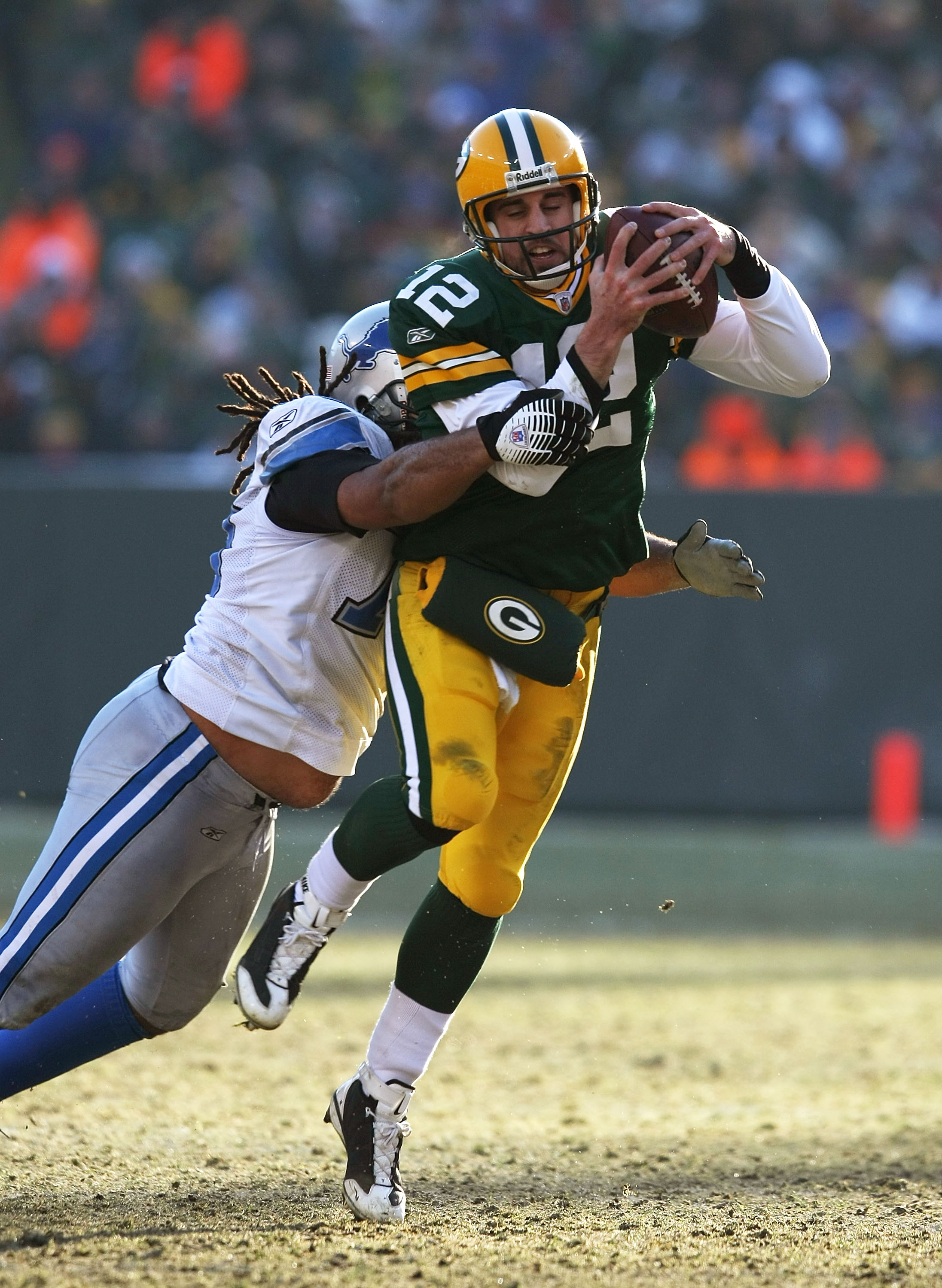
Rodgers' first year as a starter in 2008 proved his readiness, as he threw for 4,038 yards and 28 touchdowns. By 2010, he had firmly established himself among the league's top quarterbacks, taking the Packers to the postseason as a wild-card team.
In the 2010-11 playoffs, Rodgers executed one of the most efficient postseason runs in modern NFL history. On the road, Green Bay defeated the Philadelphia Eagles, Atlanta Falcons, and Chicago Bears to reach Super Bowl XLV in Arlington, Texas. Facing the Pittsburgh Steelers' top-ranked defense, Rodgers completed 24 of 39 passes for 304 yards, 3 touchdowns, and 0 interceptions, securing a 31-25 victory and earning Super Bowl MVP honors.
CAREER MILESTONE HIGHLIGHTS
| Milestone | Significance & Details |
|---|---|
| 2002 JuCo Season | Led Butte College to 10-1 record; unranked |
| 2004 Cal Performance | 23 consecutive completions vs. #1 USC |
| 2005 NFL Draft | Fell to 24th overall after 4-hour green room wait |
| Super Bowl XLV (2011) | Game MVP; 304 yards, 3 TDs, 0 INTs vs. Steelers |
| 4x NFL MVP Awards | 2011, 2014, 2020, 2021 (2nd most all-time) |
| TD-to-INT Ratio | Best in NFL history (4.5+ TDs per INT) |
Following his Super Bowl victory, Rodgers elevated his individual output to historical levels:
- 2011 MVP Season: Set the NFL single-season passer rating record (122.5), throwing 45 touchdowns against just 6 interceptions.
- 2014 MVP Season: Led Green Bay to a 12-4 record while playing through a severe calf injury, posting a 38-to-5 touchdown-to-interception ratio.
- 2020 MVP Season: Threw a career-high 48 touchdown passes with a 70.7% completion rate during a disrupted pandemic season.
- 2021 MVP Season: Earned back-to-back MVPs, moving into second place all-time for most NFL MVP awards (4), trailing only Peyton Manning (5).
Throughout this span, Rodgers established the best touchdown-to-interception ratio in NFL history, radically redefining expectations for passer efficiency and ball protection.
Psychological Resilience: Turning Snubs into Competitive Fuel
The central theme of Aaron Rodgers’ underdog story is his ability to convert institutional rejection into sustained competitive drive. Sports psychologists and football analysts often point to his detailed memory of early career slights—ranging from unreturned recruiting phone calls in high school to specific team executives who passed on him in 2005—as a defining psychological trait.
Unlike athletes whose confidence relies on early validation, Rodgers built self-reliance through adverse experiences:
"You have to believe in yourself when nobody else does. That's what gets you through the dark rooms, the waiting, and the people telling you that you aren't good enough."
This mindset proved crucial later in his career. In 2020, after the Packers drafted quarterback Jordan Love in the first round to prepare for the franchise's future, many analysts predicted Rodgers' decline. Instead of yielding his starting role, Rodgers responded by winning back-to-back NFL MVPs in 2020 and 2021, proving once again his ability to produce elite results when written off.
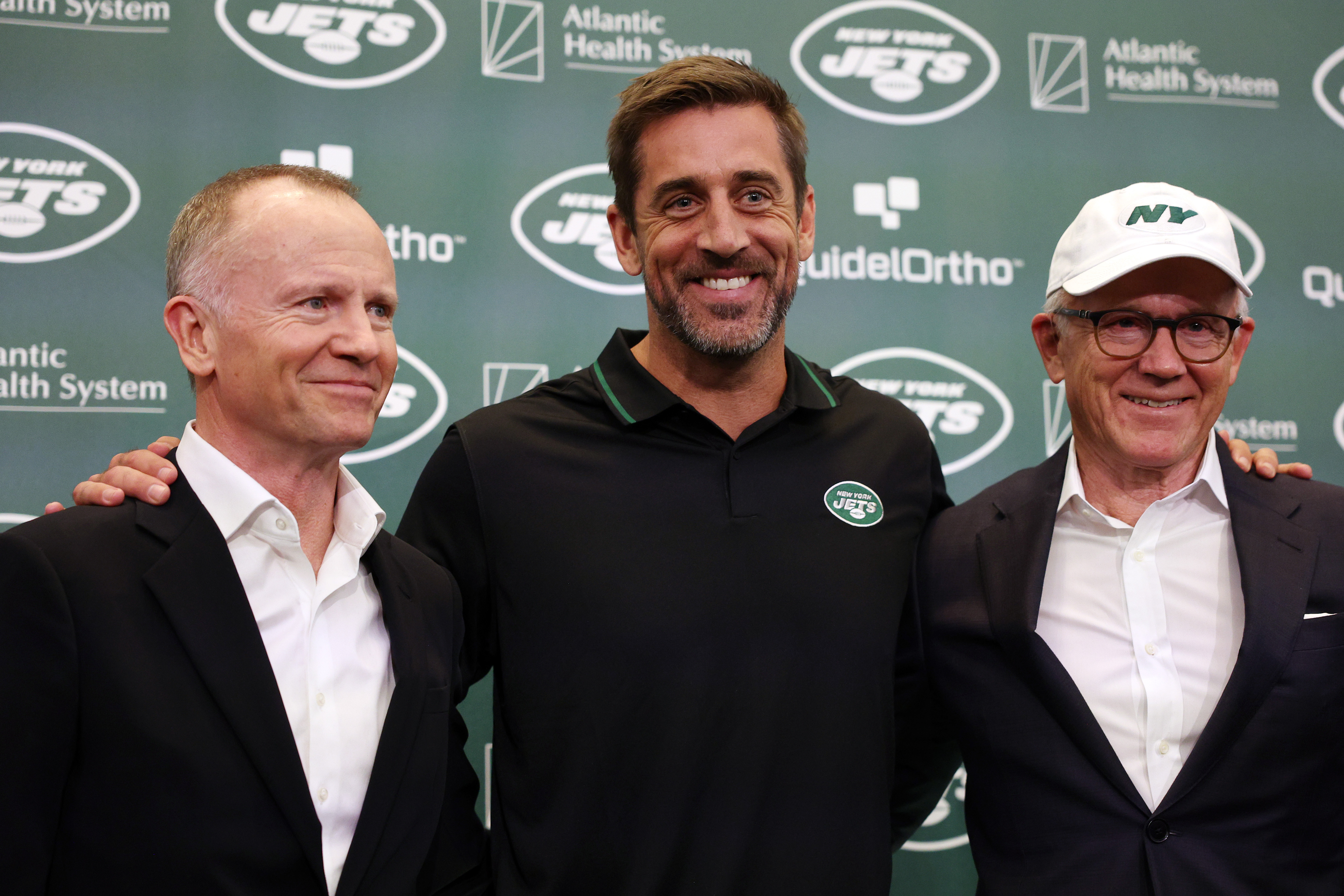
Even following his trade to the New York Jets in 2023 and a devastating season-ending Achilles injury just four snaps into his debut, Rodgers' rehabilitation and return at an advanced athletic age reflected the same perseverance that carried him from Butte Community College to professional football's highest levels.
Frequently Asked Questions
Why did Aaron Rodgers get no Division I offers out of high school?
Rodgers was overlooked primarily due to his physical frame. At the end of his senior year in high school, he measured 5-foot-10 and weighed roughly 165 pounds. Major FBS college programs prioritized taller quarterbacks who already possessed traditional NFL physical profiles, ignoring Rodgers' high school statistics and mechanics.
How was Aaron Rodgers discovered by Cal?
Cal head coach Jeff Tedford discovered Rodgers by accident in 2002 while visiting Butte Community College to recruit tight end Garrett Cross. Tedford noticed Rodgers' footwork, arm strength, and decision-making during practice film, leading Cal to offer Rodgers a transfer scholarship for the 2003 season.
Why did Aaron Rodgers fall to the 24th pick in the 2005 NFL Draft?
Rodgers slipped in the draft due to concerns over his transition from Jeff Tedford's college system, position needs of teams picking high in the draft, and minor mechanical concerns regarding his high ball carriage. Additionally, teams worried about the NFL track record of previous Tedford-coached quarterbacks.
How long did Aaron Rodgers wait behind Brett Favre?
Aaron Rodgers backed up Brett Favre for three full seasons (2005, 2006, and 2007). He took over as the Green Bay Packers' starting quarterback in 2008 after Favre retired and was subsequently traded to the New York Jets.
How many NFL MVP awards has Aaron Rodgers won?
Aaron Rodgers has won four NFL Most Valuable Player awards (2011, 2014, 2020, and 2021). This places him second on the all-time list for most MVPs in NFL history, behind only Peyton Manning, who won five.
Applying the Rodgers Playbook: Navigating Career Setbacks
Aaron Rodgers' ascension from an unranked junior college prospect to a future Hall of Fame quarterback offers a structured framework for overcoming professional stagnation or institutional rejection:
- Embrace Unconventional Paths: When direct routes (Division I scholarships) are unavailable, leverage secondary platforms (community colleges or smaller organizations) to build tangible skills and recorded results.
- Focus on Mechanical Fundamentals: Use periods out of the spotlight—such as Rodgers' three-year backup period—to refine foundational technical skills so you are fully prepared when opportunity opens.
- Control the Input, Not the External Valuation: Draft night slides and recruiting rejections are external decisions. Focus entirely on preparation, execution, and self-belief rather than seeking immediate public validation.
- Transform Doubts into Performance Metrics: Use skepticism from critics as fuel to maintain high standards of preparation and technical precision over extended periods.