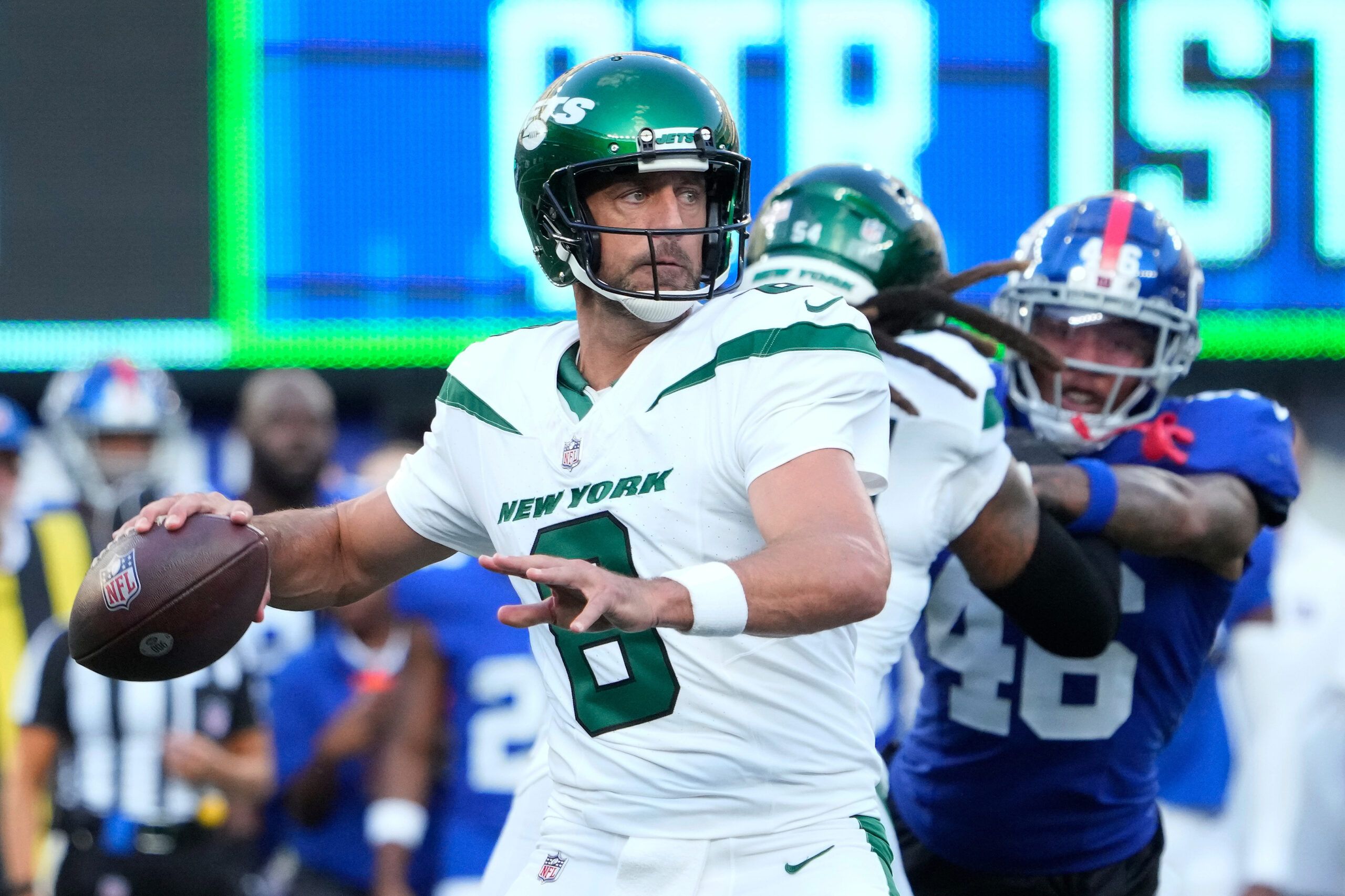
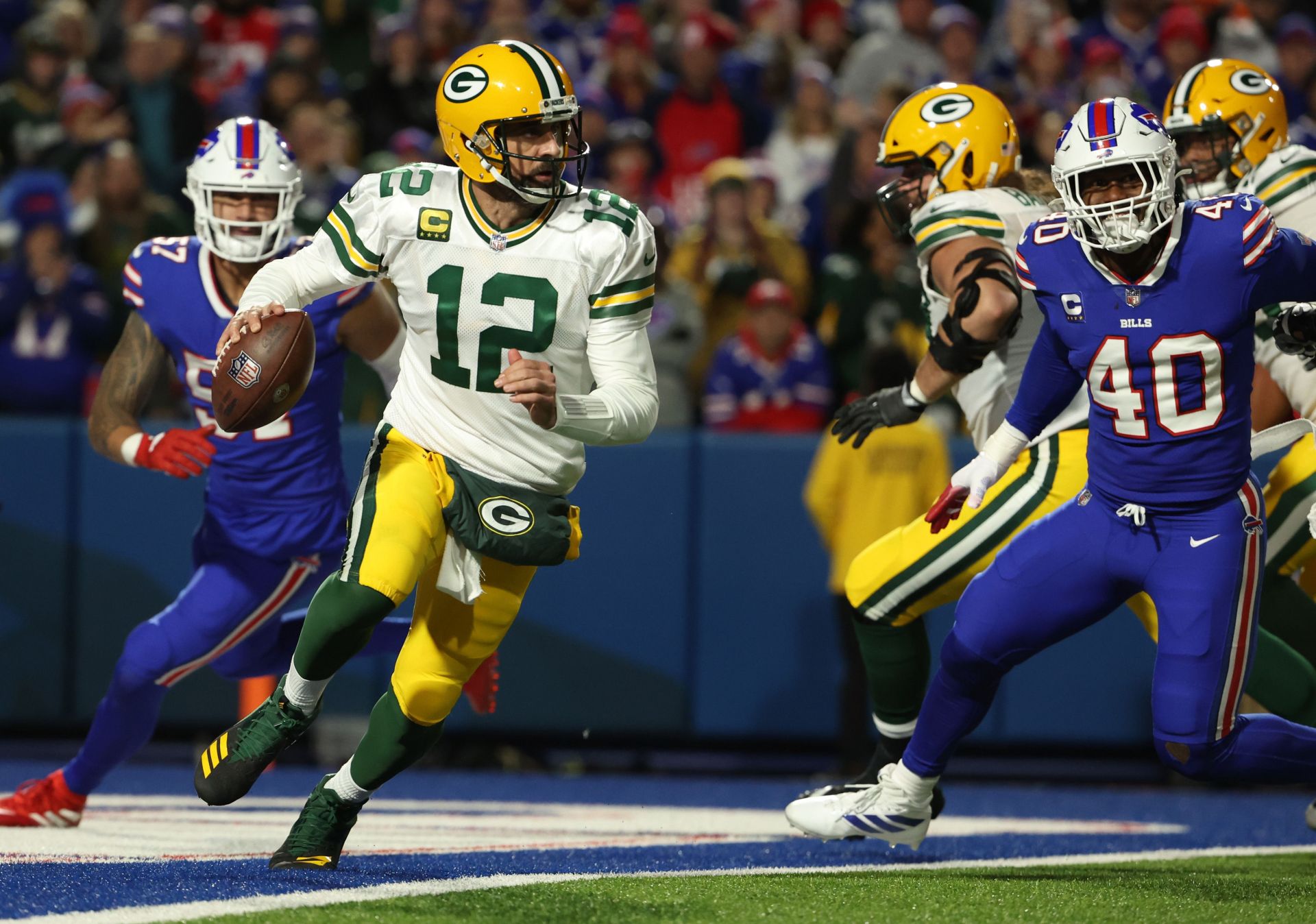
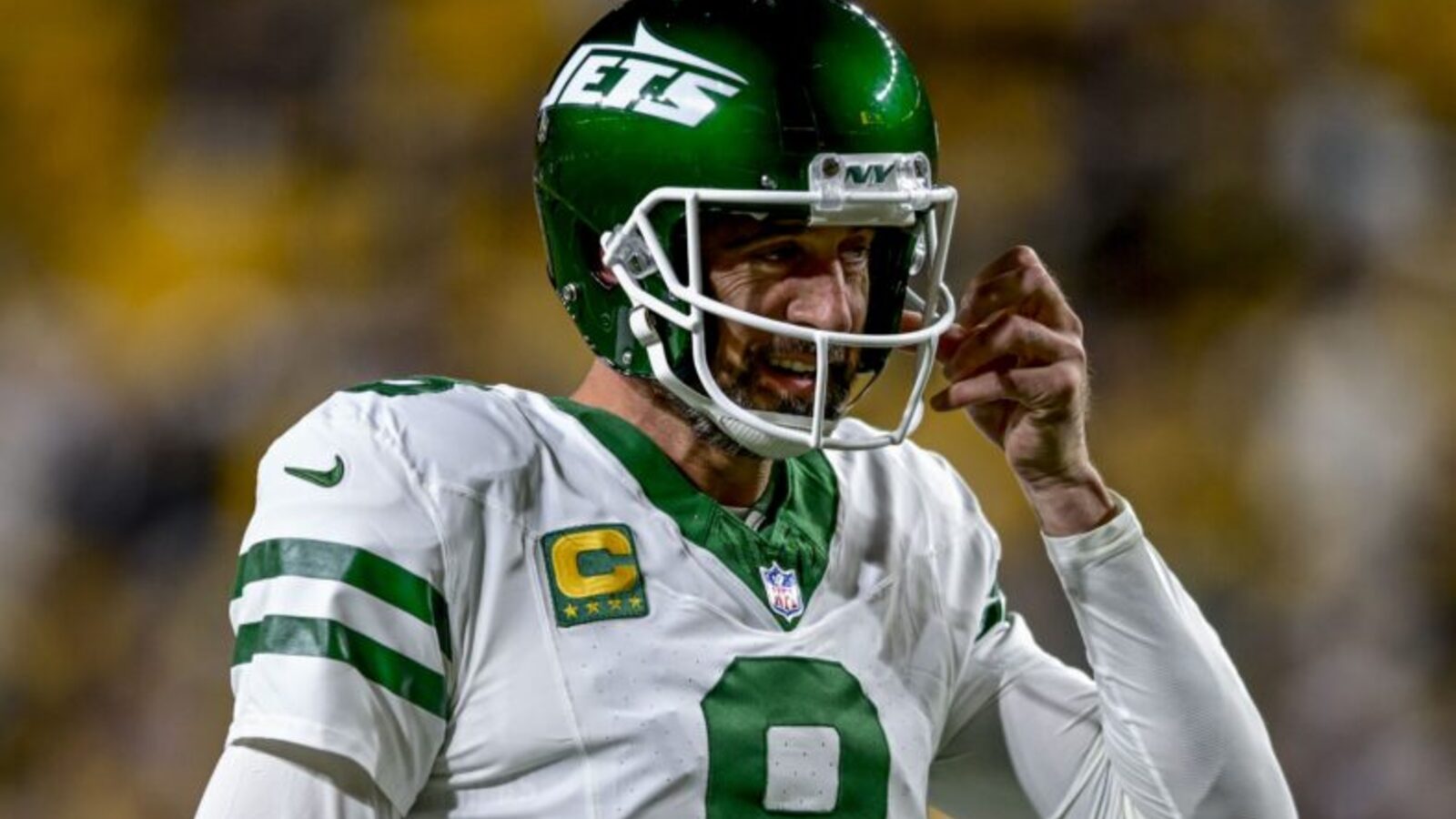
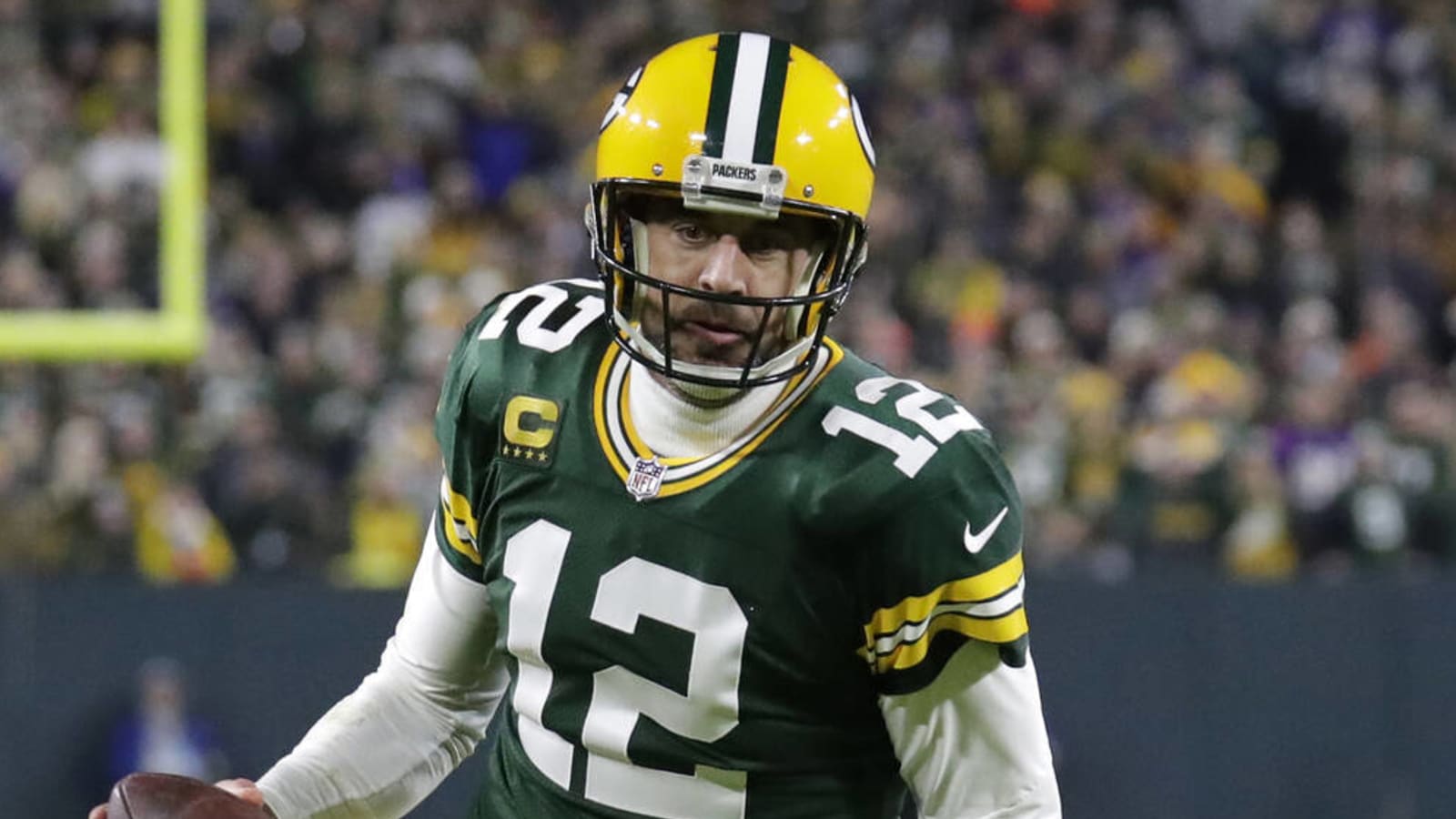
Following his high-profile 2023 trade from the Green Bay Packers to the New York Jets, four-time NFL Most Valuable Player Aaron Rodgers entered the 2025 campaign tied to a complex contractual and organizational crossroad. Rodgers remained anchored to the Jets' roster structure through guaranteed contract mechanisms, though organizational restructuring and cap considerations prompted extensive debate regarding his long-term playing future.
The Evolution of Aaron Rodgers' Contract with the New York Jets
To understand Aaron Rodgers' team status in 2025, one must first examine the unprecedented financial structure established upon his arrival in New York. In April 2023, the New York Jets acquired Rodgers from the Green Bay Packers in exchange for a package of draft picks, including a 2023 first-round swap, a 2023 second-round pick, a 2023 sixth-round pick, and a conditional 2024 second-round pick.
Shortly after arriving in New York, Rodgers agreed to a reworked contract that demonstrated significant short-term sacrifice for team roster flexibility. He signed a revised three-year deal worth $112.5 million, which included $75 million in fully guaranteed money. By voluntarily taking a $35 million pay cut from his previous Packers deal, Rodgers provided the Jets front office with immediate salary-cap relief to sign supporting veteran talent.
However, the structural arrangement relied heavily on option bonuses and voidable contract years to spread the salary cap hit over multiple seasons. The contract created specific financial inflection points entering the 2025 league year:
- Option Bonus Allocations: Large portions of Rodgers' guaranteed base compensation were structured as option bonuses, distributing dead cap hits across future void years.
- Cap-Hit Escalation: While the 2023 and 2024 cap hits remained manageable for New York, the 2025 season carried a substantial cap charge if the team retained him without further restructuring.
- Dead Cap Liabilities: Accelerating remaining bonus pro-rations into a single season meant releasing or trading Rodgers prior to June 2025 would trigger historical dead-cap penalties for the organization.
Season Context: How Performance and Leadership Impacted 2025 Roster Decisions
Rodgers' tenure with the Jets suffered an immediate setback on September 11, 2023, when he tore his left Achilles tendon just four snaps into his regular-season debut against the Buffalo Bills. The injury sidelined him for the remainder of the 2023 season, turning his entire evaluation period into a high-stakes campaign for 2024.
During the 2024 NFL season, Rodgers returned to full starting duties, demonstrating flashes of his trademark pre-snap intelligence, quick release, and arm talent. However, the physical reality of playing at age 40 following a major Achilles recovery introduced noticeable limitations in his pocket mobility and scrambling ability.
The team struggled to maintain consistency on the field, leading to severe organizational shifts mid-season:
- Head Coaching Change: Head Coach Robert Saleh was dismissed early in the 2024 season after a disappointing start, shifting defensive coordinator Jeff Ulbrich into the interim head coach role.
- Front-Office Overhaul: General Manager Joe Douglas was relieved of his duties late in the 2024 season, signaling a total reset of the front-office vision heading into 2025.
- Offensive Instability: Despite adding veteran wide receivers like Davante Adams via mid-season trade to pair with Garrett Wilson, the Jets offense struggled with pass protection, short-yardage conversions, and overall operational efficiency.
When the 2024 season concluded with a 5-12 record, the incoming leadership group faced a fundamental dilemma: retain a 41-year-old Hall-of-Fame quarterback under a heavy cap charge or absorb a historic dead-cap hit to initiate a complete roster rebuild.
Financial Mechanics: Dead Cap, Option Bonuses, and Contractual Hurdles
Evaluating where Aaron Rodgers would play in 2025 required navigating the rigid framework of the NFL salary cap. Contracts for elite quarterbacks contain complex mechanisms designed to protect both the player's guaranteed money and the team's cap flexibility.
If a team decides to part ways with a player before their contract expires, all unamortized signing and option bonuses immediately accelerate onto the current year's salary cap—a charge known as "dead money."
Aaron Rodgers 2025 Contract Scenario Financial Breakdown
| Roster Decision Scenario | Estimated 2025 Cap Hit | Future Dead Cap Implications |
|---|---|---|
| Retained on Roster (No Restructure) | ~$23.5M - $37.5M | Significant dead cap deferred to 2026 void years |
| Pre-June 1 Release or Trade | ~$49M - $63M (Immediate Acceleration) | All remaining dead cap hits 2025 cap instantly |
| Post-June 1 Release Designate | ~$14M - $21M (Split over two years) | Remaining ~$35M-$42M dead cap hits the 2026 salary cap |
As illustrated in the financial breakdown, the timing of any potential roster move significantly dictated the team's strategic choices. A Pre-June 1 release or trade would force the organization to take an immense financial hit in 2025, severely restricting their ability to sign free agents or extend young core talent. Conversely, a Post-June 1 designation allowed the franchise to spread the cap liability over the 2025 and 2026 league years.
Analyzing Potential Destinations Beyond the New York Jets
Throughout late 2024 and early 2025, NFL analysts evaluated several potential avenues for Aaron Rodgers' late-career continuation. Given his age, financial expectations, and desire to contend immediately, only a select group of franchises represented viable options.
1. Remaining with the New York Jets
Staying in New York represented the path of least financial resistance for the franchise in 2025. With guaranteed money already committed, bringing Rodgers back under a revised contract allowed a new head coach to bridge the gap while developing a young quarterback drafted in the early rounds of the 2025 NFL Draft.
2. The Pittsburgh Steelers
Pittsburgh consistently operated as a primary trade destination rumor due to their strong defense, established head coach Mike Tomlin, and ongoing search for long-term stability at the quarterback position following short-term veteran experiments.
3. The Las Vegas Raiders
With a persistent need for high-level quarterback play and ample cap space, Las Vegas frequently surfaced in offseason speculations. Reassessing veteran options under a competitive system offered Rodgers another opportunity in a warm-weather, high-profile venue.
4. Retirement
Retirement remained a fully viable personal outcome. Having played over two decades in the NFL, earned four MVP awards, won Super Bowl XLV, and secured his place in the Pro Football Hall of Fame, Rodgers possessed little left to accomplish statistically.
How Franchise Overhauls Impact Veteran Quarterback Trajectories
The dynamic between a veteran, first-ballot Hall-of-Fame quarterback and a franchise entering a broad structural rebuild is inherently complex. When a franchise replaces both its head coach and general manager, the new leadership team rarely operates on the same competitive timeline as a 41-year-old signal-caller.
New general managers typically prioritize roster youth, draft capital acquisition, and salary-cap flexibility. Retaining an aging veteran can create a strategic conflict:
- Win-Now Mentality vs. Rebuilding Reality: A veteran quarterback demands immediate resources spent on proven talent, whereas a new front office prefers long-term asset accumulation.
- Snap-Distribution Conflicts: Playing a veteran QB consumes 100% of first-team practice reps, limiting the development and evaluation of young draft picks acquired for the future.
- System Adaptability: A veteran of Rodgers' caliber operates with broad authority at the line of scrimmage, utilizing custom pre-snap adjustments. A incoming offensive coordinator may prefer a standardized system designed for younger, more mobile quarterbacks.
These fundamental operational differences ultimately shape how franchises handle late-career transitions for elite quarterbacks.
Frequently Asked Questions About Aaron Rodgers' 2025 Roster Status
Did Aaron Rodgers have a full no-trade clause in his Jets contract?
Yes. When Aaron Rodgers restructured his deal with the New York Jets in 2023, the contract included contractual protections—including no-trade language and option execution terms—that effectively gave Rodgers approval power over any potential trade destination.
What was the dead cap hit if the Jets released Aaron Rodgers in 2025?
Depending on whether the release occurred before or after June 1, the dead money acceleration ranged between $14 million and over $49 million on the 2025 salary cap. A Pre-June 1 cut would force all remaining pro-rated bonus money onto the 2025 cap immediately.
How did Rodgers' 2023 Achilles injury impact his 2024 and 2025 play?
While Rodgers regained full arm strength and functional throwing mechanics in 2024, the recovery from a torn Achilles tendon naturally reduced his lateral mobility and escape ability outside the pocket. This required offensive lines to provide cleaner interior pockets and altered how plays unfolded under pressure.
Could Aaron Rodgers have returned to the Green Bay Packers in 2025?
A return to Green Bay was functionally impossible. The Packers committed fully to Jordan Love as their franchise quarterback, signing him to a long-term contract extension in 2024 following his successful first year as a starter.
How did the mid-season trade for Davante Adams impact Rodgers' status?
The Jets acquired receiver Davante Adams during the 2024 season to maximize Rodgers' familiar target preference. However, carrying high-cost veteran contracts for multiple skill players complicated the team's long-term salary-cap planning entering the 2025 offseason overhaul.
Key Indicators to Watch for Late-Career Veteran QB Movements
For fans, cap analysts, and sports journalists tracking veteran quarterback transitions across the league, specific operational milestones dictate how contract situations resolve:
- The Start of the League Year (March): Mandatory roster bonuses and option execution deadlines occur right at the opening of the new league year. Teams must execute contract options or process releases before specific bonus dates trigger full guarantees.
- The NFL Scouting Combine (February): League executives, agents, and head coaches conduct informal discussions during the Combine, which frequently establish the ground rules for high-profile veteran trades or releases.
- Post-June 1 Designations: Teams seeking to spread massive dead-cap hits over two fiscal years will officially submit Post-June 1 transaction waivers to the league office, altering immediate salary-cap accounting.
- Official NFL Transaction Wire Verification: Speculation should always be cross-referenced with official filings submitted to the NFL Management Council and public database trackers like Spotrac and Over The Cap.