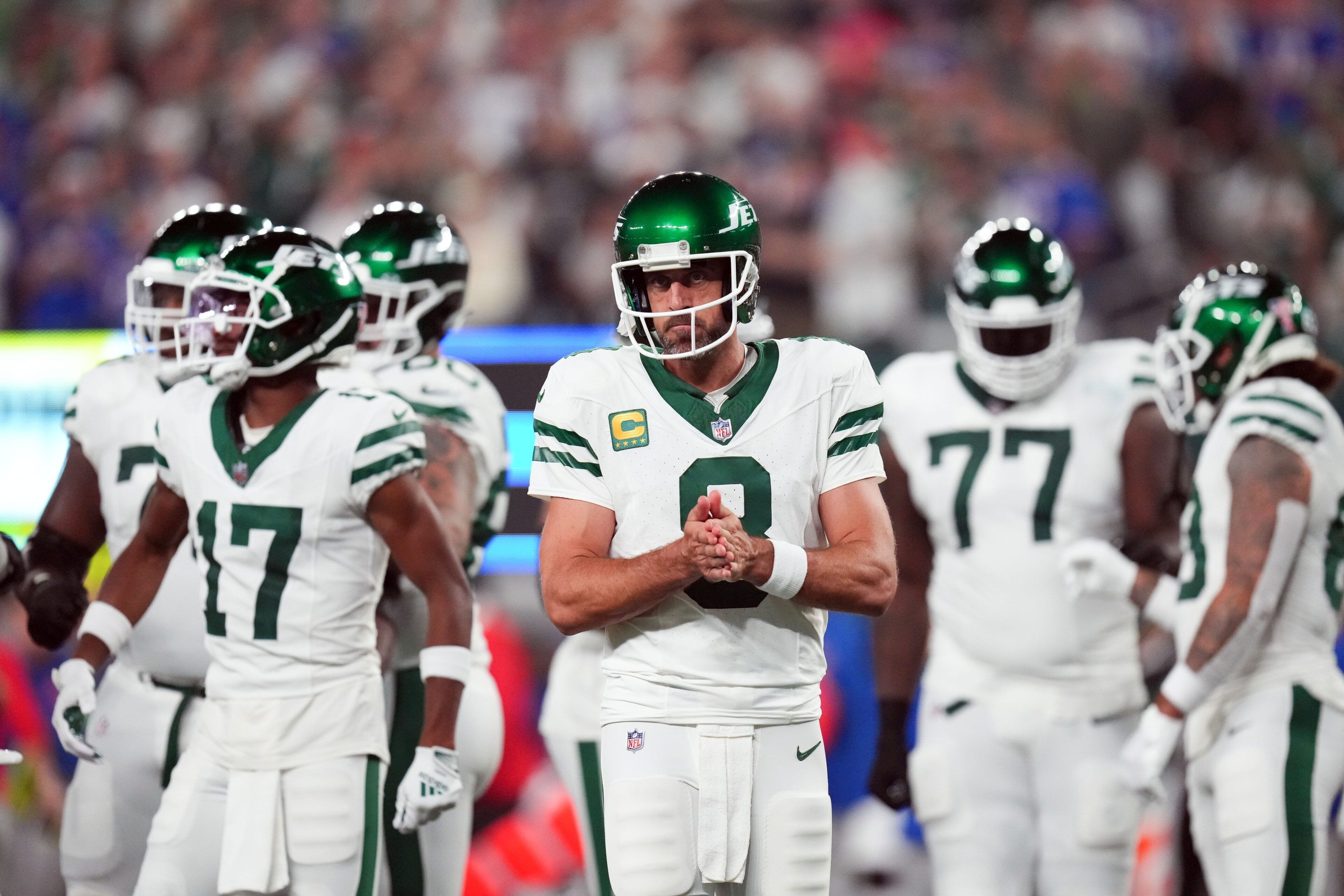
As of 2026, Aaron Rodgers has earned approximately $480 million in career NFL salary and bonuses alone. When factoring in his extensive portfolio of off-field endorsements and investments, his total career earnings surpass $600 million. This makes him one of the highest-earning players in the history of professional football.
The Financial Evolution of an NFL Icon
Aaron Rodgers’ financial journey mirrors the explosive growth of the NFL’s salary cap over the last two decades. Entering the league in 2005 as the 24th overall pick for the Green Bay Packers, Rodgers did not start his career with the massive "megadeals" common for top-five picks today. Instead, his earnings trajectory was built on a series of record-breaking extensions that reflected his ascent to the very top of the quarterback hierarchy.
In his early years, Rodgers sat behind Brett Favre, earning a relatively modest rookie wage. His first contract was a five-year deal worth approximately $7.7 million. At the time, this was standard for a late first-round pick, but it provided the foundation for what would become a historic accumulation of wealth. Once he took the reigns as the starter in 2008, his earning power shifted gears. The Packers quickly moved to secure him with a six-year, $65 million extension, a move that looks like a bargain by 2026 standards but was a significant investment during that era.
Breaking the Bank: The Major Extensions in Green Bay
Rodgers’ middle and late years in Green Bay were defined by his ability to reset the market for quarterbacks. Every time his contract neared its end, the market had shifted, and Rodgers consistently secured deals that placed him at or near the top of the league's annual pay scale.
The 2013 Extension
In April 2013, Rodgers signed a five-year, $110 million extension. This deal was a watershed moment in NFL finance, making him the highest-paid player in league history at the time with a $22 million average annual value (AAV). It included a then-massive $35 million signing bonus. This contract covered the prime of his career, during which he secured multiple MVP awards and solidified his status as a financial powerhouse.
The 2018 Milestone
By 2018, the quarterback market had shifted again. Rodgers signed a four-year, $134 million extension. This deal pushed his AAV to $33.5 million and included over $100 million in total guarantees. It was notable for its structure, which utilized roster bonuses and signing bonuses to ensure high liquidity for Rodgers while allowing the Packers to manage the cap.
The 2022 "Final" Packers Deal
In 2022, following back-to-back MVP seasons, Rodgers signed a three-year extension worth $150.8 million. This was arguably his most complex deal, effectively a series of one-year options that guaranteed him $50 million per year. While he was eventually traded, this contract ensured that he would remain one of the highest-paid athletes in the world, regardless of which jersey he wore.
The Jets Transition and Strategic Salary Restructuring
When Aaron Rodgers was traded to the New York Jets in 2023, his financial strategy took a surprising turn toward team-building. Despite being owed massive sums from his previous Green Bay extension, Rodgers agreed to a restructured two-year, $75 million nearly fully guaranteed contract.
This move involved Rodgers voluntarily taking a "pay cut" of roughly $35 million compared to what he was originally scheduled to earn. This was a strategic decision designed to provide the Jets with the "cap space" necessary to surround him with veteran talent. For a player who had already amassed over $300 million in on-field earnings, the priority shifted from maximizing every dollar to optimizing the roster for a Super Bowl run.
Even with this reduction, his earnings remained in the top tier of the league. By the conclusion of the 2025 season and heading into 2026, the cumulative effect of these massive contracts solidified his position as the all-time leader in career earnings at the time of his transition.
Comprehensive Career Earnings Breakdown
The following table outlines the estimated cumulative on-field earnings for Aaron Rodgers across his various contract phases. Note that these figures include base salary, signing bonuses, roster bonuses, and option bonuses.
| Contract Phase | Team | Estimated Total Earnings | Key Financial Highlight |
|---|---|---|---|
| Rookie Contract (2005–2007) | Green Bay Packers | ~$7.7 Million | Initial 1st-round entry deal. |
| First Extension (2008–2012) | Green Bay Packers | ~$65 Million | Transitioned from backup to Super Bowl MVP. |
| Market Reset (2013–2017) | Green Bay Packers | ~$110 Million | First deal to hit $22M AAV. |
| The $100M Guarantee (2018–2021) | Green Bay Packers | ~$134 Million | Secured $33.5M per year average. |
| The MVP Peak (2022) | Green Bay Packers | ~$50 Million | Single-year payout from the $150M deal. |
| The Jets Era (2023–2025) | New York Jets | ~$113 Million | Includes restructured $75M guaranteed deal. |
| Career Total (Est. 2026) | All Teams | ~$480 Million | On-field salary and bonuses only. |
Off-Field Income: The Business of Being Aaron Rodgers
While his NFL salary is the primary driver of his wealth, Rodgers has been equally successful in the boardroom. His off-field earnings are estimated to have contributed an additional $120 million to $150 million over his two-decade career.
His most famous partnership was with State Farm, where his "Discount Double Check" commercials became a cultural phenomenon. This endorsement alone was worth millions annually for over a decade. Beyond insurance, Rodgers has maintained high-value partnerships with:
- Adidas: A long-term footwear and apparel deal.
- Zenith: Representing the luxury watchmaker as a brand ambassador.
- TaylorMade: Capitalizing on his well-known passion for golf.
- Prevea Health: A regional partnership during his time in Wisconsin.
Furthermore, Rodgers has been a savvy investor. He was an early investor in Vicis, a helmet technology company aimed at reducing concussions, and he holds a minority stake in the Milwaukee Bucks NBA franchise. The appreciation of the Bucks' franchise value since his investment has significantly bolstered his net worth, independent of his football activities.
Comparing Rodgers to Other NFL Greats
To understand the magnitude of Rodgers' $480 million on-field earnings, one must compare him to his peers. For many years, Tom Brady was the gold standard for NFL earnings, but Brady famously took several below-market deals to help the New England Patriots maintain a competitive roster. Brady’s career on-field earnings totaled approximately $333 million—a figure Rodgers surpassed significantly by 2025.
Patrick Mahomes is currently on a trajectory to eventually surpass Rodgers, thanks to his 10-year, $450 million deal. However, because Rodgers started his career earlier and navigated several cap-spike eras, he maintained the "all-time earnings" lead for a considerable period. Rodgers' ability to sign shorter, high-AAV deals allowed him to "re-up" at higher market rates more frequently than players locked into decade-long contracts.
Understanding the "Dead Cap" and Financial Impact on Teams
Rodgers’ earnings are not just a win for his bank account; they represent a significant accounting challenge for NFL front offices. In the NFL, "signing bonuses" are paid upfront but prorated over the life of the contract for cap purposes.
When the Packers traded Rodgers to the Jets, they had to absorb a record-setting "dead cap" hit of over $40 million in 2023. This is the amount of money already paid to Rodgers that had not yet been accounted for against the salary cap. This illustrates a key point in NFL finance: Earnings and Cap Hit are not the same thing. While Rodgers may have received a $50 million check in a single year, the team might only "count" $15 million of it against the cap that year, pushing the "bill" into the future. Rodgers’ career has been a masterclass in leveraging this system to maximize his immediate take-home pay.
Frequently Asked Questions
Is Aaron Rodgers the highest-paid NFL player ever?
As of 2026, Aaron Rodgers ranks among the top three in all-time career earnings. While players like Patrick Mahomes may have higher total "contract values," Rodgers' actual realized earnings—money already in the bank—placed him at the top of the list for several years.
How much did Aaron Rodgers lose by taking a pay cut with the Jets?
Rodgers took a voluntary reduction of approximately $35 million when he restructured his contract with the New York Jets in 2023. While he "lost" this money relative to his previous contract, it was a strategic move to help the team sign other players, and he still received $75 million in fully guaranteed money over two years.
Does Aaron Rodgers' salary include his endorsements?
No, the $480 million figure refers strictly to his NFL salary, signing bonuses, and roster bonuses. His endorsements and investment returns are calculated separately and add an estimated $150 million+ to his career total wealth.
What is Aaron Rodgers' net worth in 2026?
While "earnings" refers to the total money made, "net worth" accounts for taxes, spending, and investments. Experts estimate Rodgers' net worth in 2026 to be in the range of $250 million to $300 million, taking into account his minority ownership in the Milwaukee Bucks and his diverse investment portfolio.
How do NFL taxes affect his actual take-home pay?
Athletes are subject to high federal taxes (37%) and "jock taxes," which are state taxes paid in every state where they play a game. For Rodgers, playing in high-tax states like New Jersey and California (for away games) significantly impacts his net take-home pay, often reducing the gross amount by 45-50%.
Tracking the Legacy of NFL Compensation
For fans and financial analysts alike, the best way to keep track of Rodgers' evolving financial status is through dedicated salary databases. While the figures in this article reflect his status as of 2026, the "business of football" is constantly shifting.
If you are looking to verify specific annual breakdowns or explore the "dead cap" implications of his latest deal, resources like Spotrac and Over The Cap provide the most granular data available. These platforms track every bonus and contract trigger, offering a real-time look at how the NFL's most elite players manage their wealth. As Rodgers moves into the post-playing phase of his career, his focus will likely shift from salary to the management of his private equity and venture capital interests, ensuring his financial legacy continues long after he hangs up his cleats.