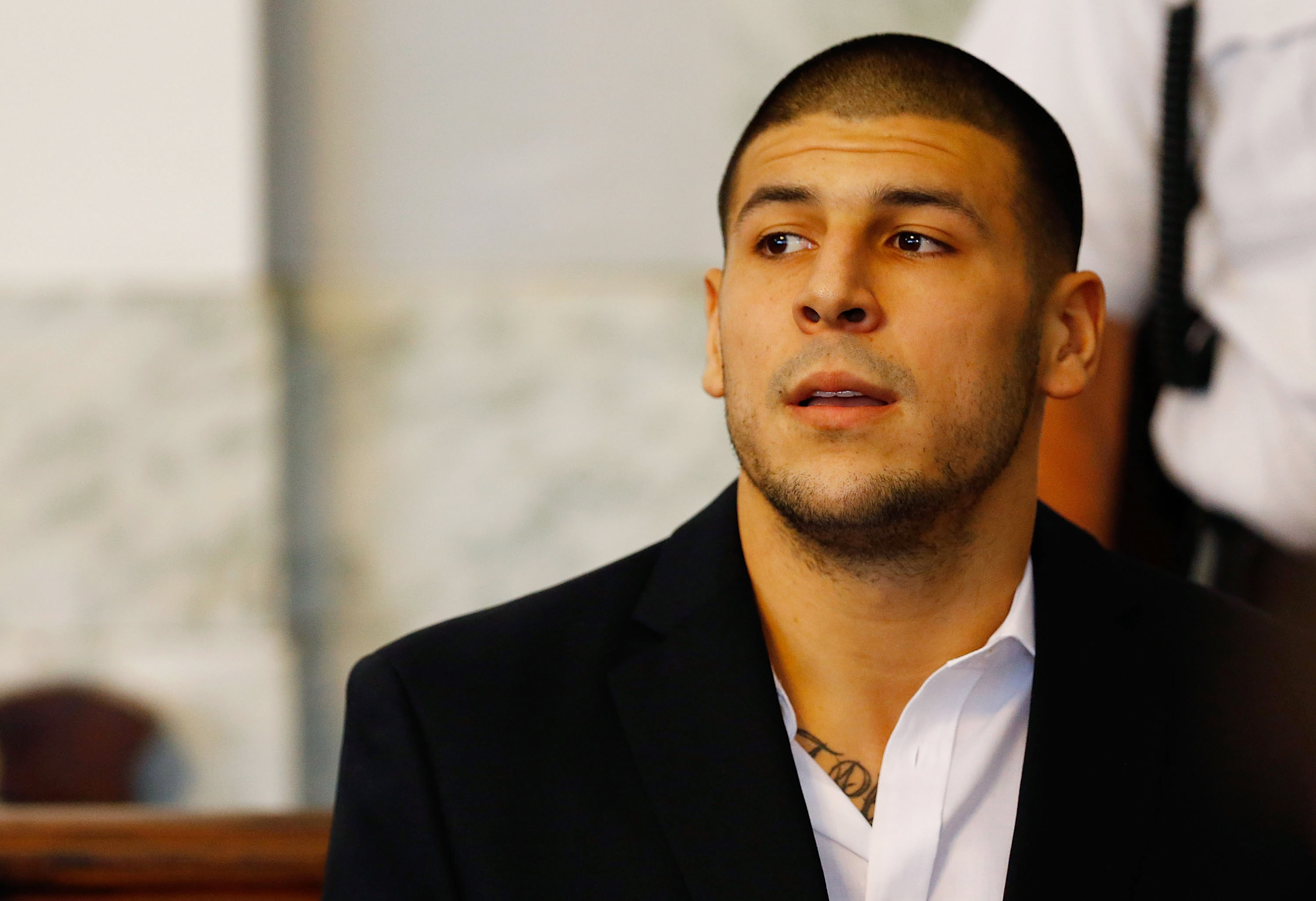
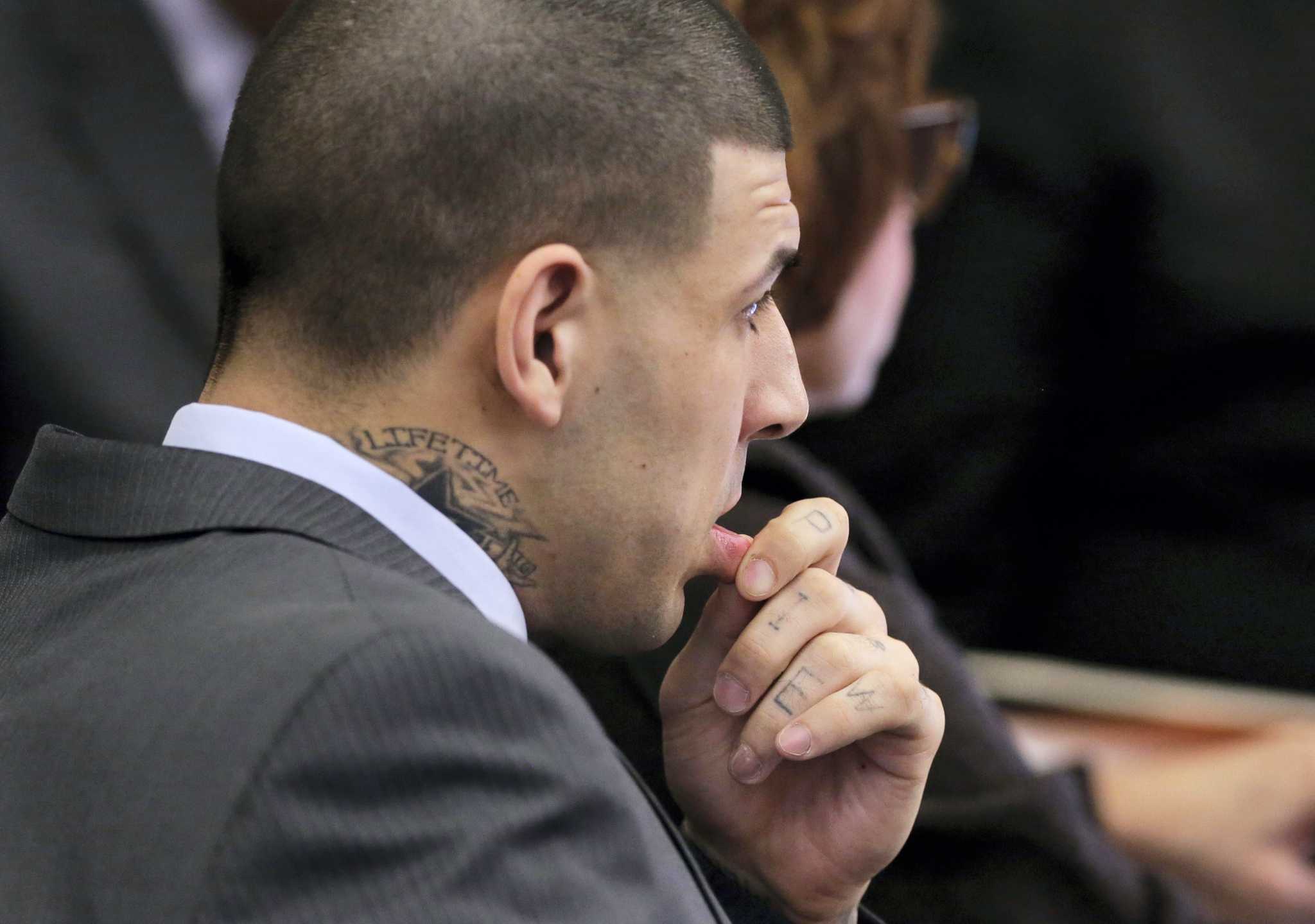
Aaron Hernandez, a former standout tight end for the New England Patriots, was involved in multiple high-profile shooting incidents that led to his criminal conviction and subsequent imprisonment. The most prominent case involved the 2013 murder of Odin Lloyd, an associate of Hernandez. Additionally, Hernandez was investigated and later acquitted in 2017 for the 2012 double homicide of Daniel de Abreu and Safiro Furtado in Boston’s South End.
The 2013 Murder of Odin Lloyd
The investigation into the death of Odin Lloyd began in the early hours of June 17, 2013, when Lloyd’s body was discovered in an industrial park in North Attleborough, Massachusetts, less than a mile from Hernandez’s home. Lloyd, a semi-professional football player for the Boston Bandits, had been dating the sister of Hernandez’s fiancée.
Evidence presented during the 2015 trial indicated that Hernandez, along with two associates, Carlos Ortiz and Ernest Wallace, picked up Lloyd from his home in Dorchester late on the night of June 16. Prosecutors successfully argued that Hernandez orchestrated the execution-style killing, driven by a perceived slight during a night out at a Boston nightclub. Forensic investigators recovered a spent shell casing from a .45-caliber Glock at the crime scene, which matched the caliber of the weapon used to kill Lloyd. Although the murder weapon was never recovered, the prosecution relied on a combination of surveillance footage, cell phone tower data, and DNA evidence found on a shell casing left in a rental car driven by Hernandez.
In April 2015, a jury found Aaron Hernandez guilty of first-degree murder. The conviction carried a mandatory sentence of life in prison without the possibility of parole, which he began serving at the Souza-Baranowski Correctional Center.
The 2012 Double Homicide Case
Prior to the conviction for the death of Odin Lloyd, Hernandez faced charges related to the July 16, 2012, shooting deaths of Daniel de Abreu and Safiro Furtado. This incident occurred outside a nightclub in the South End of Boston. According to the prosecution’s theory at the time, the confrontation began when de Abreu accidentally bumped into Hernandez inside the club, causing Hernandez to spill his drink.
The legal proceedings for this case were complex. Prosecutors alleged that Hernandez followed the victims’ vehicle after they left the club and opened fire at a stoplight, also injuring two other individuals. The defense argued that Hernandez was not the shooter and pointed toward other associates. In April 2017, a jury in Suffolk County Superior Court acquitted Hernandez of the first-degree murder charges related to the deaths of de Abreu and Furtado, though he was convicted of the unlawful possession of a firearm. This acquittal occurred only days before Hernandez was found dead in his prison cell.
Comparative Summary of Legal Proceedings
The legal trajectory of Aaron Hernandez involved distinct cases with varying evidentiary standards and outcomes. The following table clarifies the subjects involved and the judicial status of the major shootings attributed to his investigations.
| Incident Date | Victims Involved | Primary Location | Judicial Outcome |
|---|---|---|---|
| July 16, 2012 | Daniel de Abreu, Safiro Furtado | Boston, MA | Acquitted of Murder (2017) |
| June 17, 2013 | Odin Lloyd | North Attleborough, MA | Convicted of Murder (2015) |
Investigative Challenges and Evidence
The investigation into the activities of Aaron Hernandez presented significant challenges for law enforcement, primarily due to the destruction of physical evidence and the complexities of witness cooperation. In the Odin Lloyd case, authorities noted that Hernandez had installed a sophisticated home security system, which he subsequently dismantled following the murder. Investigators recovered a portion of the surveillance footage, but other segments had been intentionally deleted.
The prosecution’s reliance on circumstantial evidence in both cases highlighted the difficulty of proving premeditated violence in high-profile trials. In the 2012 shooting, the lack of a clear, singular forensic link to Hernandez allowed the defense to create reasonable doubt, leading to the acquittal. Conversely, the 2013 case relied heavily on the "chain of events" established by electronic records—specifically the location tracking of mobile devices and the progression of the vehicle through surveillance cameras—which the jury found compelling enough to secure a conviction.
Impact on NFL and Professional Athletics
The arrest and subsequent conviction of Aaron Hernandez sent shockwaves through the National Football League. At the time of his arrest, Hernandez was in the early stages of a five-year, $40 million contract extension with the New England Patriots. His swift removal from the team and the subsequent voiding of his contract set a precedent for how professional sports organizations handle player conduct and liability.
The transition from a marquee athlete to a defendant in a murder trial prompted discussions regarding team culture, background vetting, and the psychological health of professional athletes. Forensic examinations performed after his death in 2017 revealed that Hernandez suffered from severe Chronic Traumatic Encephalopathy (CTE), a degenerative brain disease often associated with repeated head trauma. While medical experts debated the extent to which CTE influenced his decision-making or behavioral patterns, the findings added a layer of complexity to the public and legal understanding of his actions.
Frequently Asked Questions
Did Aaron Hernandez confess to the shootings?
Aaron Hernandez did not confess to the murders of Odin Lloyd or the 2012 shooting of Daniel de Abreu and Safiro Furtado during his lifetime. Throughout his legal proceedings, he consistently maintained his plea of not guilty.
Was anyone else charged in the death of Odin Lloyd?
Yes, two other individuals—Carlos Ortiz and Ernest Wallace—were charged as accessories after the fact in connection with the murder of Odin Lloyd. Both men were present in the vehicle with Hernandez on the night of the crime, and both faced significant legal proceedings for their roles in the event.
Why was Hernandez acquitted of the 2012 double homicide?
The jury in the 2017 trial found that the prosecution did not provide sufficient evidence to prove beyond a reasonable doubt that Hernandez was the individual who pulled the trigger. The defense successfully argued that there were significant gaps in the evidence and that the state had not met its burden of proof.
What happened to the weapon used in the Odin Lloyd case?
The firearm used to kill Odin Lloyd was never recovered by law enforcement. Despite an extensive investigation that included searching various locations and waterways, police were unable to locate the .45-caliber weapon.
How did the 2017 acquittal affect his prison sentence?
The 2017 acquittal of the 2012 murder charges did not change his status as an inmate. Because he was already serving a life sentence without the possibility of parole for the murder of Odin Lloyd, the outcome of the Boston trial did not alter his eligibility for release.
Recommended Next Steps for Research
For those seeking further information on the legal proceedings or official records, it is recommended to review transcripts provided by the Massachusetts court system or authorized archives of the Suffolk County Superior Court. These documents provide the most accurate account of the testimony and evidence presented during the trials.