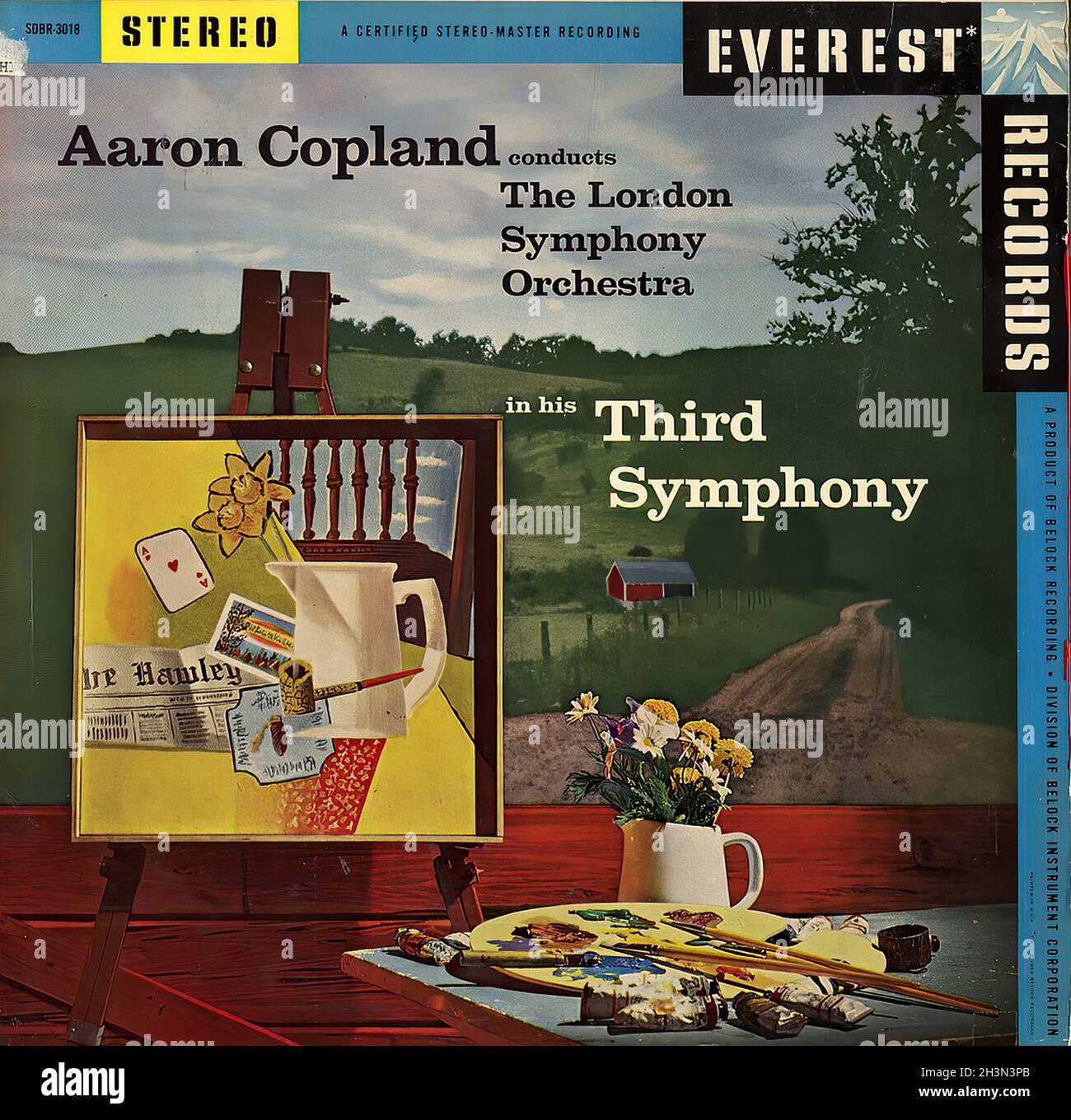
Aaron Copland defined the acoustic landscape of twentieth-century America by transforming orchestral music into a vivid, visual medium. Through open-interval harmonies, rhythmic vitality, and folk-inspired themes, his compositions act as a visual symphony that evokes sweeping prairies, bustling cities, and frontier life. Contemporary performance venues frequently pair his music with photography and visual projections to celebrate this inherent pictorial quality.
Defining the "American Sound": How Copland Painted Landscapes in Audio
Before Aaron Copland forged his signature style in the late 1920s and 1930s, classical music in the United States leaned heavily on European romantic traditions. Copland recognized that the American continent required a distinct musical vocabulary—one that could capture the vast geographical scale, democratic spirit, and kinetic energy of a growing nation. By pairing spatial harmonic structures with crisp instrumentation, Copland succeeded in writing music that listeners instantly perceive as visual images of the American continent.
Musicologists often attribute this pictorial capability to Copland’s deliberate use of "open voicing." By placing wide intervals—such as open fifths and octaves—at the top and bottom of the orchestral spectrum while leaving the middle register relatively sparse, he created a sonic illusion of broad physical horizon lines. When hearing works like Appalachian Spring or the introduction to Billy the Kid, the listener's imagination fills the open acoustic space with visual images of uncluttered skies, rolling grasslands, and distant mountain ranges.
Copland’s training under the renowned French pedagogue Nadia Boulanger in Paris provided him with strict structural discipline. However, upon returning to the United States, he integrated native elements into this rigorous framework:
- American Folk Songs: Direct citations and modal adaptations of traditional ballads, cowboy tunes, and spirituals.
- Jazz Rhythms: Syncopation, off-beat accents, and polyrhythms derived from early urban jazz and ragtime.
- Hymnody and Sacred Harp Music: Plain-spoken, transparent harmonies reflecting early American community life.
The combination of these elements allowed Copland to shift classical music from abstract formal exercises into descriptive, narrative soundscapes. His compositions do not merely accompany physical scenes; they actively paint them, forming what concert halls today describe as a visual symphony of American identity.
Key Masterworks in Copland’s Visual-Symphonic Portfolio
To understand how Copland constructed visual pictures through sound, one must examine the pivotal compositions that form the core of his populist period. Each piece focuses on a distinct facet of the American narrative, using specific orchestration strategies to evoke imagery.
1. Appalachian Spring (1944)
Originally commissioned as a ballet for choreographer Martha Graham, Appalachian Spring tells the story of a nineteenth-century Pennsylvania pioneer couple building a farmhouse. Copland’s Pulitzer Prize-winning score captures early morning light, quiet reverence, and community celebration.
The famous variation sequence on the Shaker hymn "Simple Gifts" illustrates how Copland uses tone color to change visual perspective. The tune begins with a solitary clarinet—evoking an intimate, rural morning—and gradually builds into a full brass and orchestral statement that mirrors the physical expansion of a settlement rising against the mountain landscape.
2. Rodeo (1942)
Commissioned by dancer and choreographer Agnes de Mille, Rodeo captures the kinetic energy and humor of the American West. Subtitled "The Courting at Burnt Ranch," the suite paints pictures of horse breaking, square dances, and rustic romance.
In sections like "Buckaroo Holiday," Copland uses asymmetrical meters and heavy percussion to simulate the unbridled motion of bucking horses and dusty rodeo arenas. Conversely, the "Corral Nocturne" utilizes muted brass and low woodwinds to picture a quiet, lonely night under a canopy of desert stars.
3. Billy the Kid (1938)
As Copland’s first explicit Western ballet score, Billy the Kid established the cinematic template for Western film music that followed. The suite opens with "The Open Prairie," where a slow, marching rhythm beneath held woodwind chords visualizes a endless line of covered wagons moving westward across an uninterrupted horizon. Copland integrates authentic cowboy tunes, such as "Goodbye Old Paint" and "Street in a Frontier Town," layering overlapping melodies to recreate the chaotic, colorful atmosphere of an old West settlement.
4. Fanfare for the Common Man (1942) & Third Symphony (1946)
Written during World War II at the request of conductor Eugene Goossens, Fanfare for the Common Man uses brass and percussion to project architectural grandeur and moral clarity. Copland later incorporated this fanfare into the finale of his monumental Third Symphony. The work functions visually like heroic public sculpture, projecting images of national unity, physical endurance, and shared purpose.
5. Film Scores: Our Town (1940), The Red Pony (1948), and The Heiress (1949)
Copland’s visual sensibilities found a natural home in Hollywood. His score for The City (1939), an urban planning documentary, contrasted idyllic rural life with the chaotic rhythm of modern industrialization. His dramatic scores for Of Mice and Men (1939) and The Heiress (1949)—the latter earning him an Academy Award—demonstrated how symphonic motifs can heighten cinematic storytelling, establishing atmospheric cues that visual directors rely on to reinforce emotional narrative.
The Intersection of Live Performance and Visual Art in Modern Concerts
In modern concert programming, orchestras frequently combine Copland’s music with live visual presentations, officially branding these multimedia events as "Visual Symphonies." Rather than treating the music purely as an auditory performance, organizations pair high-resolution photography, archival film, and projection mapping with live symphonic execution.
Photo-choreography studios and visual artists construct custom image sequences timed precisely to the conductor's tempo. For example, when an orchestra performs Appalachian Spring, projected imagery might display historical black-and-white portraits of early settlers, landscape photography of the Blue Ridge Mountains, or sweeping aerial footage of the Eastern Seaboard.
- LIVE MULTIMEDIA CONCERT
- HIGH-DEFINITION SCREEN
- Synchronized Visuals: Landscape, Architecture, Art
- ORCHESTRA PODIUM
- Conductor Syncs Tempo to Visual Cue Track
- SYMPHONIC SECTIONS
- Strings: Horizon | Woodwinds: Light | Brass: Vista
- HIGH-DEFINITION SCREEN
This multimedia approach succeeds with Copland's works because his harmonic language was inherently structural and spatial from its inception. The open textures leave room for visual processing, allowing audiences to absorb both auditory and visual information simultaneously without cognitive overload.
Comparative Overview: Copland’s Major Works, Visual Themes, and Performance Formats
The table below summarizes Copland’s prominent visual-symphonic compositions, detailing their core visual motifs, musical techniques, and standard visual performance pairings seen in modern concert venues.
| Work Title | Primary Visual Motif | Primary Compositional Technique | Modern Concert & Multimedia Format |
|---|---|---|---|
| Appalachian Spring | Appalachian mountains, rural homesteads, dawn light | Open-fifth harmonies, Shaker folk variations, transparent woodwind textures | Live orchestra paired with nature photography, pastoral landscapes, or historical archival stills |
| Rodeo | Western ranches, rodeo arenas, barn dances | Asymmetrical rhythms, syncopated brass, folk melody collage | Symphonic pops concerts, often combined with film footage of equestrian events or Western scenery |
| Billy the Kid | Open prairies, frontier towns, night campfires | Bitonal overlapping themes, slow ostinato march rhythms | Projection-mapped visual symphonies featuring early American photography and desert landscapes |
| Quiet City | Empty night streets, solitary urban architecture | English horn and trumpet solos over muted, reflective string textures | Gallery installations, night-concert programming with black-and-white urban photography projections |
| Fanfare for the Common Man | Monuments, industrial labor, heroic landscapes | Broad brass intervals, heavy bass drum and gong accents | Ceremonial openings, patriotic visual presentations featuring national parks and historical landmarks |
| The Red Pony Suite | California ranches, childhood imagination, rural work | Bright woodwind passages, kinetic string ostinatos, clear tonal colors | Family symphony concerts accompanied by illustrated storyboards or vintage film excerpts |
Orchestral Aesthetics: Why Copland’s Harmonies Evoke Imagery
The visual quality of Copland’s music stems from specific technical decisions in orchestration, pitch selection, and rhythm. Analyzing these musical mechanics reveals how sound transforms into visual imagery within the mind of the listener.
Spatial Spacing and Clarity
Classical romanticism—exemplified by composers like Richard Wagner or Gustav Mahler—relied on dense, lush chromatic harmonies that create a thick curtain of sound. Copland reversed this approach. He stripped away middle harmonies, leaving clean gaps between low bass notes and high treble lines.
This acoustic separation mirrors physical geography:
- High Woodwinds and Violins: Represent bright sunlight, crisp mountain air, and broad skies.
- Low Strings and Tuba: Provide an unyielding foundation representing the solid earth or open terrain.
- Empty Middle Register: Evokes physical space, silence, and distance across a landscape.
Rhythmic Realism and Motion
Copland’s rhythms reflect physical movement rather than abstract poetic meters. In his Western ballets, off-beat accents mimic the erratic gate of a horse or the uncoordinated steps of an amateur dancer at a barn dance. In works reflecting industrial settings, such as Music for a Great City, repetitive metallic percussion and sharp brass stabs visualize the mechanical rhythm of machinery and city traffic.
Color Contrast and Solos
Rather than blending instruments into a single thick tone, Copland frequently highlighted isolated instrumental colors. A solo trumpet in Quiet City sounds lonely because it stands completely separated from the quiet string pad underneath it. A solo flute in Appalachian Spring evokes early morning dew because it enters without accompaniment against a background of silence. This high-contrast orchestration operates like directional lighting in painting or photography.
Preserving and Experiencing Copland’s Visual Soundscapes Today
Experiencing Aaron Copland's visual symphony requires intentional listening and engagement with both historical and contemporary media formats. For audience members, educators, and music directors, several approaches help bring out the pictorial depth of his catalogue.
1. Attending Live Multimedia Orchestral Performances
Major symphonies worldwide regularly present Copland's works accompanied by giant-screen projections. When searching for concert tickets, look for programs featuring keywords such as:
- "Visual Symphony"
- "Symphonic Pictures"
- "Americana Live in Concert"
- "Copland and the American Landscape"
These events typically feature custom-curated photography by environmental photographers or historical film reels provided by institutions like the National Archives.
2. Deep Active Listening Strategies
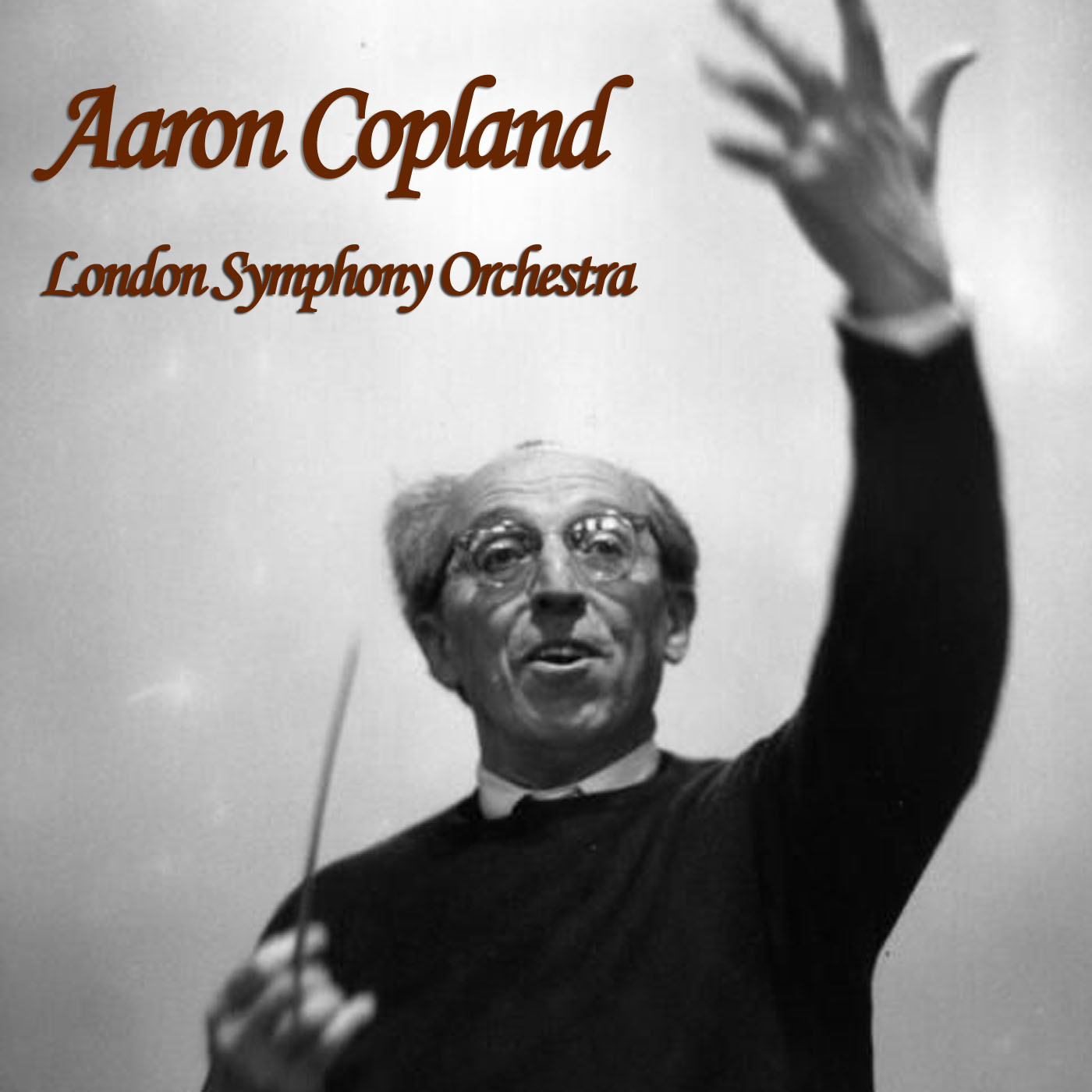
To appreciate the visual structures embedded within the score without external screens, listeners can engage in focused active listening using high-fidelity recordings (such as those conducted by Leonard Bernstein with the New York Philharmonic, or Copland conducting his own works with the London Symphony Orchestra).
Focus on identifying:
- The Entry of Light: How bright woodwind motifs signal changes in musical "scenery."
- Horizon Changes: How shifts in brass volume indicate movement from intimate spaces to wide outdoor vistas.
- Narrative Transitions: How sudden rhythmic shifts introduce new characters or environmental forces (e.g., storms, dances, quiet nights).
3. Educational and Community Staging
School music programs and regional community orchestras frequently use Copland's scores to teach multidisciplinary arts integration. Combining Copland's music with student art exhibitions, visual history presentations, or regional history projects demonstrates how American classical music reflects broader cultural history.
Frequently Asked Questions
Why is Aaron Copland frequently called the "Dean of American Composers"?
Aaron Copland earned this title because he established a distinct, universally recognized American classical sound during the 1930s and 1940s. Before his work, American classical composition heavily mirrored European models. Copland synthesized American folk music, jazz, and frontier themes with modern classical techniques, creating an influential body of work that shaped American composition, film scoring, and concert programming for generations.
How did Aaron Copland create a visual sense of space in his music?
Copland achieved a sense of physical space by utilizing "open voicing"—placing wide intervals between high and low registers while leaving the middle register uncluttered. He also employed lean orchestration, bright woodwinds, solitary brass solos, and sudden dynamic shifts. This acoustic clarity creates an auditory illusion of wide vistas, broad skies, and physical distance.
What is a "Visual Symphony" concert format?
A "Visual Symphony" is a modern performance format where live orchestral music is synchronized with projected high-definition imagery, historical photos, or video footage on screens above the stage. When applied to Copland’s music, visual artists choreograph images of American landscapes, historical events, or artwork to match the precise tempo, dynamics, and narrative themes of the orchestral score.
Did Aaron Copland compose scores for Hollywood movies?
Yes, Copland composed several acclaimed film scores that deeply influenced cinematic music. His major film works include Of Mice and Men (1939), Our Town (1940), The Red Pony (1948), and The Heiress (1949). He won an Academy Award for Best Original Score for The Heiress, proving that concert hall classical music could elevate visual storytelling on film.
What is the historical story behind Appalachian Spring?
Copland composed Appalachian Spring in 1944 as a ballet score for choreographer Martha Graham. Set in a 19th-century Pennsylvania pioneer community, the narrative centers on a newly married couple constructing a farmhouse and preparing for their future. The score incorporates traditional tunes, most notably the Shaker song "Simple Gifts," to celebrate American resilience, community values, and hope during the final years of World War II.
Recommended Next Steps for Music Lovers and Concertgoers
To fully explore Aaron Copland's visual symphony of American music, take these practical steps:
- Explore Key Landmark Recordings: Begin with definitive recordings of the principal ballet suites (Appalachian Spring, Rodeo, Billy the Kid). Look for performances conducted by Leonard Bernstein, Michael Tilson Thomas, or Aaron Copland himself.
- Review Symphony Season Schedules: Check the upcoming performance schedules of local regional or metropolitan orchestras for multimedia performances, visual symphonies, or film-with-live-orchestra events featuring Copland’s works.
- Compare Concert Music to Film Scores: Listen to Copland's film suite for The Red Pony alongside his Third Symphony to observe how he adapted his visual spatial techniques between the silver screen and the formal concert hall.
- Utilize Score-Reading Videos: Access online score-following videos that display Copland’s musical notation alongside live audio. Observing the physical space on the printed page provides immediate visual proof of his open-interval harmonic structure.