911 operations encompass the coordinated systems, technology, and personnel required to receive, process, and dispatch emergency services. These operations rely on Public Safety Answering Points (PSAPs) to route calls to police, fire, or medical units, utilizing advanced location-tracking and telecommunications infrastructure to ensure rapid, life-saving public safety response across various jurisdictions.
The Foundation of 911 Infrastructure: The PSAP
At the heart of 911 operations is the Public Safety Answering Point (PSAP). A PSAP is a specialized call center responsible for receiving emergency calls and diverting them to the appropriate emergency service. In the United States and Canada, these centers are categorized into two primary types: Primary PSAPs and Secondary PSAPs. A Primary PSAP is the first point of contact for a 911 call, while a Secondary PSAP receives transferred calls (for example, a city dispatch center transferring a medical emergency to a specific ambulance service provider).
The operational efficiency of a PSAP depends on the Selective Router. When you dial 911, the call does not simply go to the nearest phone tower; it is sent to a specialized switch that queries a database to determine which PSAP has jurisdiction over your specific location. This process involves a complex handshake between the telecommunications carrier and the 911 system's tandem switch. In 2026, this process has largely migrated toward IP-based systems, though legacy components still exist in rural jurisdictions.
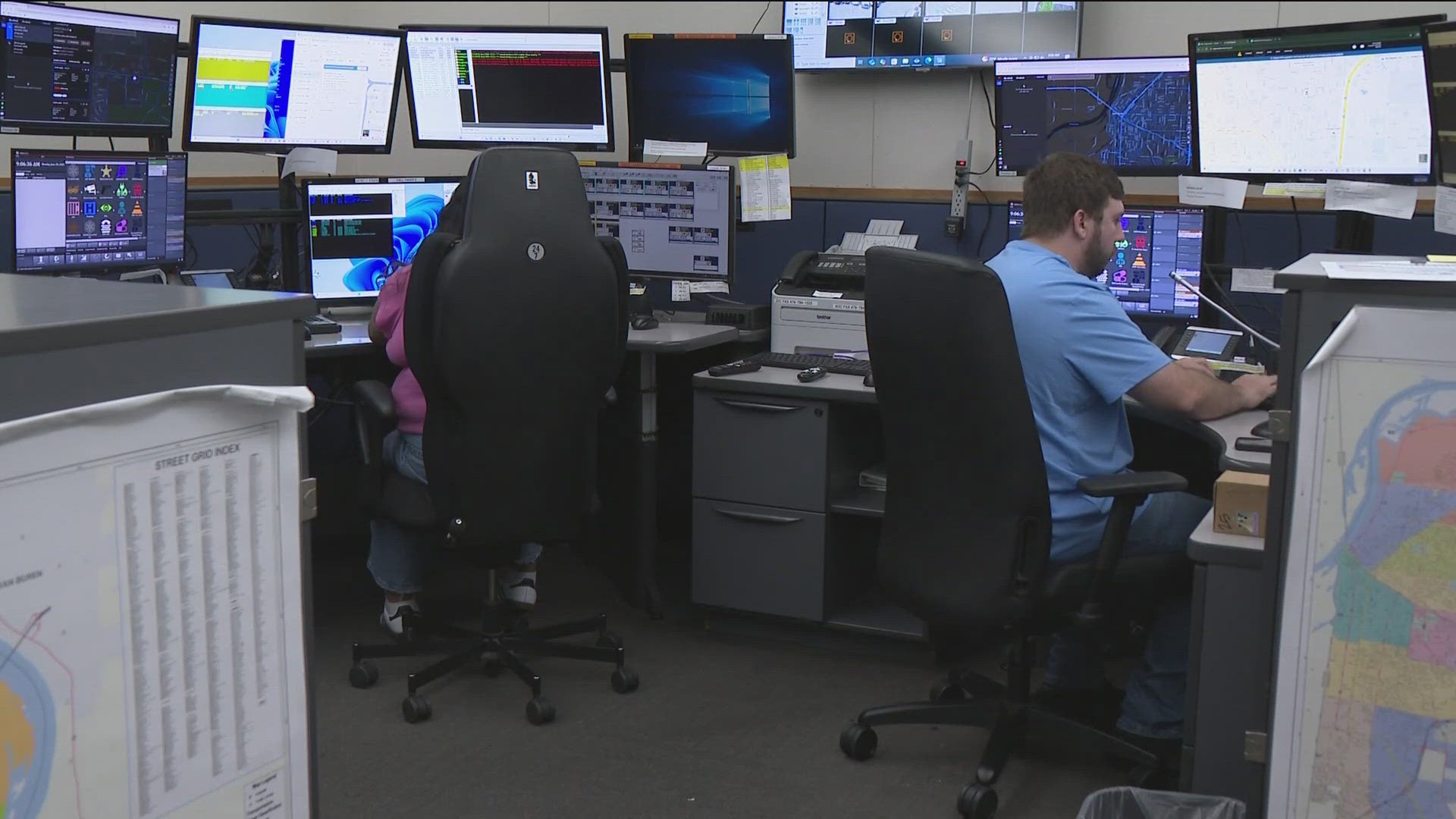
Beyond the physical hardware, PSAPs utilize Computer-Aided Dispatch (CAD) systems. The CAD is the central software hub where dispatchers log call details, track the status of field units (police cars, fire trucks), and access building blueprints or hazardous material data. This software is the "brain" of the operation, ensuring that the dispatcher has a real-time view of all available resources in the field.
The Evolution of Next Generation 911 (NG911)
As of 2026, the transition from legacy 911 systems to Next Generation 911 (NG911) has reached a critical maturity level. Legacy systems were built on decades-old analog technology designed for landline telephones. These systems struggle with the data-rich environment of modern smartphones, which provide not just voice, but GPS coordinates, photos, and video.
NG911 replaces traditional circuit-switched 911 networks with an IP-based system known as the Emergency Services IP Network (ESInet). This transition allows for several fundamental shifts in operations:
- Multimedia Reception: Dispatchers can now receive text messages, photos, and live video streams from the scene, providing "eyes on the ground" before responders arrive.
- Dynamic Routing: If a PSAP is overwhelmed by a mass casualty event or a natural disaster, NG911 allows calls to be instantly rerouted to another center without the caller ever knowing, preventing busy signals during crises.
- Enhanced Geographic Information Systems (GIS): Rather than relying on static address databases (MSAG), NG911 uses precise GIS data to route calls based on the caller’s actual latitude and longitude, which is vital for callers in large parks or on multi-lane highways.
The implementation of NG911 has required significant capital investment and inter-agency cooperation. While the benefits are clear, the shift also introduces new cybersecurity risks, as IP-based systems are theoretically vulnerable to DDoS attacks and malware that analog lines were immune to.
The Lifecycle of a 911 Call
Understanding 911 operations requires a look at the "lifecycle" of an emergency request. This process occurs in seconds but involves multiple layers of verification and communication.
Phase 1: Interrogation and Entry
When a call hits the PSAP, the call-taker must immediately establish two things: the location of the emergency and the nature of the emergency. This is known as "interrogation." Even with modern GPS tracking, verbal confirmation is the gold standard to account for technology failures or callers in high-rise buildings where vertical location (Z-axis) may be inaccurate.
Phase 2: Prioritization
Dispatchers use Emergency Medical Dispatch (EMD) or similar protocols to categorize the call. A "Priority 1" call (e.g., a cardiac arrest or active shooter) moves to the front of the queue, while a "Priority 4" (e.g., a past-tense theft report) may wait. These protocols provide the dispatcher with a script of life-saving instructions to give the caller—such as how to perform CPR or apply a tourniquet—while help is on the way.
Phase 3: Dispatch and Coordination
Once the call-taker enters the data into the CAD system, it appears on the screen of a radio dispatcher. The dispatcher identifies the closest available unit using Automatic Vehicle Location (AVL) technology and broadcasts the call over encrypted radio frequencies or digital mobile data terminals (MDTs) inside the emergency vehicles.
Phase 4: Termination and Post-Call
The operation doesn't end when the ambulance arrives. The dispatcher monitors the safety of the responders, manages requests for additional resources (like a helicopter or heavy rescue), and finally closes the call in the CAD system for state and federal reporting.
Technical Specifications: Comparing Legacy vs. Modern Systems
The following table outlines the technical differences between legacy E911 systems and the NG911 standards utilized in 2026.
| Feature | Legacy E911 (Analog) | NextGen 911 (IP-Based) |
|---|---|---|
| Transmission Media | Analog CAMA Trunks | Managed IP Networks (ESInet) |
| Location Method | Master Street Address Guide (MSAG) | Geographic Information Systems (GIS) |
| Data Types | Voice and limited text (TTY) | Voice, Text, Photo, Video, Telematics |
| Call Routing | Static, based on Selective Router | Dynamic, based on policy and location |
| Interoperability | Limited; localized to county/state | High; nationwide data sharing |
| Device Support | Landlines and basic cellular | Smartphones, IoT, Wearables, Connected Cars |
The Human Factor: Staffing and Training Requirements
Despite the technological advancements of 2026, 911 operations remain a human-centric field. The role of a 911 dispatcher—often called a "telecommunicator"—is one of high stress and technical complexity.
Training and Certification: Most jurisdictions require dispatchers to complete a rigorous training program, often based on standards set by the Association of Public-Safety Communications Officials (APCO) or the National Emergency Number Association (NENA). Training typically lasts 3 to 6 months and covers:
- Radio Technology: Operating complex multi-frequency consoles.
- Crisis Intervention: Handling callers experiencing suicidal ideation or extreme trauma.
- Legal Liability: Understanding the "Duty to Act" and the legal ramifications of dispatch errors.
The Staffing Crisis: 911 operations across the country have faced significant staffing shortages. The combination of high-stress environments, shift work (24/7/365), and the cognitive load of managing multiple digital inputs has led to high turnover. To combat this, many agencies in 2026 have implemented "Wellness and Resiliency" programs, focusing on the mental health of dispatchers who suffer from secondary traumatic stress.
Operational Challenges: Cybersecurity and TDoS
As 911 operations become more digitized, they face sophisticated threats. One of the most prominent is the Telephony Denial of Service (TDoS) attack. In a TDoS attack, bad actors use automated systems to flood a PSAP with thousands of "silent" calls, preventing legitimate emergency callers from getting through.
Furthermore, the integration of Internet of Things (IoT) devices—such as smart smoke detectors and medical alert wearables—has created a "data deluge." While this data is helpful, it can overwhelm a dispatcher if not filtered correctly. Operations centers are increasingly using AI-assisted filtering to prioritize these automated alerts, ensuring that human dispatchers focus on the most critical inputs.
Standards and Regulatory Oversight
911 operations are not unregulated. In the United States, the Federal Communications Commission (FCC) sets the rules for how wireless carriers must deliver 911 calls and location data. Locally, state 911 boards oversee the distribution of "911 fees" collected from phone bills to ensure PSAPs stay funded.
The National Fire Protection Association (NFPA) 1221 standard is another crucial benchmark, setting requirements for how quickly a call must be answered. Generally, the standard dictates that 95% of emergency calls should be answered within 15 seconds. Agencies that fail to meet these metrics may lose accreditation or face increased scrutiny from local government oversight.
Frequently Asked Questions
How does 911 know my location if I call from a cell phone?
911 systems use a combination of GPS data from your phone and cellular tower triangulation. In the NG911 environment of 2026, many phones also utilize Advanced Mobile Location (AML), which automatically turns on the phone’s high-precision location services during a 911 call and sends an encrypted SMS with your coordinates to the PSAP.
Can I text 911 instead of calling?
Yes, in the majority of jurisdictions as of 2026, "Text-to-911" is fully operational. However, public safety officials still emphasize "Call if you can, text if you can't," because voice communication is faster and allows the dispatcher to hear background noises that provide critical context.
What happens if I call 911 by mistake?
If you accidentally dial 911, do not hang up. Stay on the line and tell the dispatcher it was a mistake. If you hang up, 911 operations protocol requires the dispatcher to call you back or send a police officer to your location to verify there is no emergency, which wastes valuable resources.
Why do 911 dispatchers ask so many questions?
Dispatchers ask questions to determine the exact level of help needed and to keep the caller and responders safe. Asking questions does not delay the arrival of help; in most operations, one person is typing the information into the CAD while another dispatcher is already sending the units to the scene.
Are 911 calls recorded?
Yes, every 911 call and radio transmission is recorded and archived. These recordings are used for quality assurance training and can be subpoenaed as evidence in criminal or civil court cases.
Recommendations for Navigating 911 Systems
For the public and those interested in the field, understanding the operational limits of the system is vital. If you are in a situation requiring emergency assistance, try to remain calm and lead with your location first. In the event of a power outage or network failure, landline phones (if available) are still the most reliable way to reach a PSAP because they are tied to a fixed physical address in the database.
For those looking to enter the field of 911 operations, pursuing certifications from APCO or NENA is the best first step. The industry is rapidly evolving toward a "Public Safety Telecommunicator" model that treats dispatchers as first responders in their own right, reflecting their critical role in the chain of survival.