Many 90s retailers disappeared due to a combination of high-interest debt from leveraged buyouts, the rapid rise of e-commerce, and a failure to adapt to shifting consumer demographics. While brands like Blockbuster and KB Toys were cultural staples, internal mismanagement and aggressive competition from big-box retailers eventually led to their permanent closure.
The 1990s represented the pinnacle of the American mall experience. It was an era defined by "category killers"—specialty retailers that dominated a specific niche, from toys to electronics to home media. However, as the millennium turned, the very factors that fueled their growth became their undoing. As of 2026, these names exist primarily as nostalgic memories or intellectual property assets owned by holding companies, yet their downfall offers critical lessons in business agility and market evolution.
The Rise and Fall of the Category Killer Model
In the 1990s, the retail landscape was dominated by the "category killer" philosophy. This strategy involved a retailer focusing on a single category of merchandise and offering such a massive selection at low prices that smaller, independent stores could not compete. Stores like Circuit City, Borders, and KB Toys utilized this model to expand rapidly across suburban America.
The primary driver of this growth was the booming mall culture. For the 90s consumer, the mall was not just a place to shop; it was a social destination. This physical foot traffic guaranteed a steady stream of customers for specialty shops. However, this model relied on two assumptions that proved to be fragile: that physical proximity was the consumer's primary barrier to purchase, and that inventory depth could always compensate for thin profit margins. When e-commerce emerged in the late 90s, it dismantled the "category killer" advantage by offering even greater selection without the overhead costs of maintaining thousands of physical storefronts.
Blockbuster Video: The Digital Disruption Case Study
Perhaps no closure is more synonymous with the end of the 90s than Blockbuster Video. At its peak in 2004, Blockbuster operated over 9,000 stores globally. The brand was a cornerstone of weekend culture, facilitating the "movie night" ritual for millions of families.
The disappearance of Blockbuster was not a sudden collapse but a slow erosion caused by several strategic missteps. First was the refusal to acknowledge the shift in distribution. In 2000, the founders of a then-small DVD-by-mail service called Netflix offered to sell their company to Blockbuster for $50 million. Blockbuster executives famously laughed them out of the room.
Second, Blockbuster’s revenue model was heavily dependent on late fees, a major pain point for customers. When Netflix introduced a subscription model with no late fees, and Redbox introduced convenient kiosk rentals, Blockbuster’s "brick-and-mortar-only" strategy became obsolete. By the time Blockbuster launched its own mail-order and streaming services, it was too late to catch up with the technological infrastructure and brand loyalty already captured by digital-first competitors. The final corporate-owned stores closed their doors by early 2014, leaving only one independently owned franchise in Bend, Oregon, as a living museum of the era.
KB Toys and the Impact of Private Equity
KB Toys (originally Kay-Bee Toys) was the quintessential mall toy store. Unlike the massive, warehouse-style Toys "R" Us locations, KB Toys specialized in smaller footprints within shopping centers, focusing on high-impulse purchases and "closeout" deals.
The disappearance of KB Toys is a cautionary tale regarding Leveraged Buyouts (LBOs). In the early 2000s, the company was acquired by a private equity firm. This acquisition saddled the retailer with hundreds of millions of dollars in debt. To service this debt, the company had to divert funds away from inventory and store improvements.
Simultaneously, "big-box" retailers like Walmart and Target began using toys as "loss leaders"—selling them at or below cost during the holiday season to lure shoppers into their stores for higher-margin items. KB Toys, burdened by debt and unable to match these price cuts, filed for bankruptcy twice before liquidating its remaining 460 stores in 2009. While there have been several attempts to revive the brand name in the 2020s, the physical presence of KB Toys in malls remains a relic of the past.
Circuit City: A Failure of Management Strategy
In the 1990s, Circuit City was the undisputed leader in consumer electronics. It was known for its "Big Red" storefronts and a highly trained, commission-based sales force. However, by the mid-2000s, the company began to falter against its primary rival, Best Buy.
The downfall of Circuit City is often attributed to a series of disastrous management decisions. In an effort to cut costs in 2007, the company laid off 3,400 of its most experienced sales associates—those who were earning the highest commissions—and replaced them with lower-paid, less-experienced workers. This move destroyed the company’s reputation for customer service and technical expertise. Furthermore, Circuit City failed to secure prime real estate as suburban shopping patterns shifted, often remaining in older, less-accessible locations. The company filed for bankruptcy in 2008 and shuttered all stores by 2009.
Discovery Zone: The Rise of Experiential Retail
Discovery Zone (DZ) was the premier indoor playground for children in the 90s, characterized by massive tube crawls, ball pits, and slides. It represented the "experiential retail" trend before the term was even coined. At its height, the company had the backing of major investors like Blockbuster Video.
Discovery Zone’s disappearance was driven by high operational costs and a lack of secondary revenue. Maintaining massive indoor playgrounds required significant capital for safety inspections and cleaning. Unlike its competitor, Chuck E. Cheese, which relied heavily on food and beverage sales (high-margin items), Discovery Zone focused primarily on admission fees. Additionally, as fast-food chains like McDonald's began installing their own "PlayPlace" structures for free, the incentive to pay for Discovery Zone diminished. The company filed for bankruptcy in 1996 and 1999, with most locations eventually being absorbed or closed by competitors.
Analysis of Major 90s Retail Closures
The following table summarizes the primary reasons for the disappearance of major 90s retailers, highlighting the diversity of market pressures.
| Store Name | Primary Niche | Peak Year/Size | Primary Reason for Closure |
|---|---|---|---|
| Blockbuster | Home Media | 9,000+ stores (2004) | Failure to adapt to streaming; high debt |
| KB Toys | Toys & Games | 1,300+ stores (1999) | Leveraged buyout debt; big-box competition |
| Circuit City | Electronics | 700+ stores (2000) | Poor management decisions; loss of talent |
| Discovery Zone | Children's Play | 300+ locations (1995) | High overhead; competition from fast food |
| Borders | Books & Music | 1,200+ stores (2003) | Delayed e-commerce; poor e-reader strategy |
| Warner Bros. | Media Merch | 130+ stores (1997) | Corporate merger (AOL/Time Warner) |
| Ames | Discount Dept. | 700+ stores (2001) | Failed acquisition of Hills Department Stores |
Why Specialty Apparel Stores Faded
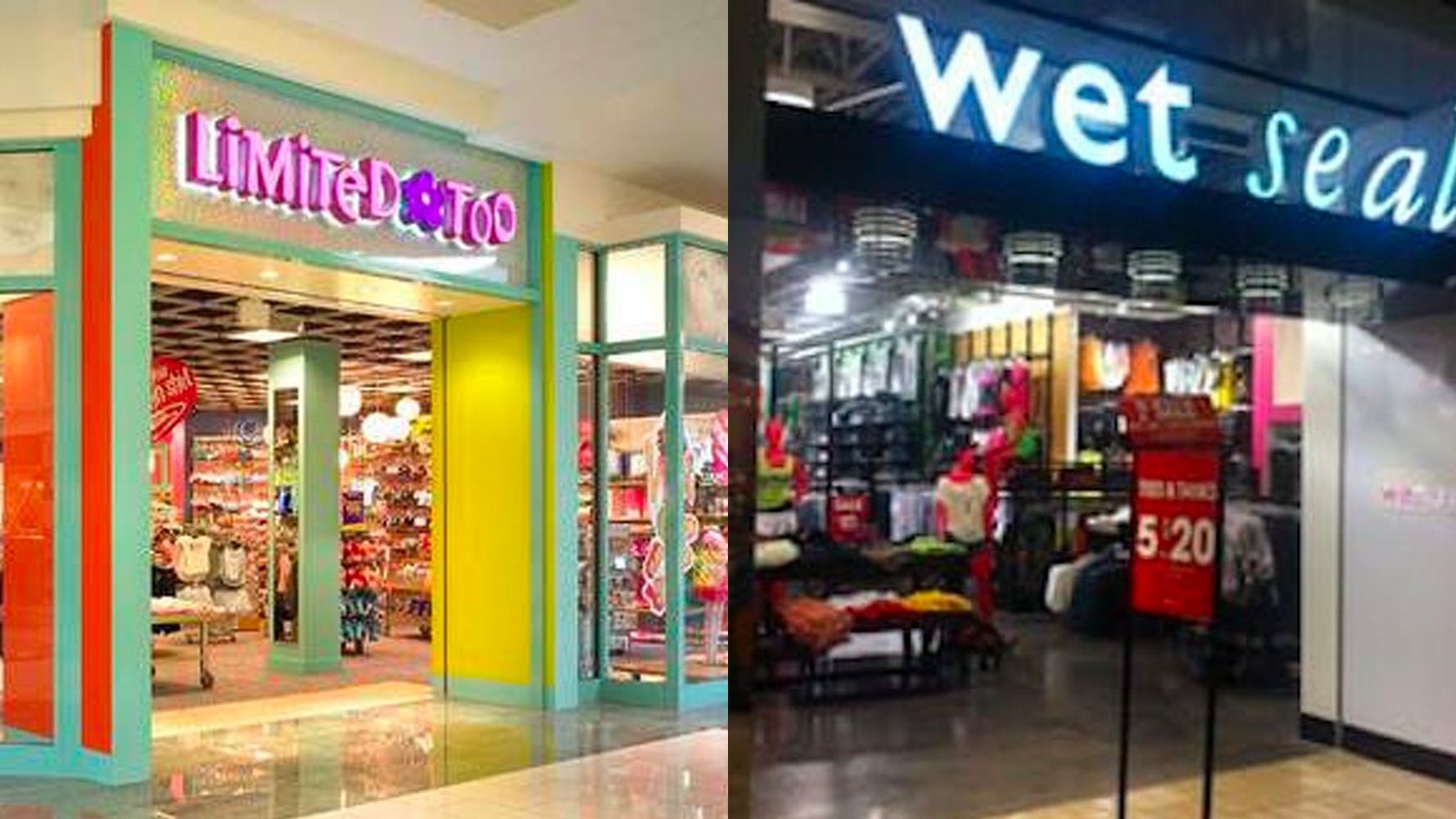
The 90s were also the era of specific fashion aesthetics promoted by stores like The Limited, Wet Seal, and Delia’s. While some of these brands still exist in truncated forms or online-only versions in 2026, their physical dominance ended years ago.
The disappearance of these retailers was largely fueled by the rise of "Fast Fashion." Companies like H&M and Zara perfected a supply chain that could move designs from the runway to the sales floor in weeks, rather than months. The 90s specialty stores were often stuck with long lead times and inventory that went out of style before it could be sold. Furthermore, the shift in teen culture away from mall-hanging toward digital socialization reduced the "impulse walk-in" traffic these stores relied on.
Structural Challenges: The Mall Death Spiral
It is impossible to discuss the disappearance of 90s stores without addressing the decline of the American mall itself. In the 90s, the mall was a self-sustaining ecosystem. A "department store" anchor (like Sears or Montgomery Ward) brought in the crowds, who then trickled down into the smaller specialty shops.
When the anchor stores began to fail due to competition from Amazon and Walmart, the foot traffic for the smaller stores evaporated. This created a "death spiral": as stores closed, the mall became less attractive to visitors, leading to more closures. For specialty stores like The Sharper Image or Sam Goody, which relied on high-traffic corridors to showcase "gadgetry" or "new releases," the thinning crowds were a death sentence.
Frequently Asked Questions
Why did Blockbuster fail while Netflix succeeded?
Blockbuster’s failure was rooted in its reliance on physical infrastructure and late-fee revenue. Netflix prioritized the customer experience by eliminating late fees and investing early in streaming technology. Blockbuster’s internal debt, stemming from its spin-off from Viacom, also prevented it from pivoting as quickly as a nimble, tech-focused startup.
Is Discovery Zone coming back in 2026?
There have been several attempts to revive the Discovery Zone name under new ownership, focusing on modern safety standards and parent-friendly amenities. However, these are typically small-scale franchises or "pop-up" experiences rather than a return to the massive national presence seen in the 1990s.
What happened to the Warner Bros. Studio Store?
The Warner Bros. Studio Store was a victim of corporate restructuring. Following the merger of AOL and Time Warner in 2001, the company decided to exit the retail business to focus on its core media assets. Most of the stores were closed or sold to the Disney Store's then-parent company, as the retail model was no longer seen as a primary profit driver for the studio.
Why did KB Toys close if people were still buying toys?
While toy sales remained strong, KB Toys could not survive the debt structure of its leveraged buyout. The company was forced to pay millions in interest annually, leaving it with no cash reserves to compete with the aggressive pricing of Walmart and Target, who were willing to sell toys at a loss to gain market share.
Can I still visit any original 90s stores?
Most iconic 90s-specific chains are gone, but you can find "spiritual successors" or rebranded versions. For example, some former Sam Goody locations were converted into FYE (For Your Entertainment) stores. The last remaining Blockbuster in Bend, Oregon, remains open as a tourist destination, though it operates outside the defunct corporate structure.
Next Steps for Nostalgia and Research
For those looking to reconnect with the 90s retail era or research business history further, several avenues remain open in 2026. If you are interested in the physical history of these brands, digital archives like the "Dead Malls" project provide photographic and historical documentation of closed retail spaces.
For those seeking the products themselves, the "secondary market" on platforms like eBay and specialized vintage sites has replaced the "closeout" bins of stores like KB Toys. If you are a business student or professional, studying the "10-K" filings of these defunct companies through the SEC’s EDGAR database offers a deep dive into the financial pressures that eventually led to their liquidation. Understanding these failures is the best way to predict which of today’s giants might be the next to disappear.