The 90-day rule most commonly refers to the European Schengen Area regulation allowing non-EU/EEA visitors to stay for up to 90 days within any rolling 180-day window without a long-stay visa. In distinct legal frameworks, the term also applies to US immigration intent assessments and corporate healthcare waiting period limits.
Defining the 90-Day Rule Across Legal Frameworks
While most international travelers encounter the 90-day rule when visiting Europe, the phrase represents specific compliance boundaries across immigration, labor, and property law. Understanding which regulatory framework applies to your situation is essential for remaining legally compliant.
1. The Schengen Area Travel Rule (Immigration Law)
Under Regulation (EU) 2016/399 (the Schengen Borders Code), third-country nationals who do not require a visa—such as citizens of the United States, United Kingdom, Canada, Australia, and Japan—are permitted to stay in the Schengen Area for a maximum of 90 days within any 180-day period. This requirement also applies to travelers holding standard short-stay (Type C) Schengen visas.
The rule ensures that short-term visitors do not use tourist access for de facto permanent residency. It applies collectively across all member states within the Schengen Zone, meaning time spent in France, Germany, Spain, or any other member country counts toward a single, shared 90-day quota.
2. The USCIS/State Department 90-Day Rule (US Immigration)
In the United States, the Department of State’s Foreign Affairs Manual (9 FAM 302.9-4(B)(3)) and policy guidance from U.S. Citizenship and Immigration Services (USCIS) utilize a 90-day principle to evaluate nonimmigrant intent.
If a foreign national enters the U.S. on a nonimmigrant visa (such as a B1/B2 tourist visa or under the Visa Waiver Program/ESTA) and engages in conduct inconsistent with their nonimmigrant status within 90 days of entry—such as taking unauthorized employment, enrolling in a degree program without authorization, or marrying a U.S. citizen and applying for adjustment of status—immigration authorities apply a rebuttable presumption that the applicant willfully misrepresented their intentions upon entering the country.
3. The ACA Employer Health Insurance Rule (US Labor Law)
Under Section 2708 of the Public Health Service Act, as added by the Affordable Care Act (ACA), group health plans and health insurance issuers offering group coverage cannot impose a waiting period exceeding 90 calendar days for eligible employees. This ensures timely access to employer-sponsored health benefits after an employee satisfies initial eligibility requirements.
How the Schengen 90/180-Day Rolling Window Works
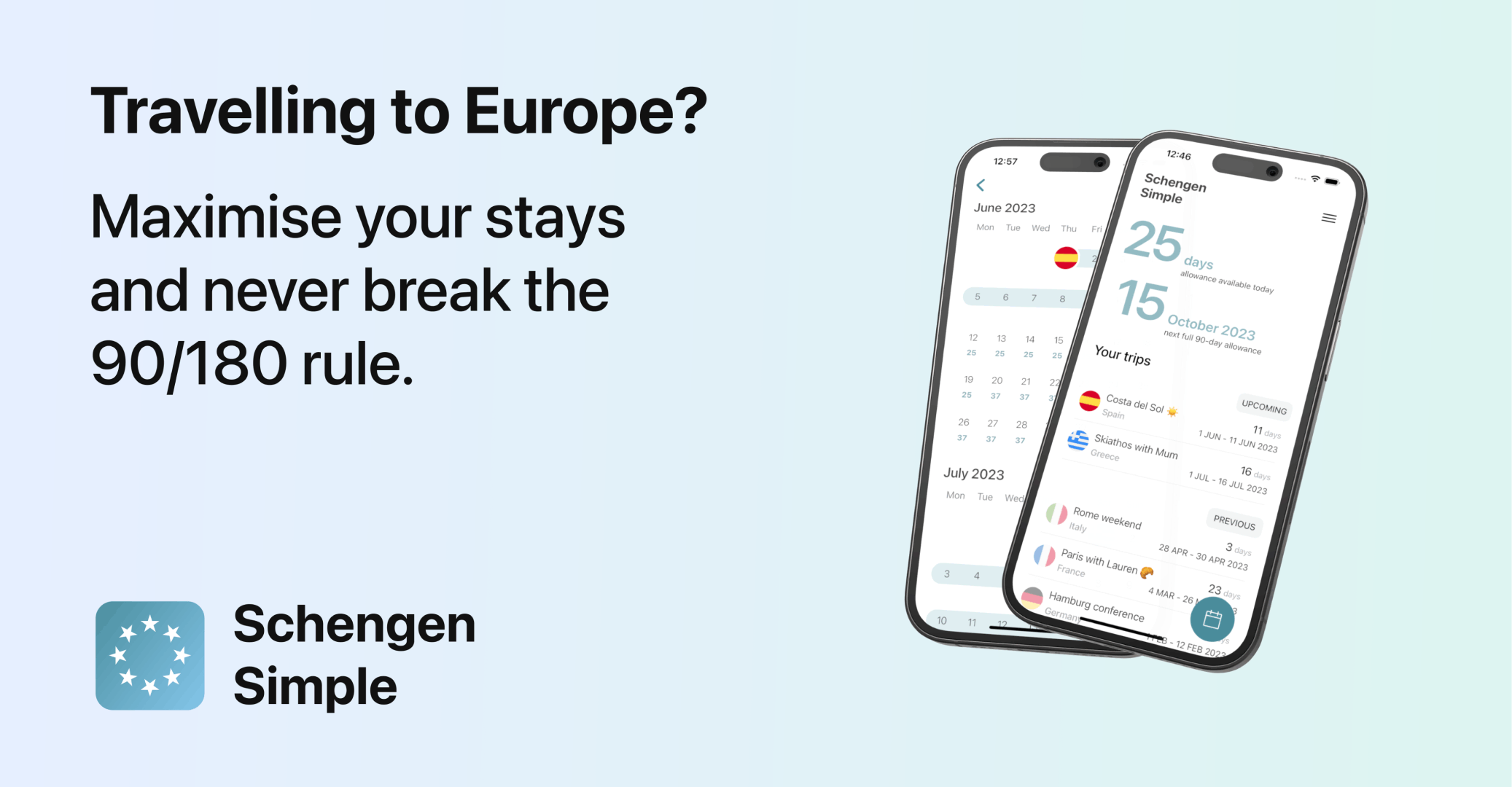
The primary source of confusion regarding the Schengen 90-day rule stems from how the 180-day period is calculated. Many travelers incorrectly assume the 180 days align with a calendar year (January to December) or reset every six months. In reality, the Schengen zone operates on a strictly backward-looking rolling window.
- 180-Day Rolling Window: Day -179 to Day 0 (Today)
- Total Schengen days spent in this block CANNOT exceed 90 days.
The Rolling Window Concept
On any given day of your trip (including proposed future stay dates), you must look back exactly 179 days prior to the current day. This creates a continuous 180-day reference window.
To remain compliant, the total number of days you have spent inside any Schengen country within that 180-day window—including the current day—must not exceed 90 days.
- It does not reset on January 1: The turn of the calendar year has no impact on your allowed allowance.
- It does not reset upon departure: Leaving the Schengen Area for a few days or weeks does not clear your accrued days; it merely pauses additional accumulation until older days roll out of the 180-day window.
- Every day is checked individually: Every single day you spend within the Schengen border control zone requires a valid balance under the 180-day lookback.
Precise Rules for Counting Days
Understanding how individual calendar days are tallied is crucial to preventing inadvertent overstays:
- Partial Days Count as Full Days: The day you cross the border into a Schengen state counts as Day 1, regardless of whether you land at 11:55 PM. Similarly, the day you depart counts as a full day of presence, even if your flight leaves at 00:05 AM.
- Transit and Layovers: If you pass through immigration control at a Schengen airport during a layover (e.g., leaving the international transit area to change terminals or stay overnight), that day counts against your 90-day limit.
- Cumulative Single Quota: Days spent across multiple Schengen countries accumulate together. Spending 30 days in Italy, 30 days in France, and 30 days in Germany within a 180-day period completely uses your 90-day allowance.
Step-by-Step Guide to Calculating Your Allowed Schengen Stay
Calculating your legal stay requires reviewing passport entry and exit stamps or official border control records. Follow this step-by-step audit method:
Step 1: Identify Your Target Travel Dates
Select the date you plan to enter the Schengen Area and the prospective date you plan to leave.
Step 2: Establish the Reference Window
For the planned entry date (Date X), calculate the start of the 180-day reference window by subtracting 179 days (Date X - 179 days).
Step 3: Tally Prior Schengen Presence
Count every day between (Date X - 179) and (Date X - 1) that you were physically inside any Schengen country. Make sure to count both entry and departure dates listed on your passport stamps as full days.
Step 4: Calculate Available Days
Subtract your prior presence tally from 90. The remaining total is the maximum number of consecutive days you can legally stay starting on Date X, provided you do not plan additional entries during that window.
Step 5: Recalculate for Extended Stays
If you plan a stay that spans several weeks, audit each future calendar day in sequence. As time advances, days spent in Europe 181 days prior fall out of the calculation, potentially freeing up fresh capacity if your travel in the previous six months was sporadic.
To consult official EU border management framework details, refer to the European Commission Schengen Area Portal.
Key Differences and Exceptions Across Legal 90-Day Rules
Because the 90-day designation is used across distinct regulatory regimes, comparing their mechanics helps clarify their legal impacts:
| Legal Domain | Primary Regulation / Governing Body | Core Requirement | Common Misconception | Penalty for Non-Compliance |
|---|---|---|---|---|
| Schengen Travel | EU Regulation 2016/399 (European Commission) | Max 90 days presence in any 180-day rolling window | Resets every calendar year or every time you exit | Fines, passport notation, SIS entry ban, future visa/ETIAS denial |
| US Immigration Intent | 9 FAM 302.9-4(B)(3) / USCIS Policy Manual | Inconsistent acts within 90 days create presumption of willful misrepresentation | Acting after 90 days automatically guarantees visa approval | Visa revocation, adjustment denial, 10-year or permanent inadmissibility |
| ACA Employer Healthcare | 42 U.S.C. § 300gg-7 / US Dept. of Labor | Max 90 calendar days waiting period for health benefits eligibility | The 90 days can be extended to 3 months (e.g., 92 days) | Excise taxes ($100/day per affected individual under IRC § 4980D) |
| UK / London Short-Lets | Greater London Authority Act 1999 | Max 90 nights per calendar year for short-term residential rentals | Applies to long-term tenancy agreements | Listing platform deactivation, municipal council enforcement fines |
Geographic Exceptions to the Schengen Rule
Not all European countries participate in the Schengen Area. Traveling to non-Schengen nations allows non-EU travelers to step outside the Schengen clock:
- EU Members Outside Schengen: The Republic of Ireland and Cyprus are EU member states that maintain independent immigration regimes. Time spent in Ireland or Cyprus does not count toward your Schengen 90-day limit, though they enforce their own separate entry restrictions.
- Non-EU Schengen Members: Iceland, Liechtenstein, Norway, and Switzerland are not EU members, but they are Schengen signatories. Time spent in these four countries directly consumes your Schengen 90-day allowance.
- European Microstates: Monaco, San Marino, and Vatican City do not have formal border controls and are treated as part of their surrounding Schengen hosts (France and Italy). Andorra maintains border controls but does not issue its own visa; entering Andorra requires stepping out of Schengen, though re-entry counts against your balance unless holding a multi-entry permit.
Legal Consequences of Violating the 90-Day Limit
Exceeding the allowed stay under any legal 90-day rule triggers swift administrative or financial consequences.
Overstaying Schengen Allowances
European border authorities enforce immigration limits rigidly upon departure using border control databases and the Entry/Exit System (EES). Penalties for overstaying include:
- Financial Fines: Border control agencies issue immediate administrative fines ranging from €100 to over €1,000, depending on the country and duration of overstay.
- Passport Stamps and Alerts: Border officers stamp passports with specific notations indicating an overstay and log the entry into the Schengen Information System (SIS).
- Formal Entry Bans: Depending on the severity (overstays exceeding a few days), authorities may issue a formal re-entry ban prohibiting travel to the entire Schengen Area for 1 to 5 years.
- Future Travel Authorizations: Overstay records negatively impact future visa applications and result in the denial of electronic travel authorizations, such as ETIAS (European Travel Information and Authorisation System).
Violating US Immigration Intent Guidance
In U.S. immigration law, violating nonimmigrant status by engaging in inconsistent behavior within 90 days carries severe long-term consequences. Guidance published in the USCIS Policy Manual explains that if USCIS determines an applicant made a willful material misrepresentation upon entry, the agency can deny green card applications (Form I-485) and initiate removal proceedings. A finding of willful misrepresentation results in a permanent bar to entry unless a specific hardship waiver (Form I-601) is granted.
Legal Strategies for Staying in Europe Beyond 90 Days
Travelers, remote workers, and retirees seeking to remain in Europe longer than 90 days must obtain appropriate legal authorization rather than relying on tourist stays.
- Options for Extended Stay Beyond 90 Days
- National Type D Visa
- Long-term study, work, residency
- Digital Nomad Visa
- Remote income thresholds met
- Bilateral Treaties
- Pre-Schengen agreements (e.g., US-Denmark)
- National Type D Visa
1. National Long-Stay Visas (Type D)
A Schengen Type D visa is issued by a specific member state for long-term stays (typically 3 months to 1 year) for work, study, family reunification, or retirement. While holding a valid Type D visa or residence permit issued by one country (e.g., France), you can travel to other Schengen states for up to 90 days in any 180-day window under standard tourist rules, while your time spent in the host nation is exempt from the tourist clock.
2. Digital Nomad Visas
Numerous Schengen nations—including Spain, Portugal, Greece, Italy, and Estonia—offer specialized visas for remote workers. These visas require proof of remote employment, minimum income requirements, health insurance, and clean criminal background checks. They grant legal residency lasting from 1 to 3 years.
3. Pre-Schengen Bilateral Agreements
Certain third-country citizens benefit from historical bilateral agreements that predated the Schengen Agreement. For example, U.S. citizens can take advantage of historical bilateral agreements with countries like Denmark or Poland, which under specific conditions permit stays beyond the standard 90-day limit within that specific country's borders. However, leveraging these treaties requires careful legal verification, as border officials do not always interpret them uniformly.
4. Non-Schengen Rotation ("Country-Hopping")
Travelers without long-stay visas frequently manage the 90-day limit by alternating between Schengen and non-Schengen destinations. For example, a traveler might spend 90 days in Spain (Schengen), move to the United Kingdom, Ireland, or Montenegro (non-Schengen) for 90 days, and then legally return to the Schengen Area as their initial 180-day window rolls past.
Frequently Asked Questions
Does the 90-day Schengen limit reset every calendar year?
No. The Schengen 90-day rule operates on a continuous, rolling 180-day window. The start of a new calendar year on January 1 does not reset your accumulated days; border control evaluates the 179 days preceding every day of presence.
Do arrival and departure days count as full days under the 90-day rule?
Yes. Any part of a calendar day spent inside a Schengen border count toward your total stay. Both the date of arrival and the date of departure are tallied as full individual days, regardless of flight times.
Which European countries are not part of the Schengen 90-day restriction?
European countries outside the Schengen Area include the United Kingdom, Republic of Ireland, Cyprus, Montenegro, Albania, Serbia, and North Macedonia. Time spent in these nations does not count toward your Schengen 90-day total.
What is the difference between the Schengen 90-day rule and the USCIS 90-day rule?
The Schengen 90-day rule is a maximum physical presence allowance for visa-free tourist visits in Europe. The USCIS 90-day rule is a U.S. immigration standard used to evaluate whether a foreign national entered the United States under false intentions regarding their visa status.
What happens if an emergency prevents departure before the 90 days expire?
If severe medical emergencies, flight cancellations due to natural disasters, or force majeure events prevent departure, you must contact local immigration authorities or police (such as the Prefecture in France or Ausländerbehörde in Germany) before your 90 days expire to request a formal extension of stay (Extension of Schengen Visa / Exceptional Leave to Remain).
Practical Action Plan for Compliance and Travel Management
To manage your travel schedule and ensure strict adherence to immigration and regulatory frameworks, follow this operational checklist:
- Audit Historic Travel Logs: Gather physical passport stamps, digital flight itineraries, and board pass confirmations for the past 12 months.
- Utilize Official Calculators: Check your status using automated calculation tools such as the official EU Schengen Short-Stay Calculator to model planned trip sequences accurately.
- Maintain Emergency Margins: Avoid scheduling departures on Day 90. Build a 3- to 5-day safety buffer into travel itineraries to accommodate unexpected flight delays, illness, or transport strikes.
- Apply for Formal Visas Early: If your planned presence will exceed 90 days within a 6-month period, submit applications for national Type D visas or temporary residence permits at least 60 to 90 days prior to your intended departure date.
- Document In-Country Days: Retain border entry slips, boarding passes, and accommodation receipts to prove physical arrival and departure dates if border officials request clarification.