A 90-day framework is a structured management and productivity model that divides a three-month period into distinct 30-day operational phases: discovery, alignment, and execution. Widely utilized in executive onboarding, strategic business planning, and personal career transitions, this framework establishes clear objectives, mitigates operational risk, and aligns team efforts to deliver measurable impact within a concentrated timeframe.
The Strategic Rationale Behind the 90-Day Framework
The concept of structuring work into 90-day blocks stems from organizational psychology and corporate operational cadences. A full year is often too long for precise forecasting; macro conditions shift, priority drift occurs, and momentum wanes. Conversely, monthly cycles often prove too short to execute substantive strategic initiatives or implement system-level changes. Ninety days—or one financial quarter—provides the optimal balance between strategic ambition and tactical agility.
In modern business management, the 90-day framework serves as a governance tool that prevents "firefighting" (reacting solely to immediate crises) by forcing leaders to anchor daily activity to medium-term outcomes. Whether applied to an incoming Chief Executive Officer, a new Product Manager, or an existing team launching a turnaround initiative, the model creates predictable cadence. It creates a psychological deadline that compels focus while granting sufficient runway to gather meaningful data, test hypotheses, and institutionalize new operational processes.
Furthermore, a 90-day window aligns perfectly with modern corporate reporting and OKR (Objectives and Key Results) tracking. By breaking large multi-year visions down into quarterly iterations, organizations build an adaptive operating rhythm. This approach ensures that performance evaluations are based on tangible milestones rather than superficial activity, protecting teams from burn-out while maintaining accountability across all operational levels.
Core Architecture: The Three 30-Day Operational Phases
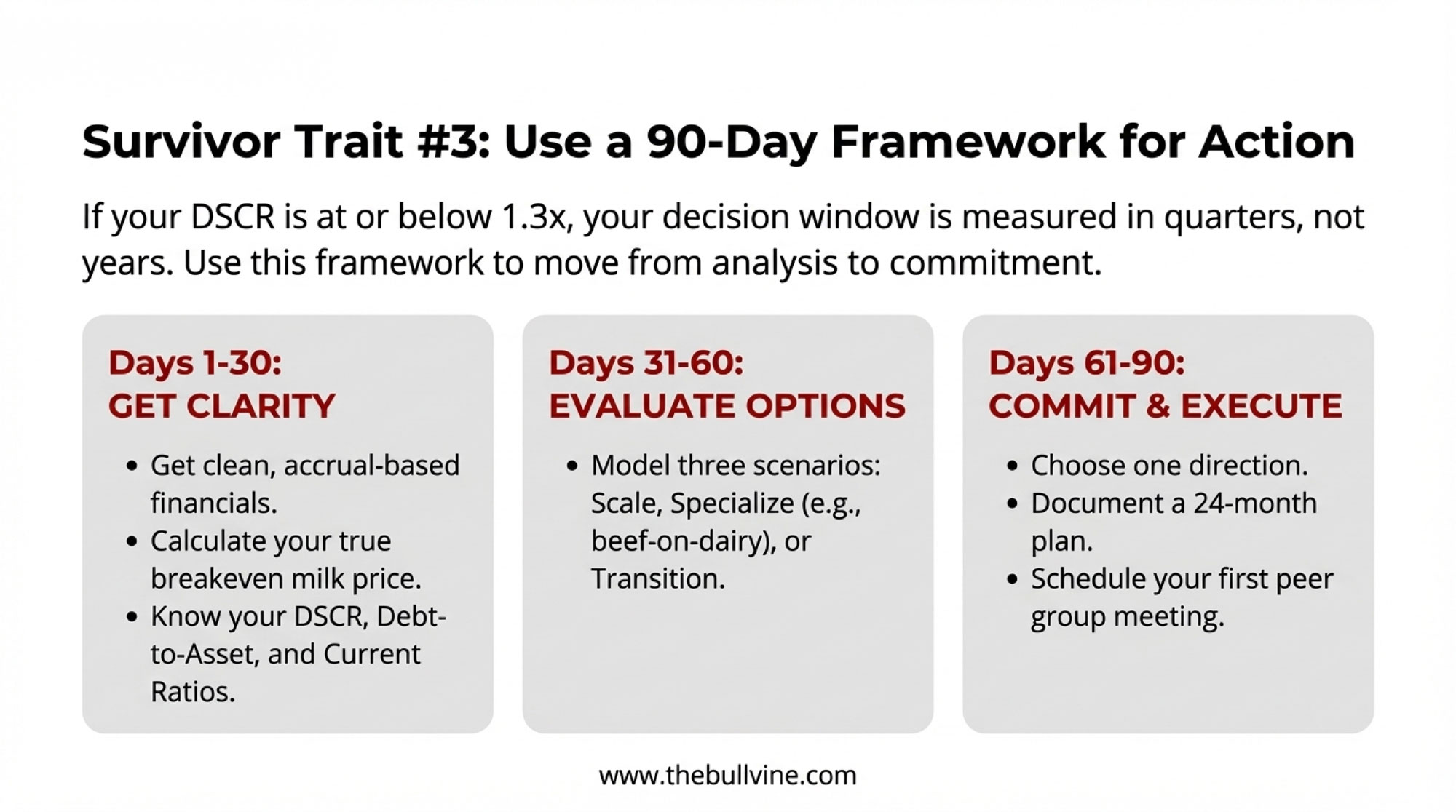
A successful 90-day framework is not a monolithic sprint; it is a sequenced progression of focused activities. To maximize efficiency and reduce early execution errors, the 90-day cycle is structured into three progressive 30-day phases.
| Phase | Key Focus Areas |
|---|---|
| DAYS 1–30: Learn & Assess | • Stakeholder mapping• Diagnostic baseline audit |
| DAYS 31–60: Align & Optimize | • Process streamlining• Securing "Quick Wins" |
| DAYS 61–90: Execute & Scale | • Scaling core initiatives• Establishing governance KPI |
Phase 1 (Days 1–30): Discovery, Diagnosis, and Relationship Building
The primary goal of the first 30 days is accurate situational assessment. A common failure mode for newly appointed leaders or strategic leads is jumping straight to solutions before understanding the systemic context. Phase 1 demands active listening, observational data gathering, and stakeholder mapping.
During this initial month, practitioners conduct comprehensive diagnostic audits. In an onboarding context, this involves interviewing direct reports, cross-functional peers, key clients, and board members to identify hidden bottlenecks and organizational dynamics. In a strategic project context, Phase 1 focuses on auditing existing data assets, workflow dependencies, historical performance metrics, and technological constraints. The objective is to absorb institutional knowledge without bias, establishing a factual baseline against which future progress will be measured.
Phase 2 (Days 31–60): Alignment, Strategy Formulation, and Quick Wins
The middle 30 days mark the transition from passive analysis to active strategic design. Armed with data from the discovery phase, the practitioner synthesizes learnings into actionable hypotheses, refines initial goals, and begins testing intervention strategies.
A vital objective during Phase 2 is identifying and securing "quick wins"—low-complexity, high-visibility improvements that demonstrate capability and build organizational trust. Quick wins create momentum and secure buy-in from skeptical stakeholders. Concurrently, the strategic lead drafts the detailed operational roadmap for the final phase, ensuring that resource allocation, cross-departmental dependencies, and success metrics are explicitly agreed upon across all governing groups.
Phase 3 (Days 61–90): Execution, Scaling, and Systematization
The final 30 days focus on high-impact implementation, operational scaling, and long-term sustainability. With foundational relationships built and strategic alignment secured, energy shifts entirely toward delivering concrete outcomes outlined in the master plan.
During Phase 3, strategic initiatives are fully rolled out, new workflows are embedded into daily operations, and formal operational governance is instituted. This phase is not merely about completing task checklists; it requires establishing permanent key performance indicators (KPIs), documentation, and standard operating procedures (SOPs) so that the results achieved during the 90-day period endure long after the initial cycle concludes.
Key Use Cases: Onboarding vs. Strategic Business Cycles
While the foundational principles of the 90-day framework remain static, its application varies based on organizational intent. Understanding these nuances ensures the framework is adapted appropriately to the operational context.
- Executive Onboarding and Career Transitions: When stepping into a senior leadership role, executive failure often traces back to poor integration rather than technical incompetence. A 90-day onboarding plan provides structured boundaries that protect incoming executives from early operational distractions, giving them time to understand company culture, map informal power structures, and establish strategic intent.
- Quarterly Business Execution (OKRs and Agile Planning): Established teams utilize 90-day frameworks to execute complex strategic pillars. By setting quarterly themes, cross-functional teams concentrate their engineering, marketing, and operational capital on achieving specific key outcomes rather than diluting effort across long, unfocused project backlogs.
- Organizational Turnarounds and Crisis Management: When an enterprise or business unit experiences underperformance, a 90-day framework creates an urgent, disciplined structure to stop financial loss, realign cost structures, and rebuild operational efficiency in targeted, measurable iterations.
Detailed Matrix: 90-Day Strategic Execution Framework
The following matrix outlines the strategic priorities, core activities, key deliverables, and common operational risks associated with each phase of the framework.
| Phase | Core Objective | Key Activities | Essential Deliverables | Operational Risk Factor |
|---|---|---|---|---|
| Days 1–30 (Learn & Assess) | Establish factual baseline and build stakeholder trust | Stakeholder interviews, operational audits, tech stack review, workflow observation | Diagnostic report, stakeholder map, baseline KPI documentation | Confirmation bias, premature decision-making |
| Days 31–60 (Align & Optimize) | Synthesize insights, define strategy, deliver quick wins | Strategy workshops, process refactoring, pilot launches, goal alignment | Refined strategic roadmap, quick-win completion, resource budget | Over-promising scope, lack of cross-functional alignment |
| Days 61–90 (Execute & Scale) | Full-scale implementation and operationalization | Broad rollouts, KPI dashboard tracking, SOP documentation, handover | Scaled project systems, performance dashboard, long-term operational plan | Execution fatigue, failure to embed SOPs permanently |
Common Pitfalls and Risk Mitigation Strategies
Despite its simplicity, executing a 90-day framework introduces strategic and operational failure points. Recognizing these traps early allows leaders to adjust before project trajectory is compromised.
The Urgency Trap (Premature Action)
The most frequent mistake made by ambitious professionals is acting too quickly during the first 30 days. Eager to demonstrate value, leaders often introduce changes before comprehending why current processes exist. This creates friction, alienates key team members, and frequently leads to unintended operational disruptions.
Mitigation: Enforce a strict observation period during Phase 1. Require all early intervention proposals to be backed by diagnostic data and vetted by long-standing team members before execution.
Scope Creep and Goal Proliferation
Attempting to fix every operational issue within a single 90-day window dilutes impact and exhausts project teams. A 90-day plan must maintain radical priority focus; attempting ten major objectives simultaneously guarantees poor execution across all of them.
Mitigation: Limit the framework to no more than three core strategic objectives per quarter. Apply the 80/20 rule: focus exclusively on the 20% of initiatives that yield 80% of the desired business impact.
Insufficient Metric Tracking and Feedback Loops
A 90-day framework without quantitative measurement risk becoming an empty academic exercise. If success is judged subjectively at Day 90, evaluation defaults to personal opinion rather than operational achievement.
Mitigation: Define quantitative leading and lagging indicators by Day 30. Establish weekly review touchpoints to track velocity against target milestones, making micro-adjustments to tactics as data emerges.
Key Metrics for Measuring 90-Day Impact
Evaluating the overall success of a 90-day plan requires balancing quantitative output indicators with qualitative health metrics. Relying solely on one category produces an incomplete assessment of real progress.
- Objective Completion Rate: The percentage of planned key milestones completed on time and within budget allocated at the end of Phase 2.
- Stakeholder Alignment Index: Qualitative and quantitative feedback gathered via 360-degree reviews, team pulse surveys, or executive sponsor evaluations assessing integration and leadership trust.
- Process Efficiency Gains: Measurable improvements in operational velocity, cycle times, error reduction, or cost savings directly attributable to Phase 2 and Phase 3 interventions.
- System Adoption Metrics: The percentage of targeted staff actively utilizing newly deployed tools, workflows, or SOPs established during the final phase of the framework.
Launching Your 90-Day Action Plan
To implement a 90-day framework effectively, move directly from strategic design into formal baseline execution using structured project management workflows:
- Define the Core Scope: Document the overarching narrative of what success looks like on Day 90. Keep this charter concise and focused on high-level goals.
- Conduct Phase 1 Discovery: Schedule your stakeholder interviews, request access to core operational metrics, and reserve time on your calendar specifically for observation and analysis.
- Establish a Governance Rhythm: Set up weekly self-audits and bi-weekly executive check-ins to report on framework progress, block tactical risks, and adjust resources proactively.
- Institutionalize Outcomes: As Day 90 approaches, transition temporary project structures into permanent management SOPs, ensuring that gains are preserved and integrated into the organization's standard operational rhythms.
Frequently Asked Questions
What is the difference between a 90-day framework and a standard 30-60-90 day plan?
A 30-60-90 day plan is typically a job application tool or introductory document outlining what a candidate intends to do upon hiring. A 90-day framework is a broader operational operational methodology that encompasses corporate execution, project governance, OKR structuring, and executive onboarding workflows.
Why is 90 days considered the optimal timeframe for strategic planning?
Ninety days aligns with standard financial quarters, offering a balanced operational cadence. It provides sufficient time to observe complex enterprise dynamics and execute meaningful change, while remaining short enough to adapt to dynamic market shifts and maintain team focus.
How do you adapt a 90-day framework for hybrid or remote work environments?
In remote or hybrid environments, Phase 1 requires deliberate scheduling of virtual discovery sessions, async feedback loops, and digital documentation reviews to compensate for the absence of organic workplace interactions. Transparency tools such as public task boards and async status updates become essential for maintaining visibility across all three phases.
What qualifies as an effective "quick win" in Phase 2?
An effective quick win is an initiative with low resource requirements, minimal cross-departmental friction, high visibility, and immediate operational value. Examples include streamlining an inefficient weekly approval meeting, fixing a long-standing data tracking error, or publishing a clear workflow document for an unstandardized process.
Can small business owners or solo entrepreneurs utilize a 90-day framework?
Yes. Solo entrepreneurs and small business owners often benefit significantly from the framework, as it prevents operational burnout and prioritization drift. By picking one primary focus area per quarter (e.g., sales automation, product redesign, or marketing channel acquisition), small operators can achieve compound business growth over time.