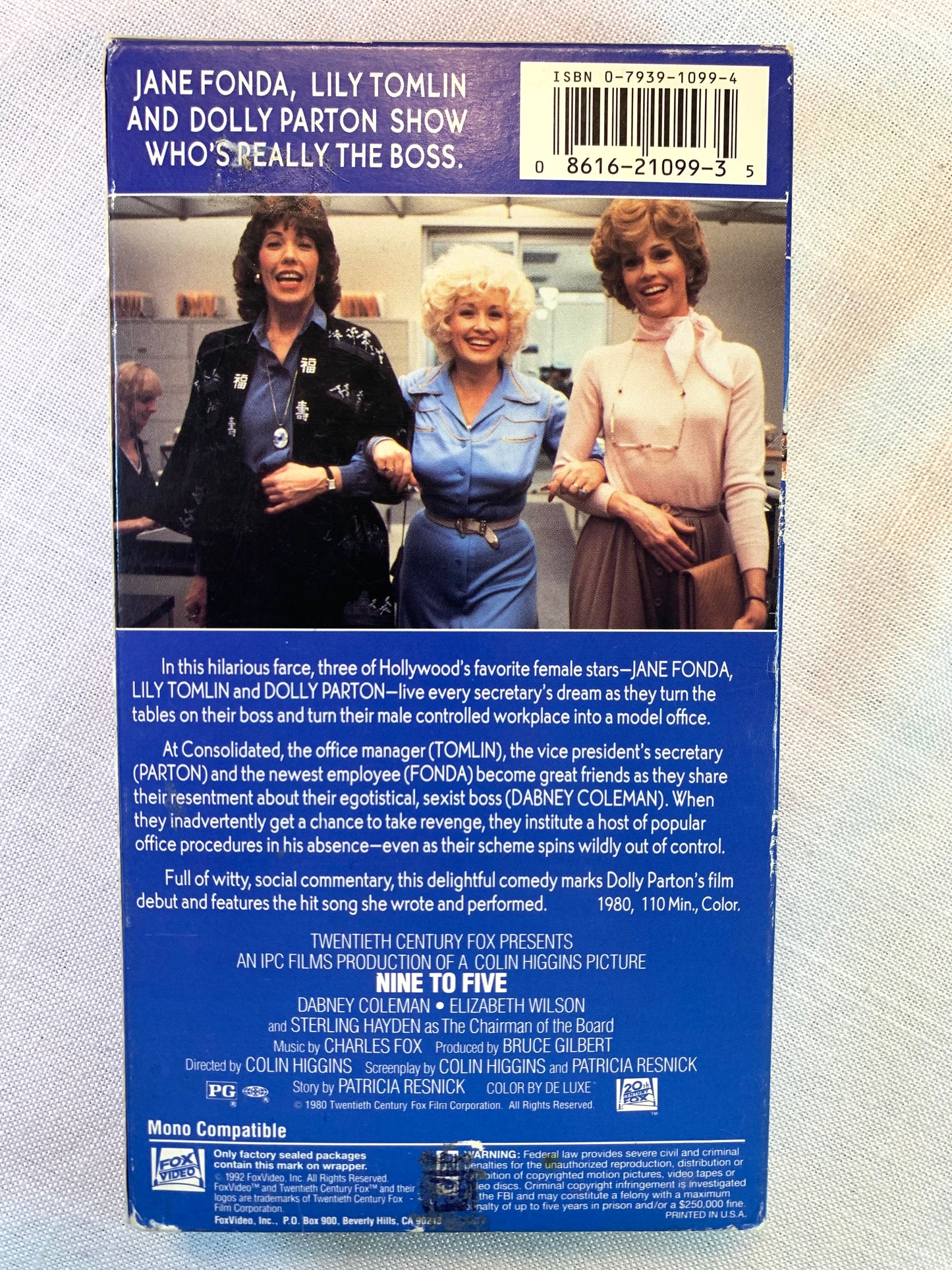
A 9 to 5 schedule is a standard full-time employment structure where employees work eight hours a day, traditionally from 9:00 AM to 5:00 PM, Monday through Friday. Totaling 40 hours per week, this system serves as the foundational benchmark for standard business operations, compensation models, and labor regulation across many global economies.
While the phrase "9 to 5" primarily refers to this conventional daily shift, it is also widely recognized in popular culture—most notably popularized by Dolly Parton’s 1980 hit song and comedy film 9 to 5. In contemporary workforce management, the term represents both a specific shift time and a broader organizational framework establishing standardized business hours.
The Origin and Evolution of the Standard Workday
The 9 to 5 work structure did not emerge by chance; it was created in response to the exhausting working conditions of the Industrial Revolution. During the 18th and 19th centuries, factory employees routinely worked 10 to 16 hours a day, six days a week, with few rest periods or legal safeguards.
The movement for shorter working hours gained momentum in the early 19th century. Labor activist Robert Owen coined the slogan "Eight hours labor, Eight hours recreation, Eight hours rest" in 1817, establishing the theoretical framework for a balanced 24-hour day. However, it took decades of organized labor advocacy and economic shifts for this model to achieve widespread institutional adoption.
- Industrial Revolution (12–16 hr workdays, 6 days/week)
- 1817: Robert Owen advocates for the 8-hour workday
- 1926: Henry Ford adopts 5-day, 40-hour workweek
- 1938: US Fair Labor Standards Act (FLSA) codifies 40-hour workweek
- 2020s: Rise of Hybrid, Remote, and Compressed Schedules
A major turning point occurred in 1926 when the Ford Motor Company, led by Henry Ford, standardized a five-day, 40-hour workweek for its factory workers without reducing pay. Ford discovered that reducing working hours did not reduce productivity; instead, it decreased worker fatigue, reduced turnover, and increased output quality. Additionally, providing workers with two days off gave them leisure time to purchase goods, driving consumer demand across the broader economy.
In the United States, the 40-hour workweek was formally codified into law with the passage of the Fair Labor Standards Act of 1938 (FLSA). The FLSA mandated overtime pay for hours worked beyond 40 per week for eligible workers, effectively establishing the standard five-day, 8-hour shift structure as the benchmark for American employment.
Legal Framework and Structural Mechanics of the 9 to 5
While "9 to 5" implies an exact eight-hour window, the practical mechanics of this schedule depend heavily on labor classifications, meal break laws, and employment agreements.
Paid vs. Unpaid Hours and Meal Breaks
A traditional 9:00 AM to 5:00 PM schedule spans exactly eight clock hours. However, whether an employee is compensated for eight full hours often depends on how lunch breaks are handled:
- Unpaid Meal Breaks: Under many state labor laws and employment contracts, mandatory meal breaks lasting 30 minutes or more are unpaid. Consequently, an employee working from 9:00 AM to 5:00 PM with an unpaid 30-minute lunch actually completes 7.5 hours of paid work per day (37.5 hours per week).
- The 8-to-5 Shift: To ensure employees complete a full 40 paid hours per week alongside an unpaid 1-hour lunch break, many modern organizations adjust the shift schedule from 8:00 AM to 5:00 PM.
- Paid Short Rest Breaks: Short rest periods (typically lasting 5 to 20 minutes) are generally classified as compensable work time under federal regulations, meaning employees remain on the clock during brief rest breaks.
Exempt vs. Non-Exempt Classifications
The legal application of a 9 to 5 schedule varies depending on whether an employee is classified as exempt or non-exempt under statutory labor regulations:
- Non-Exempt Employees: These workers are covered by FLSA minimum wage and overtime rules. Employers must track their daily and weekly hours accurately. Any time worked beyond 40 hours in a single workweek must be compensated at an overtime rate—typically time-and-a-half (1.5 times the regular hourly rate).
- Exempt Employees: Often paid a set salary rather than an hourly wage, exempt employees (such as executive, administrative, or professional staff meeting specific duty and salary threshold criteria) do not qualify for statutory overtime pay. For exempt staff, a 9 to 5 structure often serves as a baseline for availability rather than a strict legal limit on working hours.
Advantages and Drawbacks of the Traditional Model
The long-standing dominance of the 9 to 5 model stems from its ability to offer structure to both employers and workers. However, rigid adherence to set hours also presents challenges in modern operational environments.
Key Advantages
- Predictable Operational Schedules: Fixed hours allow businesses to synchronize customer service, internal meetings, and cross-departmental operations. Clients know exactly when service representatives and decision-makers are available.
- Clear Work-Life Boundaries: A defined end to the workday helps employees mentally disconnect from job tasks, supporting recovery time and personal activities.
- Standardized Payroll and Administration: Scheduling non-exempt employees on fixed shifts simplifies workforce planning, attendance monitoring, and payroll management.
- Synchronous Collaboration: Having all team members online and available during the exact same hours reduces response times and accelerates project decision-making.
Key Drawbacks
- Circadian Mismatch: Individual biological rhythms vary. Mandatory 9-to-5 working hours do not align with peak alertness for evening-oriented individuals ("night owls"), which can hurt productivity and focus.
- Peak Commuting Congestion: Standardized shift hours cause concentrated traffic congestion and crowded public transit during peak morning and evening commute times, adding unpaid travel time and stress to the daily routine.
- Rigidity for Personal Obligations: Managing medical appointments, childcare drop-offs, banking, or home maintenance during standard business hours often requires taking personal time off or navigating complicated shift adjustments.
- Focus on Hours Over Output: Rigid time-based systems risk prioritizing time spent at a desk over actual work completed, which can encourage presenteeism rather than efficiency.
Comparing Work Schedule Models
As organizations adapt to diverse employee needs and technological tools, several alternative schedule models have emerged alongside the classic 9 to 5 frame.
| Schedule Model | Typical Hours / Structure | Core Advantages | Main Limitations | Ideal Use Case |
|---|---|---|---|---|
| Traditional 9 to 5 | 9:00 AM – 5:00 PM (Mon–Fri); 37.5–40 hrs/wk | Predictable routine, synchronous overlap, clear availability | Commuting fatigue, rigid scheduling, potential circadian mismatch | Client-facing office roles, administrative functions, synchronous teams |
| Flextime | Core hours (e.g., 10 AM–3 PM) + flexible start/end times | Better work-life balance, avoids peak commute, respects personal routines | Requires tracking overlap time, potential coordination delays | Knowledge work, software engineering, internal operational roles |
| 4x10 Compressed | 8:00 AM – 6:00 PM (4 days/wk); 40 hrs total | Extended 3-day weekends, reduced weekly commute costs | Longer individual workdays, potential late-afternoon fatigue | Manufacturing, field services, customer support rotations |
| 9/80 Schedule | Eight 9-hr days + one 8-hr day over 2 weeks; every 2nd Friday off | Extra day off every two weeks, maintains 80 hrs per pay period | Complex overtime tracking for payroll, long working days | Government contracting, aerospace, corporate engineering |
| Asynchronous / Remote | Project-based completion without fixed online hours | Maximum scheduling freedom, output-oriented focus | Communication latency, risk of blurred work-life boundaries | Distributed global teams, content creation, independent research |
Modern Shift: The Evolution Toward Flexible and Hybrid Workplaces
Advances in enterprise cloud software, real-time messaging platforms, and digital collaboration tools have reshaped traditional expectations around physical office presence from 9 to 5.
- Traditional Model
- Fixed Location (Office)
- Fixed Hours (9 AM - 5 PM)
- Time-Based Evaluation
- Modern Flexible Model
- Hybrid / Remote Options
- Core Hours + Flextime
- Output-Based Evaluation
Flextime and Core Hours Systems
Rather than requiring strict adherence to a 9:00 AM start time, many modern workplaces use core hours frameworks. For instance, an organization might mandate that all team members remain online and accessible between 10:00 AM and 3:00 PM for collaborative meetings and immediate requests.
Outside of those core hours, employees can adjust their start and finish times—such as working 7:00 AM to 3:00 PM or 10:00 AM to 6:00 PM—to better fit personal responsibilities and peak energy levels.
Hybrid Work Structures
Hybrid work models combine physical office attendance with remote work days. In these setups, the 9 to 5 schedule often shifts from an in-person requirement to a structural framework applied at home on remote days.
This model reduces commuting time while preserving synchronous availability during business hours.
Results-Oriented Work Environments (ROWE)
In a Results-Oriented Work Environment, traditional hours are replaced by explicit performance metrics. Employees are evaluated entirely on project outcomes, deadline performance, and quality of work rather than the total hours logged between 9:00 AM and 5:00 PM.
While ROWE offers flexibility, it requires robust performance-tracking tools and clear communication to maintain accountability.
Practical Strategies for Navigating a Standard Schedule
Whether operating within a strict 9 to 5 framework or managing a flexible team, adopting intentional work habits helps sustain focus and balance throughout the day.
1. Structure the Day Around Energy Peaks
Human cognitive energy fluctuates throughout the day. To maximize focus within an eight-hour window, try structuring tasks by complexity:
- Deep Work Blocks: Reserve peak alertness hours—often the first two to three hours of the shift—for high-focus tasks like complex analysis, strategic writing, or technical development.
- Administrative Windows: Schedule routine communications, email responses, and administrative processing for post-lunch periods, when cognitive fatigue naturally sets in.
2. Establish Explicit Digital Boundaries
With mobile messaging apps and continuous connectivity, work tasks can easily spill beyond 5:00 PM. Maintaining clear boundaries protects personal time:
- Configure automatic status messages or out-of-office notifications on communication tools at the end of the shift.
- Establish clear protocols with supervisors regarding what constitutes an urgent off-hours emergency versus a request that can wait until the next morning.
3. Incorporate Active Rest Intervals
Continuous sedentary work can reduce focus and increase physical strain. Using structured break methods, such as taking a 5-minute break every hour or using a brief walk midday, helps sustain concentration across an eight-hour schedule.
Frequently Asked Questions
Is a 9 to 5 schedule actually 40 paid hours per week?
Not always. A 9:00 AM to 5:00 PM shift spans 8 total hours daily, or 40 total hours per week. If an employer mandates an unpaid 30-minute or 1-hour lunch break during that period, the total paid hours equal 35 to 37.5 hours per week. To reach 40 paid hours with an unpaid hour lunch break, employees typically work an 8:00 AM to 5:00 PM schedule.
What is the difference between non-exempt and exempt standard hours?
Non-exempt employees must be paid overtime (1.5 times their regular hourly rate) whenever they work more than 40 hours in a workweek, making their schedules subject to exact time-tracking. Exempt employees receive a fixed salary regardless of hourly variation and do not earn statutory overtime pay, meaning their 9-to-5 schedule often acts as a general baseline rather than a legal limit.
How does a 9/80 work schedule differ from a traditional 9 to 5?
A 9/80 schedule spreads 80 working hours across nine days over a two-week pay period instead of ten days. Employees work four 9-hour days and one 8-hour day during the first week, followed by four 9-hour days and one day off during the second week, resulting in every other Friday off.
Are employers legally required to provide a traditional 9 to 5 schedule?
No. Federal labor standards, including the Fair Labor Standards Act (FLSA), govern minimum wage, child labor, and overtime pay rules, but they do not require specific start or stop times. Employers generally retain full authority to assign work schedules based on business needs, subject to state meal break mandates and applicable collective bargaining agreements.
How can distributed teams handle 9 to 5 availability across multiple time zones?
Global organizations manage cross-time-zone work by establishing overlapping core hours, adopting asynchronous documentation practices, and rotating meeting times. This setup ensures critical decisions move forward without requiring employees to work late into the night.
Optimizing Your Workplace Schedule Model
Selecting or adapting a workplace schedule requires balancing business requirements against individual performance factors. Organizations evaluating their current scheduling model should audit operational needs, monitor communication responsiveness, and gather direct employee feedback.
If strict synchronous availability is essential for live customer service or shared operations, a structured 9-to-5 or core-hours model remains effective. If work is primarily project-based, introducing flextime or hybrid arrangements can help boost retention, reduce burnout, and increase output quality while retaining reasonable daily availability.