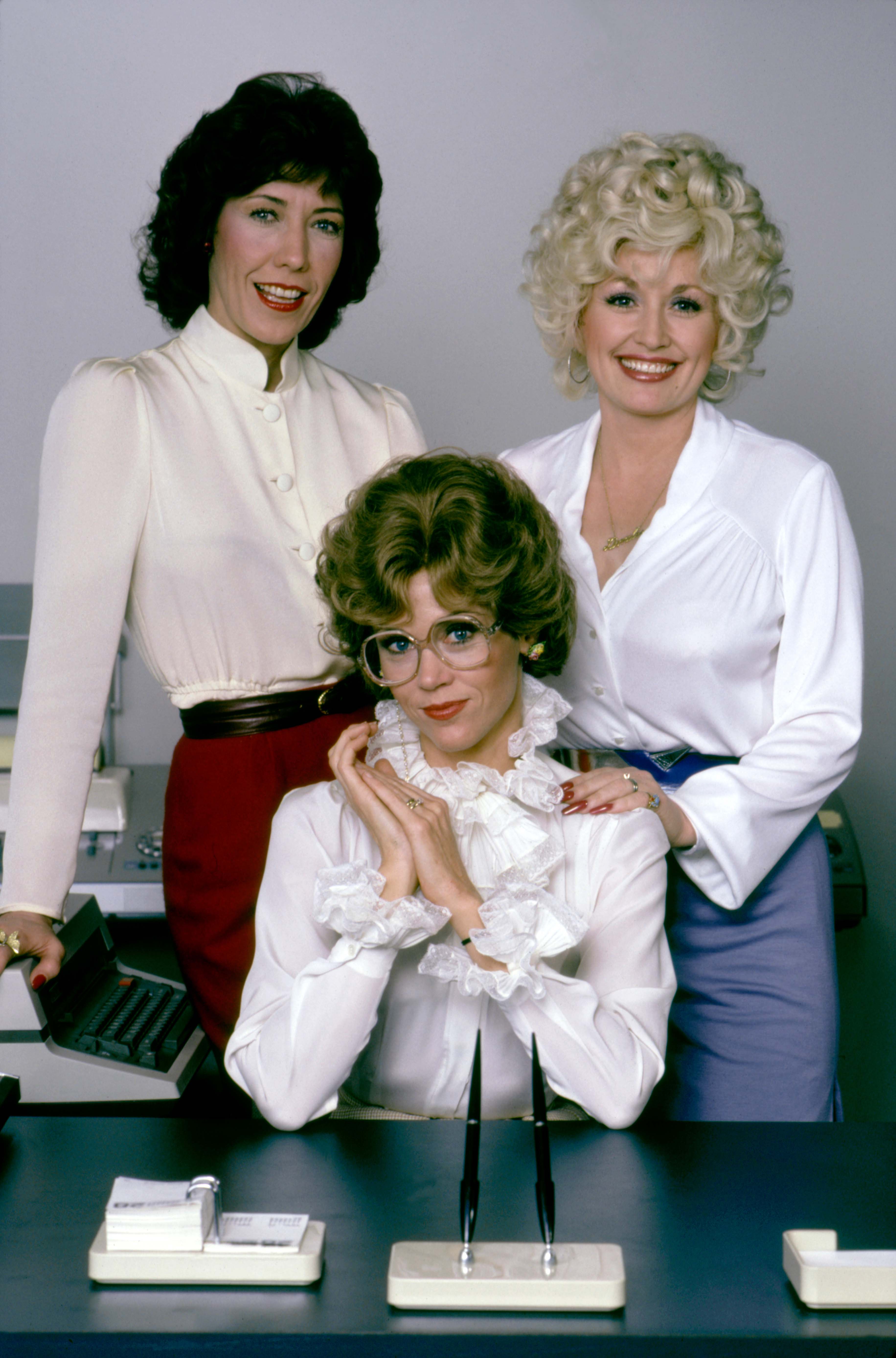
Released in December 1980, 9 to 5 is a groundbreaking American satirical comedy starring Dolly Parton, Jane Fonda, and Lily Tomlin as three office workers who unite against their tyrannical boss. Directed by Colin Higgins, the film achieved massive commercial success, launched Dolly Parton's acting career, and catalyzed national conversations regarding workplace equality and women's rights.
The Origins and Making of 9 to 5
The concept for 9 to 5 originated with actor and activist Jane Fonda, who sought to create a feature film addressing the systemic inequality, low pay, and clerical exploitation experienced by women in the American corporate workforce. Fonda’s inspiration was drawn directly from 9to5, National Association of Working Women, an organization founded in Boston in 1973 by Karen Nussbaum and Ellen Cassedy to advocate for fair pay, equal opportunities, and respectful treatment for female clerical employees.
Originally envisioned by screenwriter Patricia Resnick as a serious drama, the project shifted toward broad comedy and workplace satire after director Colin Higgins stepped in to co-write and direct. Fonda realized that using comedy and dark humor would allow the movie's social commentary to reach a far wider audience without feeling overtly preachy.
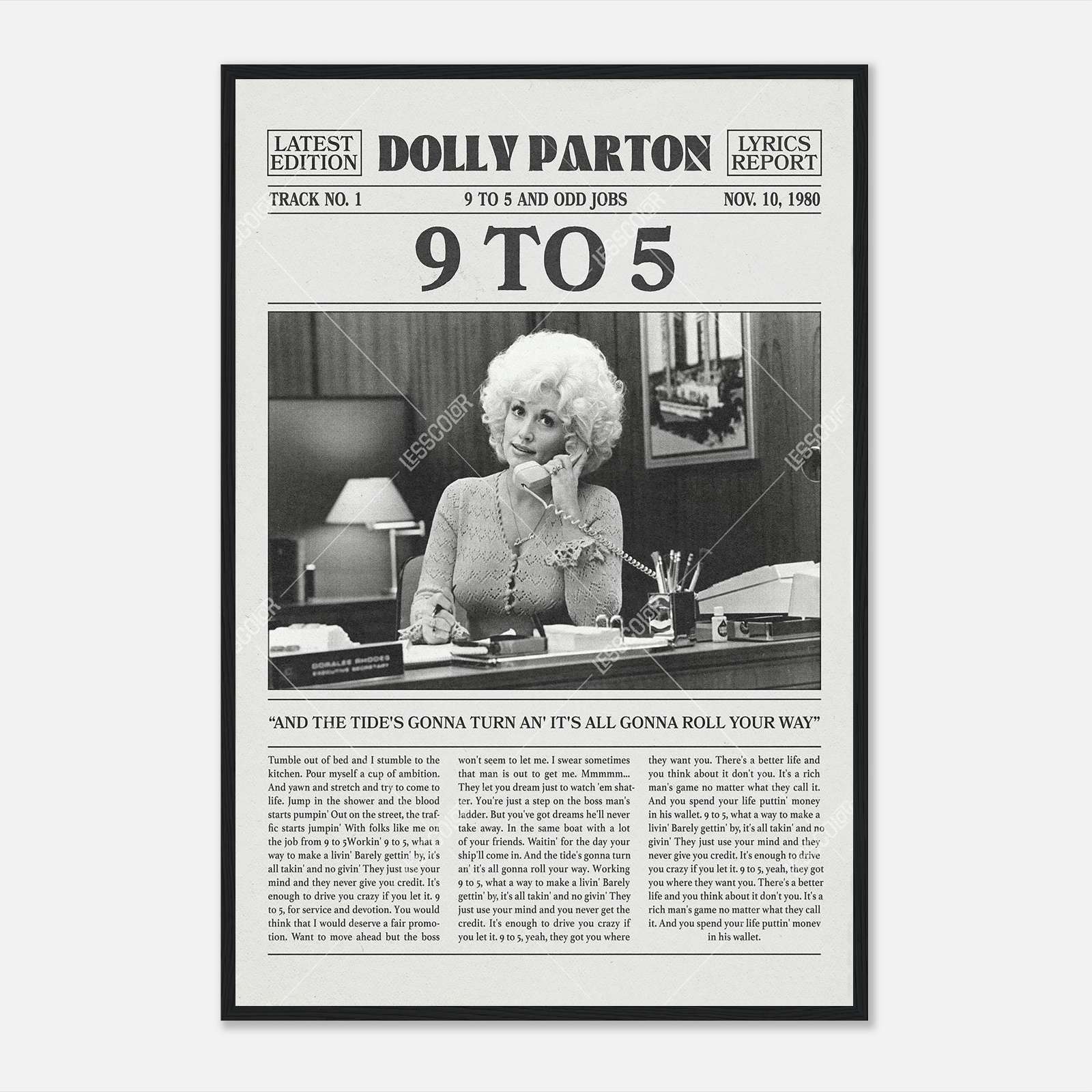
To create a balanced dynamic, Fonda cast herself as the newly divorced novice Judy Bernly, Lily Tomlin as the seasoned administrative supervisor Violet Newstead, and country music icon Dolly Parton as the executive secretary Doralee Rhodes. Parton had never acted in a narrative feature film before. She accepted the role under the explicit condition that she be permitted to write and record the film's title song. The resulting track, "9 to 5," became one of the most recognizable anthems in pop music history.
Plot Breakdown: Conspiracies, Misunderstandings, and Workplace Reform
The narrative of 9 to 5 centers around Consolidated Companies, a corporate office ruled by vice president Franklin Hart Jr., a self-absorbed executive described by his staff as a "sexist, egotistical, lying, hypocritical bigot." Hart constantly takes credit for Violet Newstead's operational ideas, spreads false rumors that he is having an affair with his secretary Doralee Rhodes, and micro-manages the office through his devoted informant, Roz Keith.
- Judy Bernly Enters Workplace
- Joint Frustration with Boss
- Accidental Rat Poisoning
- Hart Hospitalized / Hostage
- Secret Office Overhaul
- Chairman Approves Reforms
The plot turns on a series of escalating mishaps:
- The Shared Grievance: Judy arrives at the company after her husband leaves her, while Violet learns she has been passed over for a promotion in favor of a man she personally trained. Doralee discovers that the entire office shuns her because Hart lied about slept-with-the-boss rumors.
- The Fantasy Sequences: The three women bond over drinks and marijuana, sharing vivid revenge fantasies about how they would punish Hart. Violet envisions poisoning him like Snow White's stepmother; Doralee imagines roping and branding him like a farm animal; Judy imagines hunting him down like a wild game animal.
- The Hospital Mix-up: The next day, Violet inadvertently puts rat poison (thinking it is artificial sweetener) into Hart's coffee. When Hart falls out of his chair shortly after, Violet panics, believing she killed him. Hospital confusion leads the women to accidentally steal a body, only to realize Hart suffered a minor injury and is alive.
- The Hostage Situation: When Hart discovers the poisoning incident and attempts to blackmail the women with police intervention, Doralee ties him up with intercom wire. The trio holds him hostage in his own home while trying to locate corporate documents that prove he has been embezzling from the company.
- The Workplace Transformation: While keeping Hart captive, Violet, Judy, and Doralee forge Hart's signature to institute sweeping corporate reforms. They introduce job sharing, flexible hours, an on-site day-care center, equal pay initiatives, and office personalization. Productivity spikes dramatically, proving that humane management yields superior business results.
The climax occurs when Consolidated Chairman Russell Tinsworthy pays an unexpected visit. Delighted by the office's soaring productivity numbers under the implemented reforms, Tinsworthy sends Hart away to oversee a corporate project in Brazil, allowing the women to permanently preserve their operational improvements.
Cast and Character Matrix
The success of 9 to 5 relies on the dynamic chemistry among its three female leads and the exaggerated pomposity of its primary antagonist.
| Actor | Character | Role Description | Key Narrative Arc |
|---|---|---|---|
| Jane Fonda | Judy Bernly | Newly divorced, timid entry-level worker | Transforms from an anxious novice into a confident, self-sufficient professional and writer. |
| Lily Tomlin | Violet Newstead | Experienced, sharp-witted office supervisor | Moves from cynical frustration to taking bold leadership and running corporate operations. |
| Dolly Parton | Doralee Rhodes | Warm, sharp secretary targeted by executive rumors | Overcomes social isolation, stands up to executive harassment, and showcases high competence. |
| Dabney Coleman | Franklin Hart Jr. | Corrupt, misogynistic corporate vice president | Serves as the primary villain whose tyranny drives the protagonists to unite and outsmart him. |
| Elizabeth Wilson | Roz Keith | Hart's intensely loyal administrative assistant | Functions as the office spy who attempts to undermine the protagonists' solidarity. |
| Sterling Hayden | Russell Tinsworthy | Chairman of Consolidated Companies | Validates the women's workplace reforms after observing record corporate productivity. |
Dolly Parton's Iconic Theme Song
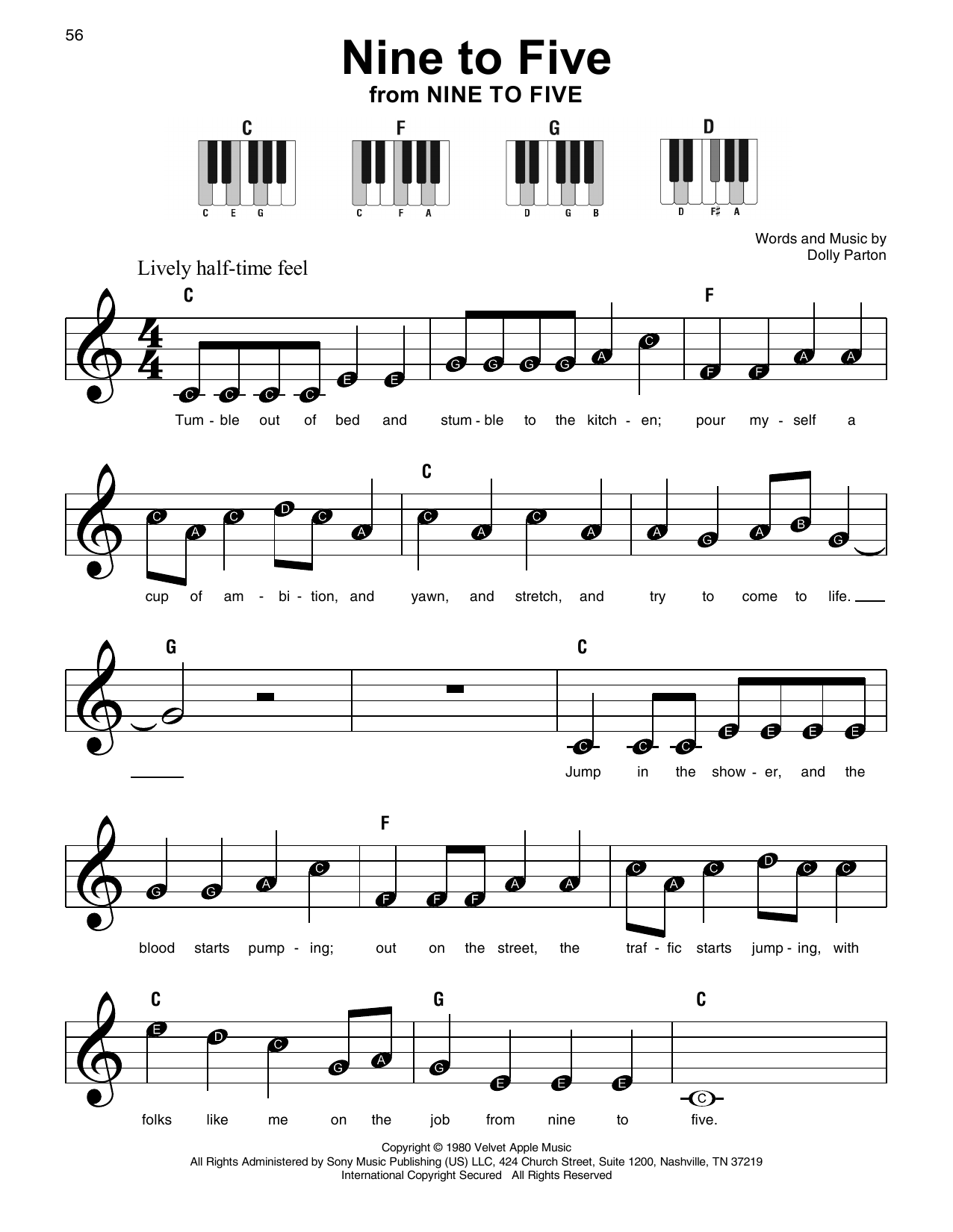
Dolly Parton's theme song, "9 to 5," serves as both the musical backbone of the film and an enduring anthem for working class employees worldwide. While on set between takes, Parton developed the song's signature driving beat by rubbing her acrylic fingernails together, generating a rhythm reminiscent of a typewriter or washboard.
Upon its release alongside the movie, the single achieved extraordinary commercial success:
- Chart Performance: It topped the Billboard Hot 100, the Hot Country Songs, and the Adult Contemporary charts simultaneously in early 1981, a rare crossover feat.
- Awards and Recognition: The song earned two Grammy Awards (Best Country Song and Best Country Vocal Performance, Female) and received an Academy Award nomination for Best Original Song.
- Cultural Endurance: The track remains one of Parton's signature songs and is regularly cited in pop culture, political campaigns, and labor discussions as an accessible critique of corporate drudgery.
Key Themes: Gender Equity, Workplace Rights, and Corporate Culture
9 to 5 managed to deliver substantive economic and social critique disguised as a mainstream studio comedy. The film highlights several structural issues that defined the late-20th-century office environment:
Equal Pay for Equal Work
Throughout the film, Violet discovers that male colleagues with significantly less seniority earn higher salaries for identical responsibilities. The narrative directly links compensation transparency with fairness, arguing that secret salary structures protect discriminatory practices rather than meritocratic performance.
Sexual Harassment and Power Imbalances
Franklin Hart’s behavior toward Doralee illustrates how executive authority was routinely abused before formal legal protections against workplace sexual harassment were widely codified or enforced. The film demonstrates how executive harassment creates hostile work environments and isolates victims from their peers.
Modern Work-Life Integration
The middle act of 9 to 5 functions as an early blueprint for progressive labor policies. By demonstrating how flexible work schedules, job sharing, and employer-sponsored child care improved employee morale and overall output, the film anticipated discussions around corporate wellness and productivity that continue to evolve today.
Adaptations, Spinoffs, and Long-Term Legacy
The commercial success of 9 to 5—which became the second-highest-grossing film of 1980 in North America behind The Empire Strikes Back—spawned an extensive multimedia franchise:
- 1980 Feature Film
- 1982 TV Series (ABC/Syndication)
- 2008 Broadway Musical
- 2022 Documentary
- The Television Series (1982–1988): ABC launched a sitcom adaptation starring Rita Moreno as Violet, Valerie Curtin as Judy, and Dolly Parton’s younger sister, Rachel Dennison, as Doralee. It ran for five seasons across network television and syndication.
- 9 to 5: The Musical (2008): Dolly Parton wrote an original score for a stage adaptation of the movie, featuring a book by original co-screenwriter Patricia Resnick. The musical premiered in Los Angeles in 2008, opened on Broadway in 2009, and continues to be produced in international tours and regional theaters.
- Still Working 9 to 5 (2022 Documentary): Directed by Camille Hardman and Gary Lane, this feature documentary reunited Fonda, Tomlin, Parton, and Coleman to examine the historic intersection between the 1980 film and the ongoing struggles for equal pay, legal protections, and workplace equity.
Streaming and Home Media Guide
For modern viewers interested in revisiting or discovering 9 to 5, the film is widely available across major home media formats and digital platforms:
- Digital Streaming & VOD: Available for rental and purchase in HD and 4K digital formats on platforms such as Amazon Prime Video, Apple TV, Google TV, and Vudu. Streaming rights periodically rotate across subscription platforms such as Hulu, Disney+, or Max depending on regional distribution agreements.
- Physical Media: The film has been released in multiple physical formats, including standard DVD releases, Special Edition Blu-rays, and multi-film comedy collections distributed by 20th Century Studios/Disney.
- Educational & Archival Access: Educational institutions and public libraries frequently provide access to 9 to 5 through academic streaming platforms such as Kanopy and Swank Motion Pictures due to its socio-historical relevance to women's studies and film history.
Frequently Asked Questions About the Film 9 to 5
Was 9 to 5 Dolly Parton's first movie?
Yes. 9 to 5 marked Dolly Parton's acting debut in a narrative feature film. Her performance earned her Golden Globe nominations for New Star of the Year and Best Actress in a Motion Picture – Musical or Comedy.
Did Dolly Parton write the song "9 to 5" specifically for the movie?
Yes. Parton agreed to star in the film on the condition that she write the theme song. She famously developed the rhythm for the track on set by clicking her acrylic fingernails together between takes.
Is 9 to 5 based on a true story?
While the plot involving the kidnapping of the boss is fictional, the film's backdrop was directly inspired by the real-life organization 9to5, National Association of Working Women, which collected stories of clerical worker exploitation and advocated for systemic workplace reforms.
Who played the sexist boss Franklin Hart Jr.?
Character actor Dabney Coleman portrayed Franklin Hart Jr. His comic performance as the self-important, unrepentant villain became a defining role of his career and established him as one of Hollywood's premier comedy antagonists of the 1980s.
What awards did the movie 9 to 5 win?
The film received an Academy Award nomination for Best Original Song ("9 to 5"). The song itself won two Grammy Awards in 1982 for Best Country Song and Best Country Vocal Performance, Female, alongside multiple Golden Globe nominations for the film's cast and score.
Essential Viewing Guidance for Film History Enthusiasts
To fully appreciate 9 to 5, viewers should approach it as both a classic studio comedy and a cultural milestone of early 1980s American cinema. When watching the film today, observe how seamlessly the narrative balances slapstick humor with genuine social criticism.
For an enriched viewing experience, pair the original 1980 feature film with the 2022 documentary Still Working 9 to 5. This pairing offers valuable historical context regarding how the labor issues depicted in the film aligned with the broader Equal Rights Amendment (ERA) debates of the era, illustrating why the movie's message remains relevant for contemporary workplaces.
EDITORIAL CATEGORY METADATA: