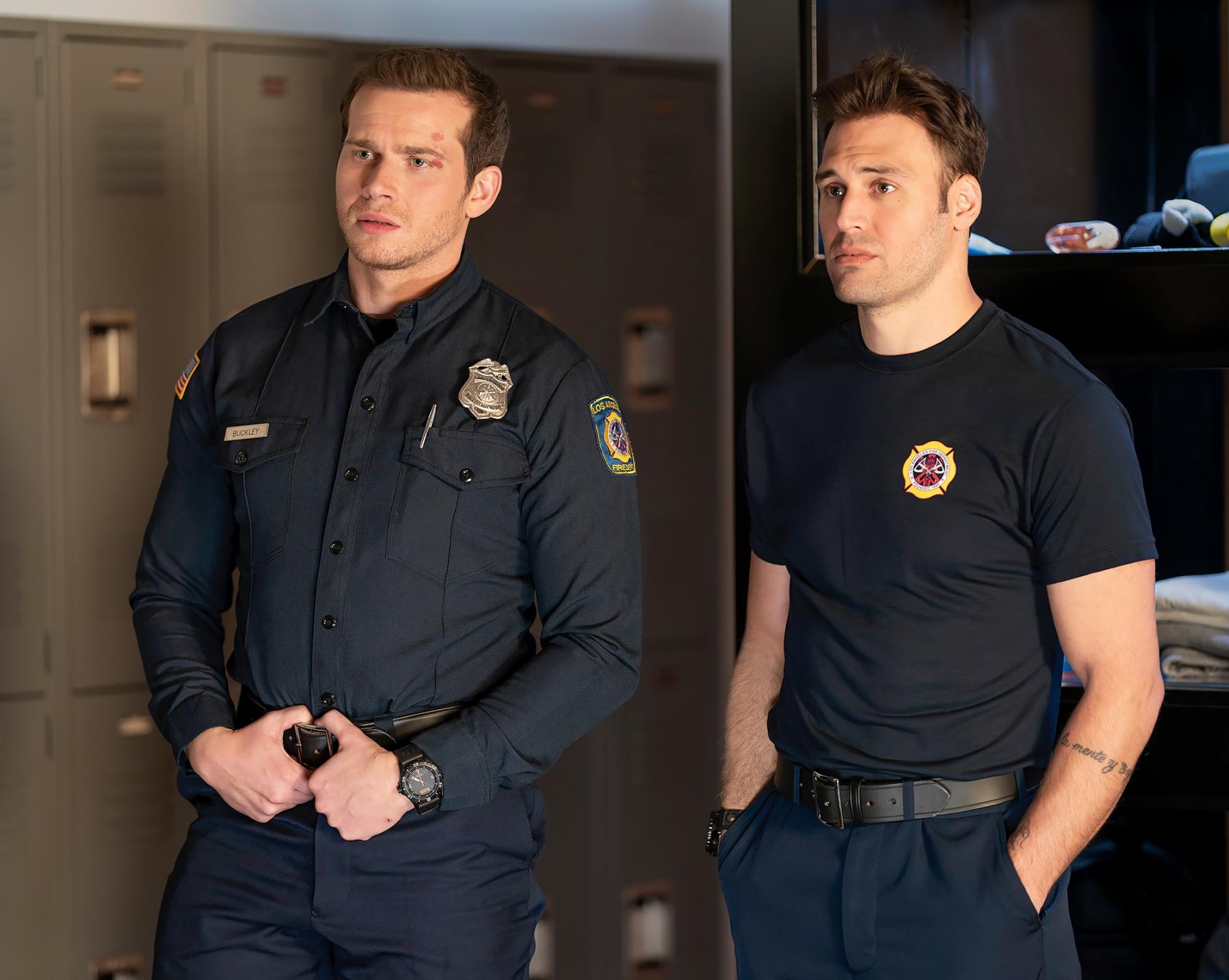
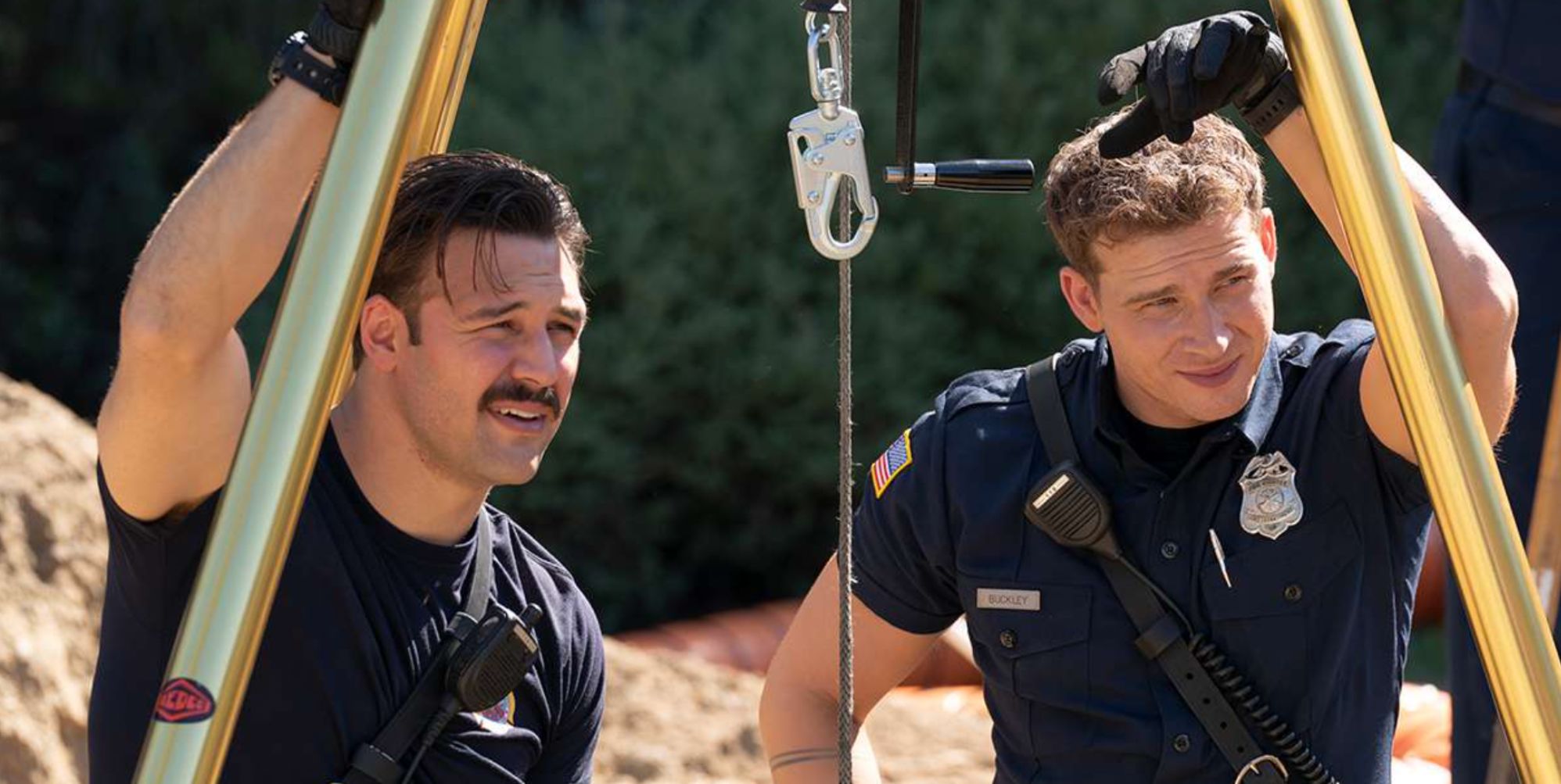
In the high-stakes procedural drama 9-1-1, firefighters Evan "Buck" Buckley and Edmundo "Eddie" Díaz of Los Angeles Fire Department (LAFD) Station 118 deliver some of television's most intense, physics-defying rescue operations. Their operational synergy combines military tactical precision with instinctive physical bravery, driving the show's most memorable high-octane emergency sequences.
The Tactical Mechanics Behind the Buck and Eddie Dynamic
The dynamic between Evan "Buck" Buckley (Oliver Stark) and Edmundo "Eddie" Díaz (Ryan Guzman) forms the operational backbone of Station 118’s heavy rescue unit. Introduced in the show’s second season, Eddie brought a disciplined, combat-tested background as a former U.S. Army medic who earned a Silver Star in Afghanistan. This military rigor directly counterbalances Buck’s high-energy, emotionally driven, and often unorthodox problem-solving style on rescue scenes.
In high-risk emergency response, split-second decisions dictate survival. Buck and Eddie operate with a high degree of non-verbal tactical communication, often anticipating each other's movements during complex technical extractions. While Captain Bobby Nash (Peter Krause) manages command logistics from the incident platform, Buck and Eddie routinely execute the direct-contact maneuvers: high-angle rope rappels, confined-space breaches, heavy vehicle extrications, and hazardous material isolations.
Their field dynamic relies on a precise balance of roles:
- Tactical Assessment and Triage: Eddie frequently leads immediate field medicine decisions, applying battlefield triage protocols under severe environmental stress.
- Physical Execution and Adaptability: Buck utilizes his superior physical reach and structural intuition, taking point on heavy lifting, mechanical breaching, and improvisational rigging.
- Mutual Redundancy: Both firefighters are cross-trained to cover each other's vulnerabilities instantly. If one is compromised by environmental collapse or equipment failure, the other transitions without delay into a single-operator rapid intervention team.
This dual-operator efficiency isn't merely a character trait; it is a recurring structural motif throughout the series. When an emergency escalates into catastrophe, the narrative relies on their mutual trust to ground the absurd scale of LAFD rescue scenarios in realistic physical stakes.
Key High-Stakes Emergency Sequences: A Deep Dive Into Their Greatest Field Ops
Over the course of eight seasons, 9-1-1 has subjected Station 118 to massive natural disasters, violent criminal disruptions, and bizarre freak accidents. Within these broad narratives, specific rescues stand out as definitive demonstrations of Buck and Eddie's field action capabilities.
- [Incident Command / Captain Bobby Nash]
- [Eddie Díaz: Triage & Medic]
- [Buck Buckley: Heavy Extraction]
- [Tactical Field Execution]
The Subterranean Well Rescue ("Eddie Begins", Season 3, Episode 15)
During a severe rainstorm, an illegal subterranean well shaft collapses, trapping a young boy deep underground. When Eddie lowers himself into the narrow conduit to complete the rescue, a sudden flash mudslide buries the pipe, cutting off his oxygen supply and communications line.
The sequence highlights two distinct phases of high-stress operation. Below ground, Eddie relies on survival breathing techniques and technical rigging despite rising water levels. Above ground, Buck refuses to abandon the rescue point despite direct orders to retreat due to lightning hazards. Buck mobilizes heavy machinery, then abandons the equipment to dig through saturated mud with his hands to re-establish a breathing path. The episode illustrates their bond under environmental pressure, proving that their field performance is tied directly to an absolute refusal to leave a partner behind.
The Active Sniper Ambush ("Survivors", Season 4, Episode 14)
One of the most intense action sequences in the show's history occurs when a sniper targeting first responders shoots Eddie in broad daylight in the middle of a residential intersection. As Eddie lies bleeding on open asphalt with an active threat holding the high ground, standard emergency protocols dictate establishing a defensive perimeter before entering the hot zone.
Buck ignores passive staging procedures to perform an immediate hot-zone extraction. Utilizing the engine truck's frame as mobile kinetic armor, Buck crawls into the line of fire, reaches Eddie, and drags his wounded partner into the interior of the fire engine. Inside the moving vehicle, Buck transitions immediately to direct pressure hemorrhage control while coordinating emergency transit to a trauma center. The sequence captures the visceral intensity of tactical medicine under live fire, emphasizing high-velocity physical action combined with acute emotional vulnerability.
The Santa Monica Tsunami Emergency (Season 3, Episodes 2–3)
When a massive ocean trench earthquake triggers a tsunami that inundates the Santa Monica Pier, Buck and Eddie are separated during a off-duty afternoon. Buck finds himself caught in the initial wave surge with Eddie's young son, Christopher.
While Eddie works high-water rescue operations with the rest of Station 118 across flooded city blocks, Buck navigates a sub-urban aquatic war zone. Buck uses debris as improvised flotation devices, scaling stranded fire engines and submerged structures to protect Christopher from secondary surges and contaminated floodwaters. The post-tsunami cleanup sequences bring Buck and Eddie back together to conduct structural searches in unstable, waterlogged buildings, demonstrating how their personal ties motivate exceptional technical endurance during widespread disasters.
The Aerial Ladder Lightning Strike ("In a Flash", Season 6, Episode 10)
During a severe dry-lightning storm over Los Angeles, Station 118 responds to an apartment fire. While operating at the tip of the extended aerial ladder truck, Buck is struck directly by a bolt of lightning, causing immediate cardiac arrest and leaving him suspended high above the scene in his fall harness.
Eddie’s immediate response showcases high-angle rescue protocols executed at maximum speed. Unhooking his own safety lines, Eddie scales the elevated aerial ladder, manually releases Buck’s locking carabiners, and lowers his unconscious partner down to the ladder turntable. Without waiting for ambulance transport, Eddie initiates manual chest compressions on top of the truck engine. The scene is a masterclass in realistic high-angle emergency procedures combined with raw adrenaline, underscoring Eddie's technical control under extreme psychological distress.
Comparative Breakdown of Iconic Station 118 Rescue Operations
The table below breaks down the structural elements, tactical challenges, and primary physical maneuvers performed by Buck and Eddie across major multi-episode disaster arcs and standalone rescue highlights:
| Season & Episode | Disaster / Hazard Category | Primary Tactical Challenge | Key Buck & Eddie Field Synergy |
|---|---|---|---|
| Season 2, Ep 18 ("Life Longers") | Structural Collapse / Heavy Machinery | Industrial rescue requiring rapid hydraulic tool placement under shifting loads. | Buck holds unstable debris while Eddie accesses a trapped victim's airway to place an endotracheal tube. |
| Season 3, Ep 15 ("Eddie Begins") | Confined Space / Mudslide Collapse | Sub-surface asphyxia hazard, structural instability of non-reinforced soil well. | Eddie executes narrow-bore entry; Buck leads manual excavation and emergency air line clearance after cave-in. |
| Season 4, Ep 14 ("Survivors") | Active Shooter / Ballistic Hazard | Open-field retrieval under sustained rifle fire without tactical armor coverage. | Buck conducts vehicle-shielded rescue crawl; Eddie performs self-triage until Buck secures vehicle interior. |
| Season 5, Ep 8 ("Defend in Place") | Hospital Explosion / Structure Fire | Escalating interior gas explosions, power grid failure, vulnerable patient evacuation. | Combined dual-operator breach through reinforced doors to evacuate ICU patients down darkened stairwells. |
| Season 6, Ep 10 ("In a Flash") | Electrical Hazard / High-Angle Fall | High-voltage strike on aerial ladder, suspended unconscious victim in mid-air. | Eddie completes elevated harness disengage, vertical lower-off, and high-intensity field CPR on engine roof. |
| Season 7, Ep 3 ("Capsized") | Maritime / Submerged Vessel | Capsized cruise ship in open ocean with inverted interior compartments and rising water. | Joint scuba/surface penetration through dynamic ship hull wreckage to rescue survivors before sink command. |
Behind the Stunts: Physicality and Production Design in 9-1-1
The visual impact of Buck and Eddie's rescue scenes relies heavily on a synthesis of specialized stunt work, practical rigging, and technical advisement from real-world first responders. The production team of 9-1-1 routinely works alongside active and retired members of the Los Angeles Fire Department to ensure that heavy rescue tools, high-angle rope setups, and medical equipment are deployed accurately on screen.
Practical Rigging vs. Digital Enhancement
While large-scale natural disasters—such as the Season 3 tsunami or Season 7 cruise ship capsize—utilize sophisticated green-screen environments and visual effects (VFX), the core action sequences featuring Oliver Stark and Ryan Guzman emphasize practical stunts.
- Rope and Harness Systems: High-angle rescues off cliff sides or burning skyscrapers use real mechanical advantage rope systems (such as 3:1 pulley rigs) operated by professional stunt riggers.
- Hydraulics and Heavy Breaching: When Buck uses hydraulic spreaders (commonly known as the "Jaws of Life") to pry open crushed vehicle cabs, actors operate functional heavy machinery on set under controlled safety conditions.
- Fire and Thermal Effects: Interior fire sequences utilize controlled propane burner lines monitored by certified pyrotechnicians. The actors wear real, weighted turn-out gear (weighing anywhere from 40 to 60 pounds with SCBA tanks), adding realistic physical strain to their movements.
Physical Conditioning and Stunt Execution
Both Stark and Guzman perform a high percentage of their own physical stunts. Stark's background in martial arts and athletics allows him to handle intense physical maneuvers, such as breaching doors with battering rams or scaling structural scaffolding. Guzman's background as an MMA fighter informs Eddie's hand-to-hand movements, tactical entries, and physical stamina during grueling multi-day water tank shoots.
This physical investment translates directly to the screen. The visible fatigue, heavy breathing, and authentic handling of 70-millimeter fire hoses contribute to the grounded, visceral nature of their field action, even when the surrounding plot points stretch theatrical drama to its absolute limit.
The Cultural Impact of the "Buddie" Dynamic on Modern Action Television
Beyond the tactical gear and structural fires, the onscreen chemistry between Buck and Eddie—frequently dubbed "Buddie" by the global television fanbase—has become a major narrative driver for 9-1-1. Their relationship subverts traditional male action-hero tropes in television procedurals.
Traditionally, action procedurals present partner dynamics through rigid archetypes: the stoic veteran and the reckless rookie, or rivals who clash until crisis strikes. Buck and Eddie present a modern evolution of the buddy-cop or firefighter duo:
- Vulnerability Alongside Physical Prowess: Their intense physical action scenes are balanced by immediate emotional transparency. Neither character hesitates to show fear, grief, or physical exhaustion in front of the other.
- Shared Responsibility and Co-Parenting: The dynamic extends beyond the firehouse walls. Eddie trusting Buck with the safety and legal guardianship of his son, Christopher, gives every high-stakes field rescue deeper narrative consequences. When Eddie is in danger, Buck isn't just saving a colleague; he is preserving a family unit.
- Subverting Hyper-Masculinity: In high-stress scenarios where traditional characters might display aggressive bravado, Buck and Eddie prioritize caretaking, precise communication, and mutual reliance.
This unique blending of intense, movie-quality action sequences with deeply layered emotional partnership has allowed 9-1-1 to retain high viewership ratings across network migrations (from FOX to ABC) and remain a dominant topic in television fan culture.
Frequently Asked Questions About Buck and Eddie’s Rescue Action
Which episode features Eddie getting trapped in a subterranean well?
Eddie becomes trapped underground in Season 3, Episode 15, titled "Eddie Begins." The episode explores Eddie's backstory in Afghanistan while detailing a real-time rescue effort led by Buck during a torrential downpour in Los Angeles.
Does Oliver Stark or Ryan Guzman use stunt doubles during major action scenes?
While professional stunt doubles perform extreme high-fall or high-impact explosion sequences for safety reasons, both Oliver Stark and Ryan Guzman execute a majority of their own physical action. They undergo specialized training to handle real LAFD heavy tools, rope harnesses, and water-tank sequences.
What is the context behind Buck dragging Eddie under sniper fire?
In the Season 4 finale titled "Survivors," a sniper targets LAFD first responders. Eddie is shot in the chest while standing in an intersection. Buck uses their engine truck as a physical shield, crawling out into open fire to pull Eddie inside and administer emergency trauma care.
How does Eddie’s military background affect his firefighter rescue style?
Eddie served as a combat medic in the U.S. Army, earning a Silver Star. This gives him advanced field triage capabilities, a high tolerance for operational chaos, and a calm tactical mindset during catastrophic structural collapses, which balances Buck's more intuitive and physical rescue approach.
What heavy equipment do Buck and Eddie typically operate during rescues?
Buck and Eddie frequently operate hydraulic rescue tools (spreaders, cutters, and rams), high-angle rescue rope systems, thermal imaging cameras for structural search-and-rescue, and specialized SCBA (Self-Contained Breathing Apparatus) gear for hazardous atmosphere operations.
Tracking Station 118’s Top Action Sequences
For viewers and analysts looking to study the evolution of action choreography, practical stunt work, and character dynamics in 9-1-1, focusing on key thematic multi-episode arcs provides the best viewing path.
To experience Buck and Eddie's rescue operations at their peak, stream the following core episode sequence in order:
- Season 2, Episode 1: "Under Pressure" (Introduction of Eddie and initial field friction).
- Season 3, Episodes 1–3: "Kids Today", "Sink or Swim", and "Searchers" (The Santa Monica Tsunami trilogy).
- Season 3, Episode 15: "Eddie Begins" (The subterranean well collapse).
- Season 4, Episodes 13–14: "Suspicion" and "Survivors" (The sniper crisis).
- Season 6, Episode 10: "In a Flash" (The ladder truck lightning strike).
- Season 7, Episodes 1–3: "Capsized" arc (Offshore maritime rescue operations).
By following these specific episodes, fans can track how technical stunt coordination, character trust, and high-concept physical production have combined to make Buck and Eddie one of the most compelling emergency response duos in contemporary network television.