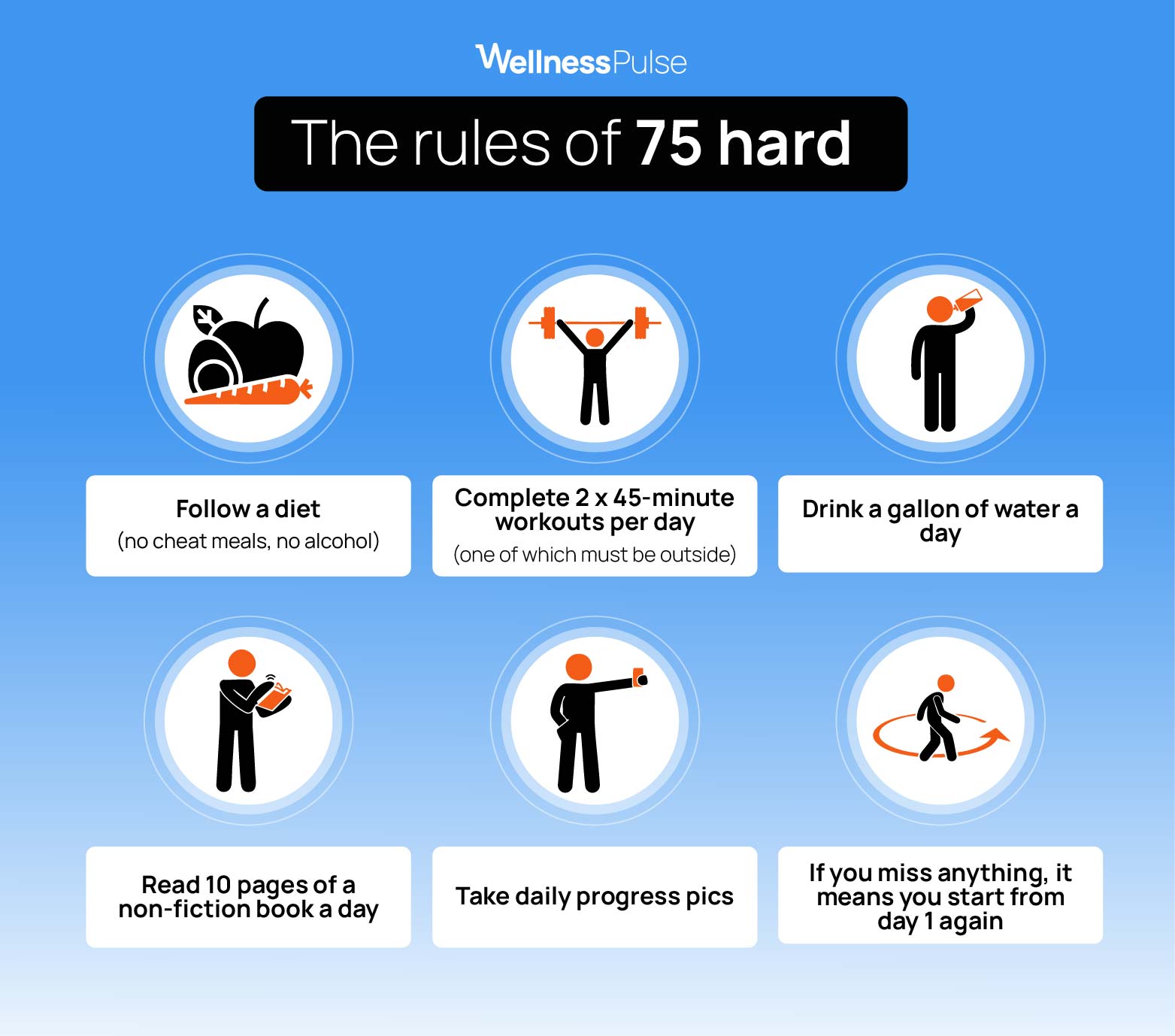
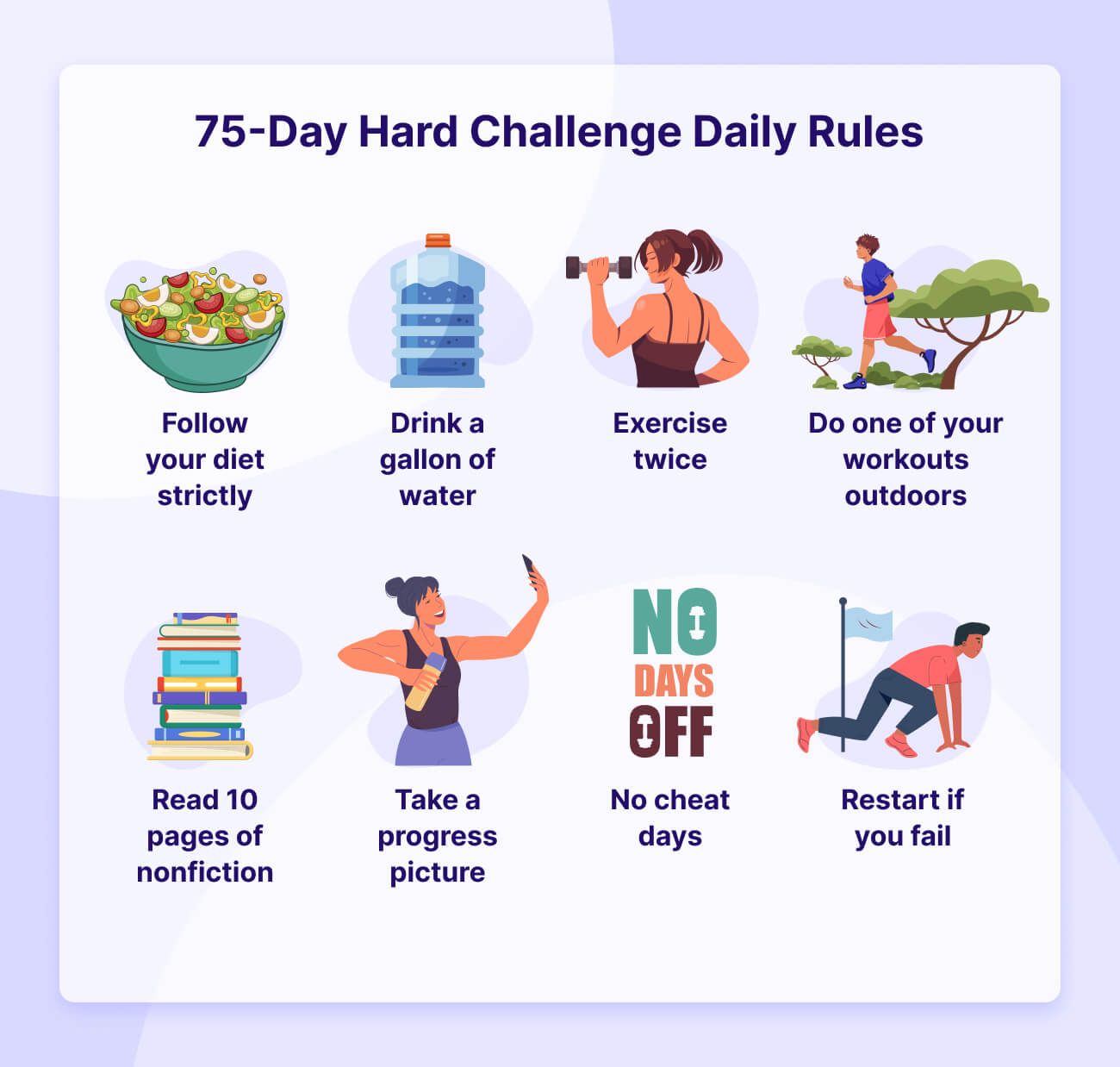
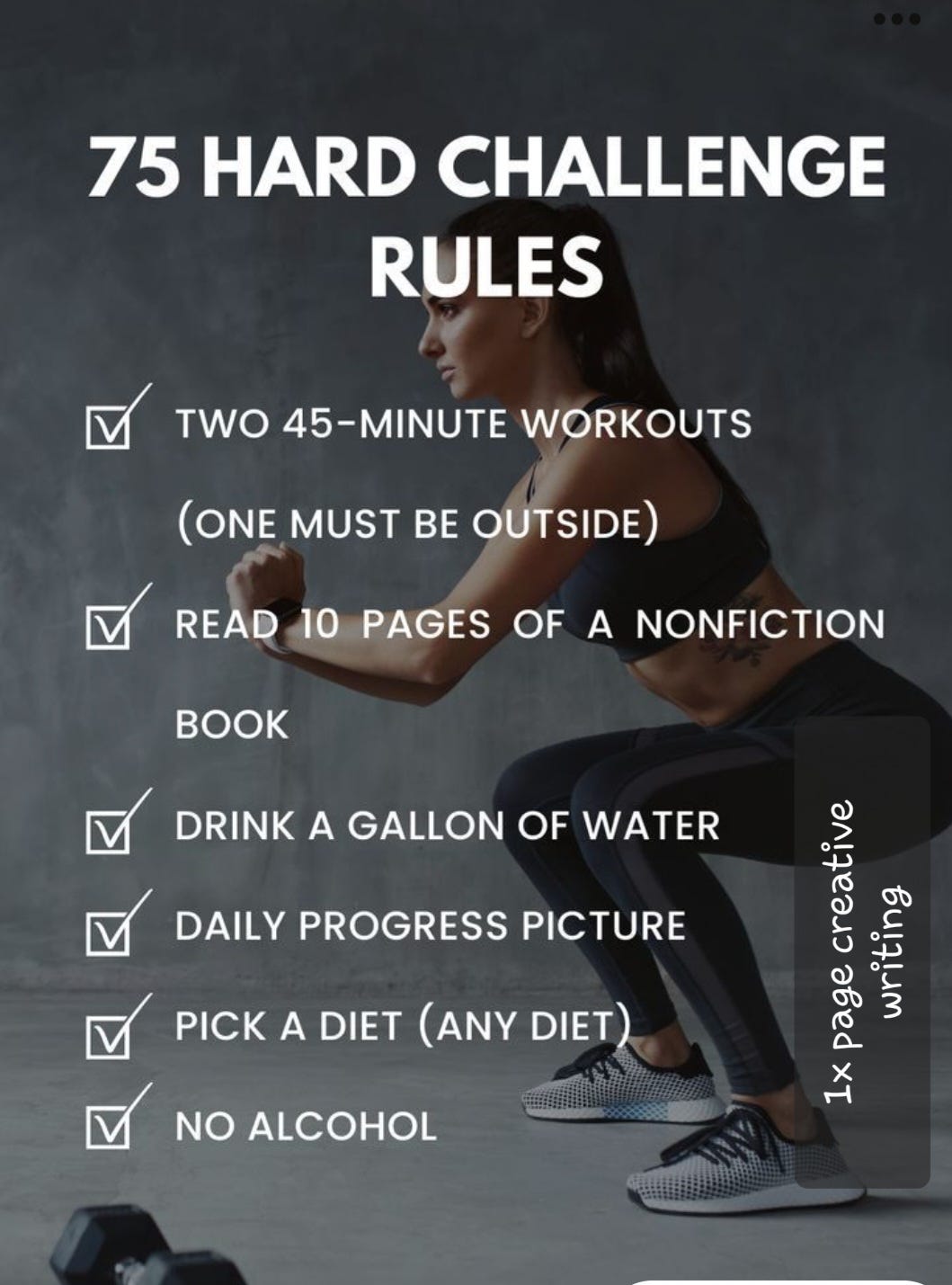
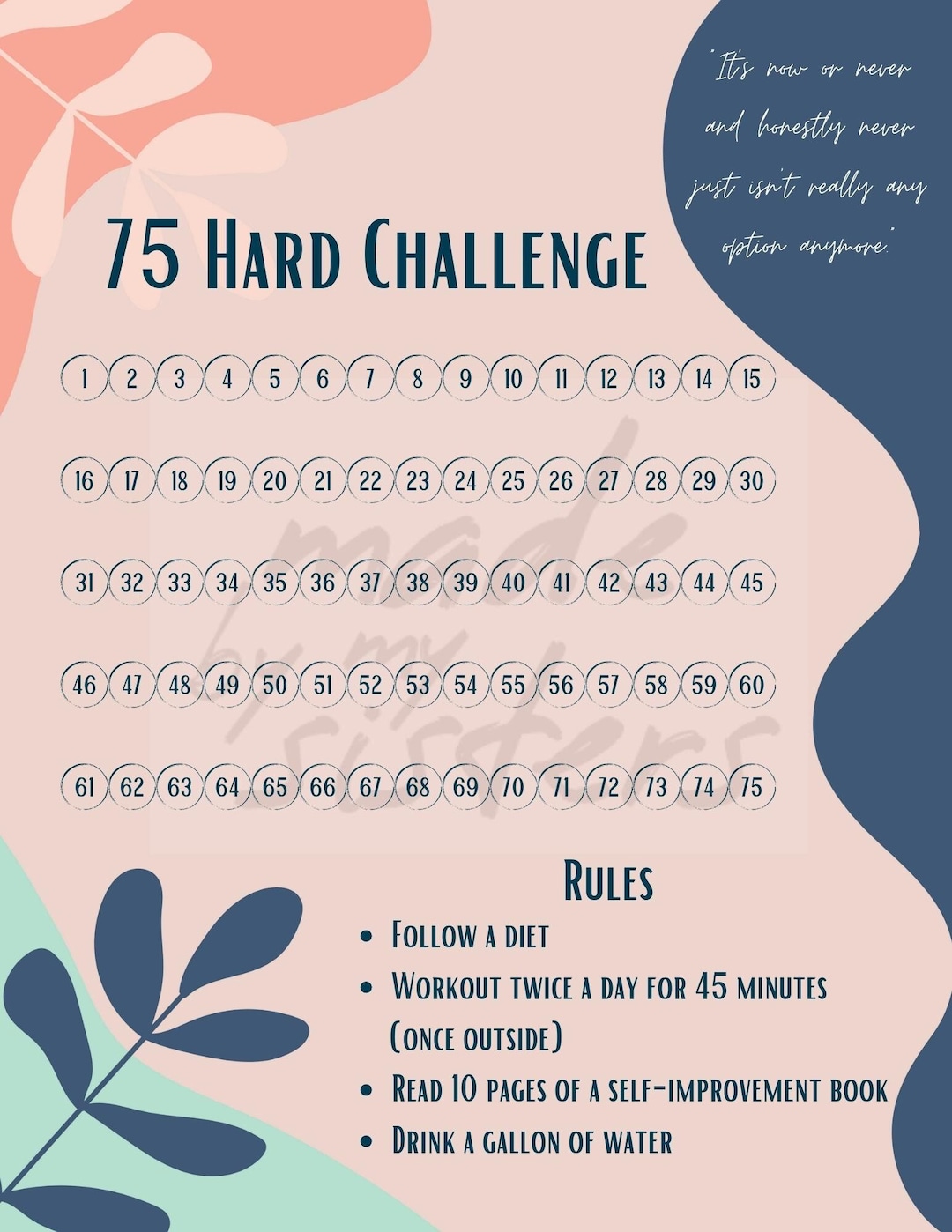
The 75 Hard challenge is a rigorous 75-day "mental toughness program" designed by entrepreneur Andy Frisella to build discipline, grit, and physical fitness. To complete it, you must perform five specific tasks every day without fail: follow a diet, complete two 45-minute workouts (one outdoors), drink a gallon of water, read ten pages of non-fiction, and take a progress photo.
Understanding the 75 Hard Program in 2026
As of 2026, the 75 Hard challenge remains one of the most prominent self-improvement protocols in the world, having evolved from a viral social media trend into a foundational "reset" tool for high performers. While it is often categorized alongside weight-loss challenges or fitness transformations, its creator, Andy Frisella, emphasizes that it is primarily a program for your brain. The physical changes—which are often significant—are considered a secondary byproduct of the mental discipline required to stay consistent for over two months.
The philosophy behind 75 Hard is centered on the concept of "zero compromises." In a world where convenience and shortcuts are the norm, this program forces individuals to confront the "bitch voice" (as Frisella calls it)—the internal monologue that encourages procrastination and quitting. By removing all gray areas and requiring an immediate restart if a single task is missed, the program aims to rewire the participant’s relationship with discomfort and accountability.
While many similar challenges allow for "active recovery" days or "cheat meals," 75 Hard is binary: you either did the work, or you didn't. This uncompromising structure is why the program is often polarizing. Critics point to the risks of overtraining or the lack of scientific customization, while proponents argue that the lack of flexibility is exactly what builds the "mental callus" necessary for long-term success in business and life.
The Five Critical Pillars of 75 Hard
To officially complete 75 Hard, you must perform five tasks every single day for 75 consecutive days. If you miss even one task, or if you perform a task incorrectly (e.g., your outdoor workout was only 40 minutes), the rules state you must return to Day 1 immediately.
1. Follow a Structured Diet and No Alcohol
You must choose a diet that aligns with your goals—be it Keto, Paleo, Vegan, or a simple caloric deficit—and follow it perfectly. There are two absolute "no-go" zones: you cannot have any "cheat meals" and you cannot consume a single drop of alcohol. In 2026, many participants use precision nutrition apps to track macros, but the specific diet is less important than the commitment to stick to it without deviation. The "no alcohol" rule is particularly significant, as it removes a common social crutch and forces participants to find other ways to manage stress and social pressure.
2. Two 45-Minute Workouts
Participants must complete two separate 45-minute workouts every day. The most famous caveat is that one of these workouts must be performed outdoors, regardless of the weather. Whether it is a blizzard, a heatwave, or a thunderstorm, the outdoor element is non-negotiable. This is designed to teach you that your environment does not dictate your performance. The workouts do not have to be high-intensity; a brisk 45-minute walk counts, provided it is dedicated exercise time. Crucially, the two workouts must be separate sessions, typically spaced at least 3-4 hours apart, rather than one 90-minute block.
3. Drink One Gallon of Water
You must consume 128 ounces (approximately 3.78 liters) of plain water every day. This task is often the most deceptively difficult. It requires constant monitoring of intake throughout the day to avoid a situation where you are drinking 40 ounces at midnight just to finish. Note that the rule specifies plain water; tea, coffee, or flavored "wellness" powders do not count toward your gallon total.
4. Read 10 Pages of Non-Fiction
Every day, you must read at least 10 pages of a physical book or an E-reader (audiobooks do not count). The book must be non-fiction, specifically in the realms of self-improvement, business, philosophy, biography, or technical skills. This pillar ensures that while you are training your body, you are also feeding your mind with constructive information.
5. Take a Daily Progress Photo
This is the task most likely to be forgotten. You must take a photo of yourself every day. While it tracks physical changes, its primary purpose is to build the habit of documenting progress and paying attention to detail. Forgetting the photo on Day 74 is a common reason participants are forced to restart the entire challenge.
Comparative Overview: 75 Hard vs. Variants
Over the years, several variations of the challenge have emerged to accommodate different fitness levels or schedules. However, only the "Hard" version is considered the true mental toughness test.
| Feature | 75 Hard (Original) | 75 Soft (Modified) | 75 Medium (Modified) |
|---|---|---|---|
| Workouts | 2x 45 min (1 Outdoors) | 1x 45 min (Anywhere) | 2x 45 min (1 Outdoors) |
| Diet | Strict (No Cheats) | Healthy Eating | Strict (No Cheats) |
| Alcohol | Zero Tolerance | Occasional (Socially) | Zero Tolerance |
| Water | 1 Gallon | 3 Liters | 1 Gallon |
| Reading | 10 Pages Non-Fiction | 10 Pages (Any Genre) | 10 Pages Non-Fiction |
| Restart Rule | Fail = Day 1 | Flexible | Fail = Day 1 |
Strategic Planning: How to Complete the 75 Hard Challenge
Successfully finishing 75 Hard requires more than just willpower; it requires a logistical strategy. Most failures happen not because of physical exhaustion, but because of a lack of planning.
Master Your Schedule
The biggest hurdle is the 90 minutes of total workout time plus the time required for showering and commuting. To succeed, most participants find it necessary to complete the first workout (usually the outdoor one) early in the morning. This ensures that even if the day becomes chaotic, you only have one session left. Waiting until 8:00 PM to start your first workout is a recipe for failure, especially if it starts to rain or you are exhausted from work.
The Water Logistics
Drinking a gallon of water can lead to frequent bathroom breaks, which can disrupt a work day. Strategic timing involves drinking about 75% of your water before 4:00 PM. This prevents you from having to choose between failing the challenge or losing a night of sleep due to waking up every hour to use the restroom.
Pre-Selecting Your Reading List
Do not wait until you finish one book to find the next. By Day 20, the novelty of the challenge often wears off, and the friction of finding a new "educational" book can lead to a missed day. Prepare a stack of at least 3-5 books before you start Day 1. This keeps the momentum going and removes a decision-making hurdle.
Common Pitfalls and Why People Fail
The "restart" rule is the defining characteristic of 75 Hard. Understanding the most common "Day 1" triggers can help you avoid them.
- The "Cheat" Definition: People often fail because they didn't define their diet strictly enough. For example, if your diet is "no processed sugar," and you eat a piece of fruit leather that has added cane sugar, you have technically failed. Decide on your "clean" parameters before you start.
- The Progress Photo: Many people set a daily alarm specifically for the photo. It is the easiest task to overlook because it takes the least amount of effort. Coupling the photo with a permanent habit—like taking it immediately after your first workout—is a common success strategy.
- The Outdoor Requirement: Some participants attempt to "cheat" the outdoor rule by working out in an open-air garage or under a covered patio during rain. According to the program’s community standards, you must be exposed to the elements. If you aren't "in" the weather, it doesn't count.
- Injury and Overtraining: Attempting two high-intensity interval training (HIIT) sessions every day for 75 days will likely lead to injury. Successful finishers often alternate a high-intensity session (lifting, running) with a low-intensity session (walking, yoga, mobility work) to allow the body to recover while still hitting the 45-minute time requirement.
Health and Safety Considerations
While 75 Hard is a mental challenge, it places significant physical stress on the body. It is essential to consult with a medical professional before starting, particularly regarding the gallon of water and the lack of rest days.
Water Toxicity (Hyponatremia): Drinking a gallon of water is generally safe for healthy adults, but if consumed too quickly without adequate electrolyte intake (sodium, potassium, magnesium), it can lead to hyponatremia—a dangerous dilution of sodium in the blood. It is vital to spread water consumption throughout the day rather than "chugging" it in large volumes.
Overtraining Syndrome: Since there are no rest days, your "active recovery" must be built into the 45-minute blocks. If you experience chronic fatigue, persistent muscle soreness, or a resting heart rate that is significantly higher than usual, you may need to pivot your workouts to very low-intensity activities like stretching or slow walking to avoid long-term hormonal or physical damage.
Life After 75 Hard: The Live Hard Program
Completing the 75 days is a massive achievement, but for many, it is just the first step. Frisella designed a full year-long program called "Live Hard," which includes 75 Hard as the foundation, followed by three additional phases:
- Phase 1: 30 days of the original rules plus a 5-minute cold shower, 10 minutes of dedicated visualization, and three "power list" tasks.
- Phase 2: A 30-day "break" to practice the habits without the restart pressure (though many choose to keep the habits), followed by another 30-day stint of the original rules.
- Phase 3: The final 30 days leading up to the one-year anniversary of your Day 1. This includes all previous rules plus a requirement to perform a "random act of kindness."
Launching Your 75 Hard Journey
If you are ready to start, the best next action is to audit your next 75 days. Look for weddings, vacations, or major work deadlines. While the point of the challenge is that there is "no perfect time," being aware of these hurdles allows you to plan your workouts and meals in advance.
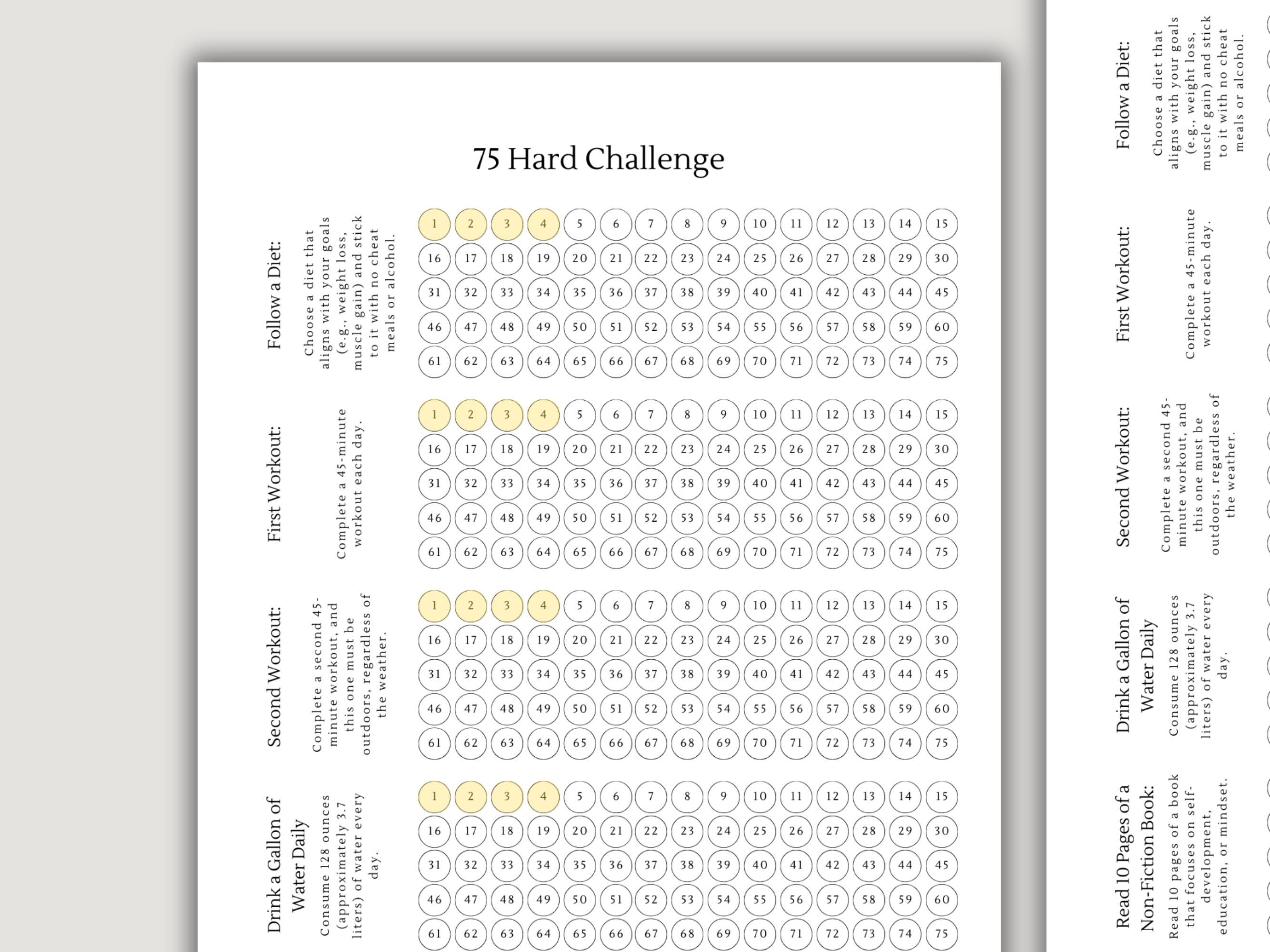
Download a dedicated tracking app or buy a physical calendar to mark off your days. The visual satisfaction of seeing a streak of "X" marks is a powerful psychological tool. Remember, the goal isn't to be perfect for 75 days; it’s to prove to yourself that you are the type of person who keeps the promises you make to yourself.
Frequently Asked Questions
Can I do my two workouts back-to-back?
No. The rules of 75 Hard require two separate 45-minute sessions. While there is no official "minute count" for the break, the general consensus among the community and the creator is that they must be distinct blocks of time, usually separated by at least 3-4 hours, to force you to manage your schedule twice.
What happens if I miss the progress photo but do everything else?
You must restart at Day 1. The challenge is about attention to detail and discipline, not just fitness. Missing the easiest task is considered a failure of focus, which is what the program aims to correct.
Does "no alcohol" include cooking with wine?
Strictly speaking, the "no alcohol" rule applies to consumption. While some argue that alcohol burns off during cooking, most "75 Hard" purists avoid it entirely to prevent any ambiguity. If you want to be 100% compliant, avoid food prepared with alcohol.
Can I read a digital book like a Kindle?
Yes, E-readers are allowed as long as you are reading the text. However, audiobooks and "summary" apps (like Blinkist) are strictly prohibited. The task is about the discipline of focused, manual reading.