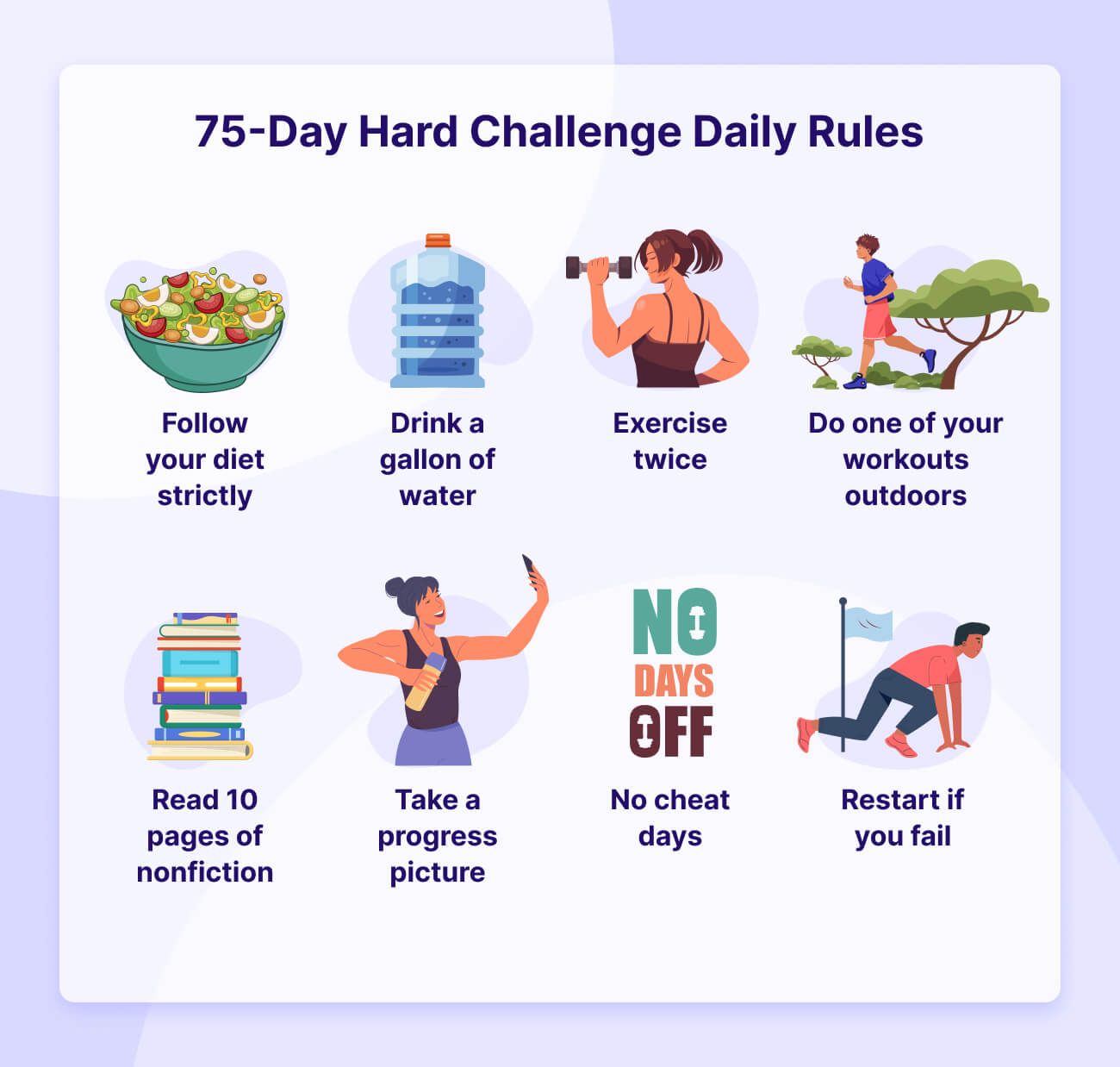
The 70 Day Hard Challenge is a structured, high-intensity self-improvement program designed to foster mental toughness, physical conditioning, and long-term habit formation. By adhering to a strict regimen of nutritional discipline, physical exertion, and cognitive tasks, participants seek to rewire their daily routines to achieve sustained personal growth and lasting performance improvements.
Defining the 70 Day Hard Challenge Framework
The 70 Day Hard Challenge is not a standardized medical or fitness protocol, but rather a structured framework built upon the principles of consistency and cumulative habit formation. Unlike short-term "quick fix" programs, this challenge emphasizes a 70-day window—approximately ten weeks—which is a period frequently cited in behavioral psychology as sufficient to begin internalizing significant lifestyle changes.
The core of the program rests on the integration of several non-negotiable daily tasks. Participants generally commit to a predefined set of actions that remain constant throughout the duration of the challenge. The objective is to remove decision fatigue by creating a rigid structure that forces the individual to prioritize their objectives regardless of external circumstances, such as work stress, travel, or social obligations. This "all or nothing" approach is intended to force a break from previous, less productive habits by replacing them with high-discipline alternatives.
Core Pillars of the Transformation
Transformation through this challenge is achieved by addressing three primary domains: physical health, nutritional intake, and cognitive discipline. Each pillar is designed to support the others, creating a feedback loop of improved recovery, increased energy levels, and enhanced mental clarity.
Physical Conditioning
The physical component typically mandates at least one, and often two, distinct exercise sessions per day. The rationale behind the dual-workout requirement is to encourage active recovery and maintain high levels of metabolic output. By splitting the training load, participants can maintain intensity without excessive strain, thereby reducing the risk of overtraining syndrome, which is a common pitfall in high-intensity programs.
Nutritional Discipline
Nutritional constraints are central to the 70-day window. Most iterations of this challenge require a clean-eating protocol, characterized by the exclusion of processed sugars, alcohol, and refined carbohydrates. This is not necessarily about caloric restriction, but rather about intentionality. By eliminating inflammatory and highly palatable processed foods, the body is forced to rely on whole-food energy sources, which often leads to improved blood glucose stability and sustained cognitive focus.
Cognitive Development
The challenge extends beyond the physical by requiring daily engagement in personal development. This typically involves reading a set number of pages from a non-fiction book or engaging in a specific mindfulness practice. The goal is to ensure that mental sharpening parallels physical conditioning, preventing the participant from becoming physically fit but intellectually stagnant.
Comparative Overview of Intensive Lifestyle Challenges
Understanding how the 70-day timeframe differs from shorter or longer interventions is crucial for setting realistic expectations. The following table highlights the structural nuances of intensive habit-change protocols.
| Feature | 30-Day Sprint | 70-Day Hard Challenge | 1-Year Lifestyle Change |
|---|---|---|---|
| Primary Goal | Habit Initiation | Behavioral Recalibration | Long-term Maintenance |
| Intensity Level | High | Very High | Moderate to High |
| Flexibility | Low | Minimal | Moderate |
| Focus | Short-term Shock | Systemic Transformation | Sustainable Integration |
| Sustainability | Difficult to maintain | Foundational for change | Natural progression |
Prerequisites and Preparation
Before embarking on the 70-day journey, it is essential to establish a baseline of readiness. This includes both physical and logistical preparation. First, individuals should consult with a healthcare professional to ensure that the increased physical output is appropriate for their current health status, especially if they have pre-existing cardiovascular or musculoskeletal conditions.
Logistically, success requires planning. This involves mapping out the 70 days, identifying potential obstacles—such as scheduled travel or major work events—and creating contingency plans for these scenarios. If the challenge requires specific meal preparation, dedicating time on weekends to shop and cook is a prerequisite for maintaining the nutritional discipline required during the week. Without this preparation, the probability of defaulting to convenience-based dietary choices increases, threatening the structural integrity of the challenge.
Navigating Challenges and Avoiding Burnout
The primary risk in any 70-day intensive program is the "mid-challenge dip," where the initial motivation fades and the reality of the daily requirements begins to feel like a burden. To navigate this, participants should adopt a strategy of "process over outcome." Instead of focusing on the 70-day finish line, the focus must remain strictly on the next 24 hours. By shortening the time horizon, the task becomes manageable, and the cumulative impact of these individual "wins" creates the necessary momentum to reach the end of the period.
Monitoring is another key to longevity. Keeping a daily tracker—whether digital or physical—provides visual evidence of adherence. This record-keeping serves two purposes: it provides a sense of accountability and acts as a diagnostic tool. If a participant misses a task, they can review their log to identify the specific trigger or bottleneck that led to the lapse, allowing them to troubleshoot the environment rather than blaming their own lack of willpower.
Common Mistakes to Avoid
- Neglecting Recovery: Attempting to sustain high-intensity workouts for 70 days without adequate sleep or active recovery will likely lead to injury. Sleep is not optional; it is a critical component of the physiological adaptation process.
- Extreme Caloric Deficits: Under-fueling can lead to performance degradation and hormonal imbalances. The goal is transformation through discipline, not starvation.
- Overcomplicating the Rules: The strength of the 70-day approach is its simplicity. Adding unnecessary complexity or changing the rules mid-way through undermines the cognitive training of the challenge.
- Ignoring Social Constraints: Failing to communicate the commitment to friends and family can create unnecessary friction. Setting clear boundaries regarding social gatherings and dietary needs is necessary for social and emotional sustainability.
Next Actions for Implementation
To begin the 70-day challenge effectively, start by documenting your specific "why." Defining the objective—whether it is body composition improvement, mental discipline, or productivity enhancement—provides the necessary anchor for when discipline wanes. Following this, create a static, printed checklist of your daily tasks and place it in a high-visibility area in your home. Execute a "dry run" for three days to troubleshoot your logistical setup, such as verifying your workout equipment and finalizing your meal prep routine. Once your processes are verified, designate your official Day 1 and commit to the full cycle with the understanding that the goal is the transformation of the process itself, not just the result of the days.