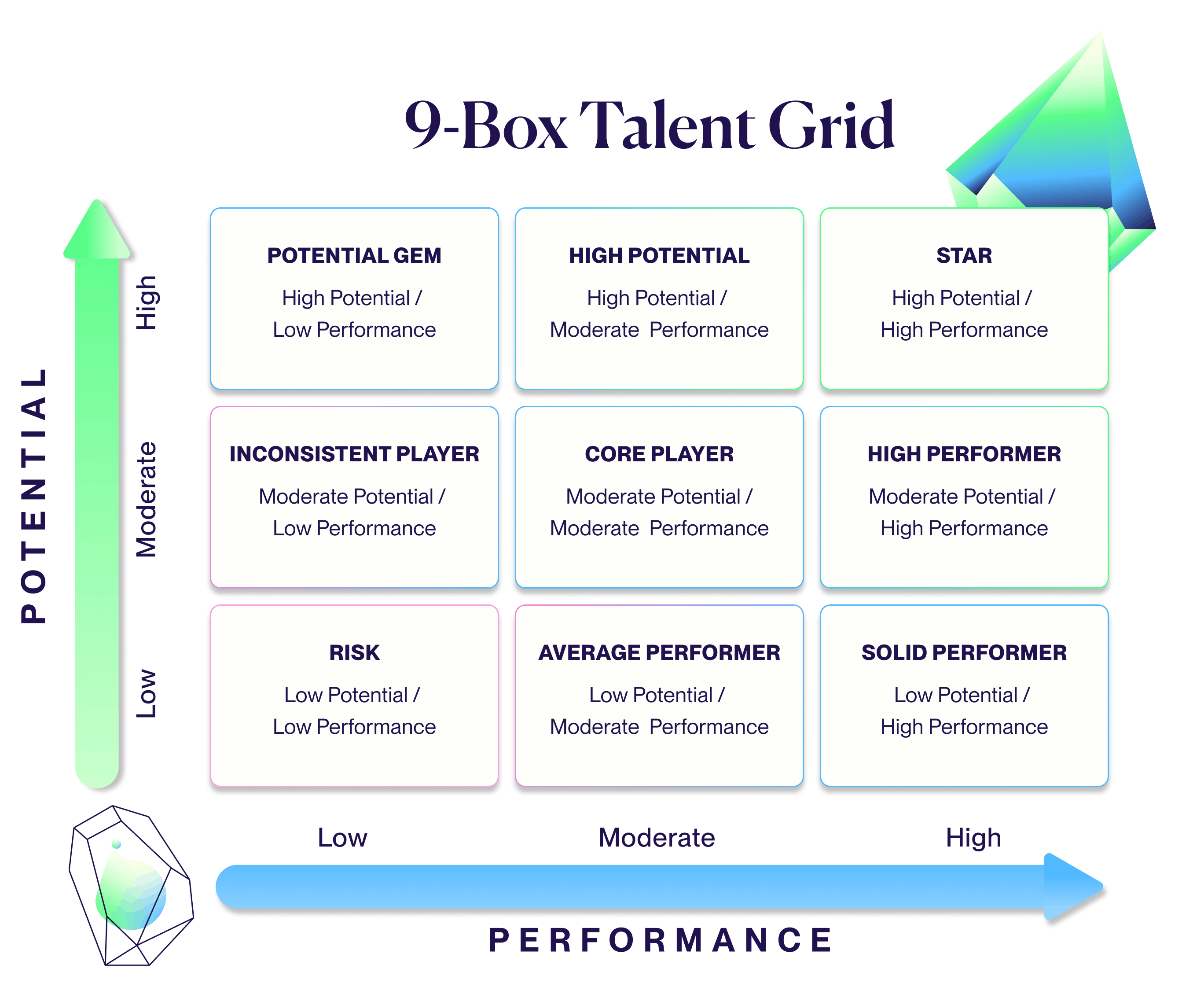
The 7-Box Model is a strategic talent management framework used by organizations to evaluate and categorize their workforce based on two primary dimensions: current performance and future potential. By streamlining the traditional 9-box grid, this model helps leadership teams identify high-potential successors, allocate development resources efficiently, and address performance issues with data-driven precision.
The Evolution of Talent Mapping: Why the 7-Box Model Dominates in 2026
For decades, the 9-box grid was the gold standard for succession planning. However, as of 2026, many global organizations have transitioned to the 7-box model to solve the "middle-box stagnation" problem. In the older 9-box system, managers frequently placed a disproportionate number of employees in the center box (Moderate Performance/Moderate Potential), which often led to a lack of actionable development for the majority of the workforce.
The 7-box model simplifies the matrix by removing the statistical outliers—specifically those rare cases of "High Potential/Low Performance" or "High Performance/Low Potential" that often require specialized HR intervention rather than standard talent tracking. By focusing on seven distinct categories, the model provides clearer "action lanes" for managers. It forces more rigorous differentiation during calibration meetings, ensuring that talent investment is directed where it will yield the highest return.
In the current business landscape, where agility and rapid upskilling are paramount, the 7-box framework allows for a more fluid movement of talent. It recognizes that in a decentralized, AI-integrated workplace, the distinction between a "Core Contributor" and a "Future Leader" needs to be sharper than ever before.
Defining the Two Axes: Performance vs. Potential
To implement the 7-box model effectively, an organization must have a shared, standardized definition of the two metrics that define the grid. Without these definitions, the model remains subjective and prone to manager bias.
The Performance Axis (Horizontal)
Performance is a retrospective metric. It measures how well an employee has met their defined KPIs, goals, and behavioral expectations over a specific period (usually the trailing 12 to 18 months). In 2026, performance measurement often includes not just quantitative output, but also "collaborative impact"—how effectively an employee utilizes internal AI tools and cross-functional networks to achieve results. Performance is generally categorized as:
- Below Expectations: Failing to meet core job requirements.
- Meets Expectations: Consistently delivering on goals.
- Exceeds Expectations: Regularly going beyond the scope of the role to deliver outsized value.
The Potential Axis (Vertical)
Potential is a prospective metric. It assesses an employee’s capacity to grow into a role of greater complexity, scale, or responsibility. Unlike performance, potential is not always visible in the current job description. It is measured through traits such as learning agility, emotional intelligence, strategic thinking, and the ability to thrive in ambiguity. HR professionals in 2026 use a combination of psychometric testing and behavioral observations to differentiate between an employee who is "great at their current job" and one who has the "runway" to lead a department.
Detailed Breakdown of the 7-Box Categories
The 7-box model typically organizes employees into a modified pyramid or a truncated grid. Below is the breakdown of each box and the management strategy associated with it.
1. The Superstars (High Potential / High Performance)
These are the organization’s most valuable assets. Superstars are individuals who consistently exceed their goals and demonstrate the capacity to move into C-suite or executive leadership roles within 1–2 years.
- Strategy: Heavy investment. Assign high-visibility projects, provide executive mentorship, and ensure their compensation is at the top of the market range to prevent poaching.
2. Future Leaders (High Potential / Moderate Performance)
Often composed of newer hires or individuals recently promoted, these employees show immense growth capacity but have not yet mastered the technical nuances of their current role to "Exceed" levels.
- Strategy: Targeted coaching and training. Focus on closing the performance gap so their output matches their potential. These individuals are the "bench strength" for the future.
3. High Achievers (Moderate Potential / High Performance)
These are your Subject Matter Experts (SMEs). They are exceptionally good at what they do and are often the most productive members of the team. However, they may have reached their "ceiling" in terms of leadership or may not have the desire to move into management.
- Strategy: Retention and recognition. Do not force them into leadership roles they don't want. Instead, give them lateral growth opportunities, such as lead technical roles or internal consulting positions.
4. Core Contributors (Moderate Potential / Moderate Performance)
The "engine room" of the company. These employees meet expectations and have some room for growth within their current level or the one immediately above it.
- Strategy: Continuous development. Provide steady feedback and ensure they feel valued. The goal is to keep them engaged and prevent them from slipping into the lower boxes.
5. Solid Professionals (Low Potential / High Performance)
These individuals are masters of their current domain but show little desire or ability to take on more complex responsibilities. They are reliable and stable.
- Strategy: Maintain engagement. These employees provide the stability an organization needs during times of change. Focus on keeping their skills current as technology evolves.
6. Developing Talent (Moderate-High Potential / Low Performance)
This is often a "transition" box. It contains individuals who might be in the wrong role, are struggling with a specific skill set, or are new to the workforce but show great promise.
- Strategy: Short-term intervention. Identify the root cause of the low performance. If it's a skill gap, provide training. If it's a culture fit, consider a lateral move to a different department.
7. Underperformers (Low Potential / Low Performance)
These individuals are not meeting the requirements of their current role and do not show the capacity to move up or improve significantly.
- Strategy: Performance Improvement Plan (PIP) or exit. In the 2026 labor market, retaining chronic underperformers is a risk to team morale and organizational velocity.
Comparison: 7-Box vs. 9-Box Talent Grids
| Feature | 9-Box Grid (Traditional) | 7-Box Model (Modern) |
|---|---|---|
| Complexity | High; 9 distinct quadrants. | Moderate; 7 distinct categories. |
| Middle-Box Bias | Significant; managers "hide" talent in the center. | Reduced; requires more specific categorization. |
| Actionability | Can be vague for mid-tier employees. | High; every box has a defined development path. |
| Suitability | Large, hierarchical legacy organizations. | Agile, flat, or tech-heavy organizations. |
| Focus | Balanced across all segments. | Weighted toward high-potential and core stability. |
| Review Time | Longer; often requires extensive debate on outliers. | Streamlined; focuses on high-impact talent decisions. |
Step-by-Step Implementation and Calibration
Successfully deploying the 7-box model requires more than just a software update; it requires a culture of radical transparency.
- Standardization of Criteria: Before any names are moved, leadership must agree on what "High Potential" looks like in the context of 2026. This often includes a "Learning Agility" score and a "Digital Fluency" assessment.
- Initial Manager Assessment: Direct managers place their team members in the boxes based on the previous year's performance data and their observations of potential.
- The Calibration Meeting: This is the most critical step. Leaders from across the department meet to review the placements. This peer-review process helps eliminate "grade inflation" (where a manager rates everyone as a Superstar) or "harshness bias."
- Developmental Mapping: Once the grid is finalized, HR and managers create specific action plans for each box. For example, the budget for external executive coaching is reserved for Boxes 1 and 2, while internal upskilling platforms are prioritized for Boxes 3 and 4.
- Communication: Managers must be trained on how to have "7-box conversations." Employees should ideally know where they stand and what is required to move to a different box.
Integrating AI and Predictive Analytics in 2026
In 2026, the 7-box model is rarely a static document. It is increasingly integrated with Human Capital Management (HCM) systems that use predictive analytics. AI can now analyze patterns in employee work—such as the complexity of tickets resolved, the sentiment of peer feedback, and the speed of skill acquisition—to suggest an initial placement in the grid.
These AI tools serve as a "bias check" for human managers. For instance, if a manager places an employee in Box 5 (Solid Professional), but the AI identifies that the employee has been rapidly completing advanced certifications and leading cross-functional Slack channels, the system flags a potential mismatch for the calibration meeting. This hybrid approach ensures that the 7-box model remains a fair and accurate reflection of the organization's true talent landscape.
Common Pitfalls and Troubleshooting
Despite its streamlined nature, the 7-box model is not immune to errors. One common mistake is using it as a "static label." An employee's position in the 7-box grid should be seen as a snapshot in time, not a permanent identity.
Another risk is the "Halo Effect," where a manager's overall positive impression of an employee influences all aspects of their rating, leading to them being placed in Box 1 when their performance metrics only justify Box 2. To troubleshoot this, organizations should use "multi-source feedback" (360-degree reviews) as a prerequisite for the calibration process. According to the Society for Human Resource Management (SHRM), multi-rater feedback significantly increases the perceived fairness of talent assessments.
Finally, legal compliance is essential. In many jurisdictions, talent mapping data can be discoverable in employment litigation. It is vital that the "Potential" scores are based on documented behaviors and objective assessments rather than "gut feelings," which can inadvertently hide systemic biases related to age, gender, or ethnicity.
Frequently Asked Questions
How often should the 7-box assessment be conducted?
In the current fast-paced environment of 2026, a bi-annual cadence is recommended. An annual review is often too slow to react to the rapid skill shifts required in modern industry, while quarterly reviews can become an administrative burden that leads to "survey fatigue" among management.
Is the 7-box model suitable for small businesses?
While designed for scale, small businesses can benefit from a simplified version. For teams under 20 people, the "calibration" might just be a conversation between the founder and a department lead, but using the 7-box categories still helps in making objective decisions about raises and promotions.
What is the difference between Box 3 (High Achiever) and Box 5 (Solid Professional)?
The primary difference is the level of performance and the "uniqueness" of the skill set. High Achievers typically "Exceed Expectations" and possess rare, high-value skills that are difficult to replace. Solid Professionals "Meet Expectations" and are highly reliable, but their roles may be more standardized.
Can an employee move from Box 7 to Box 1?
While theoretically possible, it is statistically rare. A move from Underperformer to Superstar usually requires a significant change in circumstances, such as a change in role, a new manager, or the resolution of a major external factor affecting the employee’s work.
How do we communicate 7-box results to employees?
Transparency is key. Organizations like Harvard Business Review suggest that while you may not show the physical "box" to every employee, you must communicate the themes of the assessment. An employee should leave a performance review knowing if they are viewed as a high-potential future leader or a core specialist.
Establish a Data-Driven Succession Pipeline
To get the most out of the 7-box model, your next step should be to audit your current performance data for "readiness." Ensure that your KPIs are objective and that your managers have been trained in recognizing "potential" traits. Start with a pilot program in one department to refine your box definitions before rolling the model out across the entire enterprise. By the end of 2026, the organizations that successfully move from subjective "feelings" about talent to a structured 7-box framework will be the ones that hold the competitive advantage in leadership depth and operational agility.