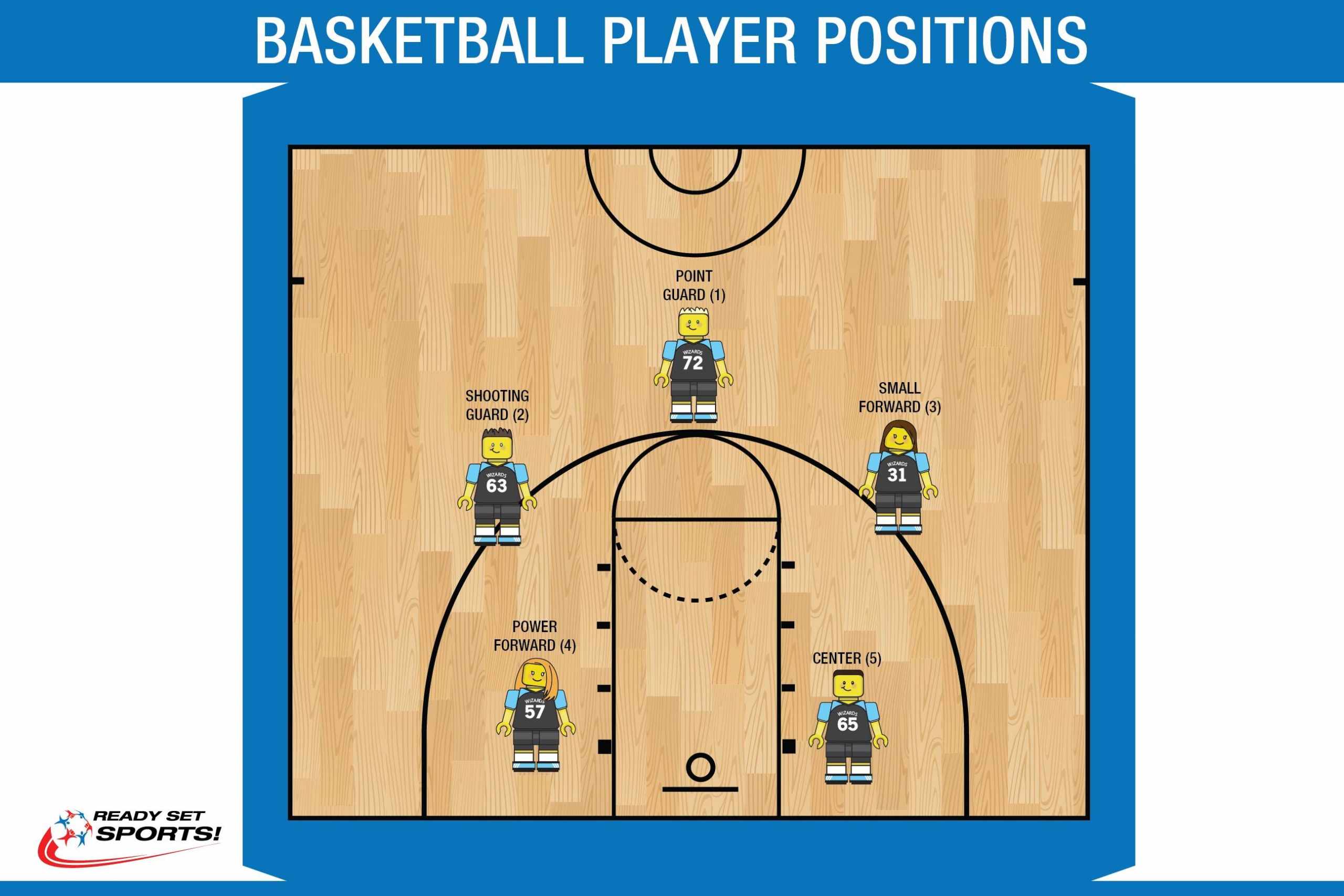
In basketball, a standing height of 6 feet 7 inches (2.01 meters) represents the ideal physical baseline for modern wing players and flexible forwards. Players at 6'7" possess the lateral quickness to defend perimeter guards alongside the structural length required to compete inside, making them essential assets in modern positionless offensive and defensive schemes.
The Positional Blueprint: Where 6'7" Players Fit on the Court
For decades, basketball hierarchy organized players strictly by height: guards were short, forwards were mid-sized, and centers were tall. In this rigid structure, a 6-foot-7 player occupied a specific niche as a classical small forward (the "3" position). However, as tactical philosophies evolved toward floor spacing, positional fluidity, and defensive switching, the 6'7" frame emerged as the single most adaptable physical prototype in elite basketball.
Depending on a player's athletic profile, skill set, and functional wingspan, a 6'7" athlete can fulfill multiple roles across the lineup.
- 6'7" Athlete Flexibility
- Point Forward (Jumbo Guard)
- Classic Wing (3-and-D)
- Small-Ball Center (Rim/Hub)
1. The Classic Small Forward (SF / Wing)
The traditional landing spot for a 6'7" athlete is the wing. At this height, a player enjoys a clear vision advantage over standard point guards and shooting guards (who historically range between 6'1" and 6'5"). A 6'7" small forward can shoot over smaller perimeter defenders, drive past heavier frontcourt players, and contest perimeter shots effectively.
2. The Modern Power Forward (PF / Stretch Four)
Prior to the 2010s, power forwards were expected to stand between 6'9" and 6'10" to contend for interior position and rebounds. In contemporary schemes, teams frequently deploy 6'7" players at power forward. These "stretch fours" draw slower, traditional interior defenders away from the paint by executing perimeter jump shots, creating driving lanes for teammates.
3. The Jumbo Guard / Point Forward
When a 6'7" player possesses advanced elite ball-handling, court vision, and decision-making capabilities, they shift into the role of a primary or secondary playmaker. Frequently designated as "jumbo guards" or "point forwards," these athletes initiate the offense, see over baseline double-teams, and posting up smaller point guards when mismatch opportunities arise.
4. The Small-Ball Center
In high-pace or high-switching defensive lineups, a physically robust 6'7" player with an elite wingspan (7'0" or greater) and high core strength can operate as a center. While yielding standing height to 7-footers, the 6'7" small-ball center neutralizes taller opponents by relying on lower-body strength, fronting post entries, pulling traditional rim protectors away from the basket on offense, and switching onto perimeter ball-handlers without dropping back.
Biomechanical Advantages and Physical Attributes
Standing 6'7" provides a unique mechanical equilibrium in athletic movement. While tall enough to affect shots at the rim and grab contested rebounds, players of this stature generally do not suffer from the leverage, balance, and coordination challenges that often affect 7-foot athletes.
| Biomechanical Advantage | Description |
|---|---|
| Center of Gravity | Maintains low posture for quick directional changes and perimeter defensive slides. |
| Wingspan Leverage | A typical 6'10"-7'2" reach creates elite pass deflection and rim-contesting surface area. |
| Kinematic Efficiency | Optimal joint angles allow fluid transition from sprinting to sudden decelerations. |
Center of Gravity and Lateral Speed
Biophysically, vertical height raises an athlete's center of gravity, which can reduce lateral deceleration speed and increase recovery time when changing direction. A 6'7" frame sits at a biomechanical sweet spot. It permits an athlete to maintain a low defensive stance, slide laterally against explosive guards, and maintain structural stability against post scorers without losing balance.
Wingspan vs. Barefoot Height
When evaluating a 6'7" basketball prospect, functional reach matters as much as barefoot standing height. In professional draft combine settings, official measurements distinguish between standing height (barefoot), height in shoes, standing reach, and wingspan:
- Barefoot Height: ~6'5.75" to 6'7"
- Height in Shoes: ~6 meast/6'7" to 6'8.5"
- Average Wingspan: 6'10" to 7'2"
- Standing Reach: 8 meast/8'7" to 8'11"
A 6'7" player with a neutral wingspan (6'7") plays significantly smaller than a 6'7" player with an extended wingspan (7'1"). Long wingspans amplify shot-blocking, entry-pass deflection, and dunking clearance without adding excess body mass that could slow down lateral agility.
Tactical Roles in Modern and Positionless Basketball
The modern game relies on spatial efficiency and versatility. The 6'7" frame serves as the anchor for several vital tactical concepts.
- Perimeter (Shooting & Driving)
- Defensive Switchability
- Floor Spacing
- Interior (Post-Up & Rebounding)
Defensive Switchability
Modern NBA, EuroLeague, and collegiate defenses rely heavily on "switching" screens to eliminate open pull-up three-pointers. When a point guard and center execute a pick-and-roll, defenses that switch must avoid creating severe mismatches. A 6'7" defender with high mobility allows a team to switch defensive assignments seamlessly across positions 1 through 4 (and occasionally 5), contesting perimeter shots while remaining strong enough to prevent post-up scoring inside.
The "3-and-D" Archetype
One of the most valuable player roles in elite basketball is the 3-and-D wing. These players specialize in hitting corner three-point shots to stretch the court on offense and guarding the opponent's primary perimeter scorer on defense. The 6'7" frame provides the perfect physical structure for this role, providing the elevation required to shoot cleanly over closing defenders while maintaining the stamina to track elite scorers through off-ball screens.
Secondary Playmaking and Short-Roll Execution
When primary ball-handlers face blitzing double-teams, they often pass out to the middle of the floor—the "short roll." A 6'7" player receiving the ball at the free-throw line operates with clear vision above collapsing guards. From this position, they can make quick reads: driving to the rim, executing an alley-opp pass to a center, or whipping a kick-out pass to a corner shooter.
Comparative Breakdown of 6'7" Player Archetypes
To understand how physical measurements translate to functional roles on the basketball court, consider how different 6'7" elite players utilize their physical traits to dominate specific positions.
| Player Profile | Primary Position | Primary Tactical Role | Key Physical Asset | Defensive Coverage |
|---|---|---|---|---|
| Defensive Anchor Wing | Small Forward (SF) | Lockdown perimeter defense, transition finishing, secondary scoring | Long wingspan (7 meast+), broad shoulders | Switches 1 through 4; guards primary ball-handlers |
| Jumbo Playmaker | Point Guard / SF | Primary initiation, post mismatches, interior rebound-and-run | High standing reach, low center of gravity | Guards perimeter; posts up smaller guards on offense |
| Versatile Interior Defender | Power Forward / Center | Small-ball rim protection, pick-and-roll switching, short-roll passing | Extreme wingspan (7'2"+), dense core strength | Switches 1 through 5; guards roll-men and post scorers |
| Perimeter Specialist (3-and-D) | Shooting Guard / SF | Corner floor spacing, off-ball tracking, perimeter contest | Vertical pop, lateral quickness | Guards perimeter wings (2 and 3); off-ball help defense |
Note: Historical and active player profiles (e.g., Scottie Pippen, Kawhi Leonard, Luka Dončić, Draymond Green) illustrate how athletes at the 6'7" height threshold manipulate leverage, skill, and wingspan to excel across distinct roles.
Challenges and Skill Development Priorities for 6'7" Athletes
Despite the tactical advantages of being 6'7", players of this height face distinct challenges throughout their developmental trajectory.
- 6'7" Development Risks & Solutions
- Risk: The "Tweener" Trap: Too slow for elite guards, too small for true centers.
- Solution: Dual-Threat Skillset: Perimeter Shooting + Interior Positional Leverage.
Navigating the "Tweener" Label
Historically, an undersized forward who was not quick enough to guard perimeter players and not tall enough to rebound against centers was negatively labeled a "tweener." To avoid this classification, a 6'7" prospect must build specialized skills:
- Elite Footwork: Developing quick drop-steps, lateral shuffles, and hip mobility to stay in front of explosive guards on the perimeter.
- Perimeter Shooting Consistency: Maintaining a high release point on jump shots to ensure effectiveness against taller closing defenders.
- Core Strength and Post Leverage: Using low pad level and lower-body strength to hold ground against 6'10"+ centers in the low post.
Rebounding Leverage Against Taller Opponents
When playing against traditional centers who stand 6'10" to 7 meast, a 6'7" player gives up 3 to 5 inches of raw standing reach. To win rebounding battles, the shorter player must rely on superior boxing-out technique:
- Establishing early contact before the ball hits the rim to move the taller player's center of mass back.
- Carving out lower-body positioning rather than trying to out-jump a taller athlete from a standstill.
- Reading shot trajectories early to attack the ball at the apex of their jump.
Evaluating Prospects and Training Protocols at 6'7"
Coaches, scouts, and performance trainers evaluate 6'7" athletes using specific performance metrics designed to maximize positional versatility.
| Priority | Objective |
|---|---|
| 1. Hip Mobility & Lateral Speed | Improves recovery time during defensive switches. |
| 2. Core Stability & Post Leverage | Prevents getting pushed off spots by true bigs. |
| 3. High Release Drop-Catch Shooting | Maximizes height advantage over closing guards. |
| 4. Short-Roll Decision Making | Elevates player from simple play-finisher to floor engine. |
Physical Conditioning Focus
- Hip Mobility: Essential for allowing tall wings to drop low into a defensive stance without bending at the waist.
- Core Anti-Rotation Strength: Protects the spine during collisions with interior players while driving to the basket.
- Deceleration Training: Ensures the player can stop on a dime from full speed to pull up for mid-range jump shots or stay balanced on defense.
Technical Skill Priorities
- Tight Handle in Tight Spaces: A tall player's dribble travels a greater distance from hand to floor, increasing interception risk. Training high-frequency, low-height dribble patterns protects the ball against smaller guards.
- Passing Above the Shoulder: Developing quick overhead outlet passes and skip passes across the court to capitalize on the vision created by their eye height.
Frequently Asked Questions
What position does a 6'7" player usually play in basketball?
A 6'7" player typically plays small forward (3) or power forward (4). Depending on their physical strength, wingspan, and ball-handling skills, they can also play jumbo shooting guard (2) or act as a small-ball center (5).
Is 6'7" tall enough to play center in high-level basketball?
Yes, but primarily in "small-ball" defensive and offensive systems. A 6'7" center must rely on strong lower-body leverage, boxing out, dynamic speed, and a long wingspan (typically 7'0" or greater) to compete with traditional 7-foot centers.
How does wingspan affect a 6'7" player's effective height?
Wingspan dictates standing reach and functional playing height. A 6'7" player with a 7'2" wingspan has a reach comparable to a standard 6'10" player with average arms, providing superior shot-blocking, rebounding, and defensive deflection capabilities.
Why are 6'7" wing players so highly valued by talent scouts?
They provide positional versatility. Modern basketball relies on switching defenses and flexible offensive lineups. A 6'7" player with perimeter skills can play multiple roles, allowing coaches to adjust tactical matchups without making substitutions.
What is the average height difference between barefoot and shoe measurements for a 6'7" player?
Official combine data indicates that basketball shoes typically add 1.25 to 1.75 inches to a player's height. An athlete measured at 6'5.75" barefoot will usually be listed at 6 meast or 6'7" in uniform.
Tactical Next Steps for Players and Coaches
To maximize the impact of a 6'7" frame in modern basketball, development programs must focus on functional versatility rather than traditional position-locked drills.
For Players
- Audit your wingspan and standing reach: Understand your true functional dimensions to determine whether your path lies in perimeter playmaking, 3-and-D wing roles, or interior small-ball operations.
- Prioritize lateral mobility: Dedicate training time to foot speed and hip openness to guarantee you can stay in front of 6'1"-6'3" quick point guards.
- Master the corner three-point shot: Establishing elite perimeter accuracy from the deep corners ensures high utility in any offensive system.
For Coaches
- Utilize high-switching schemes: Capitalize on your 6'7" players to switch screens seamlessly across positions 1 through 4 without giving up perimeter shot contests.
- Deploy short-roll playmaking: Position mobile 6'7" forwards at the free-throw line on pick-and-roll traps to exploit their vision and passing angles over collapsing defenses.
- Avoid fixed positional labels: Evaluate players by skill set and functional reach rather than assigning rigid roles based solely on standing height.