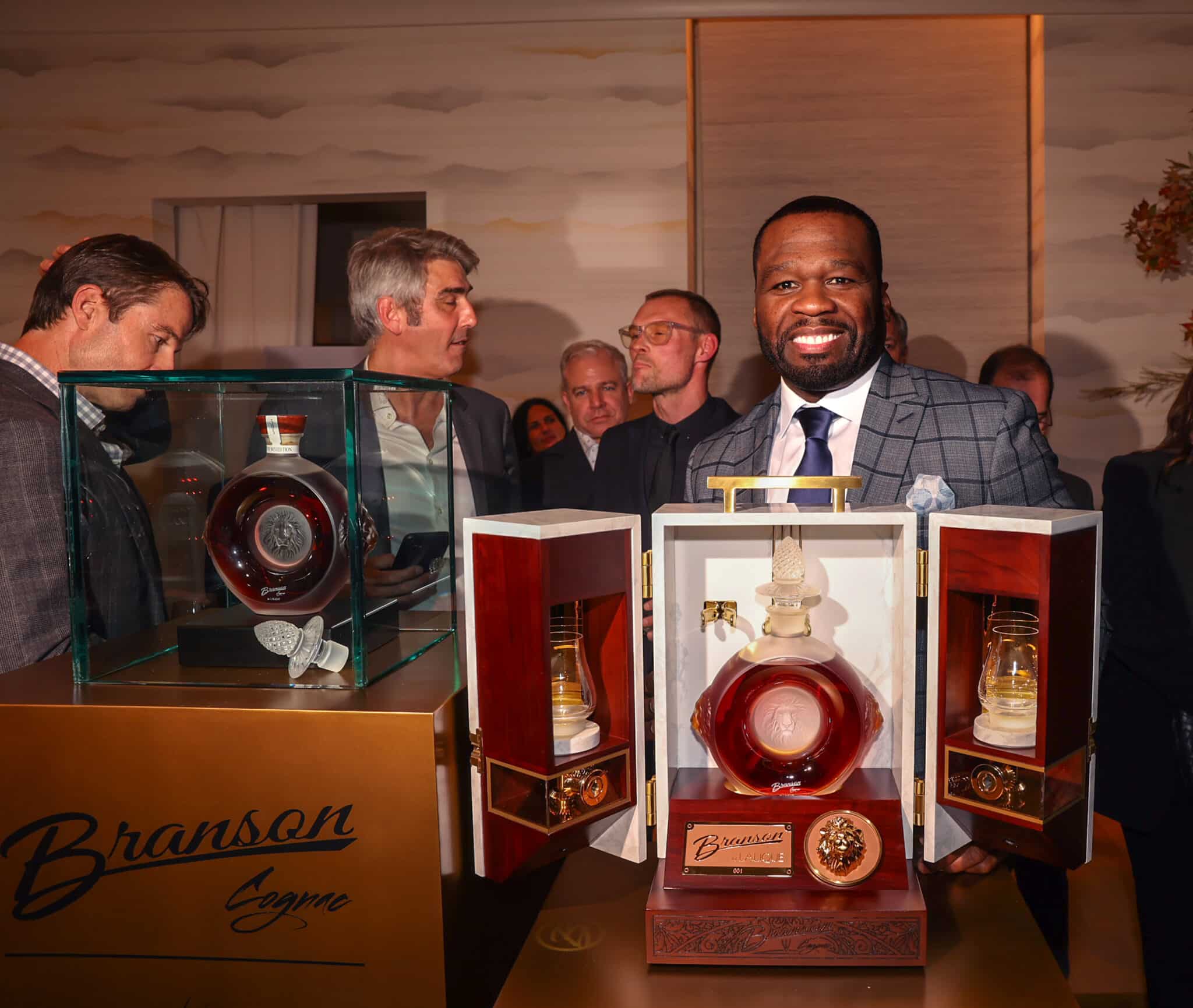
Curtis "50 Cent" Jackson rose from the violent streets of South Jamaica, Queens, to become one of hip-hop’s most dominant figures and a global business mogul. After surviving nine gunshot wounds in 2000, Jackson leveraged independent mixtapes, a landmark deal with Eminem and Dr. Dre, and unprecedented corporate equity moves to build a lasting media empire.
Early Life in South Jamaica and the Streets of Queens (1975–1996)
Curtis James Jackson III was born on July 6, 1975, in the South Jamaica neighborhood of Queens, New York City. Raised in an environment heavily impacted by economic disinvestment and systemic poverty, Jackson’s early childhood was shaped by his mother, Sabrina, who raised him while operating as a street-level drug dealer. Sabrina died in an unexplained house fire when Jackson was just eight years old, leaving him to be raised by his grandmother, Beulah Jackson.
By age 12, during the height of the 1980s crack cocaine epidemic, Jackson entered the drug trade himself. He balanced his secret life on the streets with after-school boxing at a local gym, competing as an amateur boxer in the Junior Olympics. The discipline, spatial awareness, and mental toughness acquired in the boxing ring translated directly into his street survival strategy.
- 1975: Born in Queens
- 1987: Enters Street Trade
- 1996: Mentored by Jam Master Jay
- 2000: Survives 9 Shots
- 2003: "Get Rich or Die Tryin'"
Jackson's street involvement led to multiple arrests during his teenage years. In 1994, after being arrested for selling undercover officers illicit substances, he served a seven-month sentence in a boot camp facility rather than facing long-term incarceration. Upon his release, Jackson resolved to pivot away from street hustling and redirect his energy toward the music industry, adopting the moniker "50 Cent" as a symbol of adaptability—inspired by Kelvin Martin, a 1980s Brooklyn robber known as "50 Cent."
Musical Foundations: Jam Master Jay and Columbia Records (1996–2000)
In 1996, Jackson was introduced to Jason "Jam Master Jay" Mizell, the legendary DJ of Run-D.M.C., who ran his own label, JMJ Records. Mizell recognized Jackson’s natural charisma and raw delivery, taking him under his wing to teach him formal songwriting structure:
- How to count bars accurately during verse delivery
- How to structure radio-friendly chorus hooks
- How to arrange backing tracks and vocal layering
- How to maintain rhythmic consistency in vocal takes
Although Mizell did not release a commercial project with Jackson, the technical training laid the foundation for his future songcraft. In 1999, the production duo Trackmasters signed 50 Cent to Columbia Records. Jackson spent weeks at a studio in Upstate New York, recording 36 tracks that were meant to form his debut major-label album, Power of the Dollar.
- Jam Master Jay Mentorship
- Columbia Records Signing (1999)
- "How to Rob" Underground Single
During this period, Jackson recorded the controversial single "How to Rob," in which he jokingly detailed plans to stick up prominent hip-hop and R&B stars, including Jay-Z, Puff Daddy, and Master P. The track generated massive industry buzz, positioning 50 Cent as an aggressive outsider willing to challenge established royalty. However, before Columbia could officially launch Power of the Dollar, real-world street violence intervened.
The 2000 Shooting and the Independent Mixtape Revolution
On May 24, 2000, Curtis Jackson was ambushed outside his grandmother’s house in South Jamaica, Queens. An armed assailant fired nine shots at close range using a 9mm handgun. Jackson was struck in the hand, arm, hip, calf, chest, and face. The projectile that entered his left cheek damaged his jaw and voice box, leaving him with a permanent physical scar and a distinct, slurred vocal cadence that eventually became his signature sound.
Following the shooting, Jackson spent thirteen days in the hospital undergo intensive surgery and rehabilitation. Sensing liability and street fallout, Columbia Records canceled the release of Power of the Dollar and dropped Jackson from their roster. U.S. record companies blacklisted him, considering him too dangerous to work with.
- May 24, 2000: Shot 9 Times
- Dropped by Columbia Records
- Blacklisted by Major Labels
- Shift to Independent Mixtape Production
Faced with an industry shutdown, Jackson shifted his operational strategy to the independent mixtape circuit. Alongside his newly formed crew G-Unit—comprising childhood friends Lloyd Banks and Tony Yayo—Jackson recorded vocal tracks over popular industry beats, creating bootleg mixtapes that were distributed directly to street vendors and DJs.
Projects like 50 Cent Is the Future (2002), No Mercy, No Fear (2002), and God's Plan (2002) fundamentally altered the music industry landscape. Rather than using mixtapes simply as DJ blend tapes, 50 Cent treated them as fully formatted album promos, featuring aggressive hooks, street commentary, and melodic song structures.
The strategy bypassed traditional radio programmers and record store logistics, generating massive underground momentum across North America.
The Shady/Aftermath Partnership and Get Rich or Die Tryin’ (2002–2003)
In mid-2002, a copy of the 50 Cent Is the Future mixtape reached Eminem, who immediately played it for super-producer Dr. Dre. Recognizing Jackson’s instinct for melody and storytelling, Eminem flew Jackson to Los Angeles. In June 2002, 50 Cent signed a joint $1 million recording contract with Eminem’s Shady Records, Dr. Dre’s Aftermath Entertainment, and Interscope Records.
The promotional rollout for his major-label debut was built on single selection, street cred, and executive star power. Released on February 6, 2003, Get Rich or Die Tryin’ became an instant commercial phenomenon.
- Eminem Hears Mixtape (2002)
- $1M Joint Shady/Aftermath Deal
- "In da Club" Single Release
- 872K First-Week Sales
Driven by the lead single "In da Club"—which topped the Billboard Hot 100 chart for nine weeks—the album set historic sales records:
- First-Week Sales: 872,000 units sold in its initial four days of release.
- Global Impact: Over 12 million copies sold worldwide within its first year.
- Critical Standing: Certified 9x Platinum by the RIAA, earning multiple Grammy nominations.
The album's success confirmed that raw gangsta rap, when combined with Dr. Dre’s polished West Coast production and Eminem’s mainstream marketing reach, could dominate global pop charts without diluting its core message.
Key Phases in Curtis Jackson’s Career Trajectory
The table below outlines the core strategic shifts that marked Curtis Jackson’s evolution from an underground artist to an industry enterprise:
| Career Era | Timeframe | Primary Focus & Deliverables | Strategic Significance & Industry Impact |
|---|---|---|---|
| Street & Early Music | 1996–2000 | JMJ Records training; Power of the Dollar recordings; "How to Rob" single. | Established sharp lyrical storytelling; proved willingness to disrupt industry norms. |
| Mixtape Disruptor | 2000–2002 | Independent G-Unit mixtape releases (50 Cent Is the Future, God's Plan). | Invented the modern promotional mixtape model; bypassed traditional record label gatekeepers. |
| Major Label Peak | 2003–2007 | Get Rich or Die Tryin', The Massacre, international arena tours. | Achieved record-breaking global sales; established G-Unit Records as a dominant commercial brand. |
| Corporate Venture Equity | 2004–2012 | Vitaminwater equity stake (Glacéau); SMS Audio; Sire Spirits foundation. | Shifted artist compensation models from flat cash endorsements to minority equity stakes. |
| Film & TV Empire | 2014–Present | Executive producer of Power universe, BMF; G-Unit Film & Television expansion. | Transitioned into a Hollywood executive producer with independent production studio infrastructure. |
Business Diversification: From Vitaminwater to Corporate Ownership
While maintaining a high-volume music career, Jackson pioneered a shift in how hip-hop artists structured corporate partnerships. Rather than accepting standard upfront endorsement fees to act as a brand spokesperson, Jackson negotiated equity ownership stakes in early-stage consumer brands.
- Traditional Model:
- Celebrity
- Paid Endorsement Fee
- Zero Equity
- Jackson Model:
- Celebrity
- Minority Equity Stake
- Multi-Million Payout upon Acquisition
In 2004, Jackson partnered with Energy Brands (Glacéau) to endorse Vitaminwater, creating his own custom flavor, "Formula 50." In exchange for his likeness and promotional rights, Jackson took a minority equity stake in the parent company.
When The Coca-Cola Company purchased Glacéau in May 2007 for $4.1 billion, Jackson’s equity stake yielded an estimated $100 million to $150 million after taxes—a payout that far exceeded his lifetime music royalties up to that point.
- 2004: Negotiates Glacéau Equity
- Launches "Formula 50"
- 2007: Coca-Cola Acquires Glacéau ($4.1B)
- Yields ~$100M+ Payout
Jackson replicated this equity-focused model across multiple industries:
- Sire Spirits: Founded the wine and spirits company producing Branson Cognac and Le Chemin du Roi Champagne, securing partnership deals with major NBA and NFL franchises for venue distribution.
- G-Unit Clothing Company: Partnered with Marc Ecko Enterprises to generate over $100 million in retail apparel sales during its peak operations.
- SMS Audio: Established a consumer electronics company to design and distribute premium wireless audio hardware globally.
Despite facing financial restructurings—including a high-profile Chapter 11 bankruptcy filing in 2015 to reorganize debts and legal judgments—Jackson successfully discharged his court-approved repayment plan early, preserving his core corporate assets and maintaining financial sovereignty.
Film, Television, and the Creation of the Power Universe
Recognizing changing audience consumption patterns in traditional media, Jackson expanded his production company, G-Unit Film & Television, into premium cable television.
In 2014, Jackson co-created and executive produced the crime drama series Power alongside showrunner Courtney A. Kemp on the Starz network. Jackson also co-starred as the antagonist Kanan Stark. Power became a cornerstone property for Starz, driving subscriber growth and setting viewership records across diverse demographics.
- 2014: "Power" Debuts on Starz
- Record Viewership
- Franchise Expansion: "Ghost", "Raising Kanan", "Force", "BMF"
The success of Power led to the creation of an interconnected television universe with multiple spin-offs:
- Power Book II: Ghost: Focused on the immediate aftermath of the original series' narrative.
- Power Book III: Raising Kanan: A prequel detailing Kanan Stark’s upbringing in 1990s South Jamaica, Queens.
- Power Book IV: Force: Following fan-favorite character Tommy Egan's move to Chicago's underworld.
- BMF (Black Mafia Family): A biographical crime drama detailing the Flenory brothers' rise in Detroit.
To secure physical production independence, Jackson established G-Unit Studios in Shreveport, Louisiana, acquiring massive studio production facilities to film independent television, feature films, and unscripted media content outside traditional Hollywood studio ecosystems.
Cultural Legacy and Impact on Hip-Hop Entrepreneurship
Curtis Jackson’s rise from street hustle to corporate executive represents a pivotal evolution in modern popular culture. By converting street survival skills into corporate negotiation strategies, Jackson redefined how artists approach intellectual property, equity stakes, and brand extension.
- Street Mixtapes
- Album Sales Supremacy
- Corporate Equity Deals
- Film & TV Studio Ownership
His impact on the entertainment industry spans three clear areas:
- The Mixtape Blueprint: Jackson proved that releasing free, high-quality music directly to consumers could build a fan base powerful enough to break major-label cartel control.
- Equity Over Endorsements: He challenged artists to demand equity ownership in commercial products, reshaping how hip-hop stars partner with global brands.
- Independent Content Ownership: Through G-Unit Film & Television, Jackson demonstrated that minority creators can build, own, and control long-running, multi-series TV networks and physical studio space.
Applying Curtis Jackson’s Strategic Blueprint to Business and Brand Building
Analyzing Curtis Jackson’s career offers clear tactical lessons for creators, brand builders, and media entrepreneurs looking to scale their own enterprises:
- Pivot Obstacles into Differentiating Assets: Jackson turned a career-threatening shooting injury that altered his speech pattern into his distinct vocal signature. Analyze operational setbacks to find unique market advantages.
- Control Distribution Channels: Before seeking major institutional backing, build an audience directly. Use open distribution platforms to generate real demand before negotiating with established gatekeepers.
- Negotiate Equity, Not Just Cash Fees: When partnering with established corporations, push for performance equity, royalty shares, or ownership stakes rather than flat upfront service fees to build long-term enterprise value.
- Diversify Core Intellectual Property: Do not rely on a single revenue stream. Expand successful creative concepts across formats—from music to merchandise, television, spirits, and physical real estate assets.
Frequently Asked Questions
How did 50 Cent get his stage name?
Curtis Jackson adopted the name "50 Cent" as a metaphorical nod to Kelvin Martin, a famous 1980s Brooklyn robber known by that moniker. Jackson chose the name because it embodied a mindset of absolute determination, adaptability, and survival by any means necessary.
What made Get Rich or Die Tryin' a landmark album in hip-hop history?
Released in 2003, Get Rich or Die Tryin' sold 872,000 copies in its first week and over 12 million copies globally in its first year. It combined gangsta rap themes with polished pop melodies and Dr. Dre’s cinematic production, proving that raw street narratives could dominate mainstream global pop charts.
How much did 50 Cent make from the Vitaminwater acquisition?
When The Coca-Cola Company purchased Glacéau (Vitaminwater's parent company) for $4.1 billion in May 2007, 50 Cent's minority equity stake netted him an estimated $100 million to $150 million after taxes, setting a new benchmark for celebrity equity deals.
How did surviving the 2000 shooting alter 50 Cent's career trajectory?
After being shot nine times in May 2000, Jackson was dropped by Columbia Records and blacklisted by major labels. This forced him to launch his independent mixtape movement with G-Unit, which bypassed radio gatekeepers, created massive street demand, and caught the attention of Eminem and Dr. Dre.
What TV franchises has 50 Cent produced through G-Unit Film & Television?
Through G-Unit Film & Television, Jackson co-created and executive produced the hit Starz drama Power. He subsequently expanded the franchise into spin-offs including Power Book II: Ghost, Power Book III: Raising Kanan, and Power Book IV: Force, along with the crime drama series BMF (Black Mafia Family).