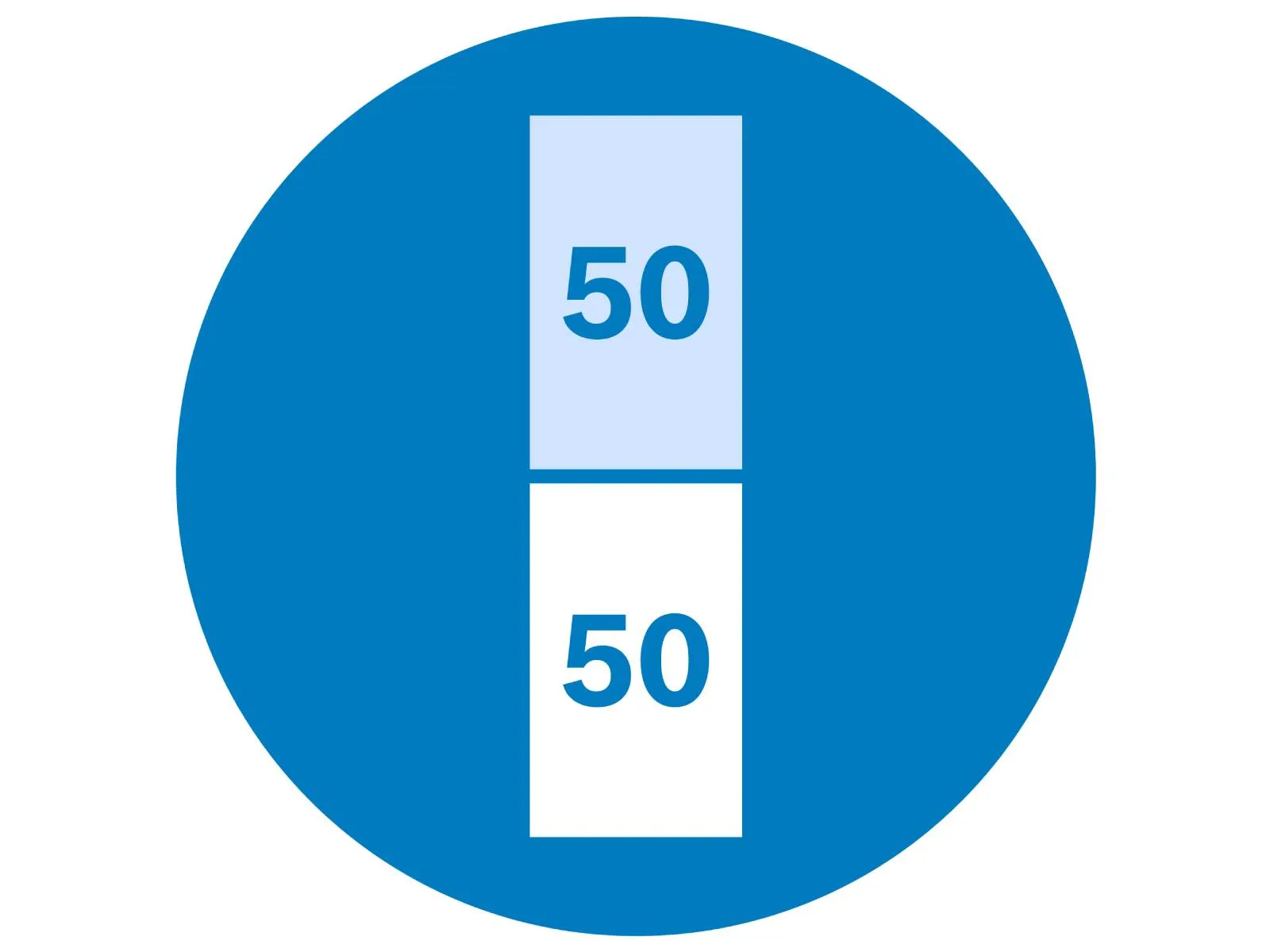
A 50/50 split represents an equal division of equity, assets, liabilities, or revenue between two entities or individuals. Commonly utilized in business partnerships, real estate purchases, commercial deals, and marital asset distributions, an equal split offers fairness and simplicity on paper but requires robust legal mechanisms to manage governance, resolve deadlocks, and prevent future disputes.
Where 50/50 Splits Are Commonly Implemented
Dividing rights, capital, or ownership into two equal halves is a standard financial and legal starting point. However, the operational reality of an equal split varies substantially depending on the underlying asset class and legal context.
Business Co-Founding and Equity Ownership
In commercial startups and joint ventures, two co-founders frequently opt for an equal 50/50 equity split at incorporation. This structure signals mutual trust, equal commitment, and shared risk. In practice, equity ownership carries two distinct rights: economic rights (entitlement to profits and distributions) and voting rights (authority over corporate decisions). When two shareholders each hold 50% of voting shares, every strategic decision—from raising capital and hiring executives to selling the company—requires absolute consensus.
Marital Asset Division and Divorce Law
In family law, a 50/50 split refers to the legal division of marital property during a divorce. Jurisdiction plays a critical role in how this division is executed:
- Community Property Jurisdictions: Jurisdictions following community property rules generally mandate that all assets and debts acquired during the marriage are owned equally by both spouses and must be divided 50/50 upon dissolution, with limited exceptions for inheritance or personal gifts.
- Equitable Distribution Jurisdictions: Under equitable distribution laws, courts aim for a fair division rather than an automatic 50/50 mathematical split. Factors such as earning capacity, health, length of marriage, and individual contributions determine whether an equal division or an asymmetric allocation (e.g., 60/40) is legally mandated.
Real Estate Joint Ventures and Tenancy
When two individuals or corporate entities purchase real estate together, a 50/50 split is typically established through a joint tenancy or tenancy-in-common structure:
- Joint Tenancy with Right of Survivorship: Both owners hold equal 50% shares simultaneously. If one owner passes away, their share automatically transfers to the surviving owner outside of probate.
- Tenancy in Common (TIC): Two parties hold distinct 50% undivided interests in the property. Each co-owner retains the legal right to transfer, mortgage, or bequeath their individual 50% share independently.
Creative Royalties and Commercial Revenue Sharing
In entertainment, publishing, and intellectual property licensing, a 50/50 split is a standard baseline for dividing net revenues. For instance, in music publishing, composition revenue is split 50/50 between the writer's share and the publisher's share. Similarly, corporate revenue-sharing agreements between distribution partners or co-marketing entities frequently divide net profits equally after deducting verifiable direct cost goods.
The Hidden Risks of an Equal 50/50 Ownership Structure
While an equal division appears fair during the initial stages of a relationship or business launch, long-term operational challenges often emerge when circumstances change.
- 50/50 Split Governance: Partner A (50% Voting Power) / Partner B (50% Voting Power)
- Disagreement on Strategy
- Operational Deadlock: No majority vote possible; business stalls completely.
- Litigation & Dissolution: Costly legal disputes, court receivership, or buyout.
Operational Deadlock and Governance Paralysis
The primary operational risk of a 50/50 voting structure in corporate settings is deadlock. If co-founders or equal partners disagree on a critical choice—such as taking on debt, terminating an executive, or pivoting product strategy—neither party possesses the majority vote necessary to break the tie. Without pre-arranged deadlock resolution provisions, governance freezes, causing operational paralysis, missed business opportunities, or forced corporate dissolution.
Asymmetry in Effort Versus Equity
Initial contributions rarely remain static over time. At launch, two partners may contribute equal capital and time. However, after several years, one partner may put in 60 hours a week driving revenue, while the other reduces their involvement due to burnout, health issues, or competing interests. An immutable 50/50 equity split creates resentment when operational contributions become lopsided but economic returns remain identical.
Valuation and Buyout Complexity
If one 50% owner wishes to exit a business or real estate asset while the other wishes to remain, determining a fair market valuation becomes complex. Without a clear buy-sell agreement, the remaining partner may lack the liquidity to buy out the exiting partner's 50% stake, while the exiting partner cannot easily sell a non-controlling 50% stake to a third party.
Comparing 50/50 Splits Across Primary Applications
The operational impact, legal framework, and necessary safeguards for a 50/50 split vary by domain:
| Application Context | Underlying Legal Basis | Primary Advantage | Major Operational Risk | Essential Safeguard |
|---|---|---|---|---|
| Startup Co-Founders | Shareholders' Agreement / Operating Agreement | Aligns incentive and establishes equal partnership trust. | Executive deadlock over board votes or strategic pivot. | Equity vesting schedules; independent tie-breaking board seat. |
| Real Estate Co-Ownership | Tenancy in Common or Joint Tenancy Deed | Shared capital outlay and split mortgage responsibility. | Disagreement over maintenance costs or sale timing. | Co-ownership agreement with forced-sale or buy-out terms. |
| Marital Property Division | Community Property / Family Law Statutes | Clear, predictable starting point for asset allocation. | Inflexible treatment of illiquid assets (e.g., family home). | Prenuptial/postnuptial agreements; court-ordered offsets. |
| Commercial Joint Ventures | Partnership Agreement / Special Purpose Vehicle (SPV) | Pools capital and expertise equally between corporate entities. | Strategic drift or unaligned corporate goals. | Clear exit triggers; Texas Shotgun or Dutch Auction clauses. |
| Music & IP Publishing | Copyright Registration & Publishing Contracts | Industry standard for allocating author and publisher income. | Disputes over underlying ownership of master recordings. | Detailed work-for-hire and administration agreements. |
Essential Legal Clauses for 50/50 Agreements
To mitigate the inherent risks of equal ownership, contracts must incorporate structural mechanisms designed to manage changing conditions and resolve disputes.
- Resolving a Deadlock
- Mediation / Board Seat: Independent party casts tie-breaking vote or facilitates consensus.
- Buy-Sell Clause: One partner offers buyout price; other partner buys or sells at that price.
1. Dynamic Equity Vesting Schedules
Equal equity should not be transferred upfront on day one. Incorporating a dynamic vesting schedule—such as a four-year vesting timeline with a one-year "cliff"—ensures that both parties earn their 50% stake over time. If one founder departs after six months, unvested equity is canceled, preventing a non-performing partner from retaining half the enterprise.
2. Shotgun Clauses (Buy-Sell Mechanisms)
A Texas Shotgun clause (or buy-sell provision) is a high-stakes deadlock resolution tool. Under this clause, Partner A can offer to buy Partner B's 50% share at a specific price per share. However, Partner B has the right to either:
- Accept the offer and sell their 50% stake to Partner A at that price; or
- Reverse the deal and buy Partner A's 50% stake at the exact same valuation.
This mechanism forces the offering partner to propose a strictly fair valuation, as proposing an undervalued price allows the recipient to purchase their share cheaply.
3. Independent Board Seats and Tie-Breakers
In corporate governance, deadlock can be mitigated by expanding the board of directors beyond the two equal partners. A common configuration involves three board seats: one for Partner A, one for Partner B, and a third seat allocated to a mutually agreed-upon independent advisor or industry veteran. In the event of a 50/50 disagreement, the third director casts the deciding vote.
4. Drag-Along and Tag-Along Rights
- Drag-Along Rights: Protect majority intentions by requiring a 50% owner to join in the sale of a company if a qualified third-party buyer offers to purchase 100% of the firm, preventing a single equal owner from blocking a favorable acquisition.
- Tag-Along Rights: Protect an individual owner by ensuring that if one 50% partner sells their stake to an outside entity, the other partner has the right to join the transaction under identical financial terms.
Practical Alternatives to an Unconditional 50/50 Split
When equal voting power or fixed equity allocations pose excessive risks, alternative structures can achieve balance while preserving operational efficiency.
The 51/49 Equity Allocation
To prevent governance paralysis, founders often adopt a 51/49 equity division. Assigning 51% voting equity to a designated Chief Executive Officer ensures clear ultimate decision-making authority during disputes. The minor economic difference (1%) can be offset through separate dividend agreements or profit-sharing distributions to maintain economic parity.
Dynamic Equity Frameworks ("Slicing Pie")
Rather than fixing equity statically at formation, dynamic equity models calculate ownership based on real-time contributions. Founders log risk, capital invested, unpaid labor hours, intellectual property contributions, and equipment provided. Equity ratios adjust dynamically based on relative ongoing inputs until the venture achieves profitability or secures external institutional funding.
Separation of Economic and Voting Rights
Parties can maintain an equal 50/50 division of financial profits while establishing an asymmetric split for corporate governance:
- Total Capital / Assets
- Economic Rights (50 / 50 Split): Profits, dividends and exit proceeds
- Voting Rights (60 / 40 Split): Corporate governance & final authority
By issuing Class A voting shares and Class B non-voting economic shares, co-owners receive equal 50% distribution payments while designating one operational lead to hold the controlling voting consensus.
Frequently Asked Questions About 50/50 Splits
Is a 50/50 equity split recommended for startup co-founders?
A static 50/50 equity split is generally discouraged by venture capital investors unless paired with time-based vesting schedules and robust deadlock provisions. Unvested equal splits leave companies vulnerable to founder abandonment, early operational paralysis, and valuation disputes that deter institutional investment.
How does a 50/50 split work in divorce asset division?
In community property states, courts start with the legal presumption that all marital assets and liabilities accumulated during marriage are owned 50/50 by both spouses. In equitable distribution jurisdictions, a 50/50 split serves as an initial guideline, but courts adjust final asset allocation based on factors such as spousal earning power, individual financial needs, non-financial contributions, and child custody arrangements.
What happens if 50/50 business partners reach an irreconcilable deadlock?
If a 50/50 partnership reaches a complete deadlock without contractually binding resolution mechanisms, options include voluntary mediation, triggering a contractual buy-sell clause, or filing for judicial dissolution. Judicial dissolution forces a court-ordered liquidation of corporate assets to pay off creditors, with remaining funds split equally between the partners.
Can property ownership be split 50/50 if one owner paid a larger deposit?
Yes. Parties can execute a Tenancy in Common deed designating equal 50/50 ownership even if capital contributions were unequal. However, the parties should execute a separate co-ownership agreement establishing how the unequal deposit will be accounted for—such as reimbursing the larger deposit upon sale before splitting net proceeds equally.
How does equity vesting protect an equal 50/50 split?
Equity vesting ensures that co-founders earn their equal split incrementally over time (typically three to four years). If a co-founder leaves the enterprise prematurely, unvested shares return to the company pool rather than remaining in the hands of the departing partner, keeping equity aligned with ongoing operational contributions.
Strategic Recommendations for Structuring an Equal Split
When structuring or negotiating a 50/50 split across business, property, or intellectual assets, take these practical steps:
- Separate Economics from Governance: Maintain a 50/50 split on capital dividends or property proceeds while creating clear operational leadership rules to prevent operational deadlocks.
- Draft a Comprehensive Operating or Shareholders' Agreement: Never rely on default statutory rules or verbal assurances. Explicitly outline dispute resolution procedures, including tie-breaking votes, buyout options, and forced-sale conditions.
- Implement Time-Based Vesting: Require all working partners to vest their equity share over a multi-year period with an initial cliff period to ensure shared long-term commitment.
- Define Explicit Valuation Protocols: Outline the exact formula or appraisal method that will be used to value a 50% share if an owner dies, becomes disabled, or exits the relationship.
- Consult Specialized Legal and Financial Counsel: Partner with experienced corporate, real estate, or family law attorneys to ensure contracts comply with jurisdictional statutes and avoid unexpected tax liabilities.