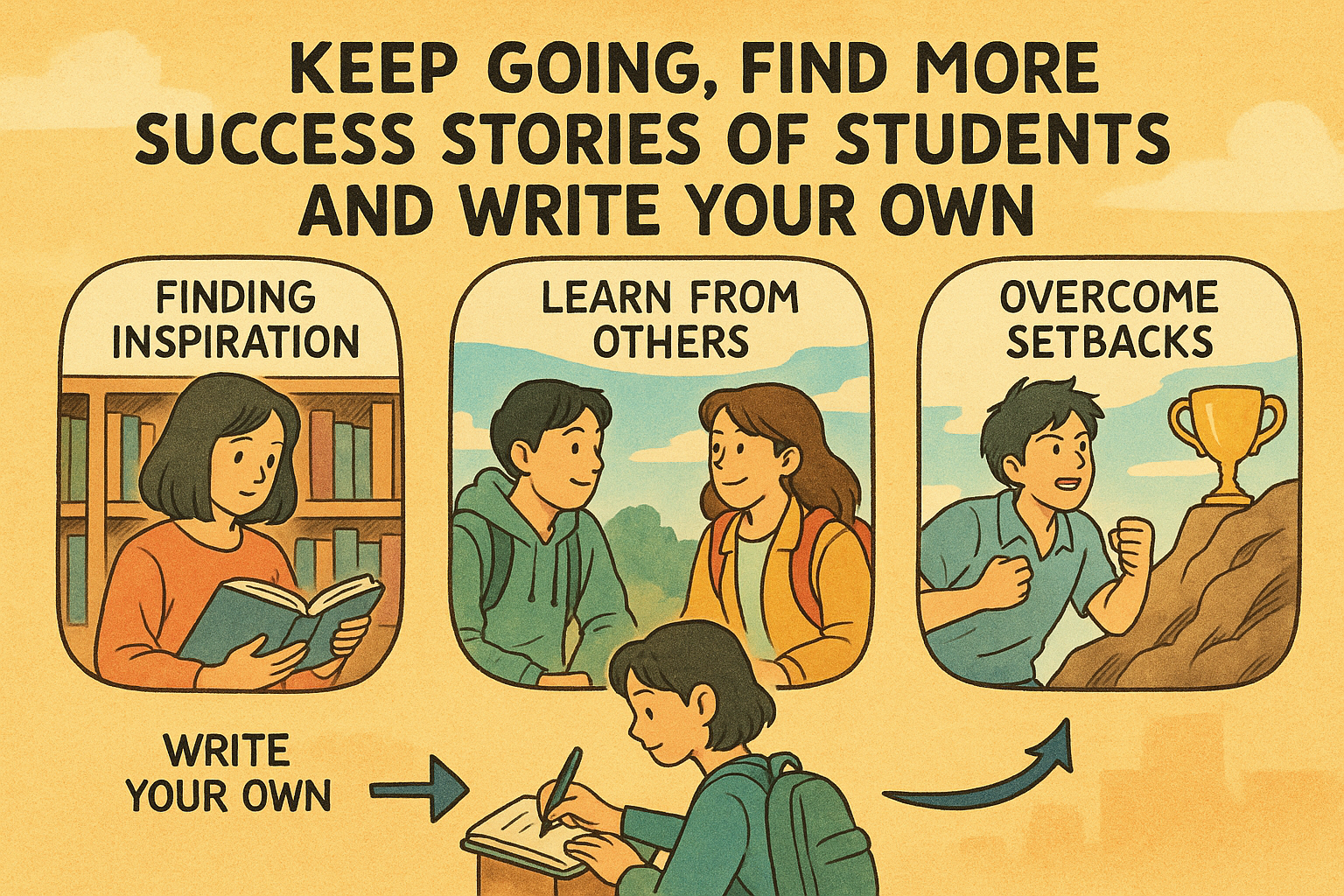
3 students achieve success together by combining specialized skills, maintaining equal accountability, and using odd-number group dynamics to prevent decision-making deadlocks. Whether in academic research, startup development, or competitive arenas, this trio-based model fosters high-intensity peer learning and psychological safety, allowing students to tackle complex projects that exceed individual capabilities.
The Power of Three: Why Trios Outperform Individuals and Large Teams
The phenomenon of three students achieving success together is grounded in the "Rule of Three," a concept that spans linguistics, mathematics, and team psychology. In an educational or early-career context, a trio represents the smallest possible unit that can sustain a democratic voting process while maintaining high levels of individual intimacy and accountability. As we move through the 2025-2026 academic cycles, peer-to-peer collaboration has shifted from a "nice-to-have" social element to a core requirement for high-impact results in STEM, business, and the humanities.
When three students work together, they create a stable structure known as a "triad" in sociology. Unlike a dyad (two people), where the departure or disagreement of one person collapses the system, a triad can resolve conflict through mediation. If two members disagree, the third acts as a natural tie-breaker or objective observer. This dynamic is essential for rapid progress in fast-paced environments like hackathons or capstone projects, where stalling for consensus can be fatal to the project's success.
Furthermore, the cognitive load is shared more efficiently. In a trio, each member can own a distinct domain—typically divided into technical execution, strategic planning, and quality assurance. This specialization allows the group to dive deeper into complex subjects than an individual could, while avoiding the "social loafing" often found in larger groups where students might hide behind the efforts of others.
Structuring Roles for Maximum Efficiency
For 3 students to achieve success together, the distribution of labor must be intentional. Success is rarely accidental; it is the result of aligning personal strengths with group needs. In the most successful student trios of 2026, we see a recurring pattern of role division that mimics professional "Agile" teams but maintains the flexibility of a student environment.
The Architect (Technical/Content Lead)
This student focuses on the "what" and the "how." In a research project, they are the primary analyst. In a startup, they are the lead developer or product designer. Their role is to ensure the core output meets the highest technical standards. They translate the group’s vision into a tangible reality, whether that is a 50-page thesis or a functioning software prototype.
The Catalyst (Operations/Project Management)
The Catalyst ensures that the trio meets deadlines and adheres to the project scope. They are responsible for "process hygiene"—scheduling meetings, managing shared digital workspaces, and ensuring that communication remains fluid. Without a Catalyst, even the most brilliant students can fall victim to "scope creep" or missed submission windows.
The Editor (Quality Control/Communication)
The Editor is the final gatekeeper. They examine the work of the other two with a critical eye, ensuring consistency in tone, logic, and presentation. They often handle the external-facing elements, such as preparing the final presentation or drafting the executive summary. By acting as the "first critic," they allow the team to refine their work internally before it ever reaches a professor or an investor.
Collaborative Learning Strategies for Academic Excellence
The transition from individual study to collaborative success requires a shift in mindset. "Success together" implies that the group’s collective grade or outcome is higher than the average of what the three would have achieved alone. This is often achieved through high-level peer instruction.
Peer Instruction and the Feynman Technique: When one student explains a concept to the other two, they solidify their own understanding—a process known as the "protege effect." In a trio, this is particularly effective because the explanation is vetted by two different perspectives. If the Architect explains a complex chemical reaction, the Catalyst might ask about its practical application, while the Editor asks about the clarity of the diagram. This 360-degree review ensures no gaps in knowledge remain.
Distributed Cognition: By 2026, the volume of data in most university courses has made it nearly impossible for a single student to be an expert in every sub-topic. Successful trios use distributed cognition, where each member "specializes" in one-third of the syllabus. They then conduct intensive "knowledge transfer" sessions. This does not mean the others ignore two-thirds of the material; rather, they rely on their peers to curate the most important insights, significantly reducing the time spent on raw data consumption.
Comparative Dynamics of Student Collaboration
To understand why the "trio" model is specifically effective, it is helpful to compare it against other group sizes based on performance metrics observed in competitive academic environments.
| Metric | Individual Effort | Trio (3 Students) | Large Group (6+ Students) |
|---|---|---|---|
| Accountability | High (Internal) | Highest (Mutual/Peer) | Low (Social Loafing Risk) |
| Decision Speed | Instant | Fast (2-vs-1 Voting) | Slow (Consensus needed) |
| Skill Diversity | Limited | Balanced & Specialized | Redundant/Overlapping |
| Conflict Resolution | N/A | Mediation-based | Political/Fractional |
| Resource Sharing | None | Optimized | Fragmented |
2026 Tech Stack for Student Collaboration
In the current 2026 landscape, three students achieving success together must leverage a suite of tools that go beyond simple document sharing. The "Success Together" toolkit now includes:
- AI-Augmented Project Management: Tools like Notion or Asana (2026 versions) now utilize predictive analytics to warn student teams if their current pace will miss a deadline based on past performance.
- Shared Neural Networks: Many research trios use localized AI models to synthesize their collective notes, identifying contradictions in their research or suggesting areas that require more evidence.
- Real-Time Collaborative Visualizers: For engineering or design students, tools like Figma or Miro have evolved to allow simultaneous 3D modeling and spatial brainstorming, which is particularly effective in a three-person layout where one person can "drive" while the others "navigate."
- Version Control Beyond Code: Git-style versioning is now standard for text-based projects, allowing the Editor to roll back changes made by the Architect or Catalyst without losing work, ensuring the project's integrity is never compromised.
Managing the "Third Person" Dynamic and Social Loafing
One of the greatest risks when 3 students achieve success together is the "two-against-one" dynamic. If not managed, two students may inadvertently form a sub-clique, leaving the third member feeling marginalized. This "exclusion anxiety" can lead to a breakdown in communication and a drop in overall performance.
To prevent this, successful trios implement "Radical Transparency." This involves:
- Weekly Check-ins: A 15-minute meeting dedicated solely to how the group is working together, rather than what they are working on.
- The "Obligation to Dissent": A rule where each member is encouraged to find a flaw in the current plan. This prevents "Groupthink," where the trio agrees on a bad idea just to maintain harmony.
- Rotating Leadership: For long-term projects (those lasting a full semester or more), the role of the Catalyst can rotate every three weeks. This ensures every member develops project management skills and understands the pressures faced by their peers.
Turning Academic Projects into Professional Success
Success for a trio often extends beyond the classroom. Many of the most successful startups and non-profits in 2025 and 2026 began as three students working on a shared assignment. When students achieve success together, they aren't just earning a grade; they are building a "Proof of Concept" for their ability to work in a high-stakes team.
Case Study: The 2025 Biotech Trio In late 2025, three students from the University of Toronto achieved international recognition for developing a low-cost water filtration sensor. Their success was attributed not just to their scientific breakthrough, but to their structure: one student focused on the biochemistry, one on the hardware integration, and the third on the logistical rollout in developing regions. By the time they graduated in early 2026, they had already secured seed funding because they had a pre-built, high-functioning team that had already survived the "stress tests" of academic deadlines.
FAQ
What is the ideal group size for high-stakes student projects?
Research consistently suggests that three is the ideal number for high-stakes projects. It provides enough diversity of thought to solve complex problems while remaining small enough to prevent the "bystander effect," where individuals feel less responsible for the outcome. Larger groups of five or more often suffer from coordination loss, where more time is spent managing the group than doing the work.
How do we divide tasks fairly among three people?
Tasks should be divided based on a combination of interest and aptitude, using a "Task Matrix." List all project requirements and have each student rank their top three choices. Where overlaps occur, the team should look at the "Role" model (Architect, Catalyst, Editor) to see which task fits their primary responsibility. Fairness is not always about doing the same type of work; it is about an equal contribution of time and cognitive effort.
What should we do if one member of the trio isn't contributing?
The "Third Man" problem must be addressed early through a "Team Contract" created at the start of the project. If a member falls behind, the other two should first conduct a "Restorative Interview" to see if there are external factors (personal or technical) causing the lapse. If the behavior continues, using a "Two-Signature" rule for project submissions or involving a faculty mediator is the standard professional response in 2026.
Can three students share credit for an individual award?
Most modern academic and professional competitions (such as the Global Student Entrepreneur Awards) have updated their 2026 guidelines to recognize "Co-Founders" or "Team Leads." When applying for individual credit, students should use "Contribution Statements" that clearly define their specific role in the trio's success, allowing them to benefit from the group's achievement while maintaining an individual professional profile.
Implementing Your Trio Success Plan
To move from a simple group of three to a successful collaborative unit, your next action should be the creation of a "Mission Charter." This is a short, one-page document that defines your collective goal, your chosen roles, and your communication protocols.
Start by identifying the "North Star" of your project—is it a 4.0 grade, a patent application, or a social impact goal? Once the goal is aligned, hold a "Skill Audit" where each student honestly assesses their strengths and weaknesses. Use this audit to assign the roles of Architect, Catalyst, and Editor. Finally, establish a "Single Source of Truth"—a digital dashboard where all tasks and files live. By formalizing these boundaries early, you transform a social group into a high-performance engine capable of achieving extraordinary success together.