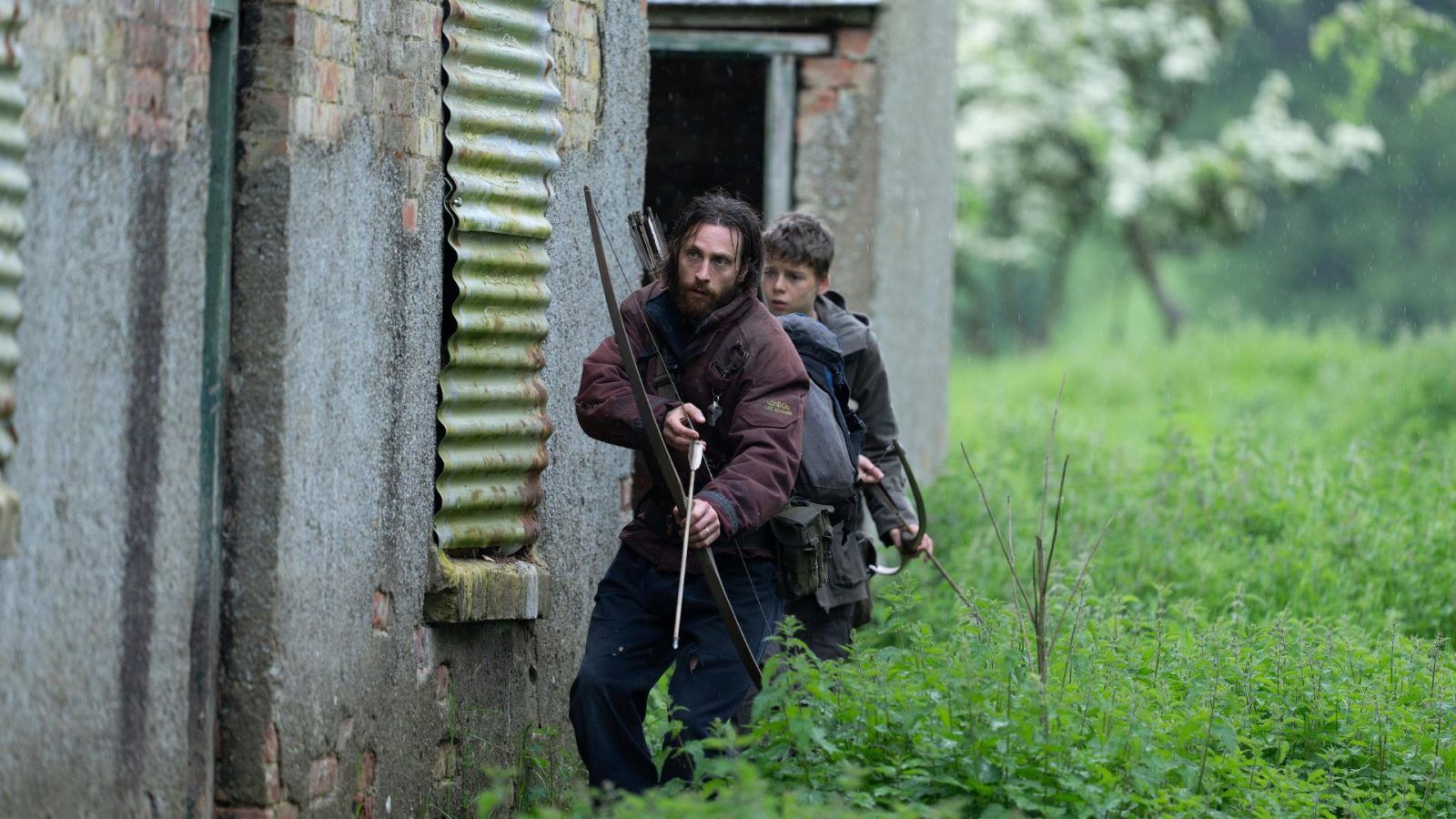
The 28 Days Later franchise is a cornerstone of modern post-apocalyptic cinema, redefining the horror genre through its introduction of the "Rage Virus" and fast-moving infected. This guide explores the film series' timeline, the biological mechanics of its central threat, and the survival strategies necessary to navigate a society decimated by a viral collapse.
The Evolution of the 28 Days Later Franchise
The series began in 2002 with 28 Days Later, directed by Danny Boyle and written by Alex Garland. It was a revolutionary entry into the horror genre, moving away from the slow, shambling undead of the George A. Romero era and introducing a visceral, high-speed threat that felt grounded in modern virology. The film followed Jim (Cillian Murphy), a bicycle courier who wakes up from a coma to find London deserted and the population transformed into mindless, homicidal shells of their former selves.
In 2007, the sequel 28 Weeks Later, directed by Juan Carlos Fresnadillo, expanded the scope. It focused on the efforts of the NATO military forces to reclaim London and establish a "Green Zone" for survivors. The film explored themes of institutional failure and the fragility of recovery, showing how a single point of failure can lead to the total collapse of even the most fortified structures.
By 2026, the franchise has seen a significant resurgence with the release of 28 Years Later. This latest installment, which brought back the original creative duo of Boyle and Garland, explores the long-term consequences of the outbreak. It examines a world that has fundamentally adapted to the presence of the Rage Virus, shifting the focus from immediate survival to the sociopolitical realities of a post-outbreak world. This trilogy represents a complete arc—from the initial shock and societal death to the failed attempts at reconstruction, and finally, the establishment of a new, albeit scarred, global reality.
Understanding the Rage Virus: Mechanics and Transmission
To survive in the world of 28 Days Later, one must understand that the antagonists are not "zombies" in the traditional, supernatural sense. They are living human beings infected with a highly contagious, laboratory-engineered virus that induces a permanent state of uncontrollable, homicidal rage.
Viral Pathophysiology
The Rage Virus is unique because of its incredible incubation speed. In almost all documented cases, the transition from exposure to full infection takes between 10 and 20 seconds. This rapid onset makes containment nearly impossible once a breach occurs. The virus targets the brain's limbic system, stripping away all higher cognitive functions and leaving only the primal urge to attack any uninfected individual. Because the infected are still living humans, they are subject to physical limitations—they can starve, they can drown, and they are susceptible to the elements—but they do not feel pain or exhaustion in the way a healthy human does.
Modes of Transmission
The primary method of infection is through the exchange of bodily fluids. This usually occurs via:
- Bites and Scratches: The most common form of transmission during an attack.
- Blood Spatter: A single drop of infected blood entering the eye, mouth, or an open wound is sufficient to cause infection.
- Aerosolization (Theoretical): While the films primarily show fluid-based transmission, the high concentration of the virus in saliva suggests that close-quarters screaming or coughing could present a risk, though this is less documented than direct contact.
Core Survival Strategies for the Rage Outbreak
Survival in this universe requires a departure from standard disaster preparedness. Because the threat is fast and the onset is near-instantaneous, reaction time and environmental awareness are the most critical assets.
1. The 20-Second Rule
Because the virus acts so quickly, there is no "waiting to see" if a bitten companion will turn. In a group setting, any member who suffers a fluid exposure must be neutralized or contained immediately. Hesitation is the primary cause of group wipes in the 28 Days Later series. Survival requires a brutal, pragmatic approach to infection management.
2. Urban vs. Rural Environments
The first film demonstrates that major urban centers like London become death traps within days. The density of the population ensures that the virus spreads exponentially. Rural areas, particularly isolated islands or highlands, offer the best chance of long-term survival. However, 28 Weeks Later highlights that even "cleared" urban zones are high-risk due to the potential for dormant viral strains or hidden infected in sub-levels and sewers.
3. Stealth and Visibility
The infected are driven by sight and sound. Unlike traditional zombies, they possess the full athletic capability of a healthy human. Running is rarely a viable escape strategy if you are already spotted; instead, survival hinges on not being seen in the first place. High-ground observation and the use of silenced or melee weapons are preferable to firearms, which draw every infected within a several-block radius.
4. Fortification Requirements
A standard home is insufficient protection against the Rage-infected. They will throw themselves against doors and windows with no regard for their own physical safety. Effective shelters must have reinforced entry points (steel shutters or heavy timber) and, crucially, a secondary "silent" exit. If a shelter is compromised, the goal is to leave without engaging the horde.
Comparative Overview of the Franchise Phases
The following table outlines the progression of the series, showing how the scale and nature of the survival challenge evolved over the decades.
| Feature | 28 Days Later (2002) | 28 Weeks Later (2007) | 28 Years Later (2025/26) |
|---|---|---|---|
| Primary Setting | Desolate London / Rural UK | NATO-controlled Green Zone | Post-Collapse Europe |
| Scope of Threat | Localized Outbreak | Continental Spread | Endemic Presence |
| Primary Survivors | Civilians | Military / Civilians | New Society Residents |
| Key Survival Theme | Immediate Escape | Institutional Failure | Long-term Adaptation |
| Core Conflict | Man vs. Infected | Man vs. Bureaucracy | Man vs. Nature/New World |
Technical and Cultural Impact of the Series
The 28 Days Later series is credited with revitalizing the horror genre in the early 21st century. Before its release, horror had largely moved toward "slasher" tropes or supernatural hauntings. Danny Boyle’s use of the Canon XL1 digital camera gave the first film a gritty, documentary-like quality that heightened the sense of realism. This "guerrilla filmmaking" style made the apocalypse feel immediate and possible.
Furthermore, the soundtrack composed by John Murphy, particularly the track "In the House - In a Heartbeat," has become synonymous with mounting dread. The music mirrors the virus itself—starting as a slow, rhythmic pulse and building into a frantic, overwhelming wall of sound. This audio-visual synergy created a template that many subsequent films and television shows, such as The Walking Dead and The Last of Us, would eventually build upon.
The series also introduced a deep level of social commentary. While 28 Days Later critiqued the inherent violence of human nature (exemplified by Major West’s soldiers), 28 Weeks Later served as a critique of foreign intervention and the hubris of military "reconstruction" efforts. The 2025/2026 era of the franchise continues this tradition by reflecting on environmental collapse and how humanity finds meaning in a world that has been permanently altered.
Essential Viewing Order and Media Consumables
For those looking to experience the full narrative arc, the following order is recommended to understand the lore and the progression of the Rage Virus:
- 28 Days Later (Film): The essential starting point.
- 28 Days Later: The Aftermath (Graphic Novel): Provides vital context on the origin of the virus (the "Cambridge Outbreak") and the bridge between the first two films.
- 28 Weeks Later (Film): Explores the escalation of the threat.
- 28 Days Later (Comic Series): Follows the character Selena after the events of the first film, expanding on the state of the world outside the UK.
- 28 Years Later (Film): The modern conclusion (or beginning of a new chapter) that brings the story into the current year's cinematic landscape.
FAQ
How did the Rage Virus start?
The virus was created by scientists at a research facility in Cambridge, England. It was an experimental attempt to develop a viral inhibitor for extreme aggression, but it mutated into a strain that induced the very behavior it was meant to suppress. It was released when animal rights activists liberated infected chimpanzees, despite warnings from the lab staff.
Are the infected in 28 Days Later actually dead?
No. Unlike traditional zombies, the infected are living humans. They require food and water to survive, though their metabolic state is highly elevated. This is a crucial plot point in the first film, as the survivors realize they can wait out the infection by staying hidden until the infected eventually die of starvation.
Why did the military fail in 28 Weeks Later?
The military failed due to a combination of bureaucratic overconfidence and a lack of understanding regarding the virus's speed. By focusing on external perimeter defense and ignoring the possibility of an internal breach (the "Patient Zero" scenario in the Green Zone), they were unable to react quickly enough when the infection began to spread in a densely packed civilian high-rise.
Does the Rage Virus affect animals?
In the films, the virus is primarily shown affecting primates (humans and chimpanzees). However, the graphic novels suggest that while many animals are immune to the behavioral effects, they could potentially act as passive carriers or be killed by the infected, who view any uninfected living thing as a target.
Is there a cure for the Rage Virus?
As of 28 Years Later, there is no known medical cure that can reverse the infection once the 20-second incubation period is complete. However, certain individuals have shown a genetic immunity or an "asymptomatic carrier" status, which has been the focus of various failed vaccine trials throughout the franchise's history.
Recommendations for Navigating the Franchise Legacy
For fans of the series and those interested in post-apocalyptic lore, the primary recommendation is to treat the 28 Days Later saga as a study in "low-probability, high-impact" scenarios. The films emphasize that the breakdown of society is not caused by the virus alone, but by the speed of the collapse. To truly appreciate the series in 2026, one should look beyond the scares and examine the underlying message: human resilience is profound, but it is often our own institutions and hesitations that pose the greatest threat to our survival. If you are new to the series, prioritize the original 2002 film to understand the DNA of the genre, then move directly to the modern 28 Years Later to see how those themes have aged in a contemporary context.