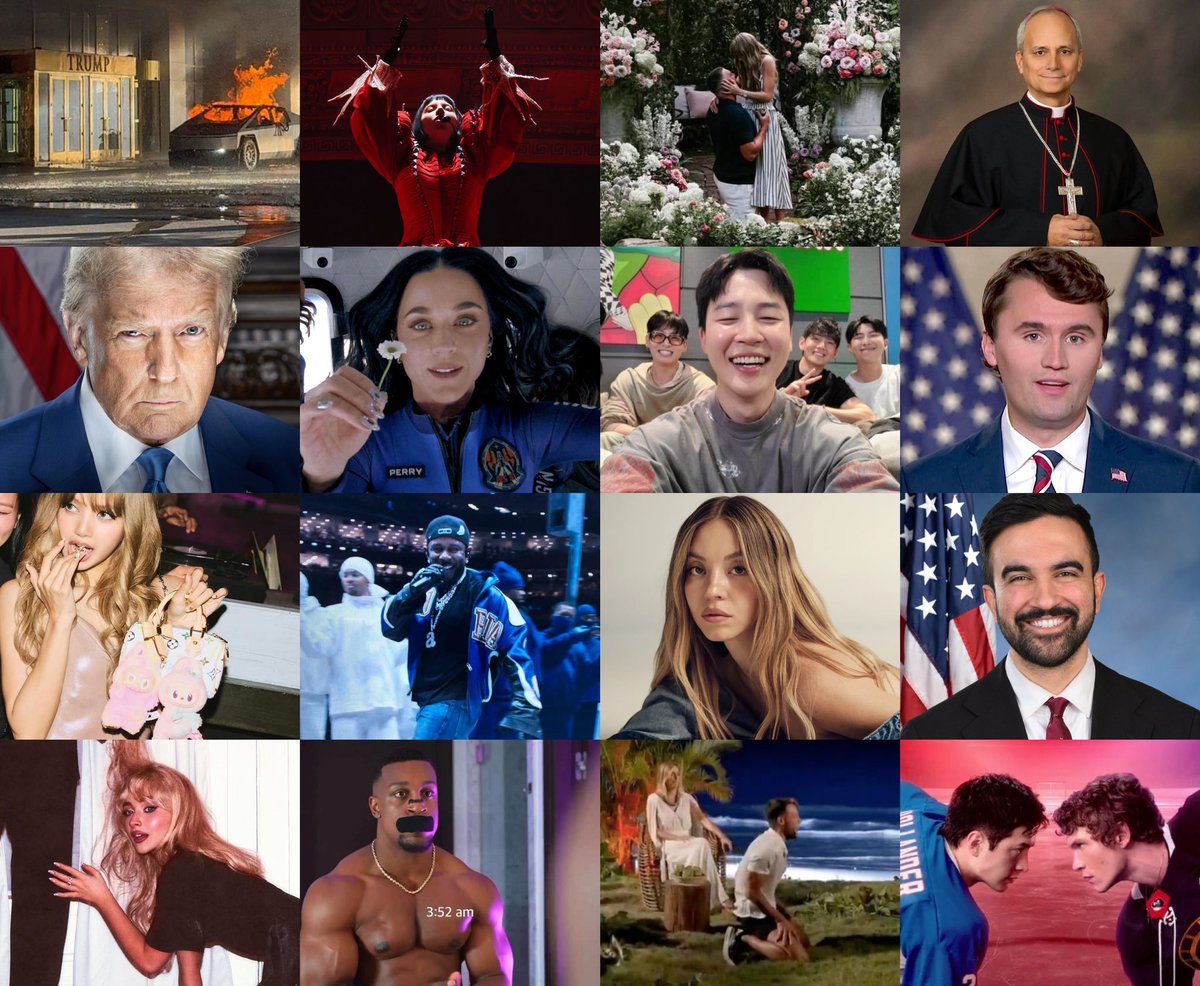
The year 2025 stood as a transformative period defined by the maturation of artificial intelligence into autonomous "agents," a revitalized global space race, and major shifts in international sports and politics. These highlights reflected a world moving past the post-pandemic recovery phase and into a new era of technological integration and geopolitical realignment.
The Rise of Agentic AI: From Assistance to Autonomy
In 2025, the primary narrative in the technology sector shifted from generative AI that simply "answers" to agentic AI that "acts." While 2023 and 2024 were dominated by Large Language Models (LLMs) like GPT-4 and Claude, 2025 saw the widespread deployment of Large Action Models (LAMs). These systems transitioned from being digital assistants to becoming autonomous entities capable of executing multi-step workflows across various software platforms without human intervention.
The integration of these agents into consumer hardware—most notably in the next generation of smartphones and wearable "pins"—marked the beginning of the "post-app" era. Instead of users navigating through separate applications for travel, finance, or communication, AI agents began managing these interfaces in the background. For example, a single prompt such as "Organize my business trip to Tokyo next month" would result in the AI booking flights, securing hotel reservations based on previous preferences, and scheduling meetings by cross-referencing calendars with international partners.
In the enterprise sector, the highlight of 2025 was the "AI Productivity Peak." Corporations that successfully integrated autonomous agents reported a 30% reduction in administrative overhead. However, this moment also sparked intense global debates regarding labor displacement and the necessity of "Human-in-the-Loop" (HITL) regulatory frameworks. By the end of 2025, the European Union and the United States began drafting standardized protocols for AI transparency, ensuring that users could distinguish between human-generated and agent-facilitated professional services.
New Frontiers in the Lunar Economy and Space Exploration
If 2024 was the year of preparation, 2025 was the year of execution for deep-space exploration. One of the most iconic moments occurred during the third quarter of the year when the Artemis II mission—the first crewed flight around the Moon in over half a century—successfully returned to Earth. This mission served as a critical proof of concept for the Orion spacecraft and the Space Launch System (SLS), setting the stage for future lunar landings.
Simultaneously, the private sector achieved unprecedented milestones. SpaceX’s Starship reached a state of operational reliability that allowed for the first commercial satellite deployments using its massive payload capacity. This technological leap significantly lowered the cost per kilogram to orbit, catalyzing the growth of the "Lunar Economy."
Key developments in this sector included:
- Lunar Infrastructure: Preliminary deployment of communication satellites orbiting the Moon to support future permanent bases.
- Resource Prospecting: Private robotic landers identified high-concentration water-ice deposits at the lunar south pole, essential for long-term habitation.
- Space Tourism Expansion: The first successful commercial orbital stays exceeding 30 days were completed, moving beyond short-duration "joyrides" to sustained research and leisure residencies.
The competition between the NASA-led Artemis Accords and the International Lunar Research Station (ILRS) led by China and Russia intensified in 2025. This "New Space Race" was not just about prestige but about establishing legal precedents for resource extraction and orbital debris management, leading to the 2025 Space Sustainability Summit in Paris.
A New Era for Global Sports: Hamilton at Ferrari and the Club World Cup
The sports world underwent a seismic shift in 2025, driven by both individual legacies and structural overhauls. Perhaps the most culturally significant moment was Lewis Hamilton’s debut season with Scuderia Ferrari. After over a decade with Mercedes, the seven-time World Champion’s move to the Italian team revitalized Formula 1 viewership, particularly in Europe and North America. The "Hamilton-Ferrari Effect" resulted in record-breaking merchandise sales and ticket demand for the 2025 Grand Prix season, proving that individual star power remains a dominant force in global marketing.
On the football (soccer) front, the summer of 2025 saw the inaugural edition of the expanded FIFA Club World Cup in the United States. Featuring 32 teams from across all six confederations, the tournament was designed to bridge the gap between regional dominance and global visibility.
While the expanded format faced criticism from player unions regarding fixture congestion, the commercial success was undeniable. The tournament provided a "dress rehearsal" for the 2026 FIFA World Cup, testing infrastructure and fan engagement across American cities. The iconic moments from the final—held in New Jersey—solidified the tournament as a permanent fixture in the global sporting calendar, despite the ongoing debates surrounding athlete welfare and the saturation of the sports market.
Geopolitical Realignments and the Search for Economic Stability
Geopolitically, 2025 was characterized by the implementation of policies following the massive global election cycle of 2024. In the United States, the newly inaugurated administration focused on "re-shoring" critical supply chains, particularly in the semiconductor and green energy sectors. This led to a cooling of certain trade relations while fostering new bilateral agreements with "near-shore" partners in Latin America.
In Europe, the focus remained on energy independence and the integration of Ukraine into the broader European economic framework. The 2025 Reconstruction Summit in Warsaw marked a pivotal highlight, where global leaders and private investors pledged over $500 billion for the long-term rebuilding of infrastructure and tech hubs in Eastern Europe.
The global economy in 2025 also saw the "Normalization of Interest Rates." After the volatility of the early 2020s, central banks moved toward a "steady-state" environment, balancing inflation control with the need for growth in the green sector. The Green Bond Initiative, which reached a record $2 trillion in cumulative issuance in 2025, underscored the financial world's commitment to funding the climate transition through market-based instruments rather than purely state-driven subsidies.
Cultural Highlights: The Renaissance of Immersive Media
The entertainment landscape in 2025 was defined by the intersection of traditional storytelling and spatial computing. The release of major cinematic titles—most notably James Gunn’s Superman—reignited the global box office, but the true innovation lay in "transmedia" experiences.
Studios began releasing films alongside VR/AR "companion worlds" that allowed fans to explore sets and interact with characters in real-time. This was largely facilitated by the widespread adoption of second-generation mixed-reality headsets, which became lighter, more affordable, and integrated with daily productivity tools.
Key cultural milestones of 2025 included:
- The Digital Museum Initiative: Major institutions like the Louvre and the Smithsonian launched high-fidelity, interactive digital twins of their collections, accessible via spatial hardware.
- The Rise of "Hyper-Local" Content: As AI made high-quality production accessible to smaller creators, a surge in localized, niche storytelling challenged the dominance of major streaming platforms.
- Live Event Evolution: Concerts and festivals in 2025 increasingly utilized "Holographic Presence," allowing artists to perform simultaneously in multiple cities, blending physical and digital attendance.
Comparing 2025’s Key Sector Impacts
The following table summarizes the primary highlights of 2025 across different sectors and their projected long-term influence on society.
| Sector | Iconic Highlight | Primary Long-term Impact |
|---|---|---|
| Technology | Deployment of Agentic AI (LAMs) | Transition to autonomous digital workflows and "post-app" interfaces. |
| Space | Artemis II Crewed Lunar Orbit | Establishment of the foundational logistics for a permanent lunar base. |
| Sports | Expanded FIFA Club World Cup (USA) | Redefinition of club-level global competition and World Cup readiness. |
| Finance | $2 Trillion Green Bond Milestone | Mainstreaming of sustainable finance as a core asset class. |
| Geopolitics | 2025 Reconstruction Summit | Stabilization of Eastern European markets and supply chain shifts. |
| Automotive | Hamilton's Debut at Ferrari | Renewed commercial interest and viewership peaks for Formula 1. |
Frequently Asked Questions
What was the most significant technological breakthrough of 2025?
The most significant breakthrough was the shift from generative AI to Agentic AI. Unlike previous iterations that only produced content, 2025’s AI agents were capable of executing complex tasks across different platforms autonomously. This allowed for the automation of professional workflows in sectors like logistics, legal research, and customer service, fundamentally changing the relationship between humans and software.
How did the Artemis II mission change space exploration in 2025?
Artemis II was the first time humans returned to the vicinity of the Moon in over 50 years. This mission was iconic because it verified the safety and efficacy of the Orion capsule’s life-support systems in deep space. Its success provided the necessary confidence for the subsequent lunar landing missions and encouraged private companies to invest heavily in lunar mining and telecommunications infrastructure.
Why was Lewis Hamilton’s move to Ferrari considered an "iconic moment"?
Hamilton’s move was more than just a team change; it represented the union of the most successful driver of the modern era with the most historic team in racing history. In 2025, this move caused a massive surge in global Formula 1 interest, influencing everything from broadcasting rights prices to the valuation of F1 teams. It proved that legacy and brand identity still hold immense power in an increasingly data-driven sports world.
What was the outcome of the 2025 FIFA Club World Cup?
The 2025 FIFA Club World Cup was a commercial and logistical milestone. While it faced debates regarding the physical toll on players, it successfully created a new high-stakes tournament format that brought top clubs from Europe, South America, and beyond into a single competitive bracket. It also served as a critical test for the United States’ hosting capabilities ahead of the 2026 World Cup.
How did the global economy stabilize in 2025?
Stability was achieved through the "Normalization of Interest Rates" and a focus on "re-shoring" production. By 2025, central banks had moved away from the emergency stances of previous years, creating a predictable environment for long-term investments. Additionally, the massive growth in the Green Bond market provided a stable mechanism for funding the energy transition without causing the same inflationary pressures seen in earlier years.
Auditing Your Digital and Professional Strategy for 2026
As we look back at the highlights of 2025 from the perspective of early 2026, it is clear that the world has entered a phase of high-velocity integration. To stay competitive and informed in this new landscape, individuals and organizations should take the following actions:
- Audit AI Integration: Move beyond simple prompt-based tools and explore "Agentic" workflows. Evaluate how autonomous agents can be integrated into your business operations to reduce repetitive tasks and focus on high-value creative output.
- Diversify Financial Holdings: With the normalization of interest rates and the rise of sustainable finance, ensure your portfolio includes exposure to the green energy sector and infrastructure projects that were initiated during the 2025 summits.
- Prepare for Spatial Media: If you are in the marketing or content creation space, 2025 proved that immersive, 3D-ready content is no longer a luxury. Begin adopting tools for spatial storytelling to meet the demands of a population increasingly using AR/VR hardware.
- Monitor Space-Related Policy: For those in telecommunications or logistics, the developments in the lunar economy are beginning to have "trickle-down" effects on Earth-bound regulations. Keep an eye on international space treaties, as they will dictate the future of global satellite networks.