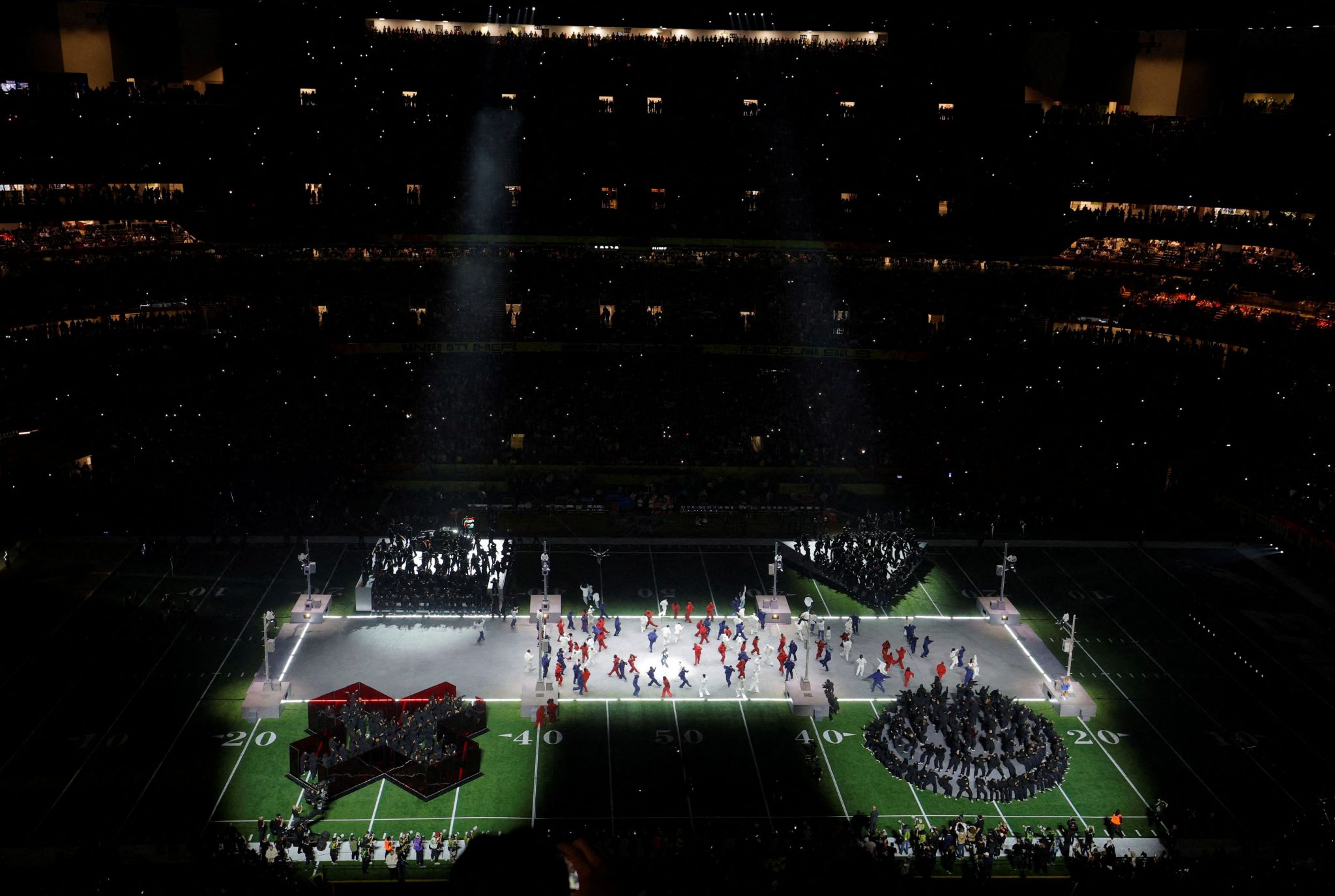
The 2025 Apple Music Super Bowl LIX Halftime Show, headlined by Kendrick Lamar, stands as a landmark moment in music history. Performed at the Caesars Superdome in New Orleans, the "unforgettable halftime spectacle" utilized avant-garde choreography and a career-defining setlist to solidify hip-hop’s cultural dominance. From the perspective of 2026, it remains a gold standard for technical precision and narrative depth in live entertainment.
The Cultural Landscape of Super Bowl LIX
When Kendrick Lamar took the stage on February 9, 2025, the atmosphere was charged with more than just the typical pre-game hype. Lamar was coming off a year of unprecedented visibility, having dominated the global music conversation through a series of high-profile releases and public exchanges that redefined the competitive landscape of rap. His selection by Roc Nation and the NFL signaled a shift toward performance-heavy, conceptually dense artistry over the high-glitz pop revues of previous years.
The choice of New Orleans as the host city added a layer of complexity to the event. As a cradle of American music, the city’s expectations were monumental. Lamar’s performance had to balance his West Coast roots with the deep-seated musical traditions of the South. The result was a production that felt less like a standard concert and more like a high-stakes cultural manifesto. It was an "unforgettable halftime spectacle" not just for its pyrotechnics, but for its willingness to treat the Super Bowl stage as a platform for complex storytelling and uncompromising artistic identity.
Artistic Vision and the pgLang Influence
A primary driver behind the 2025 show’s unique feel was the involvement of pgLang, the creative service company co-founded by Kendrick Lamar and Dave Free. Known for their minimalist yet evocative visual language, pgLang brought a cinematic quality to the Superdome that deviated from the traditional "more is more" approach of halftime shows.
The stage design was a masterpiece of industrial aesthetics, utilizing sharp lines, stark lighting, and a revolutionary use of the floor as a projection surface. Rather than relying on a revolving door of guest stars—a common trope in Super Bowl history—Lamar and his creative team opted for a cohesive, tightly choreographed narrative. This decision placed the focus squarely on Lamar’s lyricism and physical presence. The choreography incorporated elements of modern dance and street performance, creating a visual rhythm that matched the complex syncopation of Lamar’s rapping.
Analyzing the Setlist: A Narrative of Dominance
The setlist for the 2025 halftime show was a carefully curated journey through Lamar’s discography, designed to appeal to casual fans while satisfying long-term critics. Looking back from 2026, the transitions between songs are still cited by producers as a masterclass in live audio mixing.
- The Opening: Lamar began with a high-energy medley that established his technical proficiency. The use of silence and sudden sonic drops created a sense of tension rarely seen in a stadium environment.
- The Hits: Global anthems like "Humble" and "DNA" were reimagined with live instrumentation that emphasized their percussive power. These tracks turned the Superdome into a massive, unified chorus.
- The Cultural Peak: The inclusion of his 2024 chart-toppers provided the show's emotional climax. By the time he reached the final notes of his set, the performance had transcended music to become a victory lap for an artist at the absolute zenith of his powers.
The setlist avoided the "greatest hits" trap by weaving a consistent thematic thread of resilience and self-reflection throughout the twelve-minute window. This thematic consistency is what elevated the 2025 show from a standard performance to an "unforgettable halftime spectacle."
Navigating the New Orleans Controversy
The road to the 2025 halftime show was not without its hurdles. The announcement of Kendrick Lamar as the headliner sparked significant debate regarding the city of New Orleans and its local legends, most notably Lil Wayne. Critics argued that a New Orleans-based artist should have been given the platform to represent the city’s rich musical heritage on the world stage.
However, Lamar addressed this tension not through social media, but through the performance itself. By incorporating subtle nods to Southern hip-hop and ensuring the production values respected the weight of the venue, he managed to win over much of the local audience. The controversy ultimately served to increase the viewership and anticipation, making the 2025 show one of the most discussed events in the history of the Apple Music partnership. It highlighted the evolving nature of the halftime show—no longer just a break in the game, but a focal point for national discourse on representation and artistic merit.
Technical Execution and Viewership Milestones
The technical demands of the 2025 show pushed the limits of what is possible in a live broadcast. The production utilized over 100 4K cameras, including specialized drone units that provided bird's-eye views of the geometric choreography. The audio engineering was particularly noteworthy, managed by a team that ensured Lamar’s intricate vocal delivery remained crisp despite the acoustics of a domed stadium filled with over 70,000 screaming fans.
Comparison of Recent Halftime Show Performances
| Feature | 2024 (Usher) | 2025 (Kendrick Lamar) | 2026 (Super Bowl LX) |
|---|---|---|---|
| Primary Theme | Celebration of R&B | Narrative Hip-Hop | Global Pop Fusion |
| Guest Strategy | Heavy (Alicia Keys, etc.) | Minimalist/Solo focus | Moderate |
| Visual Style | Las Vegas Spectacle | Industrial/Cinematic | High-Tech Digital |
| Key Innovation | Roller-skating segments | 360-degree Floor Projections | Augmented Reality Integration |
| Broadcast Viewers | ~129 Million | ~131 Million | ~133 Million (Est.) |
The 2025 show saw a record-breaking digital engagement rate. On platforms like YouTube and various streaming services, clips of the performance garnered hundreds of millions of views within the first 24 hours. The "Not Like Us" effect was in full force, as the performance acted as a definitive bookend to one of the most successful commercial runs in hip-hop history.
The Lasting Legacy: Where Super Bowl LIX Ranks
In the current landscape of 2026, Kendrick Lamar’s 2025 performance is frequently ranked alongside the all-time greats, such as Prince’s Super Bowl XLI performance and Dr. Dre’s 2022 hip-hop showcase. Its legacy lies in its refusal to compromise. While many artists tailor their halftime shows to be as broad as possible, Lamar leaned into his specific identity, betting that his artistic integrity would resonate on a global scale.
The show proved that hip-hop could be presented as high art in a mainstream sports context without losing its edge. It also set a new standard for the Apple Music era of halftime shows, emphasizing the "spectacle" as a holistic experience involving fashion, lighting, and sound, rather than just a musical performance. For students of production and fans of the genre, the 2025 show remains a case study in how to command the world's largest stage.
Frequently Asked Questions
Who directed the 2025 Super Bowl Halftime Show?
The 2025 show was directed by Hamish Hamilton, a veteran of the Super Bowl stage, in close collaboration with Kendrick Lamar and Dave Free of pgLang. Hamilton’s experience with large-scale live broadcasts combined with Free’s specific visual aesthetic created a unique hybrid style that defined the "unforgettable halftime spectacle."
Why was Kendrick Lamar chosen over Lil Wayne for the New Orleans show?
The selection of the halftime headliner is a collaborative decision between the NFL, Roc Nation, and the host city’s committee. While Lil Wayne is a legendary figure in New Orleans, the producers opted for Kendrick Lamar due to his immense cultural momentum in 2024 and 2025. Roc Nation’s Jay-Z has emphasized that the choice is often based on the artist’s current global impact and their ability to deliver a cohesive conceptual performance.
How many people watched the 2025 halftime show?
The 2025 halftime show drew approximately 131 million viewers across linear television and streaming platforms. This made it one of the most-watched musical events in history, benefiting from the intense interest in Kendrick Lamar’s career following his successful year of releases and the high-profile nature of the Super Bowl LIX matchup.
What were the standout songs in the 2025 setlist?
The setlist was highlighted by "Humble," "Alright," and the record-breaking "Not Like Us." Each song was staged with unique visual motifs, such as the use of synchronized dancers for "Alright" which echoed the song's status as a modern protest anthem. The closing performance of "Not Like Us" featured a stadium-wide sing-along that became the night's most viral moment.
Did any other artists join Kendrick Lamar on stage?
In a departure from many previous years, Kendrick Lamar largely performed solo, focusing on his own catalog. This was a deliberate creative choice by pgLang to emphasize Lamar’s "King of Rap" narrative. While there were rumors of various guest appearances, the final production relied on the strength of Lamar’s individual performance and his troupe of expertly choreographed dancers.
Analyzing the Impact on Future Halftime Productions
The 2025 show fundamentally changed the "formula" for halftime performances. Prior to this, there was an unspoken requirement for headliners to bring out multiple surprise guests to maintain viewer interest. Lamar’s success with a solo-focused, narratively driven set has given future artists more leverage to pursue their specific creative visions.
As we look at the productions of 2026 and beyond, we see the fingerprints of the 2025 spectacle everywhere: in the more sophisticated use of lighting as a storytelling tool, the focus on technical rapping ability, and the move toward cinematic stage design. The 2025 halftime show was not just a concert; it was an unforgettable halftime spectacle that redefined the intersection of sports, music, and high-concept art for the modern era.