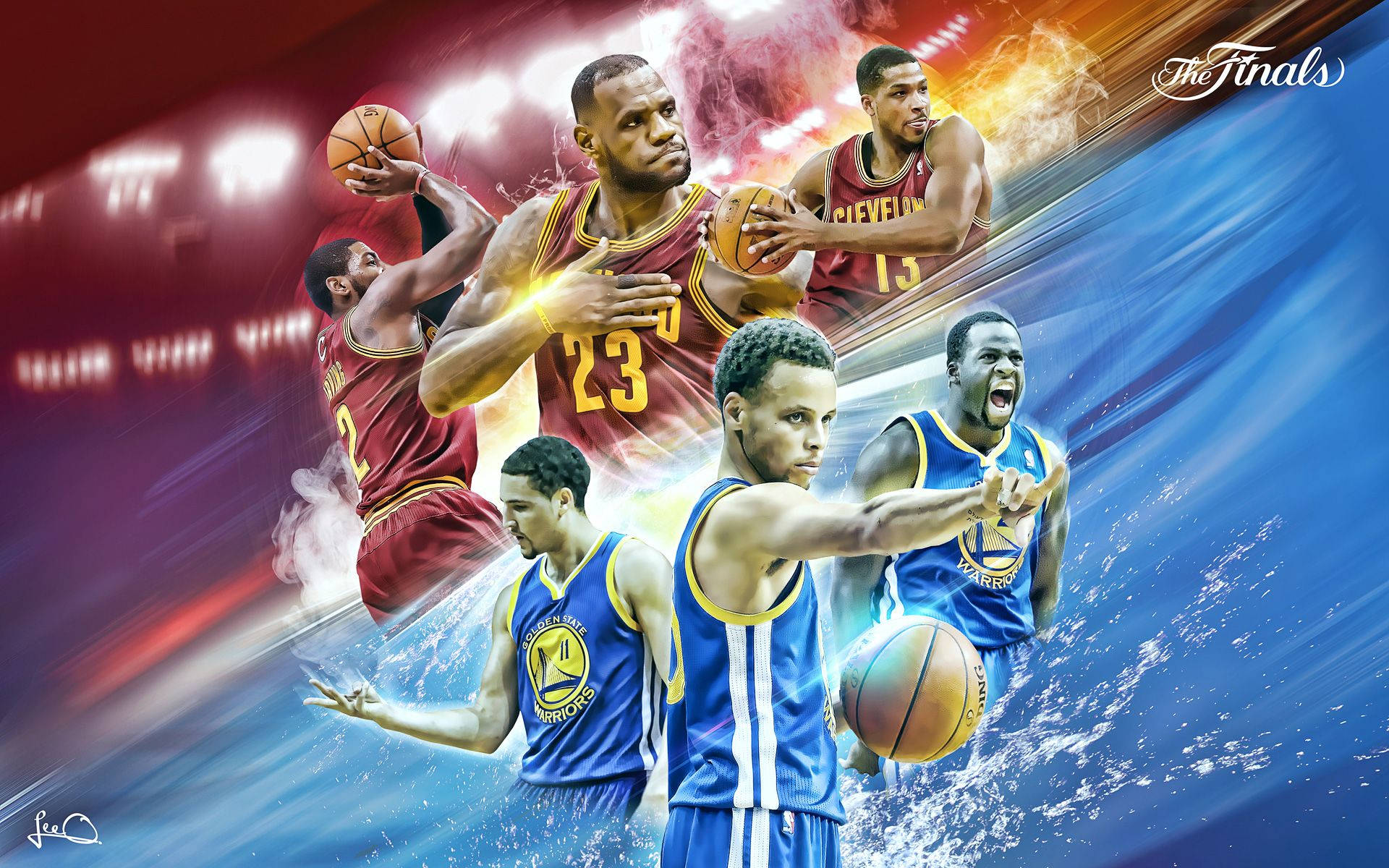
The 2020 NBA Finals was the championship series of the National Basketball Association's 2019–20 season, featuring the Los Angeles Lakers and the Miami Heat. The Lakers won the series 4–2 to secure their 17th NBA title, with LeBron James earning his fourth Finals MVP award in the unique "Bubble" environment in Orlando.
Historical Context: The NBA Bubble and the Pandemic Season
The 2020 NBA Finals remains one of the most anomalous and mentally taxing events in professional sports history. Following a mid-season suspension on March 11, 2020, due to the COVID-19 pandemic, the league resumed play in July within the NBA Bubble—a bio-secure environment at the ESPN Wide World of Sports Complex at Walt Disney World. This setting eliminated the traditional home-court advantage, as all games were played without fans in attendance and teams remained isolated from the outside world for months.
From the perspective of 2026, sports historians recognize the 2020 Finals as a "pure" basketball tournament. Without the distractions of travel, nightlife, or hostile crowds, the outcome was determined strictly by roster depth, tactical coaching, and mental resilience. The Los Angeles Lakers entered the Bubble as the top seed in the Western Conference, fueled by the tragic passing of franchise icon Kobe Bryant in January 2020. Their "Leave a Legacy" campaign became a unifying force for a roster led by LeBron James and Anthony Davis. Conversely, the Miami Heat arrived as the fifth seed in the Eastern Conference, embodying a "Heat Culture" defined by conditioning, discipline, and the emergence of Jimmy Butler as a legitimate superstar.
The psychological toll of the Bubble cannot be overstated. Players were separated from their families for upwards of 90 days before guests were allowed. This environment tested the internal chemistry of every team, and the Lakers’ ability to maintain focus throughout the three-month isolation is often cited as a testament to James’ leadership and the coaching staff's management under Frank Vogel.
Path to the Finals: Los Angeles Lakers vs. Miami Heat
The Los Angeles Lakers’ journey through the Western Conference was a display of defensive dominance and efficient transition play. They defeated the Portland Trail Blazers, Houston Rockets, and Denver Nuggets, winning each series in five games. The pairing of LeBron James and Anthony Davis proved statistically overwhelming; Davis provided elite rim protection and versatile scoring, while James orchestrated the offense with veteran precision. The Lakers’ supporting cast, including Rajon Rondo, Kentavious Caldwell-Pope, and Dwight Howard, provided the necessary "3-and-D" contributions and physical rebounding that defined their identity.
The Miami Heat’s path was significantly more surprising. Led by head coach Erik Spoelstra, the Heat dismantled the top-seeded Milwaukee Bucks in five games and defeated the Boston Celtics in a grueling six-game Eastern Conference Finals. Miami relied on a versatile zone defense and the offensive explosion of rookie Tyler Herro and veteran Goran Dragić. Jimmy Butler acted as the team’s emotional and tactical anchor, providing triple-double potential every night. However, the Heat entered the Finals as significant underdogs due to the Lakers' superior size and the star power of the James-Davis duo.
Game-by-Game Series Breakdown
The 2020 NBA Finals consisted of six games that showcased tactical adjustments and individual brilliance. Despite early injuries to key Heat players, the series remained competitive until the final whistle of Game 6.
The Opening Volleys (Games 1 and 2)
Game 1 set a somber tone for the Heat. While they started strong, the Lakers’ size and shooting eventually overwhelmed them. More importantly, Miami suffered devastating injuries: Goran Dragić sustained a torn plantar fascia, and Bam Adebayo suffered a neck strain. The Lakers won 116–98, led by Davis’s 34 points. Game 2 followed a similar trajectory, with the Lakers utilizing their size advantage to secure a 124–114 victory. Anthony Davis was nearly perfect from the field, and the Lakers’ 2-0 lead suggested a potential sweep.
The Heat’s Resilience (Game 3)
Facing a 0-2 deficit without two of their three best players, Jimmy Butler delivered one of the greatest individual performances in Finals history. Butler recorded a 40-point triple-double (40 points, 11 rebounds, 13 assists) while shooting 70% from the field. Miami’s defensive adjustments slowed down the Lakers’ transition game, resulting in a 115–104 win for the Heat. This game proved that "Heat Culture" was more than a marketing slogan; it was a functional blueprint for competing against superior talent.
The Turning Point (Games 4 and 5)
Game 4 was a defensive struggle that many experts consider the "swing" game of the series. Bam Adebayo returned for Miami, but the Lakers’ defense, specifically Anthony Davis’s primary assignment on Jimmy Butler, stifled the Heat’s offense late in the fourth quarter. The Lakers won 102–96.
Game 5 is remembered as an all-time classic. LeBron James (40 points) and Jimmy Butler (35 points) traded baskets in a high-stakes duel. The Lakers had a chance to win the championship on the final possession, but a wide-open three-pointer by Danny Green rimmed out, and a subsequent turnover by Markieff Morris allowed the Heat to escape with a 111–108 victory, forcing a Game 6.
The Coronation (Game 6)
The Lakers left no room for drama in Game 6. They implemented a lineup change, starting Alex Caruso to increase defensive pressure and pace. By halftime, the Lakers led by 28 points—the second-largest halftime lead in Finals history. The final score of 106–93 did not reflect the total dominance displayed by Los Angeles. LeBron James finished with a triple-double (28 points, 14 rebounds, 10 assists), securing the franchise's 17th title and tying the Boston Celtics for the most in NBA history at that time.
Key Statistics and Series Comparison
The following table highlights the statistical leaders and team averages throughout the six-game series, illustrating the areas where the Lakers gained their advantage.
| Category | Los Angeles Lakers | Miami Heat |
|---|---|---|
| Series Record | 4 Wins | 2 Wins |
| Points Per Game | 110.0 | 104.5 |
| Field Goal Percentage | 48.4% | 45.8% |
| Rebounds Per Game | 45.3 | 38.8 |
| Assists Per Game | 25.5 | 24.0 |
| Leading Scorer | LeBron James (29.8 PPG) | Jimmy Butler (26.2 PPG) |
| Leading Rebounder | Anthony Davis (10.7 RPG) | Jimmy Butler (8.3 RPG) |
| Leading Playmaker | LeBron James (8.5 APG) | Jimmy Butler (9.8 APG) |
LeBron James’ Legacy and the "Job’s Not Finished" Mentality
Winning the 2020 championship was a milestone for LeBron James. In doing so, he became the first player in NBA history to win Finals MVP with three different franchises (Cavaliers, Heat, and Lakers). His performance in the Bubble served as a rebuttal to critics who suggested his prime was over. Throughout the playoffs, James adopted Kobe Bryant’s "Mamba Mentality," famously echoing Bryant’s 2009 quote, "Job’s not finished," when the Lakers took early leads in series.
The Lakers' victory was also a tribute to the city of Los Angeles. Following the death of Kobe and Gianna Bryant in a helicopter accident earlier that year, the team felt a profound responsibility to bring a championship back to the Staples Center (now Crypto.com Arena). The imagery of the Lakers wearing the "Black Mamba" jerseys—a special edition designed by Bryant—became synonymous with their playoff run. They remained undefeated in those jerseys until Game 5 of the Finals.
Analysis of the "Asterisk" Debate
Since 2020, there has been recurring debate regarding the validity of the Bubble championship. Critics often argue that the lack of travel and crowd noise makes the title "easier" than traditional championships. However, looking back from 2026, the consensus among players and coaches has shifted. Most professionals argue that the 2020 title was actually harder to win because of the psychological burden of isolation.
There were no distractions, but there was also no "escape." Teams were forced to confront their weaknesses and each other every single day. The 2020 Finals lacked the "glamour" of a typical NBA championship—there was no parade through the streets of Los Angeles immediately following the win—but the level of basketball played was exceptionally high. The shooting percentages in the Bubble were among the highest in playoff history, suggesting that the controlled environment allowed players to reach their peak offensive potential.
Frequently Asked Questions
Who won the Finals MVP in 2020?
LeBron James was named the 2020 NBA Finals MVP. He averaged 29.8 points, 11.8 rebounds, and 8.5 assists per game throughout the six-game series. This was his fourth Finals MVP award, placing him second all-time behind Michael Jordan (6).
Why was the 2020 NBA Finals played in a "Bubble"?
The Finals were played in the NBA Bubble at Walt Disney World to protect players and staff from the COVID-19 pandemic. By creating a bio-secure environment with regular testing and strict entry protocols, the league was able to finish the season without a single positive COVID-19 case among the participating teams.
Which players were injured during the 2020 Finals?
The Miami Heat suffered significant injuries in Game 1. Starting point guard Goran Dragić suffered a torn plantar fascia, which sidelined him until Game 6. All-Star center Bam Adebayo suffered a neck strain that kept him out of Games 2 and 3. These injuries are often cited as a major factor in the Heat’s inability to keep pace with the Lakers early in the series.
How many championships do the Lakers have after the 2020 win?
The 2020 victory was the Los Angeles Lakers' 17th NBA championship. At the time, this tied them with the Boston Celtics for the most titles in NBA history. It was the franchise's first championship since 2010, when Kobe Bryant led the team to a victory over the Celtics.
What was the significance of the "Black Mamba" jerseys?
The "Black Mamba" jerseys were special edition uniforms co-designed by Kobe Bryant. The Lakers wore them during several key playoff games in 2020 to honor Bryant’s memory. They became a symbol of the team’s motivation and "Mamba Mentality" during their title run in the Bubble.
Accessing Historical Archives and Footage
For fans or researchers looking to revisit the 2020 NBA Finals in 2026, the primary resource remains the NBA’s official digital archives. Full game replays, "Mini-Movies," and mic'd-up segments are available via NBA ID and the NBA App. Additionally, detailed play-by-play data and advanced shooting metrics can be verified through Basketball-Reference, which provides a comprehensive statistical breakdown of every possession in the series. Documentaries such as those produced by ESPN's "30 for 30" series also offer behind-the-scenes looks at the logistical marvel that was the NBA Bubble.