The 2017 box office was a transformative year for the global film industry, generating a record-breaking $40.6 billion in worldwide revenue. This period was defined by the overwhelming dominance of the Walt Disney Company, the massive commercial expansion of the Chinese theatrical market, and a significant shift in audience appetite toward high-concept horror and female-led superhero narratives.
The Billion-Dollar Club: Analyzing 2017’s Elite Performers
In 2017, the distinction of the "billion-dollar movie" became the standard benchmark for blockbuster success. Four films surpassed this psychological and financial milestone, illustrating the power of established intellectual property (IP). These films did not just succeed; they dominated the cultural conversation and dictated the release strategies of rival studios for years to follow.
Star Wars: Episode VIII – The Last Jedi emerged as the year's highest-grossing film. Despite polarizing segments of the fanbase, its financial performance was undeniable, securing over $1.3 billion globally. The film benefited from the momentum of the sequel trilogy, leveraging a December release window that has since become synonymous with "event" cinema.
Beauty and the Beast, Disney’s live-action reimagining of its 1991 animated classic, proved that nostalgia was one of the most bankable commodities in Hollywood. By grossing $1.26 billion, it validated Disney’s strategy of mining its vault for live-action adaptations, a trend that accelerated throughout the late 2010s and into the early 2020s.
Rounding out the elite tier were The Fate of the Furious and Despicable Me 3. The former showcased the immense importance of international markets, specifically China, where the high-octane franchise enjoyed a massive following. The latter confirmed that Illumination Entertainment had become a formidable rival to Pixar and DreamWorks, capturing the family demographic with consistent efficiency.
2017 Global Box Office Performance Data
The following table outlines the top-performing films of 2017 by gross revenue. These figures represent the total earnings across all global territories as reported by official tracking sources such as Box Office Mojo.
| Film Title | Primary Studio | Domestic Gross (NA) | International Gross | Total Global Gross |
|---|---|---|---|---|
| Star Wars: The Last Jedi | Disney | $620.2M | $712.5M | $1.332B |
| Beauty and the Beast | Disney | $504.0M | $759.5M | $1.263B |
| The Fate of the Furious | Universal | $226.0M | $1.010B | $1.236B |
| Despicable Me 3 | Universal | $264.6M | $770.2M | $1.034B |
| Jumanji: Welcome to the Jungle | Sony | $404.5M | $557.6M | $962.1B |
| Spider-Man: Homecoming | Sony/Marvel | $334.2M | $545.9M | $880.1M |
| Wolf Warrior 2 | Beijing Culture | $2.7M | $867.6M | $870.3M |
| Guardians of the Galaxy Vol. 2 | Disney | $389.8M | $473.9M | $863.7M |
| Thor: Ragnarok | Disney | $315.1M | $538.9M | $854.0M |
| Wonder Woman | Warner Bros. | $412.6M | $409.2M | $821.8M |
Studio Landscapes: Disney’s Market Consolidation
The 2017 box office cannot be discussed without addressing the sheer market share controlled by Disney. Holding roughly 21.8% of the domestic market share that year, Disney demonstrated an unprecedented ability to launch "four-quadrant" hits. Between the Marvel Cinematic Universe (MCU), Lucasfilm, and their own live-action and animated divisions, the studio created a release calendar that left little room for competitors to breathe.
However, other studios found success by identifying niches that Disney had not yet fully occupied. Warner Bros. had a banner year, largely due to the success of Wonder Woman and It. Wonder Woman, directed by Patty Jenkins, was a cultural phenomenon that silenced long-standing industry myths regarding the viability of female-led superhero films. It grossed $821 million and became a critical darling, providing the DC Extended Universe (DCEU) with a much-needed win.
Universal Pictures relied on its "fast and funny" strategy, leaning heavily on the Fast & Furious franchise and the minions of Despicable Me 3. Meanwhile, Sony Pictures saw a significant resurgence. After a period of struggling to find a consistent identity, Sony struck gold with Spider-Man: Homecoming (in partnership with Marvel) and the surprise hit Jumanji: Welcome to the Jungle. The latter is often cited as one of the most impressive "leggy" runs in history, opening against Star Wars and continuing to earn top-tier revenue well into early 2018.
The Resurgence of Horror and Original Concepts
While franchises dominated the top 10, 2017 was also the "Year of the Horror Film." Audiences showed a renewed interest in theatrical experiences that offered visceral thrills and social commentary. This trend was spearheaded by New Line Cinema’s adaptation of Stephen King’s It. The film shattered records for an R-rated horror movie, grossing $700 million globally on a modest production budget of $35 million.
Even more significant was the success of Jordan Peele’s Get Out. Released by Blumhouse and Universal, the film became a cultural touchstone. It demonstrated that "social horror" could be both a commercial juggernaut and an Academy Award contender. On a production budget of only $4.5 million, Get Out earned over $255 million, representing one of the highest returns on investment in modern cinema history.
These successes signaled to the industry that while sequels and remakes were safe, there was a massive, untapped market for original storytelling, provided it was marketed effectively and tapped into the zeitgeist. This year effectively paved the way for the "Prestige Horror" era that would follow.
The China Factor and International Market Dynamics
A pivotal development in 2017 was the explosion of the Chinese box office. For the first time, a non-Hollywood production, Wolf Warrior 2, cracked the global top 10. The film earned the vast majority of its $870 million in China alone. This was a wake-up call for Hollywood executives, proving that the Chinese market was no longer just a secondary "bonus" for American films, but a powerhouse capable of sustaining its own blockbusters.
The international market in 2017 accounted for approximately 73% of the total global box office. This discrepancy between North American (Domestic) growth and International growth forced a change in how films were greenlit. Large-scale spectacles like The Fate of the Furious and Pirates of the Caribbean: Dead Men Tell No Tales saw their domestic numbers decline, yet remained highly profitable because of their massive appeal in territories like China, Russia, and Brazil.
Critical Reception vs. Commercial Reality
2017 also highlighted a growing divide between critical consensus and commercial outcomes. Several films were "critic-proof," succeeding despite poor reviews, while others suffered from "franchise fatigue."
- Transformers: The Last Knight: This film represented a turning point for the franchise. While it grossed $605 million, it was a significant drop from the billion-dollar heights of its predecessors, signaling that audiences were beginning to grow weary of the Michael Bay aesthetic.
- The Mummy: Universal’s attempt to launch a "Dark Universe" of interconnected monster movies faltered both critically and commercially. It served as a cautionary tale for studios attempting to rush into cinematic universes without first establishing a singular, high-quality film.
- Justice League: Despite featuring some of the most iconic characters in comic history, the film’s troubled production and mixed reception led to a disappointing $657 million global finish, far below what was expected for a "team-up" event.
Conversely, films like Logan and Dunkirk showed that audiences would turn out for "harder" R-rated fare or historical dramas if the quality was exceptional. Logan was praised as a deconstruction of the superhero genre, while Christopher Nolan’s Dunkirk proved that a non-linear war film could still gross over $500 million.
Which film was the highest-grossing of 2017?
Star Wars: Episode VIII – The Last Jedi was the highest-grossing film released in 2017, earning approximately $1.332 billion worldwide. It led both the domestic and global charts, followed closely by Disney's live-action Beauty and the Beast.
How much did the global box office earn in total during 2017?
The global box office reached a then-record of $40.6 billion in 2017. This was the first time in history that the worldwide total surpassed the $40 billion mark, driven largely by international growth and a strong slate of franchise releases.
Was 2017 a good year for horror movies?
Yes, 2017 is considered a landmark year for the horror genre. Films like It, Get Out, Annabelle: Creation, and Split all performed exceptionally well. It became the highest-grossing R-rated horror film of all time, while Get Out became a significant cultural and awards-season phenomenon.
How did the Chinese box office impact 2017 totals?
China played a massive role in 2017, with the local hit Wolf Warrior 2 earning over $800 million in that territory alone. Additionally, Hollywood films like The Fate of the Furious and Kong: Skull Island relied heavily on Chinese audiences to reach their high revenue targets.
Which studio had the highest market share in 2017?
The Walt Disney Company held the highest market share, accounting for over 21% of the domestic box office. With hits like Star Wars, Beauty and the Beast, Guardians of the Galaxy Vol. 2, and Thor: Ragnarok, Disney solidified its position as the industry leader.
Did any original (non-sequel) films succeed in 2017?
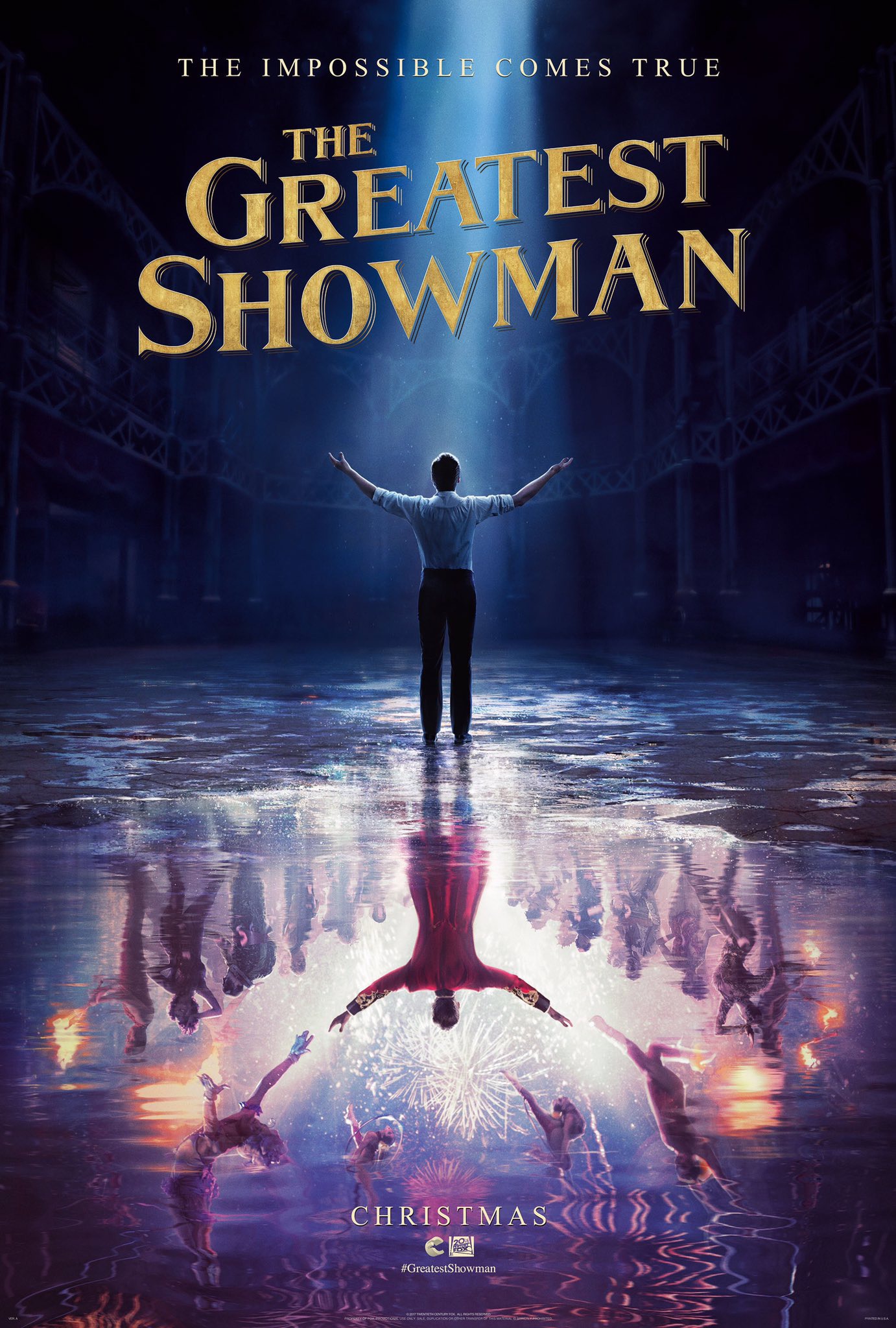
While sequels dominated the top 10, several original or non-sequel films were highly successful. Coco, Dunkirk, Get Out, and The Greatest Showman all proved that original concepts or historical retellings could still draw massive audiences and maintain "legs" at the box office.
Utilizing 2017 Data for Industry Forecasting
For researchers, students, and industry analysts, the 2017 box office serves as a primary case study in market saturation and the evolution of global audiences. To further analyze these trends, one should look toward historical databases and year-end reports provided by The Numbers or Variety’s Intelligence Platform.
When evaluating these figures from our current 2026 perspective, it is clear that 2017 was the peak of the "traditional" blockbuster era before the rapid acceleration of streaming services began to fundamentally alter theatrical windows. Understanding the success of Get Out or the "legs" of Jumanji provides valuable insights into counter-programming strategies that remain relevant in today’s competitive media landscape. Analysts should focus on the ratio of international-to-domestic gross as a key indicator of a franchise's long-term viability in a globalized economy.