The term 2007 projects primarily refers to the massive global infrastructure, engineering, and technology initiatives that reached critical milestones or completion during the final peak of the mid-2000s economic boom. These projects represent a bridge between traditional industrial engineering and the modern, digitally integrated construction era, with many remaining iconic landmarks as of 2026.
The year 2007 stands as a unique chronological marker in the world of project management. It was the year the world’s tallest building reached record heights, several of the most expensive transit hubs in history opened their doors, and the software used to manage these complexities—Microsoft Project 2007—reached peak market dominance. Looking back from 2026, these projects offer a case study in durability, the transition to sustainable design, and the long-term impact of the 2008 financial crisis on global development.
The Landmarks of 2007: Architecture and Engineering Milestones
In 2007, the global skyline underwent a fundamental transformation. This was the year that the Burj Khalifa (then known as Burj Dubai) officially became the tallest free-standing structure in the world, surpassing the CN Tower in Toronto and Taipei 101. Although the building did not officially open until 2010, the "2007 projects" designation is frequently applied to it because of the unprecedented engineering feats achieved during that calendar year, including the pumping of specialized concrete to heights never before reached.
The Rebirth of Wembley Stadium
In Europe, the completion of the new Wembley Stadium in London was the preeminent architectural event of 2007. After years of delays and budget overruns that served as a cautionary tale for project managers, the stadium finally opened on May 19, 2007, for the FA Cup Final. The project was notable for its 133-meter-tall arch, which replaced the iconic twin towers of the old stadium and required a unique structural engineering approach to support the weight of the roof.
St Pancras International and High Speed 1
November 2007 marked the completion of one of the UK’s most significant transportation projects: the full opening of St Pancras International as the new terminus for Eurostar services. This project was more than just a renovation; it involved the integration of a Victorian masterpiece with modern high-speed rail infrastructure. As of 2026, this hub remains a primary example of "adaptive reuse" in project management, proving that historical preservation can coexist with cutting-edge engineering.
Managing Complexity: The Microsoft Project 2007 Era
When professionals refer to "2007 projects" in a technical or IT context, they are often discussing the legacy of Microsoft Project 2007. Released as part of the 2007 Microsoft Office system, this software became the industry standard for scheduling, resource allocation, and tracking for over a decade.
Key Innovations of the 2007 Suite
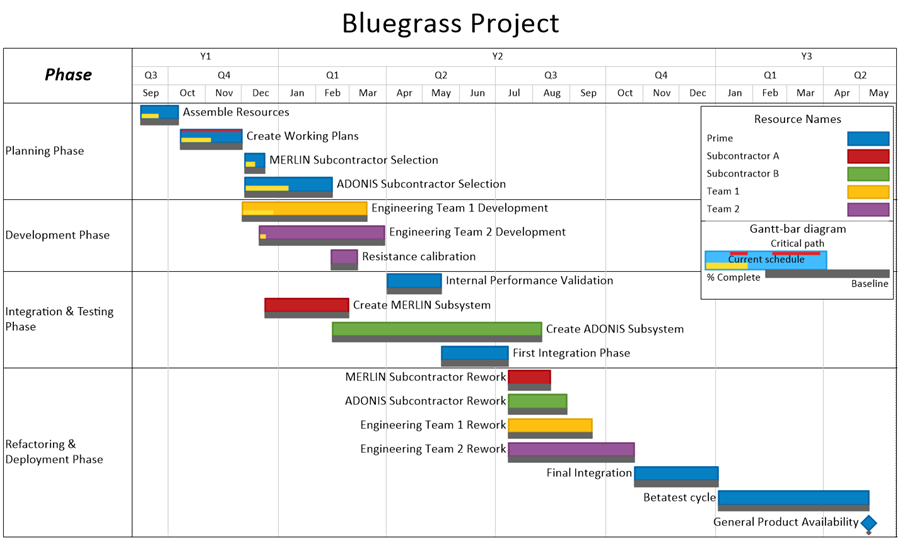
Microsoft Project 2007 introduced the "Change Highlighting" feature, which allowed managers to see the cascading effects of a single date change across a massive Gantt chart. This was revolutionary for the large-scale infrastructure projects of the time. It also integrated more deeply with SharePoint, facilitating the "Project Server" environment that modern collaborative tools like Jira or Monday.com were eventually built upon.
The Legacy of Data from 2007
As of 2026, many organizations still hold archived files in the .mpp format specific to the 2007 version. While Microsoft has long since ended support for this version (it reached End of Life in 2017), the project structures defined in 2007 often serve as the "blueprints" for modern maintenance and renovation schedules. Upgrading these legacy project files to cloud-native platforms remains a niche but vital task for IT departments managing aging infrastructure.
Significant Global Projects Completed or Advanced in 2007
The following table outlines the most impactful projects that reached major milestones in 2007, highlighting their original purpose and their status in 2026.
| Project Name | Location | Primary Category | 2007 Milestone | 2026 Status |
|---|---|---|---|---|
| Burj Khalifa | Dubai, UAE | Skyscraper | Surpassed Taipei 101 as tallest building | Fully operational; world landmark |
| Three Gorges Dam | China | Hydroelectric | Main wall completion/turbine installation | World's largest power station |
| Wembley Stadium | London, UK | Sports Venue | Official reopening/First FA Cup Final | Primary UK national stadium |
| Big Dig (CA/T) | Boston, USA | Infrastructure | Official project conclusion | Functional; transformed downtown Boston |
| St Pancras Int. | London, UK | Transport | Opening of High Speed 1 link | Major international rail terminus |
| Great Man-Made River | Libya | Water Engineering | Phase III expansion progress | Critical water source (despite regional conflict) |
The "Big Dig" and the End of an Era
The Central Artery/Tunnel Project, known colloquially as the "Big Dig" in Boston, officially concluded in 2007. This was the most expensive highway project in US history. Its conclusion marked the end of the 20th-century philosophy of massive, car-centric urban "megaprojects." By 2007, the project management world began shifting its focus toward "Smart Cities" and multi-modal transit, making the Big Dig a final monument to a different era of engineering.
The Big Dig taught the industry significant lessons about soil mechanics, slurry walls, and the financial risks of "unknown unknowns" in underground construction. In 2026, the green spaces created by the project (the Rose Kennedy Greenway) are cited as early examples of urban heat island mitigation, even though that wasn't the project's primary goal in 2007.
The Economic Context: The 2007 Financial Crisis Impact
It is impossible to discuss "2007 projects" without acknowledging the subprime mortgage crisis that began in late 2007. This economic shift had a dual effect on global projects:
- The Great Stall: Many projects initiated in early 2007 were abruptly halted or "mothballed" as liquidity dried up. Iconic examples include the Chicago Spire, which began construction in 2007 only to be abandoned as a hole in the ground for over a decade.
- The Shift to Public Stimulus: Conversely, projects that were already under contract often became the centerpiece of government stimulus packages in the following years (2008-2010), leading to an era where infrastructure was seen as the primary tool for economic recovery.
Technical Requirements for 2007-Era Project Archiving
For professionals in 2026 tasked with managing or auditing projects from the 2007 era, several technical challenges persist. Understanding these is vital for historical verification and structural integrity assessments.
- Software Compatibility: Opening 2007-era CAD files or Project files often requires specialized "compatibility packs" or legacy VM (Virtual Machine) environments.
- Material Standards: 2007 was a transition year for concrete and steel standards. Projects from this year often used early-generation high-performance concrete (HPC) that requires specific ultrasonic testing methods in 2026 to ensure no internal delamination has occurred over the last 19 years.
- Documentation Gaps: Many 2007 projects were documented in a hybrid "Paper-Digital" format. Unlike the fully digital "Digital Twins" used in 2026, these projects often have critical blueprints stored as physical microfiche or unsearchable PDFs.
Common Mistakes in Evaluating 2007 Projects
When researching or managing these legacy initiatives, several pitfalls can lead to inaccurate conclusions:
- Confusing Announcement with Completion: Many "2007 projects" were announced that year but never built due to the 2008 recession. Verification of the actual construction status is essential.
- Overlooking Environmental Standards: While LEED (Leadership in Energy and Environmental Design) existed in 2007, it was significantly less stringent than 2026 standards. Evaluating a 2007 building by today's "Net Zero" metrics often requires substantial retrofitting.
- Software Version Conflict: Assuming a "Project 2007" file will behave identically to a Modern Project Cloud file. Formulas for "Critical Path" and "Resource Leveling" were updated in later versions, which can lead to different project end-dates when the data is imported into modern software.
Frequently Asked Questions
Why is 2007 considered a "peak" year for global projects?
2007 was the last full year of global economic expansion before the Great Recession. This meant there was an unprecedented amount of both private and sovereign wealth being poured into "megaprojects," particularly in the Middle East and East Asia. Many of the world's most ambitious structural feats were either topped out or finalized during this 12-month window.
What happened to the software Microsoft Project 2007?
Microsoft Project 2007 reached the end of its extended support cycle on October 10, 2017. As of 2026, it is considered "Legacy Software." It is no longer secure for use on internet-connected machines, and most modern project management firms have migrated their data to Microsoft 365 or specialized BIM (Building Information Modeling) platforms.
Are buildings from 2007 considered "modern" in 2026?
Architecturally, yes; technically, they are entering their "mid-life" phase. Buildings completed in 2007 are now approximately 19 years old. In 2026, many of these structures are undergoing their first major HVAC and elevator modernizations to meet new carbon-reduction regulations that did not exist when they were designed.
Which 2007 project had the biggest impact on modern engineering?
The Burj Khalifa is generally cited as the most impactful. The techniques developed in 2007 for vertical pumping of concrete and wind-vortex shedding redefined the limits of skyscraper height. These methods are still the gold standard for supertall construction in 2026.
How can I access files from a 2007 Project?
To access .mpp files from 2007, the most reliable method in 2026 is using the "Import" function in modern Microsoft Project Online or using a dedicated third-party viewer. Beware that custom macros or VBA scripts written in 2007 may not function in 2026 environments due to security protocols.
Practical Guidance for Managing 2007-Era Assets
For those responsible for the maintenance or oversight of infrastructure and software assets dating back to 2007, the priority in 2026 should be digital preservation and structural auditing.
If you are managing a physical asset, conduct a deep-dive audit of the structural joints and electronic control systems, as these are reaching the end of their original 20-year design life. If you are managing data, ensure that all 2007-format files are migrated to a modern, searchable database. The historical data from these projects is invaluable for predictive maintenance, but only if it is accessible in a modern format.