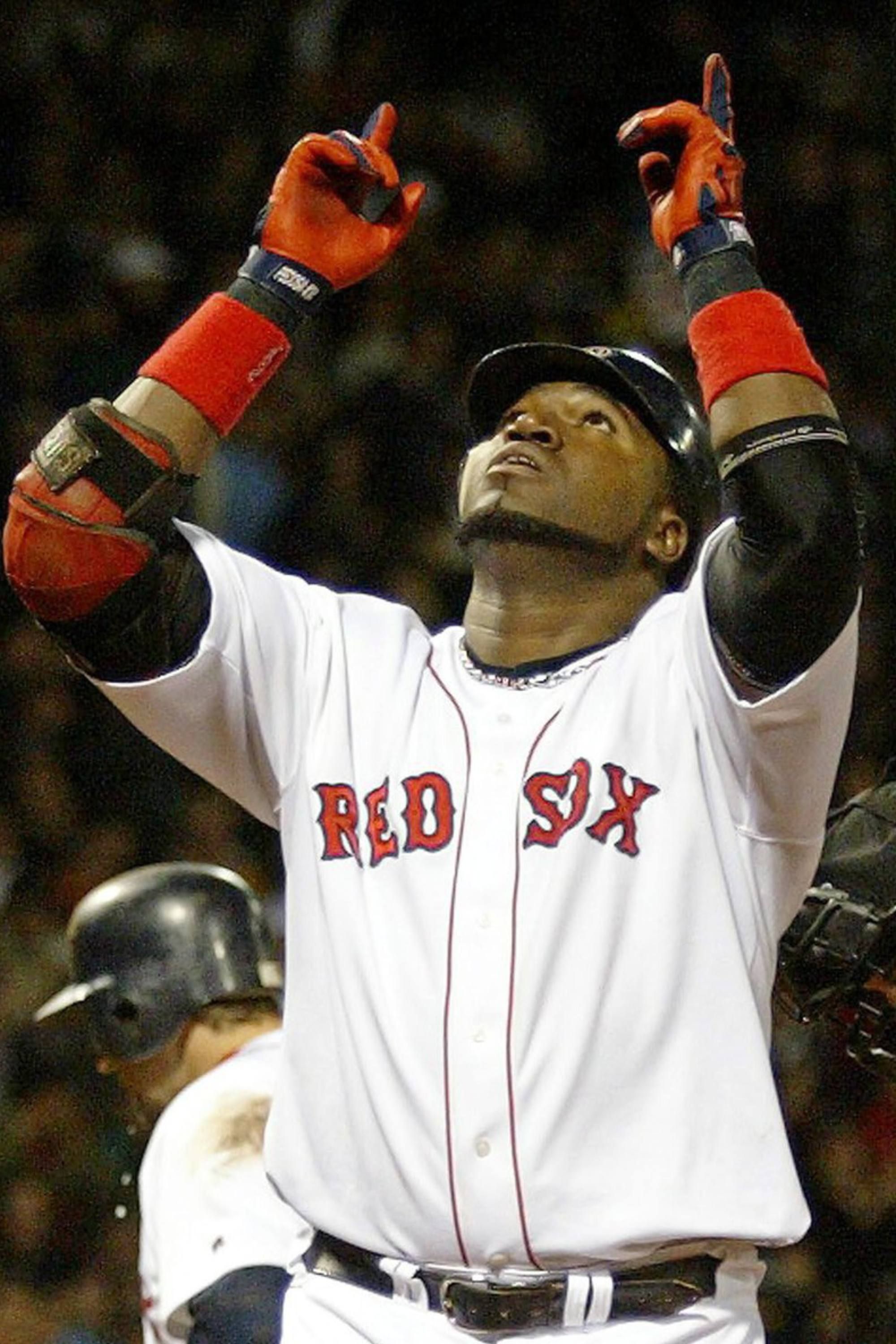
The 2004 Boston Red Sox World Series roster consisted of 25 players who famously broke the 86-year "Curse of the Bambino" by sweeping the St. Louis Cardinals in four games. This legendary squad, managed by Terry Francona, featured a potent lineup led by David Ortiz and Manny Ramirez, supported by a pitching staff anchored by Curt Schilling and Pedro Martinez.
The Significance of the 2004 Roster Construction
Looking back from the vantage point of 2026, the 2004 Boston Red Sox roster remains a masterclass in aggressive mid-season adjustments and chemistry building. The team, nicknamed "The Idiots" for their loose, unconventional clubhouse culture, was not just a collection of talent but a specifically engineered unit designed to overcome the psychological hurdles of the franchise’s long championship drought.
To understand the roster, one must look at the pivotal trade deadline move on July 31, 2004. The Red Sox traded their franchise icon, Nomar Garciaparra, in a four-team deal that brought in shortstop Orlando Cabrera and first baseman Doug Mientkiewicz. This move was initially unpopular with fans but was technically vital; it prioritized infield defense and "grittiness" over Garciaparra's offensive production, which had been hampered by injuries. This restructuring solidified the roster that would eventually take the field against the Cardinals in late October.
The 2004 roster was also unique for its blend of "bridge" players—short-term veterans like Curtis Leskanic and Dave Roberts—and homegrown icons like Jason Varitek. This synergy allowed the team to survive an unprecedented 0-3 deficit in the ALCS against the New York Yankees before entering the World Series with unstoppable momentum.
The Starting Rotation: A Dual-Ace Foundation
The 2004 Red Sox rotation was top-heavy but incredibly resilient. The strategy relied on two future Hall of Famers at the top, followed by versatile arms capable of logging heavy innings under pressure.
Curt Schilling and Pedro Martinez formed the most feared 1-2 punch in baseball that season. Schilling, pitching through the now-legendary "bloody sock" injury (a ruptured tendon sheath in his right ankle), provided the physical and emotional stability the rotation needed. His performance in Game 2 of the World Series—6.0 innings with only one run allowed—set the tone for the sweep. Pedro Martinez, while no longer at his absolute peak of 1999–2000, remained a master of deception and big-game temperament, delivering seven shutout innings in Game 3.
Behind them, Derek Lowe and Bronson Arroyo provided the necessary depth. Lowe’s role was particularly noteworthy; he transitioned between the bullpen and the rotation throughout the year, eventually becoming the winning pitcher in the clinching games of the ALDS, ALCS, and the World Series. His sinker-ball style was the perfect foil to the high-strikeout approaches of Schilling and Martinez. Tim Wakefield, the veteran knuckleballer, provided the roster with a unique tactical advantage, though his primary World Series contribution was stabilizing the staff after the marathon games in the ALCS.
The Infield: Defensive Stability and Clutch Hitting
The 2004 infield was defined by the "Nomar Trade" arrivals and the steady excellence of the corner infielders. By the time the World Series arrived, the defensive alignment was airtight, which was a prerequisite for supporting a pitching staff that relied heavily on ground-ball outs.
- Jason Varitek (Catcher): The unofficial captain (named official captain in 2005), Varitek was the cerebral heart of the team. He was responsible for managing the diverse pitching styles of a knuckleballer, a power pitcher, and a finesse ace.
- Kevin Millar (First Base): While his "Cowboy Up" mantra and "don't let us win tonight" speech are legendary for their locker room impact, Millar provided essential right-handed power and a high on-base percentage.
- Mark Bellhorn (Second Base): Often the unsung hero, Bellhorn had a penchant for late-inning home runs, including a critical two-run shot in Game 1 of the World Series that hit the foul pole.
- Orlando Cabrera (Shortstop): Acquired for his defense, Cabrera brought a gold-glove caliber glove and an infectious energy that transformed the left side of the infield.
- Bill Mueller (Third Base): The 2003 American League batting champion, Mueller was a consistent professional who provided high-contact at-bats and reliable defense at the hot corner.
The Official 2004 Red Sox World Series 25-Man Roster
The following table lists the complete 25-man roster as submitted to Major League Baseball for the 2004 World Series against the St. Louis Cardinals.
| Player Name | Position | Role/Key Contribution |
|---|---|---|
| Jason Varitek | Catcher | Primary Catcher; Team Leader |
| Doug Mirabelli | Catcher | Backup Catcher; Tim Wakefield's Personal Receiver |
| Kevin Millar | First Base | Starting 1B; Clubhouse Catalyst |
| Mark Bellhorn | Second Base | Starting 2B; Clutch Power Hitter |
| Orlando Cabrera | Shortstop | Starting SS; Defensive Anchor |
| Bill Mueller | Third Base | Starting 3B; High-Contact Hitter |
| Doug Mientkiewicz | First Base | Defensive Specialist; Recorded Final Out of WS |
| Pokey Reese | Second Base/SS | Defensive Replacement; Late-Inning Speed |
| David Ortiz | DH / 1B | Designated Hitter; ALCS MVP; Power Threat |
| Manny Ramirez | Outfield | Left Field; World Series MVP (.412 AVG) |
| Johnny Damon | Outfield | Center Field; Leadoff Hitter; "The Hair" |
| Trot Nixon | Outfield | Right Field; "The Dirt Dog"; Intense Competitor |
| Gabe Kapler | Outfield | Defensive Substitute; Fourth Outfielder |
| Dave Roberts | Outfield | Pinch Runner; Defensive Specialist |
| Pedro Martinez | Pitcher | Starting Pitcher (Game 3 Winner) |
| Curt Schilling | Pitcher | Starting Pitcher (Game 2 Winner) |
| Derek Lowe | Pitcher | Starting Pitcher (Game 4 Winner) |
| Bronson Arroyo | Pitcher | Starting Pitcher (Game 1 No-Decision) |
| Tim Wakefield | Pitcher | Knuckleballer; Long Relief/Starter |
| Keith Foulke | Pitcher | Closer; 1.00 ERA in 2004 Postseason |
| Mike Timlin | Pitcher | Setup Man; Veteran Postseason Experience |
| Alan Embree | Pitcher | Left-Handed Specialist; Middle Relief |
| Mike Myers | Pitcher | Left-Handed Specialist; "Submarine" Delivery |
| Curtis Leskanic | Pitcher | Right-Handed Middle Relief |
| Ramiro Mendoza | Pitcher | Veteran Relief; Multi-Inning Capability |
The Outfield and DH: The Power Engine
The offensive core of the 2004 Red Sox resided in the outfield and the designated hitter spot. The duo of David Ortiz and Manny Ramirez is widely considered one of the greatest offensive pairings in baseball history. In 2004, they were at the peak of their powers, providing a "fear factor" that forced opposing managers into difficult tactical decisions.
Manny Ramirez earned World Series MVP honors by batting .412 with a home run and seven RBIs over the four-game sweep. His ability to drive the ball to all fields made him nearly impossible to pitch around. David Ortiz, while primary a DH, was the emotional engine of the lineup. Following his walk-off heroics in the ALCS, he continued his dominance in the World Series, hitting a three-run home run in the first inning of Game 1 to signal that the Red Sox were not suffering from a "post-Yankees hangover."
Johnny Damon served as the perfect leadoff hitter. His speed and aggressive approach at the plate created constant pressure on the St. Louis defense. In the clinching Game 4, Damon hit a lead-off home run that effectively sucked the life out of the Busch Stadium crowd. Trot Nixon, the quintessential "Dirt Dog," provided grit in right field and hit .357 during the series, proving that the lineup had depth far beyond the superstars at the top.
The Bullpen: The "Foulke" Point of Success
While the starters and hitters received most of the accolades, the 2004 World Series would not have been a sweep without the elite performance of the bullpen, specifically closer Keith Foulke.
Foulke’s 2004 postseason is statistically one of the greatest of all time. He appeared in 11 of the 14 postseason games the Red Sox played, throwing 257 pitches in the month of October. In the World Series, he was the bridge to victory, appearing in all four games and securing the final out when he hopped off the mound to field a comeback grounder from Edgar Renteria.
The supporting cast in the bullpen was equally disciplined. Mike Timlin and Alan Embree provided the veteran presence needed to bridge the gap between the starters and Foulke. Timlin was the reliable right-hander who could handle high-leverage situations in the 7th and 8th innings, while Embree served as the primary left-handed weapon. The specialized roles of Mike Myers (a lefty specialist) and Curtis Leskanic (a mid-season waiver claim) allowed Terry Francona to play the "matchup game" with clinical precision against a dangerous Cardinals lineup featuring Albert Pujols and Scott Rolen.
Common Questions About the 2004 Roster
Who was the MVP of the 2004 World Series?
Manny Ramirez was named the World Series MVP. He posted a .412 batting average, a .500 on-base percentage, and slugged .588. His steady production in the middle of the order was the driving force behind the Red Sox's ability to score 24 runs over the four-game sweep.
Did Dave Roberts play in the 2004 World Series?
Dave Roberts was on the 25-man World Series roster, but his physical participation was minimal compared to his legendary "The Steal" in the ALCS. He appeared in Game 2 as a pinch-runner for Kevin Millar and eventually scored a run, but he did not record an official at-bat during the four games against St. Louis.
Why wasn't Nomar Garciaparra on the World Series roster?
Nomar Garciaparra was traded to the Chicago Cubs on July 31, 2004. Because he was no longer on the team's active roster after the trade deadline, he was ineligible to play for Boston in the postseason. However, the organization did vote to give him a World Series ring in recognition of his years of service and his contributions during the first half of the 2004 season.
Which pitcher recorded the final out of the 2004 World Series?
Keith Foulke recorded the final out. In the bottom of the 9th inning of Game 4, with two outs and nobody on base, Foulke induced a ground ball from St. Louis shortstop Edgar Renteria. Foulke fielded the ball himself and tossed it to first baseman Doug Mientkiewicz to end the 86-year championship drought.
How many Hall of Famers were on the 2004 Red Sox roster?
As of 2026, the roster features three primary Hall of Famers: David Ortiz (inducted 2022), Pedro Martinez (inducted 2015), and Curt Schilling (who, while not in Cooperstown, has the statistical credentials often debated by historians). Manny Ramirez also possesses Hall of Fame statistics but remains outside the Hall due to era-specific controversies.
Verification of Roster Legacy
To truly appreciate the 2004 Red Sox roster, one should examine the individual career arcs that peaked during that October. This team was a "lightning in a bottle" assembly where role players like Mark Bellhorn and Pokey Reese played far above their career averages at the exact moments the team required it.
For researchers or fans looking to verify specific game logs or advanced metrics from this roster, official archives at MLB.com or the National Baseball Hall of Fame offer comprehensive seasonal breakdowns. The 2004 team remains the benchmark for how a front office can use the trade deadline to fix specific defensive deficiencies, transforming a "good" team into an unbeatable one.
If you are analyzing this roster for historical comparison, pay close attention to the "Innings Pitched" totals for the bullpen. The workload handled by Keith Foulke and Mike Timlin during the seven-game ALCS and four-game World Series represents a style of bullpen management that has largely disappeared in the modern "opener" era, making their 2004 achievement even more technically impressive.