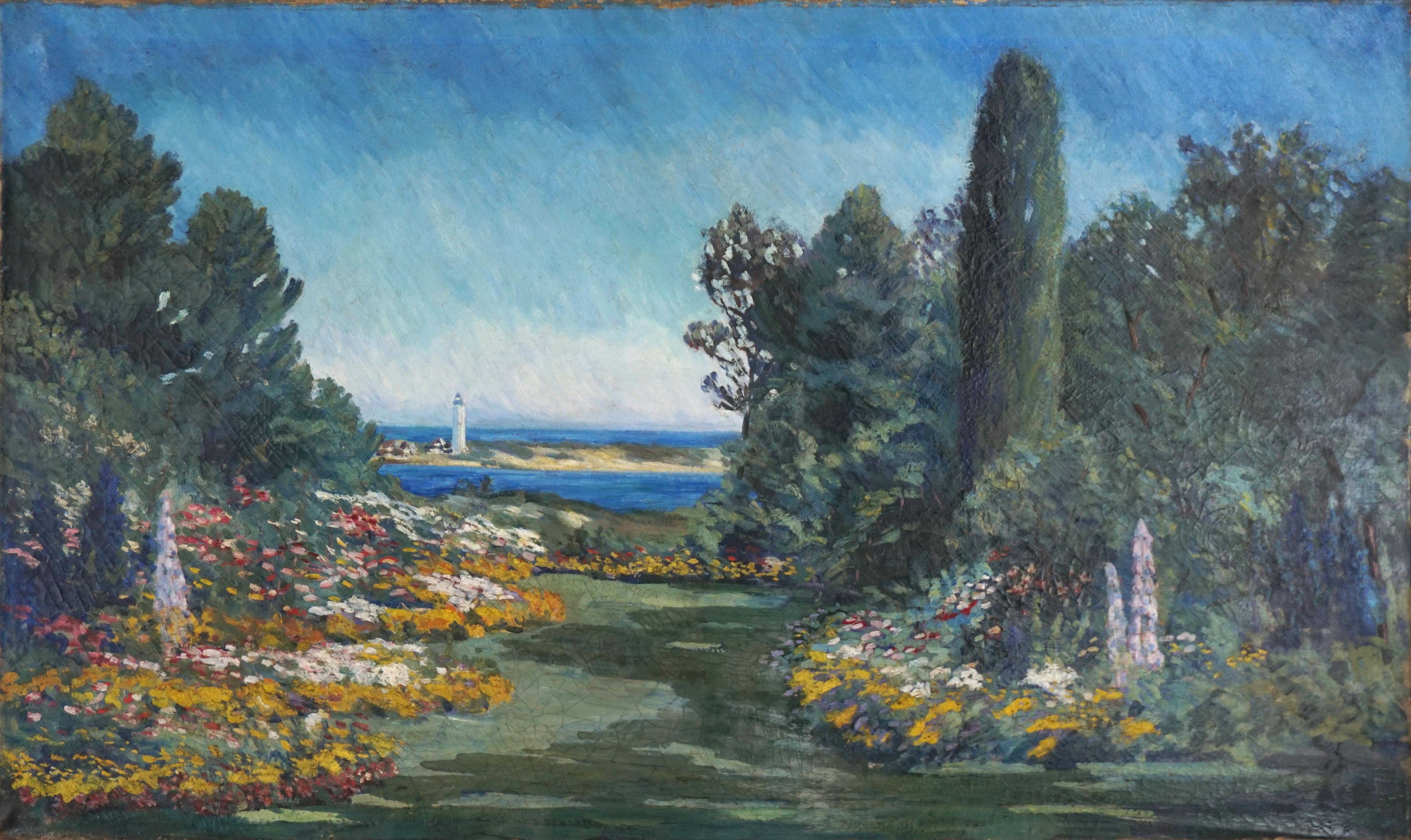
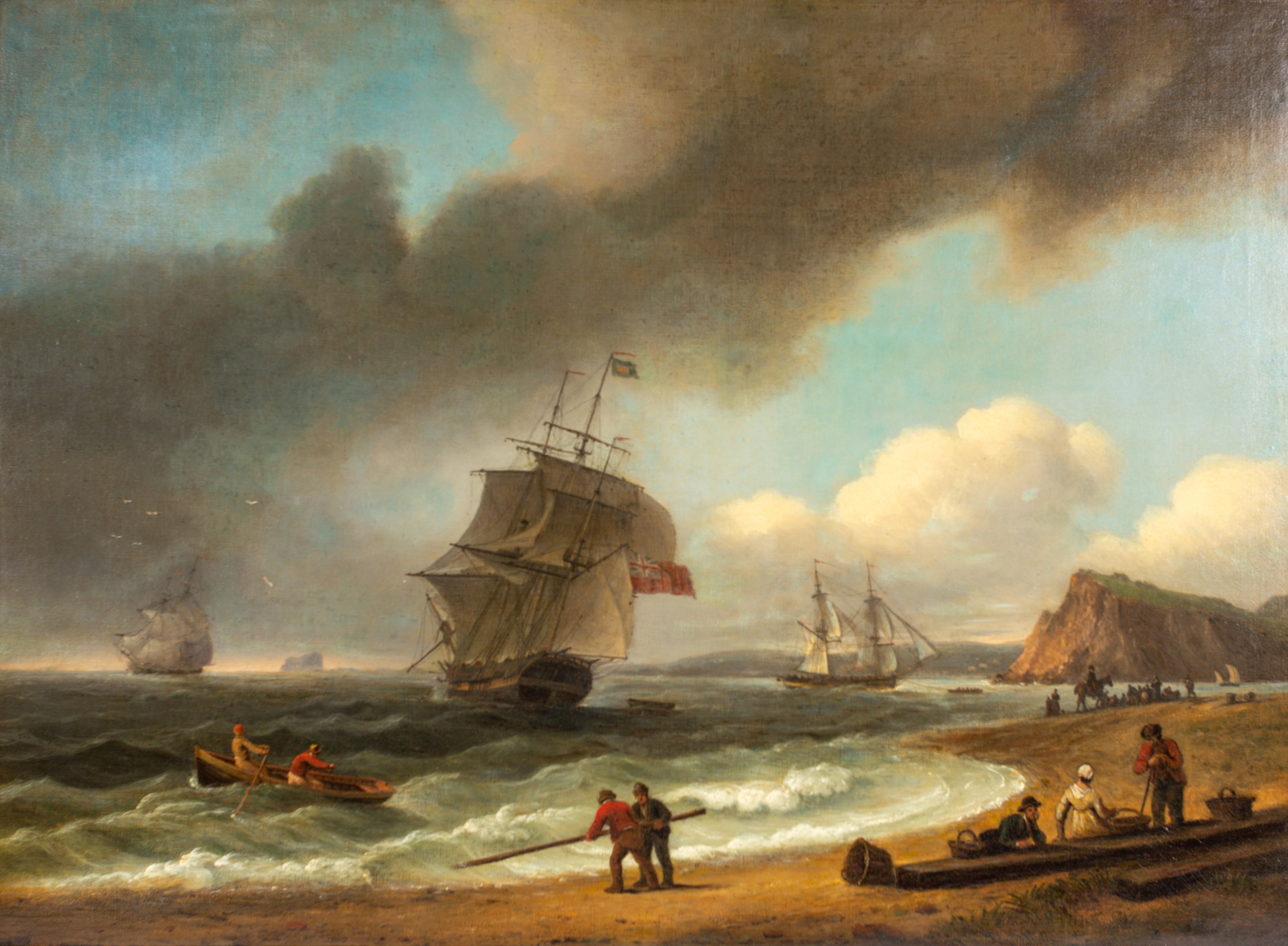
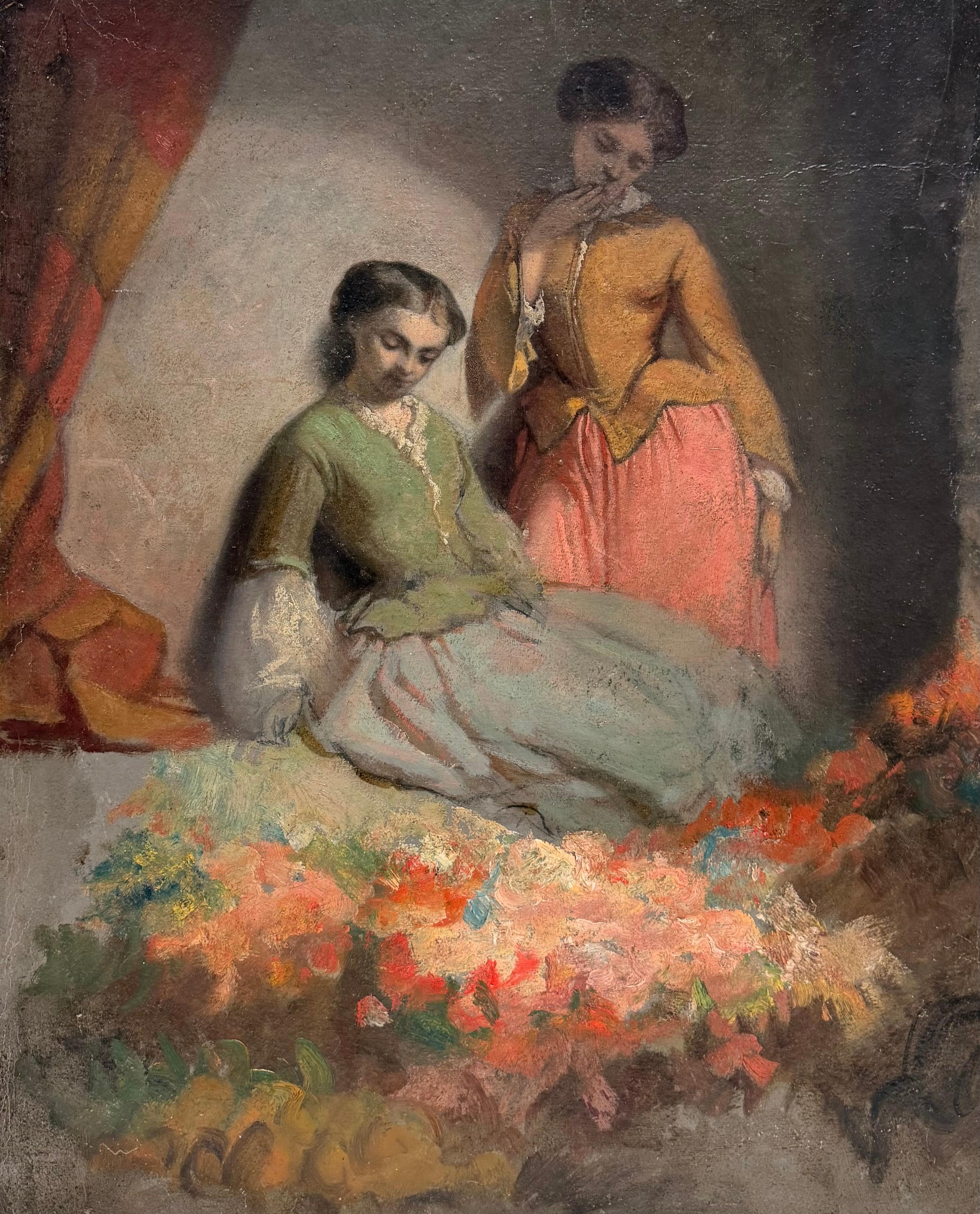
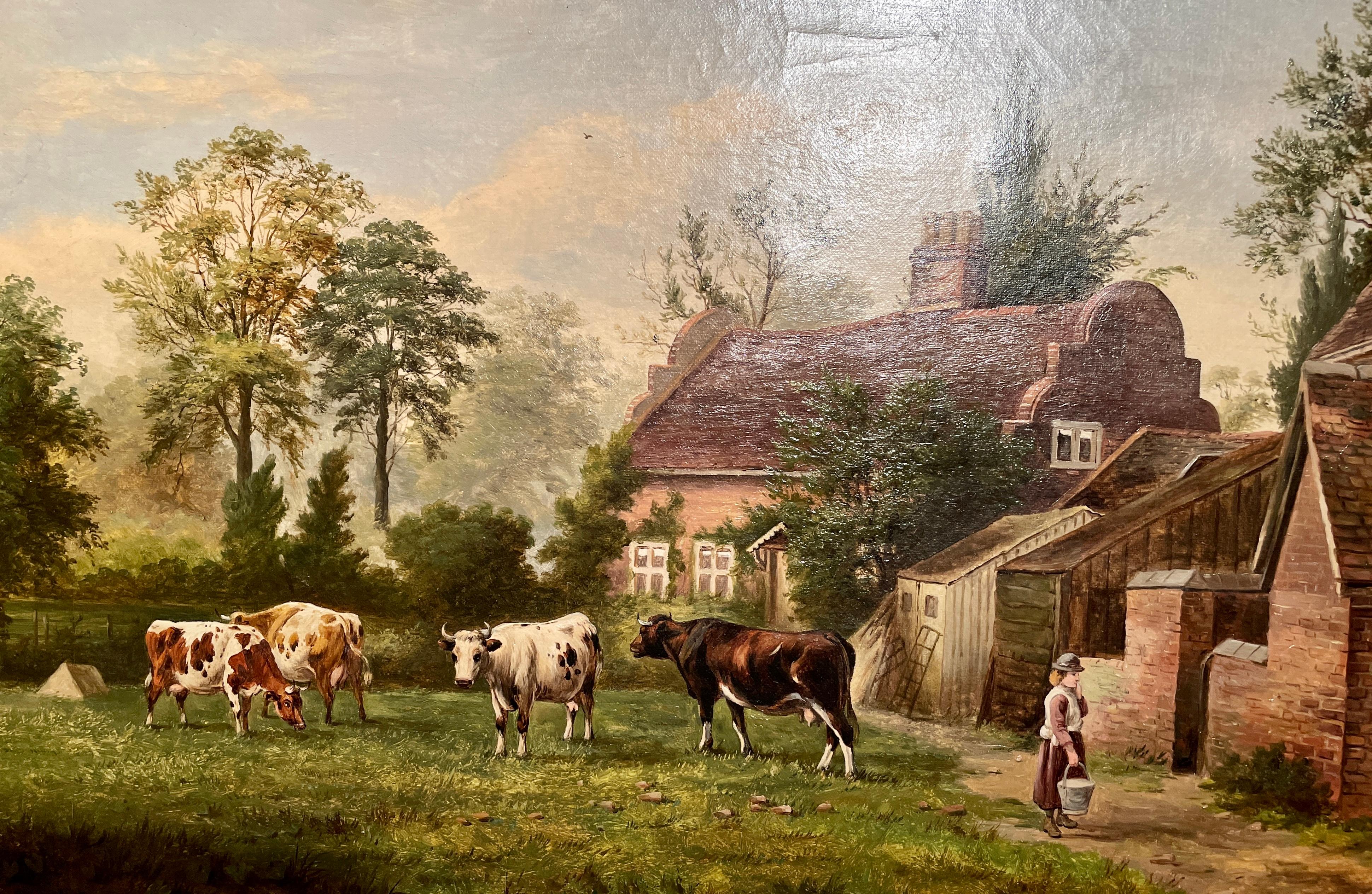
The 19th century was a period of unprecedented transformation in European and American art, marked by a rapid shift from rigid academic classicism to the revolutionary sensory investigations of Impressionism and Post-Impressionism. Driven by industrialization, the invention of portable oil paint tubes, and the rise of photography, artists abandoned traditional studio constraints to redefine visual culture.
The Academic Foundation and Neoclassicism
At the dawn of the 19th century, academic painting dominated the official institutions of Europe, most notably the Académie des Beaux-Arts in Paris. Neoclassicism served as the visual language of the state and the ruling classes, drawing heavy inspiration from the classical antiquity of Greece and Rome. Artists such as Jacques-Louis David and Jean-Auguste-Dominique Ingres championed rigorous draftsmanship, clear compositional lines, and moral seriousness. Subjects were frequently drawn from classical history, mythology, or contemporary political heroism, rendered with smooth, polished brushstrokes that concealed the hand of the artist.
Academic instruction relied heavily on the hierarchy of genres, a system that ranked historical and mythological painting at the top, followed by portraiture, landscape, genre scenes, and still life at the bottom. To exhibit at the official Paris Salon—the most important annual or biennial art event in the Western world—painters had to conform strictly to these academic standards. However, this rigid system quickly drew resistance from a new generation of artists who sought emotional intensity, individual expression, and a direct engagement with the turbulent modern world.
Romanticism: Emotion, Nature, and the Sublime
In stark opposition to the rationalism and order of Neoclassicism, Romanticism emerged in the early decades of the 19th century, prioritizing intense emotion, imagination, and the overwhelming power of nature. Romantic painters across Europe rejected the calm restraint of the classical tradition, instead exploring themes of nationalism, historical nostalgia, and the concept of the sublime—an aesthetic experience combining awe, terror, and insignificance in the face of untamed wilderness.
In France, Eugène Delacroix captured political fervor and dramatic movement in works like Liberty Leading the People (1830), using vibrant color and expressive brushwork over tight outlines. In Spain, Francisco Goya charted the darkest recesses of human psychology and the horrors of war. Meanwhile, in England, landscape painters like J.M.W. Turner and John Constable elevated landscape painting to a monumental scale. Constable focused on the pastoral tranquility of the English countryside with acute atmospheric observation, whereas Turner dissolved forms into swirling vortexes of light, color, and elemental fury, anticipating modern abstraction.
Realism: Documenting Everyday Life and Social Truth
By the mid-19th century, the sociopolitical upheavals of the Industrial Revolution and the revolutions of 1848 spurred a rejection of both classical idealism and Romantic fantasy. Realism emerged with the mandate to depict the actual contemporary world truthfully, without embellishment or romantic idealization. Painters turned their attention to the laboring classes, rural peasants, and urban workers, elevating ordinary people to the subjects of monumental canvas painting.
Gustave Courbet stood as the central figure of the Realist movement, famously declaring that he could not paint an angel because he had never seen one. His massive canvases, such as A Burial at Ornans (1849–1850), depicted rural commoners with the scale and dignity previously reserved for historical or religious heroes. In France, the Barbizon School painters—including Jean-François Millet and Théodore Rousseau—withdrew from urban centers to paint the Forest of Fontainebleau and the peasants who worked the land. In the United States, Winslow Homer and Thomas Eakins developed a gritty, empirical approach to American life, recording the realities of the Civil War, maritime labor, and scientific anatomy.
Impressionism: Capturing Light and Modernity
The defining turning point of 19th-century art arrived in the 1860s and 1870s with the formation of Impressionism. A loose collective of independent artists—including Claude Monet, Pierre-Auguste Renoir, Edgar Degas, Camille Pissarro, and Berthe Morisot—rejected the themes and exhibition constraints of the official Paris Salon. Driven by the advent of portable metal paint tubes and the accessibility of synthetic pigments, these painters took their easels outdoors (en plein air) to capture transient effects of light, weather, and atmosphere.
Impressionist technique abandoned smooth, blended modeling in favor of rapid, visible brushstrokes and unblended complementary colors placed side by side, allowing the viewer's eye to optically mix the pigments at a distance. Rather than painting grand historical narratives, Impressionists focused on modern urban life: bustling Parisian boulevards, railway stations, cafés, theaters, and leisure activities of the burgeoning middle class. Their radical departure from traditional perspective and color theory faced fierce derision from conservative critics initially, but it laid the direct groundwork for the modernist movements of the 20th century.
| Movement | Core Philosophy | Key Artists | Representative Subject Matter |
|---|---|---|---|
| Neoclassicism | Reason, order, moral elevation, classical antiquity | Jacques-Louis David, J.A.D. Ingres | Historical heroism, classical mythology, portraits |
| Romanticism | Emotion, imagination, nationalism, the sublime | Eugène Delacroix, J.M.W. Turner, Caspar David Friedrich | Shipwrecks, dramatic landscapes, revolutions |
| Realism | Truthful documentation of contemporary life and labor | Gustave Courbet, Jean-François Millet, Thomas Eakins | Peasant labor, urban workers, ordinary scenes |
| Impressionism | Transient light, atmospheric effects, modern leisure | Claude Monet, Pierre-Auguste Renoir, Edgar Degas | Landscapes, Parisian street scenes, cafés, rivers |
Post-Impressionism: Structural and Psychological Explorations
As the 19th century drew to a close, a generation of artists built upon the color breakthroughs of Impressionism while seeking to reintroduce structural order, symbolic meaning, or heightened emotional intensity. Known collectively as Post-Impressionism—a term coined later by art critic Roger Fry—these painters pursued highly individualized paths that would dismantle traditional visual representation entirely.
Georges Seurat pioneered Pointillism (or Divisionism), a meticulous technique applying small, distinct dots of pure color based on scientific theories of optical perception. Paul Cézanne sought to restore structural solidity to painting by reducing natural forms to their fundamental geometric equivalents—cylinders, spheres, and cones—fundamentally influencing Cubism. Vincent van Gogh utilized thick impasto and swirling, expressive brushstrokes to convey turbulent psychological states, while Paul Gauguin abandoned European civilization for Tahiti, utilizing flat planes of intense, symbolic color to evoke spiritual and primitive themes.
Frequently Asked Questions
What caused the shift from academic art to modern movements in the 19th century?
The shift was accelerated by the Industrial Revolution, the invention of photography, and changing political structures. Photography relieved painting of its traditional role as a documentary recording tool, allowing artists to experiment with abstraction, subjectivity, and light. Additionally, the rise of a wealthy middle class disrupted traditional patronage, creating an independent art market that supported experimental dealers and independent exhibitions.
How did the invention of tube paint change 19th-century painting?
Before the mid-19th century, oil paint was laboriously ground by studio assistants and stored in fragile pig bladders, limiting artists to indoor studio work. The invention of the collapsible tin paint tube in 1841 by John Goffe Rand allowed paint to remain fresh, portable, and sealed. This innovation enabled the rise of en plein air painting, directly fueling the Impressionist movement by letting artists work outdoors in nature.
What was the Paris Salon and why was it important?
The Paris Salon was the official art exhibition of the Académie des Beaux-Arts in Paris, established in the 17th century. Throughout the 19th century, acceptance into the Salon was essential for an artist's career, financial success, and public reputation. Because conservative academic juries rejected innovative styles like Realism and Impressionism, independent artists eventually bypassed the Salon entirely, organizing cooperative group exhibitions that birthed the modern art market.
How did Japanese art influence 19th-century European painting?
Following the reopening of Japanese trade ports in the 1850s, Japanese woodblock prints (ukiyo-e) flooded European markets, frequently used as wrapping paper for imported goods. Impressionist and Post-Impressionist artists like Edgar Degas, Mary Cassatt, and Vincent van Gogh were profoundly influenced by these prints. They adopted asymmetric compositions, high horizon lines, flat areas of unmodulated color, and cropped framing devices.
What is the difference between Realism and Impressionism?
While both movements rejected academic classicism and turned away from historical or mythological subjects, their goals diverged sharply. Realism focused on the social and political truths of everyday life, often depicting the harsh labor of the working class with sober tones and solid forms. Impressionism focused primarily on optical perception, light, and modern leisure, using loose, fractured brushstrokes to capture a fleeting moment in time rather than a social critique.
Preserving and Studying 19th-Century Art Today
For contemporary researchers, collectors, and enthusiasts, studying 19th-century painting requires engaging with both physical museum collections and technical conservation data. When examining authenticated works, conservators utilize infrared reflectography and X-ray radiography to analyze underlying underdrawings, pentimenti (artist alterations), and pigment degradation. To explore this era effectively, prioritize visits to foundational institutions such as the Musée d'Orsay in Paris, the Metropolitan Museum of Art in New York, and the National Gallery in London, where extensive provenance records and scientific analyses are readily accessible to the public.