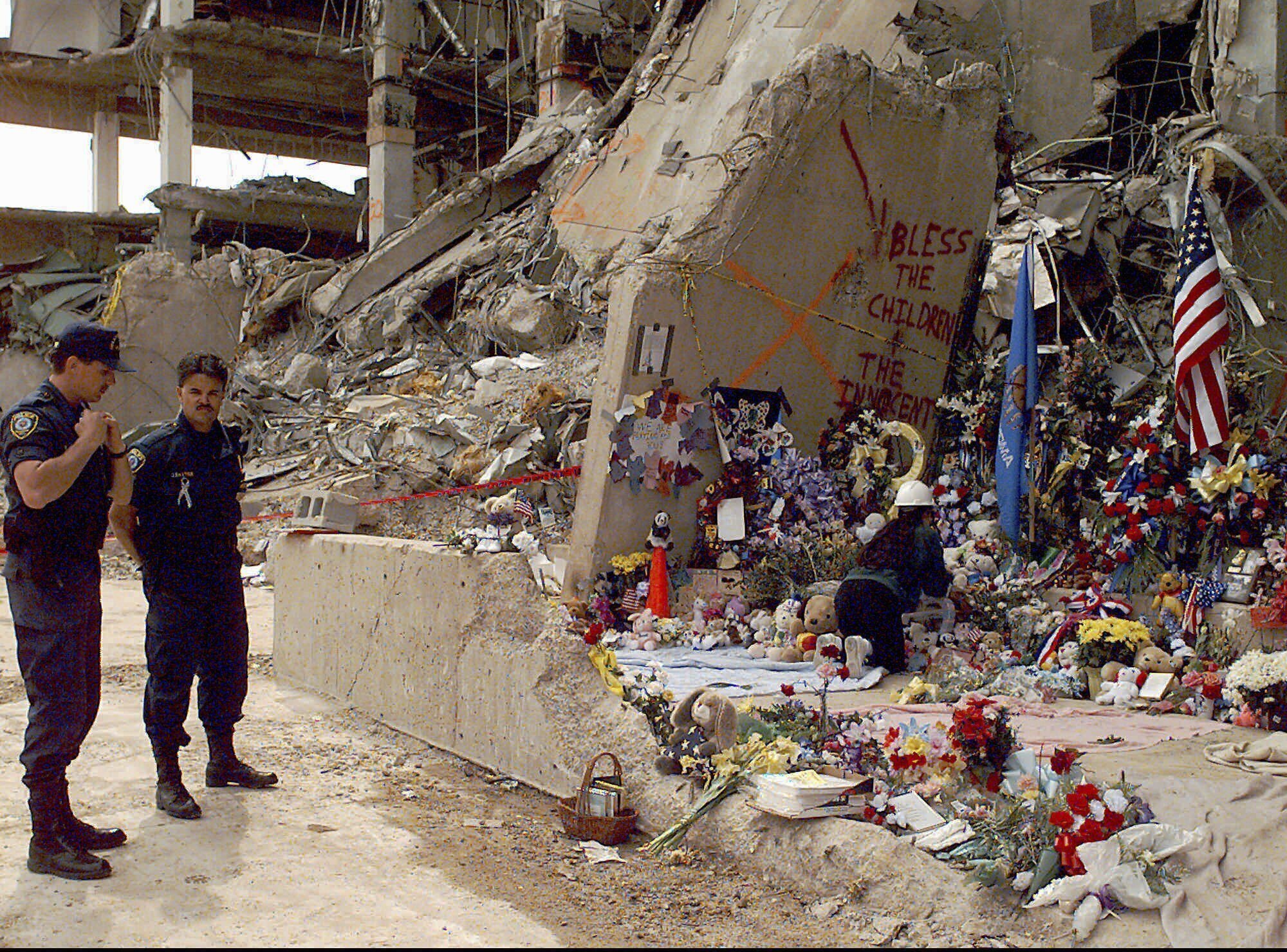
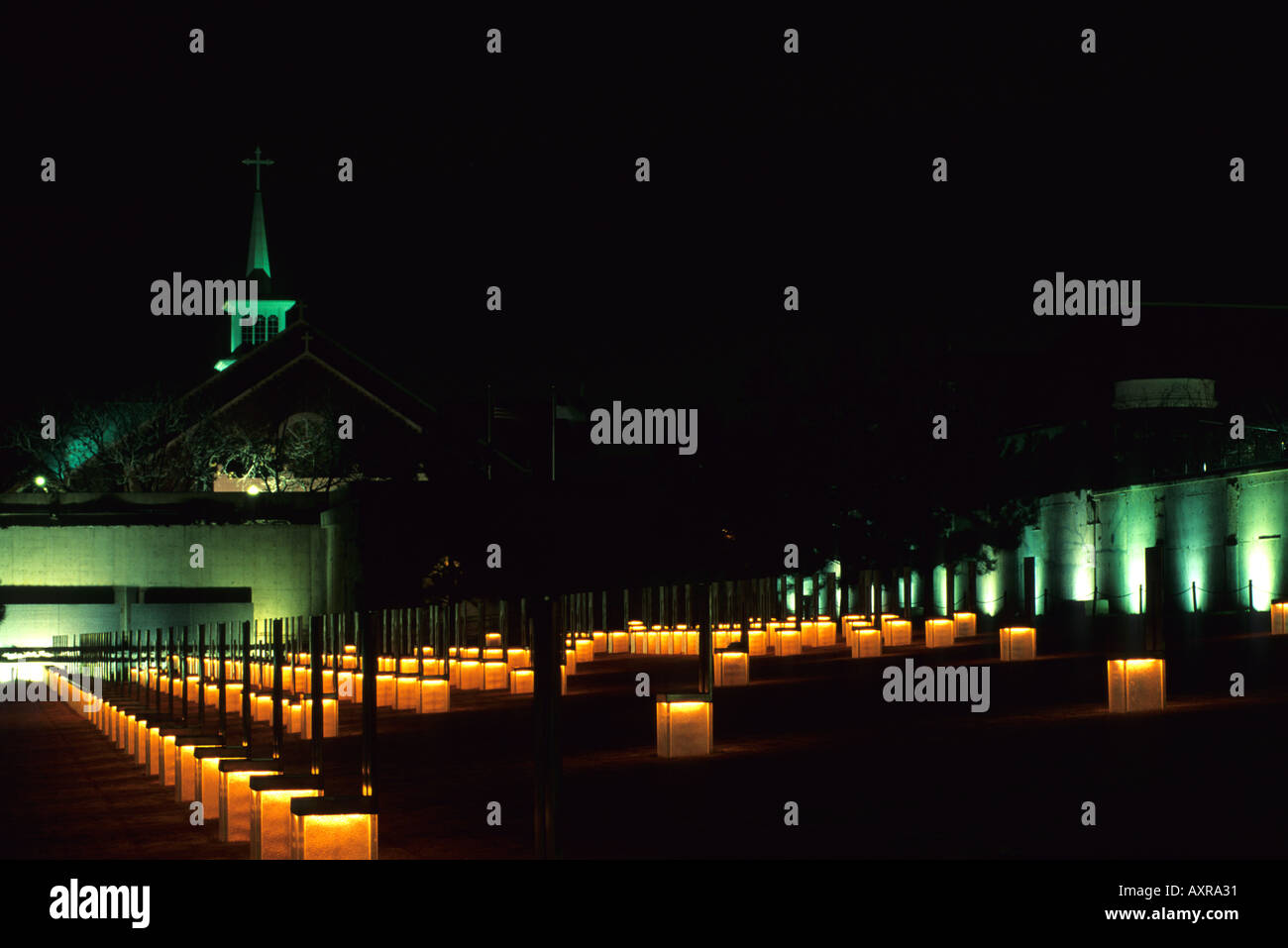
The 1995 bombing site marks the location of the April 19, 1995, domestic terrorist attack on the Alfred P. Murrah Federal Building in downtown Oklahoma City. Today, the footprint serves as the solemn Oklahoma City National Memorial & Museum, preserving the history of the tragedy, honoring the victims, and documenting the response of emergency personnel and the community.
Historical Context and the Attack on the Murrah Building
On the morning of April 19, 1995, a Ryder rental truck packed with an estimated 4,000 pounds of an ammonium nitrate-fuel oil fertilizer mixture was detonated outside the Alfred P. Murrah Federal Building at 5th Street and Northwest Robinson Avenue in downtown Oklahoma City. The blast destroyed the north half of the nine-story federal office building, claiming 168 lives—including 19 children—and injuring hundreds of others. It remains one of the deadliest acts of domestic terrorism in United States history.
The choice of target and the structural mechanics of the blast fundamentally changed how federal buildings across the United States were secured and designed. The Murrah Building, constructed in 1977, featured an open-air parking lot directly adjacent to the street and a reinforced concrete design that lacked progressive collapse resistance. When the truck bomb detonated, the exterior columns failed, causing upper floor slabs to pancake down onto lower levels. The event prompted the Interagency Security Committee (ISC) to establish rigorous physical security standards for federal facilities, emphasizing mandatory setback distances, blast-mitigation glazing, and hardened structural frames.
Transition from Disaster Zone to Sacred Ground
In the immediate aftermath of the explosion, the site functioned as a chaotic, high-stakes rescue and recovery zone. Federal, state, and local emergency personnel, alongside civilian volunteers and urban search and rescue teams (such as Oklahoma Task Force 1 and teams from across the nation), spent weeks sifting through the rubble. Once recovery efforts concluded, local leadership and victims' families faced the question of how to handle the scarred urban core.
The initial spontaneous memorialization began organically along the chain-link security fences surrounding the blast site. People left teddy bears, flags, caps, letters, and religious items, turning the perimeter into a vast repository of national grief. Recognizing the cultural and historical weight of these offerings, community leaders formed the Oklahoma City Bombing Memorial Foundation to steward the collection and design a permanent monument. The federal building was demolished in May 1995, and planning began for a permanent space that would balance public mourning, architectural dignity, and historical education.
Architecture and Design of the Oklahoma City National Memorial
Dedicated on April 19, 2000, exactly five years after the bombing, the Oklahoma City National Memorial was designed by the Hans Meyer Boeke architecture firm. The memorial site occupies the footprint of the former Murrah Building, adjacent lawns, and the section of Northwest 5th Street that absorbed the direct impact of the blast. The landscape is divided into several symbolic zones designed to guide visitors through historical reflection, quiet contemplation, and remembrance.
| Memorial Zone | Key Architectural Feature | Symbolic Meaning |
|---|---|---|
| The Gates of Time | Two monumental bronze arches inscribed with "9:01" and "9:03" | Framing the moment innocence was lost (9:02 AM) and the time healing began. |
| The Reflecting Pool | A shallow pool of water set within the former alignment of 5th Street | Representing a mirror to reflect upon oneself and honor those affected. |
| The Field of Empty Chairs | 168 handmade glass and stone chairs arranged by floor of the building | Representing individual lives lost, with smaller chairs for the children. |
| The Survivor Tree | An American elm tree that survived the blast and fire | Demonstrating resilience, endurance, and the enduring spirit of the community. |
Educational Outreach and the Memorial Museum
Positioned immediately south of the memorial grounds is the Oklahoma City National Memorial Museum, housed in the former Journal Record Building. This facility sustained severe damage during the 1995 explosion but was restored to house an extensive interactive archive. The museum utilizes artifacts, oral histories, interactive timelines, and forensic evidence to chronicle the investigation, the legal proceedings, and the societal impact of the attack.
The investigative timeline displayed within the museum details the rapid multi-agency manhunt led by the Federal Bureau of Investigation (FBI), alongside the Oklahoma Department of Public Safety and local police. Within days, key perpetrators Timothy McVeigh and Terry Nichols were apprehended. The museum details the forensic breakthroughs—such as tracing the vehicle identification number (VIN) fragment from the Ryder truck axle—that connected the conspirators to the purchase of precursor chemicals. Educational programs at the museum focus on counter-terrorism, civil liberties, emergency management, and the ethics of public safety, drawing thousands of students, law enforcement officials, and historians annually.
Visitor Information, Access, and Site Etiquette
Visiting the 1995 bombing site requires an understanding of its dual nature as both an active public park and a place of deep national mourning. The outdoor memorial grounds are open 24 hours a day, 365 days a year, allowing visitors unrestricted access to the Field of Empty Chairs and the Reflecting Pool.
The Memorial Museum operates under standard ticketing hours, typically requiring paid admission with discounts available for seniors, military personnel, and students. Security protocols at the museum entrance are comparable to federal facilities, prohibiting large bags and requiring standard bag checks. Visitors are encouraged to maintain a respectful demeanor, as many family members and survivors frequent the grounds for quiet reflection.
Frequently Asked Questions
What happened at the 1995 bombing site?
The site was the location of the Alfred P. Murrah Federal Building, which was destroyed by a domestic terrorist truck bomb on April 19, 1995, resulting in 168 deaths and hundreds of injuries.
Can visitors access the memorial grounds at night?
Yes, the outdoor memorial grounds—including the Gates of Time, the Reflecting Pool, and the Field of Empty Chairs—are open to the public 24 hours a day. The indoor museum operates on standard daytime schedules.
How many chairs are in the Field of Empty Chairs?
There are 168 bronze and stone chairs, each inscribed with the name of a person killed in the blast. The chairs are arranged in rows corresponding to the floor of the building where the victims were located at 9:02 AM.
What is the Survivor Tree?
The Survivor Tree is an American elm located on the north side of the memorial grounds that withstood the blast, flying debris, and intense fires. It has become a living symbol of resilience and is preserved as a central feature of the landscape.
Are there educational resources available for researchers?
The museum houses an extensive archive containing oral histories, court documents from the federal trials, media broadcasts, and millions of items left at the fence during the spontaneous memorialization period. Researchers can access these materials by contacting the memorial foundation's archival department.
Planning a Visit to the Oklahoma City National Memorial
For those planning to visit the 1995 bombing site, begin your journey at the outdoor memorial before entering the museum to understand the spatial layout of the tragedy. Allocate at least two to three hours to thoroughly explore the museum exhibits, view the documentary footage, and examine the forensic archives. Respectful exploration ensures that the historical integrity and emotional weight of the grounds are preserved for future generations seeking to understand the enduring impact of the 1995 tragedy.