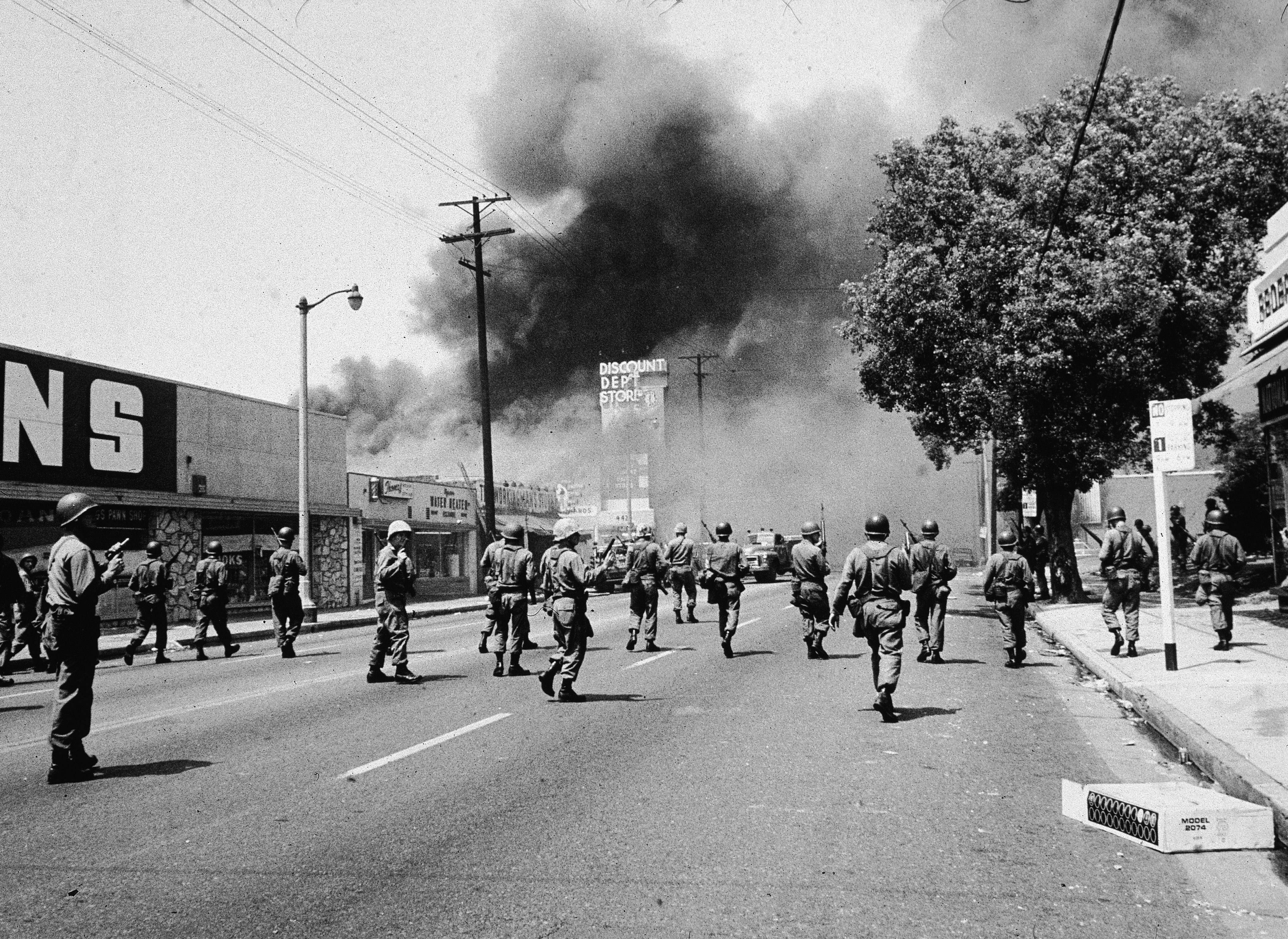
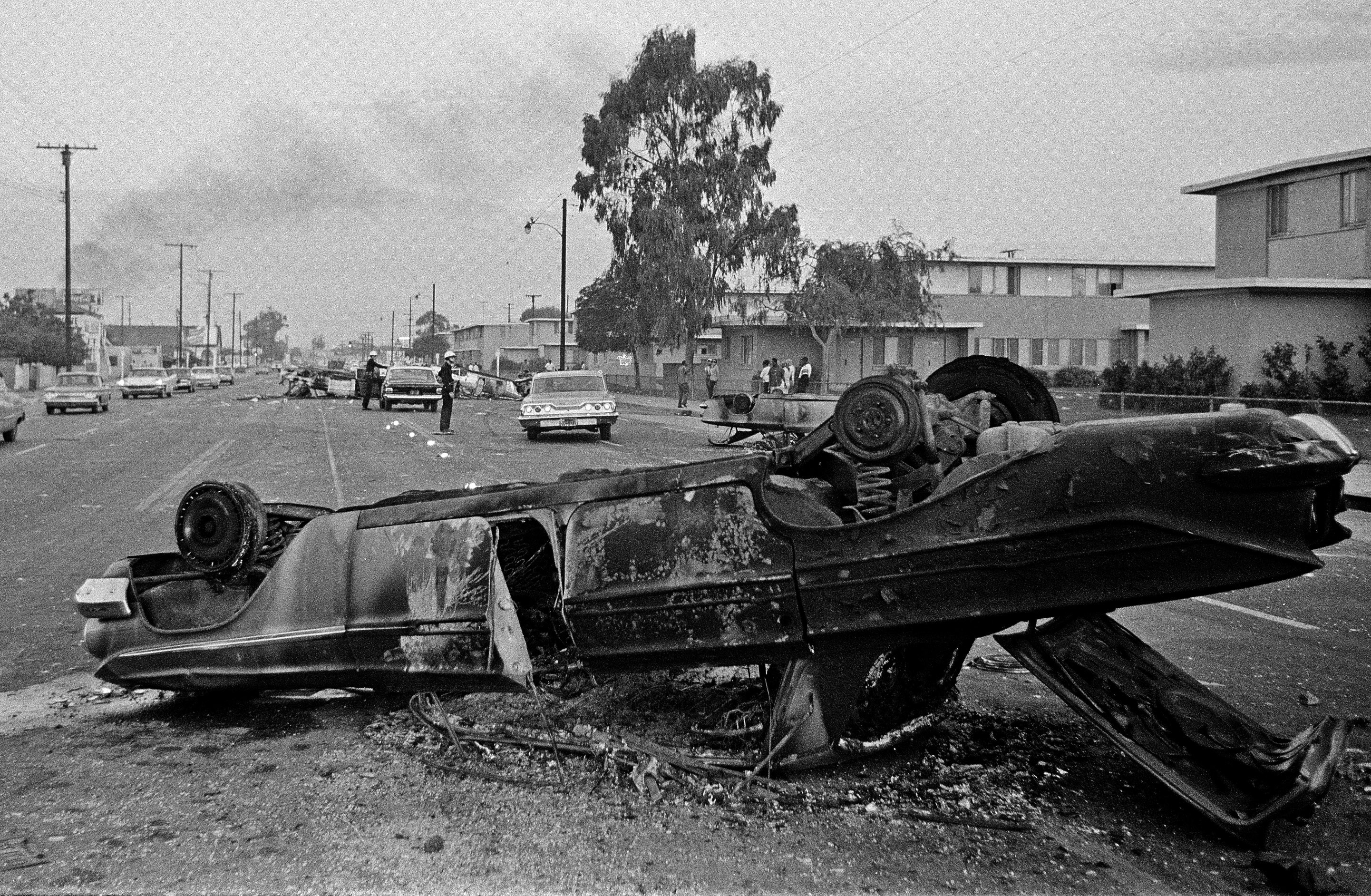
The 1965 Watts uprising was a six-day civil disturbance that erupted in the Watts neighborhood of Los Angeles, California, in August 1965, triggered by allegations of police brutality and fueled by systemic racial discrimination, high unemployment, and inadequate housing. The event fundamentally reshaped civil rights discourse, urban policy, and law enforcement strategies in the United States.
Historical Context and Preexisting Conditions in Los Angeles
To understand the outbreak of the Watts uprising, one must examine the socio-economic and political landscape of Los Angeles during the mid-20th century. Despite a reputation for progressive sunshine and suburban expansion, the city maintained deeply entrenched patterns of racial segregation. Restrictive housing covenants, discriminatory real estate practices, and de facto segregation confined the vast majority of Black residents to a narrow geographic corridor known as South Central Los Angeles, of which the Watts neighborhood was a prominent enclave.
By the mid-1960s, the demographic makeup of South Central Los Angeles had shifted dramatically due to the Second Great Migration, bringing hundreds of thousands of African Americans from the rural South to urban industrial centers in search of economic opportunity. However, local manufacturing jobs were rapidly disappearing or relocating to suburban industrial parks inaccessible by public transit. Consequently, Black residents faced chronic unemployment rates significantly higher than those of their white counterparts. Educational institutions in the area were underfunded and overcrowded, failing to provide adequate vocational training or pathways to upward mobility.
Compounding these structural disadvantages was an intensely strained relationship between the Black community and the Los Angeles Police Department (LAPD). Led by Chief William H. Parker, the LAPD operated with a militarized ethos and maintained a notoriously aggressive posture toward minority communities. Parker instituted strict command-and-control protocols that minimized community policing and maximized stop-and-search tactics, often utilizing racial slurs and physical intimidation. Years of accumulated grievances regarding police harassment, lack of political representation, and systemic poverty created a volatile social climate where a single spark could ignite widespread unrest.
The Immediate Catalyst: The Arrest of Marquette Frye
The immediate catalyst for the 1965 Watts uprising occurred on the evening of August 11, 1965, near the intersection of 116th Street and Avalon Boulevard. A California Highway Patrol (CHP) officer named Lee Minikus pulled over a vehicle driven by Marquette Frye, a 29-year-old Black man, on suspicion of reckless driving. Frye was subjected to a field sobriety test, which he failed. As the situation escalated, backup units from both the CHP and the LAPD arrived at the scene, drawing a growing crowd of neighborhood residents who closely monitored the interaction.
Tensions mounted rapidly when Marquette Frye's mother, Rena Frye, arrived at the scene after being notified by a neighbor. An argument ensued between Mrs. Frye, her son, and the law enforcement officers. Amid the heated verbal exchange, physical force was applied to subdue Marquette Frye and place him under arrest, alongside his mother and his brother, Ronald Frye, who had also attempted to intervene. Eyewitness accounts alleging that officers used excessive force—including striking Marquette Frye with a baton and treating Mrs. Frye roughly—spread rapidly through the densely populated neighborhood, outraging onlookers.
While the initial arrests concluded within a relatively short timeframe, the crowd did not disperse. Instead, residents remained at the intersection to voice their anger over the incident and historical police abuses. Rocks and debris were thrown at passing police cruisers as officers attempted to clear the area. What began as an intense street-level confrontation quickly transformed into an organized expression of collective rage, marking the opening hours of what would become a six-day civil disturbance across South Los Angeles.
| Incident Detail | Description |
|---|---|
| Date of Initiation | August 11, 1965 |
| Primary Location | Watts neighborhood, South Central Los Angeles, California |
| Immediate Trigger | Arrest of Marquette Frye for suspected reckless driving and subsequent allegations of police brutality |
| Duration | Six days (August 11 – August 17, 1965) |
| Key Law Enforcement Response | Deployment of the Los Angeles Police Department and approximately 14,000 California National Guard troops |
Chronology of the Civil Disturbance and the Response
Over the next several days, the unrest expanded exponentially across a 50-square-mile area of South Los Angeles. What started as rock-throwing and localized verbal protests evolved into widespread property destruction, arson, and looting directed primarily at white-owned businesses that residents accused of exploitative economic practices, such as predatory pricing and discriminatory credit terms. Sirens filled the air as firefighters attempting to extinguish blazes were frequently met with sniper fire and thrown objects, forcing fire crews to require armed police escorts to perform their duties safely.
Local law enforcement agencies quickly found themselves overwhelmed by the sheer scale and intensity of the disturbances. Los Angeles Police Chief William H. Parker requested assistance from California Governor Edmund G. "Pat" Brown, who was attending a conference in San Francisco at the time. Governor Brown, upon returning to Los Angeles and consulting with local leaders and military officials, authorized the deployment of the California National Guard on August 13. Approximately 14,000 National Guard troops were mobilized, setting up checkpoints, imposing curfews, and patrolling the streets alongside local police officers in armored vehicles equipped with heavy weaponry.
The imposition of martial law-style tactics temporarily curbed the violence, but it also resulted in significant civilian casualties and civil liberties violations. Curfew violations led to mass arrests, with holding facilities reaching critical overcrowding capacity. By the time the uprising subsided on August 17, 1965, the human and material toll was staggering. Official tallies recorded 34 deaths, over 1,000 injuries, and approximately 4,000 arrests. Property damage exceeded $40 million, leaving large commercial blocks reduced to charred ruins that would remain vacant for years to come.
The McCone Commission and Institutional Findings
In the aftermath of the violence, Governor Edmund G. Brown appointed a blue-ribbon commission led by John A. McCone, former Director of the Central Intelligence Agency, to investigate the root causes of the uprising and recommend corrective measures. Known formally as the Governor's Commission on Los Angeles Riots, the panel released its comprehensive report, titled Violence in the City—An End or a Beginning?, in December 1965. The commission conducted extensive hearings, reviewed empirical data, and interviewed community leaders, law enforcement officials, and residents.
The McCone Commission report rejected the characterization of the uprising as a mere "senseless riot" driven by criminal elements, acknowledging instead that it was a profound social protest against deep-seated conditions of inequality. The report identified critical failures in multiple public and private sectors:
- Employment: Chronic joblessness was cited as a primary catalyst, exacerbated by a severe lack of reliable public transportation connecting South Los Angeles to suburban employment hubs.
- Education: De facto segregation and underfunded schools in minority neighborhoods failed to provide basic literacy and job skills, creating a persistent cycle of poverty.
- Housing: Discriminatory housing practices severely limited residential mobility and concentrated impoverished populations in overcrowded urban enclaves.
- Law Enforcement: While defending the overall integrity of the LAPD, the commission acknowledged widespread resentment toward police practices and recommended the establishment of an independent civilian review board to investigate citizen complaints—a recommendation that police leadership resisted.
Despite its thorough documentation of systemic inequalities, critics at the time—including civil rights leaders and grassroots organizers—argued that the McCone Commission placed too much emphasis on individual criminality and law enforcement restoration while offering timid policy prescriptions that failed to demand immediate structural reforms. Many of the commission's substantive recommendations regarding job creation, educational investment, and police accountability went unimplemented or stalled in bureaucratic inertia.
Long-Term Societal Impacts and Urban Legacy
The 1965 Watts uprising served as a watershed moment in American history, signaling a decisive shift in the civil rights movement from the legal desegregation struggles of the American South to the complex economic, structural, and racial disparities plaguing northern and western urban centers. It shattered the illusion of racial harmony in California and forced municipal governments nationwide to confront the hidden costs of urban neglect and institutional racism.
In the decades following the uprising, the physical landscape of Watts slowly transformed, though economic revitalization remained elusive. Community activists, religious organizations, and local entrepreneurs established grassroots social service agencies, healthcare clinics, and cultural centers designed to foster self-determination and community empowerment. Institutions such as the Watts Labor Community Action Committee (WLCAC), founded by Ted Watkins in 1965, played a pivotal role in developing affordable housing, job training programs, and community green spaces.
Simultaneously, the uprising influenced political mobilization within Los Angeles. The visible disenfranchisement of Black residents underscored the urgent need for political representation. This momentum contributed to the eventual election of Thomas Bradley as the first Black mayor of Los Angeles in 1973, an administration that brought greater diversity to municipal agencies and police leadership. However, systemic issues such as economic disinvestment, gang violence, and strained police-community relations persisted, as evidenced by subsequent civil unrest in Los Angeles in 1992, demonstrating that the structural challenges highlighted in 1965 remained fundamentally unresolved.
Frequently Asked Questions
What was the primary cause of the 1965 Watts uprising?
The uprising was primarily caused by deep-seated racial tensions, systemic poverty, chronic high unemployment, discriminatory housing practices, and pervasive allegations of police brutality directed against the Black community by the Los Angeles Police Department.
Who was Marquette Frye and how did he start the event?
Marquette Frye was a 29-year-old Black motorist whose arrest for suspected reckless driving on August 11, 1965, served as the immediate catalyst for the civil disturbance after onlookers alleged that law enforcement officers used excessive physical force against him and his family.
How many people died and what was the total property damage?
Official reports documented 34 deaths, more than 1,000 injuries, approximately 4,000 arrests, and over $40 million in property damage resulting from arson, looting, and structural destruction during the six-day period.
What was the McCone Commission?
The McCone Commission was a blue-ribbon investigative panel appointed by California Governor Edmund G. Brown to examine the underlying causes of the uprising and issue recommendations for structural and policy reforms to prevent future disturbances.
How did the National Guard become involved in the Watts uprising?
As local law enforcement agencies became overwhelmed by the scale of the civil disturbance, Governor Edmund G. Brown authorized the deployment of approximately 14,000 California National Guard troops to assist local police in establishing curfews, securing intersections, and restoring order.
What are the lasting historical lessons of the 1965 Watts uprising?
The uprising demonstrated the critical dangers of ignoring urban poverty, racial discrimination, and police-community alienation, permanently altering how civil rights advocates, urban planners, and law enforcement agencies approach civil unrest and systemic equity.
Strategic Community Engagement and Historical Memory
Preserving the history of the 1965 Watts uprising requires active engagement with archival documentation, oral histories, and community-led educational initiatives. Researchers, educators, and policy analysts studying urban studies, civil rights history, and criminal justice reform must consult primary documents such as the McCone Commission transcripts, municipal police records, and contemporary journalistic accounts from the period. Engaging with local cultural institutions, such as the Watts Towers Arts Center and regional historical archives, ensures that the nuanced perspectives of community residents and grassroots organizers are preserved alongside official governmental narratives.