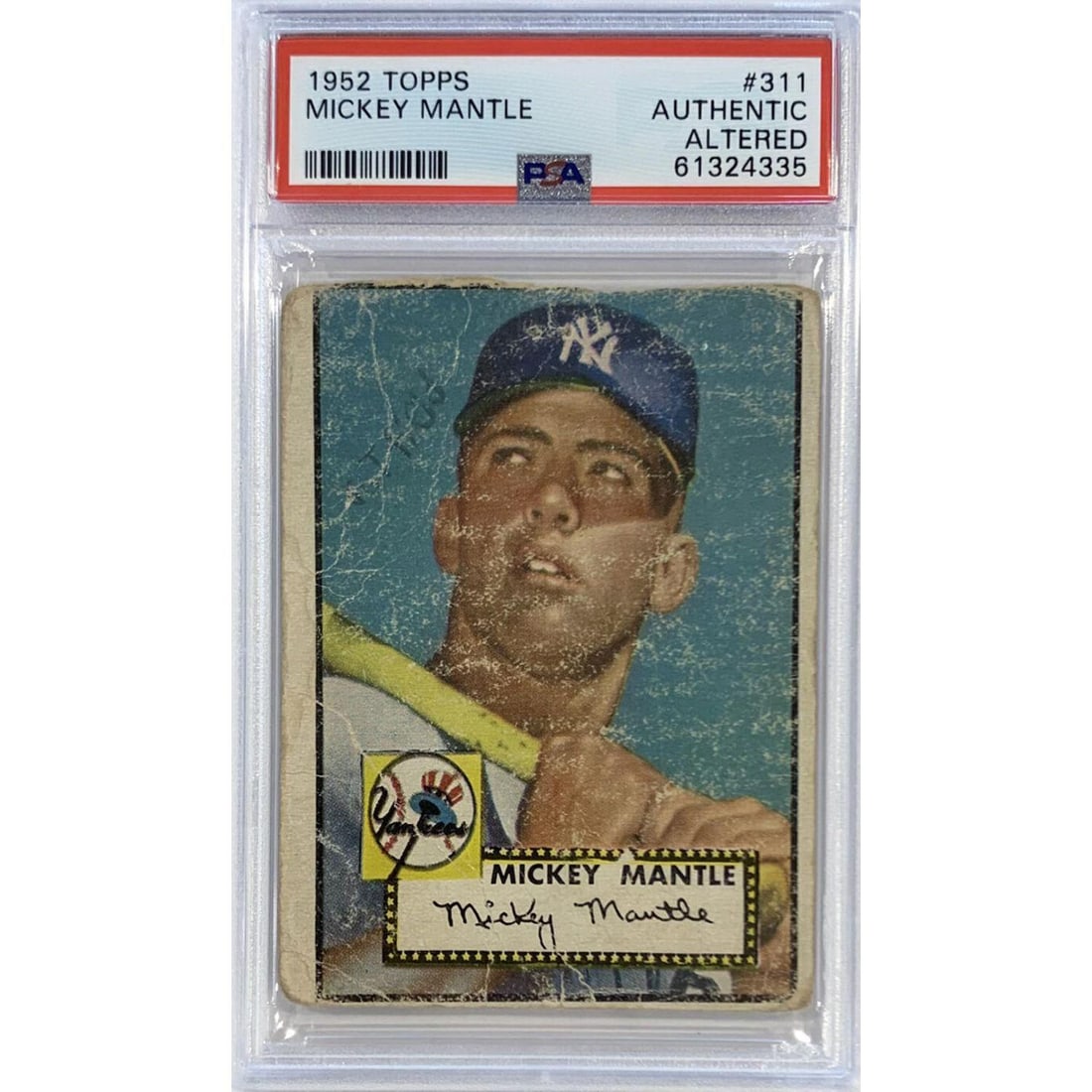
The 1952 Topps baseball card set is widely regarded as the most important and iconic post-war release in sports card collecting history. Anchored by the legendary rookie card of Mickey Mantle, the set introduced standard modern card sizing, vibrant color photography, and team logos that permanently transformed the hobby from a regional novelty into a multi-billion-dollar industry.
The Genesis of Modern Sports Card Culture
Before the 1952 Topps release, the American baseball card market was dominated by the Bowman Gum Company, which had held a virtual monopoly on the industry throughout the late 1940s. Topps, a chewing gum and confectionery manufacturer based in Brooklyn, New York, entered the market with ambitions to upend the status quo. Bolstered by the creative vision of Sy Berger and Woody Gelman, Topps set out to design a product that would completely overshadow its competitor.
The result was an expansive, visually striking release that measured 2-5/8 by 3-3/5 inches—significantly larger than any card previously issued. This larger format allowed for bold, color-tinted player portraits on the front, coupled with comprehensive biographical data, career statistics, and a cartoon factoid on the reverse. By combining aesthetic appeal with engaging player information, Topps established the template for every baseball card set that followed.
Understanding the High-Number Series and Ocean Dumping
The production history of the 1952 Topps set is unique and directly responsible for the staggering market values commanded by its final series. Topps issued the 407-card set in distinct installments, or "series," throughout the spring and summer of 1952. While the early series (cards 1 through 310) were heavily printed and distributed to meet overwhelming consumer demand, the high-number series (cards 311 through 407) arrived late in the baseball season, when children and retailers had largely lost interest in purchasing baseball cards.
Consequently, massive quantities of high-number cards remained unsold in Topps' New York warehouses as the year drew to a close. According to hobby lore, Sy Berger personally arranged for the disposal of these unsold cases. A fleet of dump trucks hauled thousands of pristine high-number 1952 Topps boxes to the New York harbor, where they were dumped into the Atlantic Ocean. This historical event created an acute scarcity of high-number cards, turning routine commons from that final series into rare and coveted treasures.
The Mickey Mantle Phenomenon
Card number 311 in the 1952 Topps set features New York Yankees icon Mickey Mantle. Although Mantle had a rookie card in the 1951 Bowman set, the 1952 Topps #311 is universally treated by the hobby as his definitive card and the undisputed crown jewel of sports memorabilia.
| Card Detail | Specification |
|---|---|
| Set Release Year | 1952 |
| Manufacturer | Topps Chewing Gum, Inc. |
| Total Set Count | 407 Cards |
| Dimensions | 2-5/8 × 3-3/5 Inches |
| Key Card | #311 Mickey Mantle (High Number) |
| Scarcity Factor | High numbers dumped in Atlantic Ocean |
The card's immense valuation stems from a combination of Mantle's legendary status, the team he played for, and its position as a high-number card. Because card #311 fell into the scarce late-series release, very few copies survived in high grade. A pristine, Mint-conditioned copy of the 1952 Topps Mickey Mantle can command tens of millions of dollars at public auction, setting benchmarks for the entire collectibles asset class.
Key Keys and Notable Rarities in the Set
While Mickey Mantle dominates discussions of the 1952 Topps set, the release is packed with other crucial rookie cards and vintage stars that maintain robust market demand. The set features early cardboard appearances of future Hall of Famers, each carrying distinct historical and financial significance.
- Jackie Robinson (#312): As another high-number card, Jackie Robinson's 1952 Topps entry captures the civil rights pioneer during the prime of his Brooklyn Dodgers career, commanding five- and six-figure sums in high grades.
- Willie Mays (#261): Although technically his second-year card, this classic depiction of the "Say Hey Kid" remains an essential cornerstone for vintage collectors.
- Eddie Mathews (#407): Occupying the very last slot in the set and belonging to the scarce high-number series, the rookie card of the legendary Brooklyn/Milwaukee Braves third baseman is a premier target for advanced set builders.
- Hoyt Wilhelm (#392): Another high-number rookie card representing the Hall of Fame knuckleballer, highly prized in authenticated, graded tiers.
Grading, Authentication, and Counterfeit Detection
Because authentic 1952 Topps cards carry such substantial financial weight, the market is unfortunately rife with counterfeits, trims, and alterations. Modern collectors rely heavily on third-party professional grading services—such as Professional Sports Authenticator (PSA), Sportscard Guaranty Corporation (SGC), and Beckett Grading Services (BGS)—to verify authenticity and assess condition on a scale from 1 to 10.
When evaluating raw or graded 1952 Topps cards, experts examine several distinct physical characteristics:
- Card Dimensions: Counterfeiters often attempt to trim authentic lower-grade cards or print modern replicas that deviate from the precise 2-5/8 by 3-3/5 inch factory measurements.
- Printing Technology: Original 1952 Topps cards were produced using offset lithography, displaying specific dot patterns under magnification. Modern inkjet or laser reprints lack these authentic vintage halftone rosettes.
- Card Stock and Back Color: The cardboard stock used in 1952 was heavy and gray-backed. Variations in paper stock or stark white reverses are immediate red flags for forgery.
- Register and Color Saturation: Vintage Topps printing exhibited slight color misalignments (registration shifts), whereas modern counterfeits often display unnaturally sharp, computer-generated alignment.
Frequently Asked Questions
Why is the 1952 Topps set more popular than Bowman sets from the same era?
The 1952 Topps set revolutionized the industry by introducing a larger card format, vibrant color photography, team logos, and comprehensive player biographies. Combined with the dramatic scarcity of the high-number series and the iconic Mickey Mantle rookie-era card, Topps captured the cultural imagination in a way Bowman's smaller, painted-portrait sets did not.
Are all high-number 1952 Topps cards valuable?
Yes, relative to low-number cards, even common commons from the high-number series (cards 311 through 407) command significant premiums. Because these cards were distributed late in the year and many were allegedly dumped into the ocean, their survival rate is drastically lower than cards 1 through 310.
How can I tell if a 1952 Topps Mickey Mantle card is real?
Verifying a 1952 Topps Mickey Mantle requires professional authentication from an established grading company like PSA, SGC, or BGS. Experts check the card stock, exact dimensions, rosette dot patterns under magnification, and back typography to ensure the item is not a counterfeit or a modern reprint.
What was the original retail price of a 1952 Topps wax pack?
In 1952, a single Topps wax pack typically retailed for five cents. Children could purchase individual packs containing several cards and a piece of bubble gum at local candy stores and newsstands, making the hobby an accessible pastime before the era of multi-dollar collectible packs.
Can incomplete sets still hold significant market value?
Incomplete sets of 1952 Topps cards, often referred to as "part sets," are heavily traded in the hobby. Even without the Mickey Mantle card, a mid-to-high-grade set containing the major stars and a high percentage of the checklist remains a highly valuable and liquid asset.
Strategic Acquisition and Portfolio Preservation
Acquiring vintage material from the 1952 Topps set requires careful financial planning, rigorous authentication, and strict adherence to condition standards. Whether building a complete 407-card registry set or investing in a single premier anchor card like the Mickey Mantle, buyers must prioritize professionally graded specimens to mitigate the risk of counterfeits and altered trims. Store certified cards in climate-controlled environments protected from direct ultraviolet light and excessive humidity to preserve cardboard integrity and protect your investment for decades to come.