The year 1912 marked a major turning point in criminal history, defined by sensational unsolved homicides, high-level municipal corruption, and early motorized gang warfare. Events like the Villisca Axe Murders, the assassination of Herman Rosenthal involving NYPD Lieutenant Charles Becker, and the suppression of France's Bonnot Gang reshaped law enforcement strategies and forensic science worldwide.
The Criminological and Social Context of 1912
At the onset of the 12th year of the twentieth century, society was experiencing rapid industrial growth, urban expansion, and technological innovation. These advancements created new opportunities for criminals while simultaneously overwhelming traditional law enforcement practices. The widespread adoption of the automobile, expansion of telephone and telegraph networks, and growth of mass-market newspaper publishing fundamentally changed how crimes were executed, investigated, and reported.
Criminal enterprises in 1912 took advantage of jurisdictional boundaries. Local police forces, designed for nineteenth-century agrarian or localized urban settings, lacked centralized coordination, specialized investigative units, and standardized forensic training. Motorized bandits could commit armed robberies in one city and cross state or international borders before local authorities could alert neighboring jurisdictions.
Simultaneously, the era of "yellow journalism" turned criminal trials into national media spectacles. Detailed coverage of crime scenes and judicial proceedings fueled intense public demand for accountability. This media exposure put immense pressure on public officials to modernize police tactics, adopt scientific methods of proof, and eliminate systemic corruption within urban police departments.
The Villisca Axe Murders: America's Most Infamous Unsolved Cold Case
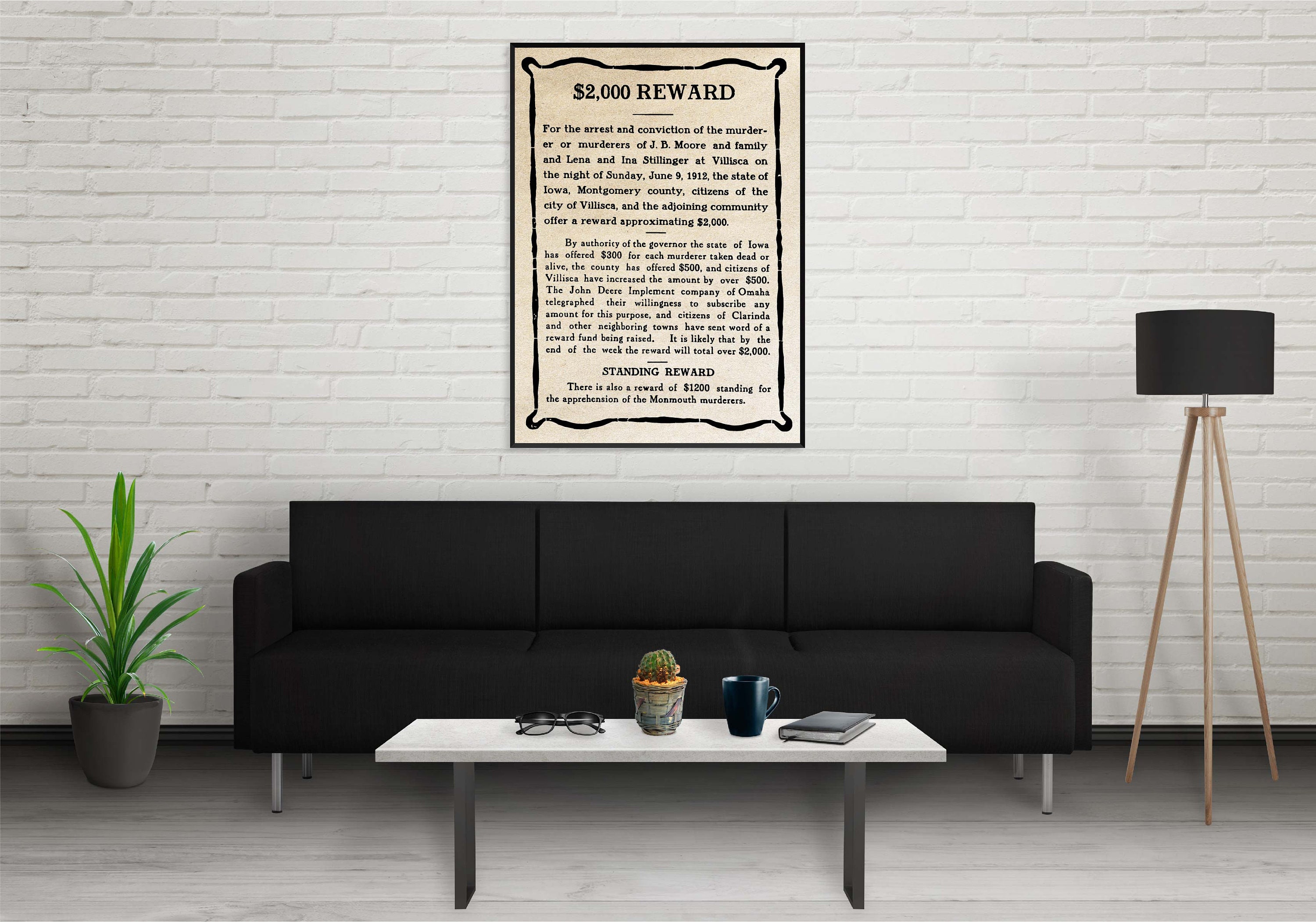
Between the late evening of June 9 and the early morning hours of June 10, 1912, an unknown assailant murdered eight people in the quiet town of Villisca, Iowa. The victims included Josiah B. Moore (age 43), his wife Sarah (age 39), their four children—Herman, Mary, Arthur, and Paul—and two young houseguests, Lena and Ina Stillinger. All eight victims were struck on the head with the blunt side of an axe while asleep in their beds.
Villisca Crime Scene Observations (June 10, 1912):
- Victims: 8 total (2 adults, 6 children)
- Modus Operandi: Heavy blunt-force trauma followed by sharp-edge strikes
- Crime Scene Alterations:
- Mirrors and glass surfaces covered with clothing
- Chimneys of oil lamps removed; lamps placed at foot of beds
- Two-pound slab of bacon left wrapped in a towel near axe
- Key locked from inside; doors secured upon exit
- Primary Forensic Challenge: Uncontrolled crime scene access by ~100 citizens
The perpetrator altered the crime scene in distinct ways. Gauzy clothing and bedsheets were pulled over the faces of the victims, and mirrors throughout the house were covered with towels or garments. An oil lamp was left burning low at the foot of the master bed, and a two-pound slab of bacon wrapped in a cloth was found near the murder weapon in the downstairs bedroom.
Critical Investigative Failures
The local investigation was compromised almost immediately. News of the killings spread rapidly, leading nearly one hundred local residents to walk through the Moore household before local law enforcement or the Montgomery County coroner could secure the area. Footprints were trampled, blood splatters were smudged, and physical artifacts were handled by curious bystanders.
Key Suspects in the Villisca Investigation:
- Rev. George Kelly: Traveling preacher who confessed multiple times but recanted; tried twice and acquitted.
- Frank F. Jones: Iowa State Senator with severe business rivalries with Josiah Moore; alleged hiring of a hitman.
- William "Blackie" Mansfield: Serial murder suspect linked to similar axe slayings in Kansas, Illinois, and Colorado.
Despite extensive investigations by local authorities, private detective agencies (including the Pinkerton National Detective Agency), and state grand juries, no offender was ever successfully convicted. The trial of Reverend George Kelly ended in a hung jury in 1917 and an acquittal in a second trial. The case highlighted the urgent need for strict crime scene preservation protocols and dedicated state-level investigative bureaus across North America.
Police Corruption and Political Murder: The Herman Rosenthal Assassination
On July 16, 1912, Manhattan gambling operator Herman Rosenthal was shot to death outside the Hotel Metropole on West 43rd Street in New York City. Rosenthal was executed just hours before he was scheduled to provide sworn testimony to District Attorney Charles S. Whitman regarding an extensive police protection racket operated by senior officers within the New York City Police Department (NYPD).
The assassination exposed systemic corruption connecting municipal law enforcement, organized crime, and political machines such as Tammany Hall. Investigative efforts quickly centered on NYPD Police Lieutenant Charles Becker, head of the city's Special Squad (often called the "Strong-Arm Squad"), which was tasked with suppressing illegal gambling.
The Trial and Execution of NYPD Lieutenant Charles Becker
District Attorney Whitman established that Becker had extorted protection money from Rosenthal's gambling house. When Rosenthal resisted paying increased bribes and leaked details to the press, Becker used organized crime associates—specifically members of the Lenox Avenue Gang, including gunmen known as "Gyp the Blood" (Harry Horowitz), "Lefty Louis" (Louis Rosenberg), "Dago Frank" (Frank Cirofici), and "Whitey Lewis" (Jacob Seidenshner)—to execute the hit.
Rosenthal Murder Legal Timeline:
- July 16, 1912: Herman Rosenthal assassinated outside Hotel Metropole.
- July 29, 1912: NYPD Lieutenant Charles Becker indicted for murder.
- October 1912: First trial results in a guilty verdict for Becker.
- February 1914: New York Court of Appeals grants a retrial due to procedural errors.
- May 1914: Second trial yields a second guilty verdict.
- July 30, 1915: Charles Becker executed in the electric chair at Sing Sing Prison.
Becker's conviction marked a critical milestone in American legal history. He became the first, and remains the highest-ranking, NYPD officer executed for murder. The case accelerated nationwide police reform, led to the creation of independent internal affairs oversight, and propelled Charles S. Whitman to the governorship of New York.
The Rise of Motorized Crime: France's Bonnot Gang
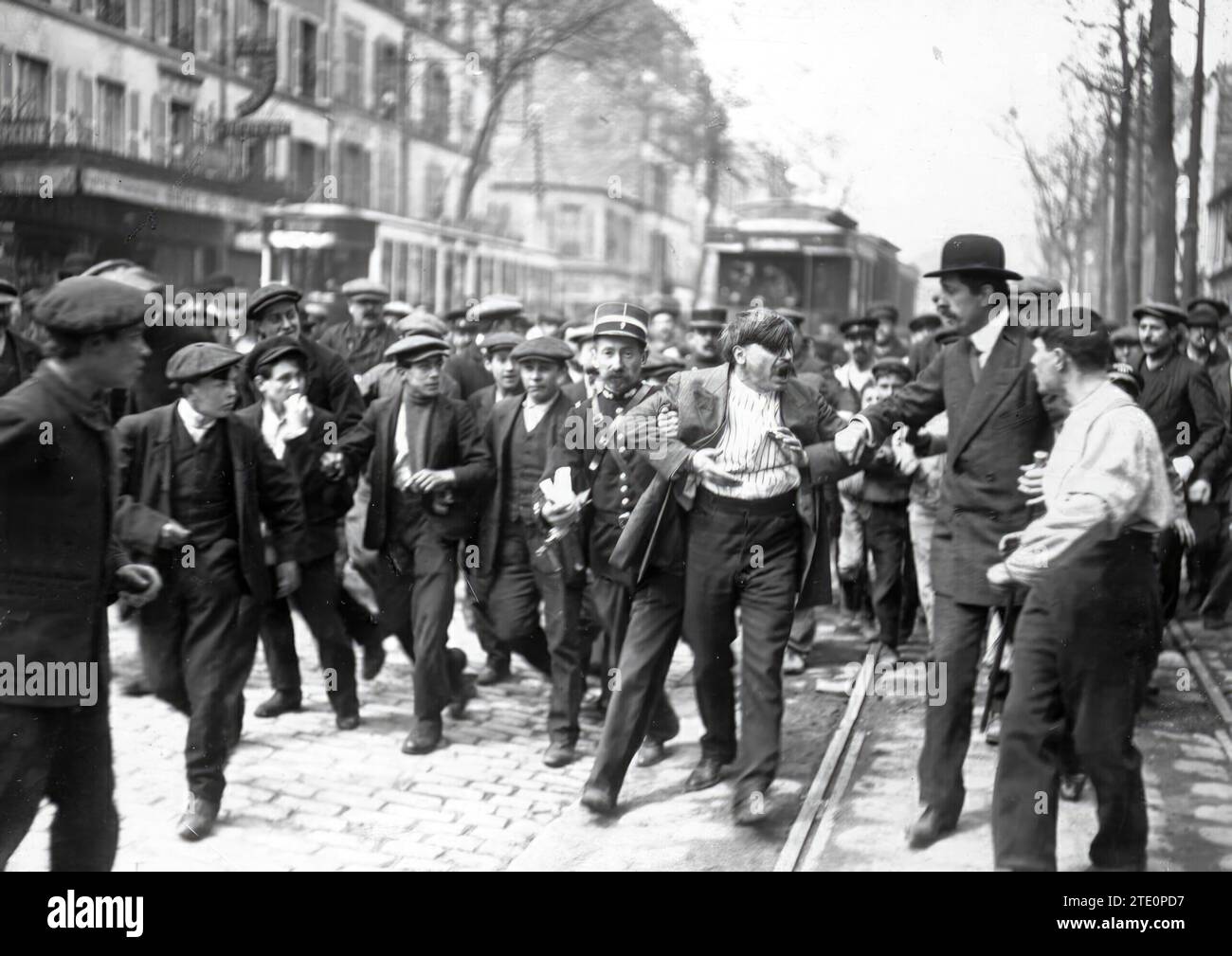
In France, the period between late 1911 and mid-1912 was dominated by the violent escapades of La Bande à Bonnot (the Bonnot Gang). Led by Jules Bonnot, an eccentric mechanic and self-styled anarchist "illegalist," the group carried out high-profile bank robberies, armory raids, and police homicides across Paris and surrounding departments.
The Bonnot Gang achieved notoriety by being the first criminal syndicate to systematically use high-powered motorcars as primary getaway vehicles. In December 1911, they used a stolen 1910 De Dion-Bouton automobile to rob a courier of the Société Générale in Paris, easily outpacing bicycle-mounted and pedestrian police officers.
Key Events of the Bonnot Gang Campaign (1911–1912):
- Dec 21, 1911: First getaway-car bank robbery in Paris (Société Générale courier)
- Mar 25, 1912: Chantilly Bank Robbery; two bank employees killed
- Apr 28, 1912: Siege of Choisy-le-Roi; Jules Bonnot killed after dynamite assault
- May 14, 1912: Siege of Nogent-sur-Marne; remaining core members killed
The Siege of Choisy-le-Roi
By April 1912, French law enforcement launched a massive search operation, employing military forces and custom pursuit vehicles. On April 28, 1912, police surrounded Bonnot's hideout in the Paris suburb of Choisy-le-Roi.
After an extended shootout involving hundreds of armed officers, soldiers, and armed civilians, police chief Louis Lépine ordered the building breached using dynamite. Bonnot was mortally wounded during the assault and died shortly after reaching the hospital. The remaining core members were killed or captured during a subsequent siege at Nogent-sur-Marne in May 1912.
The campaign forced European police departments to abandon horse-drawn patrols, adopt motorized fleets, equip officers with repeating firearms, and coordinate intelligence across municipal boundaries.
Forensic Toxicology and Capital Punishment: The Case of Frederick Henry Seddon
In March 1912, the Central Criminal Court (the Old Bailey) in London prosecuted one of the United Kingdom's most famous financial murder cases: the trial of Frederick Henry Seddon. Seddon, a prosperous insurance superintendent, was charged with the murder of his wealthy 49-year-old boarder, Margaret Mary Barrow.
Barrow died suddenly on September 14, 1911, after transferring a substantial estate of cash and stocks to Seddon in exchange for a small lifetime annuity. Suspicion mounted when Seddon paid for a cheap pauper's burial despite holding power of attorney over her assets. Upon exhumation, toxicological analysis revealed lethal quantities of arsenic within her organs.
Forensic Significance of the Trial
The Seddon case turned heavily on pioneer scientific evidence provided by Home Office toxicologist Dr. William Willcox and forensic pathologist Sir Bernard Spilsbury.
Seddon Trial Technical Evidence Points:
- Toxicological Method: Quantitative application of the Marsh Test to tissue samples.
- Key Scientific Finding: Arsenic distributed evenly throughout keratinized tissue, proving acute single-dose ingestion.
- Defense Contention: Deceased accidentally ingested arsenic from soaking commercial flypaper.
- Legal Ruling: Quantitative distribution established intent; Seddon convicted and hanged on April 18, 1912.
Dr. Willcox demonstrated that the concentration of arsenic throughout Barrow's body could only have resulted from a massive, acute dose administered shortly before her death, rather than chronic low-level exposure. Seddon was found guilty of murder for financial gain and was executed at Holloway Prison on April 18, 1912. The trial established rigorous protocols for toxicological evidence presentation in British courts.
Scientific Advances in 1912 Forensic Science and Investigation
The high-profile cases of 1912 coincided with a major shift in how police forces collected and analyzed physical evidence. Forensic techniques moved away from qualitative physical observations toward empirical laboratory analysis.
Evolution of Criminal Identification Systems (c. 1912):
| Bertillonage (Anthropometry) | Fingerprinting (Dactyloscopy) |
|---|---|
| - Physical bone measurements- Requires complex specialized calipers- Vulnerable to skeletal changes/aging- High rate of operator recording error | - Unique friction ridge patterns- Easily captured with ink and card- Permanent and immutable throughout life- Standardized via Henry System |
1. Fingerprinting Replaces Bertillonage
Prior to 1912, many Western law enforcement agencies relied on Alphonse Bertillon’s system of anthropometry (Bertillonage), which measured eleven specific body dimensions to track repeat offenders. However, systemic errors, operator variance, and cases of non-identical individuals sharing near-identical dimensions led to its rapid decline.
By 1912, police departments in Europe and North America accelerated their transition to the Henry Classification System of fingerprinting (dactyloscopy). The system proved far more reliable for positive personal identification and latent crime-scene recovery.
2. Formalization of Locard’s Exchange Principle
Dr. Edmond Locard, who established the world's first university-affiliated police forensic laboratory in Lyon, France, in 1910, published foundational research around 1912 expanding on trace evidence theory.
Locard’s Exchange Principle—summarized as "every contact leaves a trace"—posited that a perpetrator inevitably takes microscopic evidence from a crime scene and leaves trace evidence behind. This concept encouraged early twentieth-century investigators to collect soil samples, fabric fibers, metallic dust, and hair follicles from crime scenes.
3. Early Developments in Ballistics and Photography
Crime scene photography became standardized in 1912, moving from artistic wide angles to methodical, scaled documentation of victim positions, entry points, and spatial relationships. Early firearm identification techniques also began to emerge, as investigators noted that gun barrels left distinctive manufacturing grooves and striations on fired bullets and shell casings.
Comparative Overview of Major 1912 Criminal Cases
The table below outlines the core attributes, legal domains, key figures, and long-term legal outcomes of the primary criminal cases of 1912:
| Case Name | Primary Jurisdiction | Offense Category | Key Entities / Suspects | Historical / Legal Outcome |
|---|---|---|---|---|
| Villisca Axe Murders | Iowa, United States | Mass Homicide / Burglary | Josiah Moore family, Rev. George Kelly, Frank F. Jones | Unsolved; exposed critical flaws in rural crime scene preservation and multi-agency communication. |
| Herman Rosenthal Assassination | New York, United States | Organized Extortion / Murder | Lt. Charles Becker, Herman Rosenthal, Lenox Ave Gang | Lt. Becker and 4 gunmen executed; led to major NYPD anti-corruption overhauls and internal oversight. |
| Bonnot Gang Campaign | Paris & Region, France | Armed Robbery / Homicide | Jules Bonnot, Octave Garnier, Raymond Callemin | Gang neutralized in military-style sieges; forced police forces to motorize and upgrade firepower. |
| Seddon Poisoning Trial | London, United Kingdom | Financial Murder / Poison | Frederick Henry Seddon, Margaret Mary Barrow | Seddon executed; established quantitative Marsh test standards for forensic toxicology in court. |
| Mona Lisa Investigation | International (France/Italy) | Art Theft / Grand Larceny | Vincenzo Peruggia (Arrested late 1913, stolen Aug 1911) | Global 1912 dragnet exposed vulnerabilities in museum operations and international art trafficking. |
The Institutional Legacy of 1912 Crime on Modern Jurisprudence
The high-profile crimes of 1912 served as a catalyst for sweeping structural reforms in criminal justice, evidence management, and municipal governance. The failures and successes of this period directly shaped modern investigative standards.
- Establishment of State and National Crime Laboratories: The contamination of the Villisca crime scene demonstrated that local municipal authorities could not handle complex homicide investigations without specialized support. This led directly to the creation of centralized state bureaus of investigation across the United States.
- Internal Oversight and Anti-Corruption Units: The conviction of Charles Becker established that municipal police departments required external judicial monitoring and independent internal affairs units to break collusion between police commanders and organized crime networks.
- Cross-Border Tactical and Intelligence Coordination: The mobility of the Bonnot Gang proved that modern criminals were no longer constrained by local city limits. National governments began establishing centralized criminal intelligence databases, laying the groundwork for international bodies like Interpol (founded in 1923 as the International Criminal Police Commission).
- Admissibility Standards for Scientific Evidence: The successful prosecution of Frederick Seddon set strict legal precedents requiring quantitative expert testimony, documented chains of custody, and verified laboratory testing for physical evidence introduced at capital trials.
Frequently Asked Questions About 1912 Crime
What was the primary weapon used in the 1912 Villisca murders?
The weapon was a standard two-pound broad-ax, which belonged to the home’s owner, Josiah Moore. The killer used the blunt back of the axe head to render the victims unconscious before striking them with the sharp edge, leaving the axe at the scene after the attacks.
Why was the trial of Lt. Charles Becker historically significant?
Charles Becker was the first, and remains the highest-ranking, NYPD officer executed by the state for a capital crime. His conviction demonstrated that political influence through organizations like Tammany Hall could not shield corrupt police commanders from federal and state prosecution.
How did the Bonnot Gang influence modern police tactics in 1912?
The Bonnot Gang was the first organized criminal group to use automobiles for fast getaway operations during bank robberies. Their speed advantage forced European police forces to replace horse-drawn transport with motorized pursuit vehicles and upgrade patrol officers' arms from revolvers to repeating rifles.
Which forensic methods replaced anthropometry around 1912?
Fingerprinting (dactyloscopy) using the Henry Classification System replaced anthropometry (Bertillonage). Fingerprinting proved far more reliable because friction ridge patterns remain unchanged throughout an individual's life and do not rely on accurate manual caliper measurements.
Was the stolen Mona Lisa recovered during 1912?
No. The Mona Lisa was stolen from the Louvre in August 1911 by Vincenzo Peruggia. Throughout 1912, international police conducted an extensive global search, but the painting was not recovered until December 1913, when Peruggia attempted to sell it to an art dealer in Florence, Italy.
Navigating Archival Records and Historical Crime Research
For legal historians, true-crime researchers, and criminologists examining primary sources from 1912, accessing verified documentation requires navigating specialized archival repositories:
- Court Transcripts and Judicial Records: Official trial transcripts for cases like the trial of Charles Becker or Frederick Seddon are maintained in state supreme court libraries and the UK National Archives at Kew.
- Coroner Inquests and Police Logs: Local county historical societies (such as the Montgomery County Historical Society in Iowa) preserve microfilmed original coroner reports, grand jury witness transcripts, and crime scene photographs.
- Periodical Archives: Newspaper collections such as The New York Times archive, the British Newspaper Archive, and the Bibliothèque nationale de France (Gallica) provide contemporary, unedited coverage detailing how these cases unfolded in real time.
When examining early twentieth-century legal records, researchers should cross-reference news reports with official trial transcripts, as newspaper accounts from 1912 frequently included unverified rumors, speculative theories, and partisan political bias.