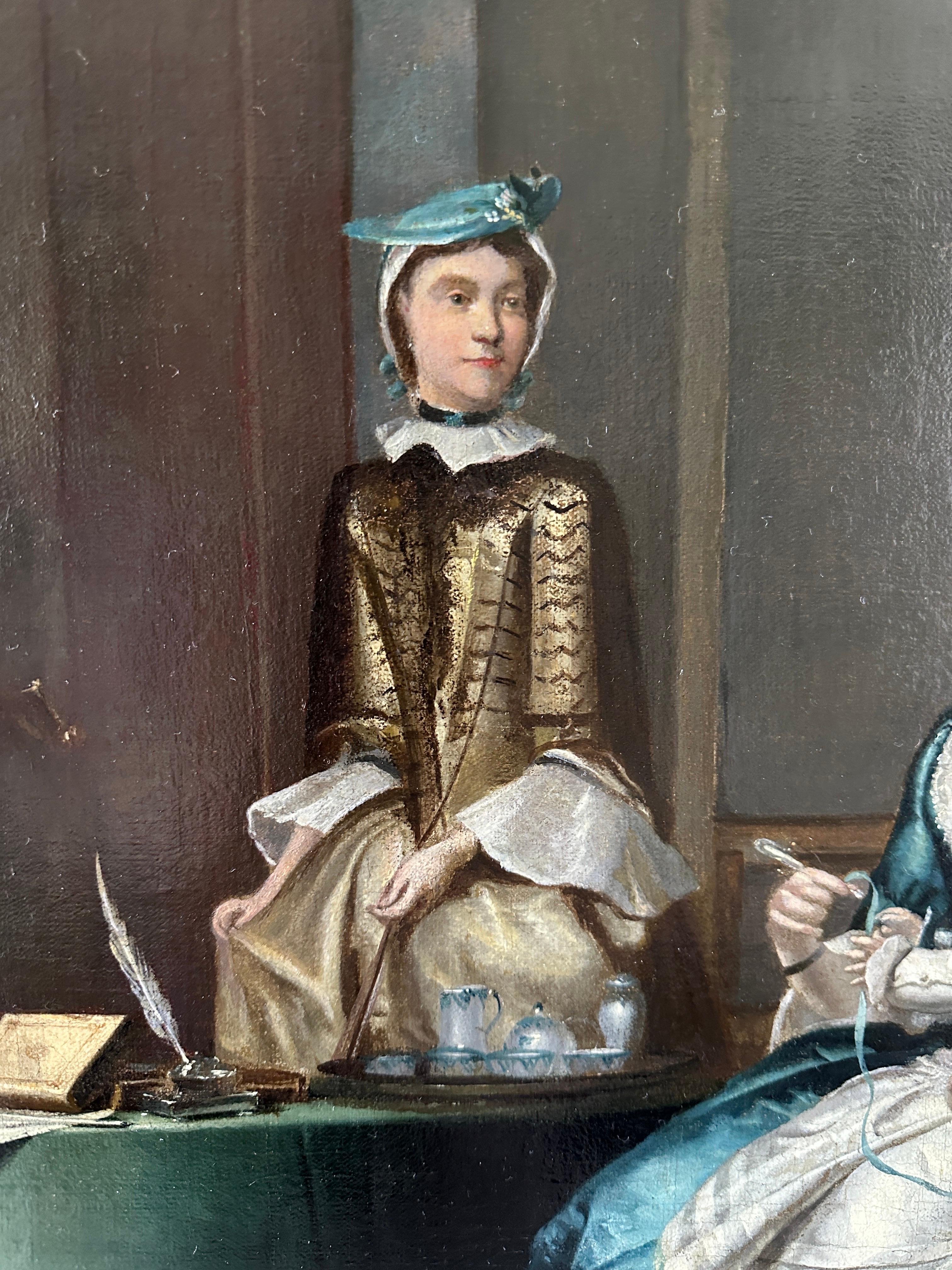
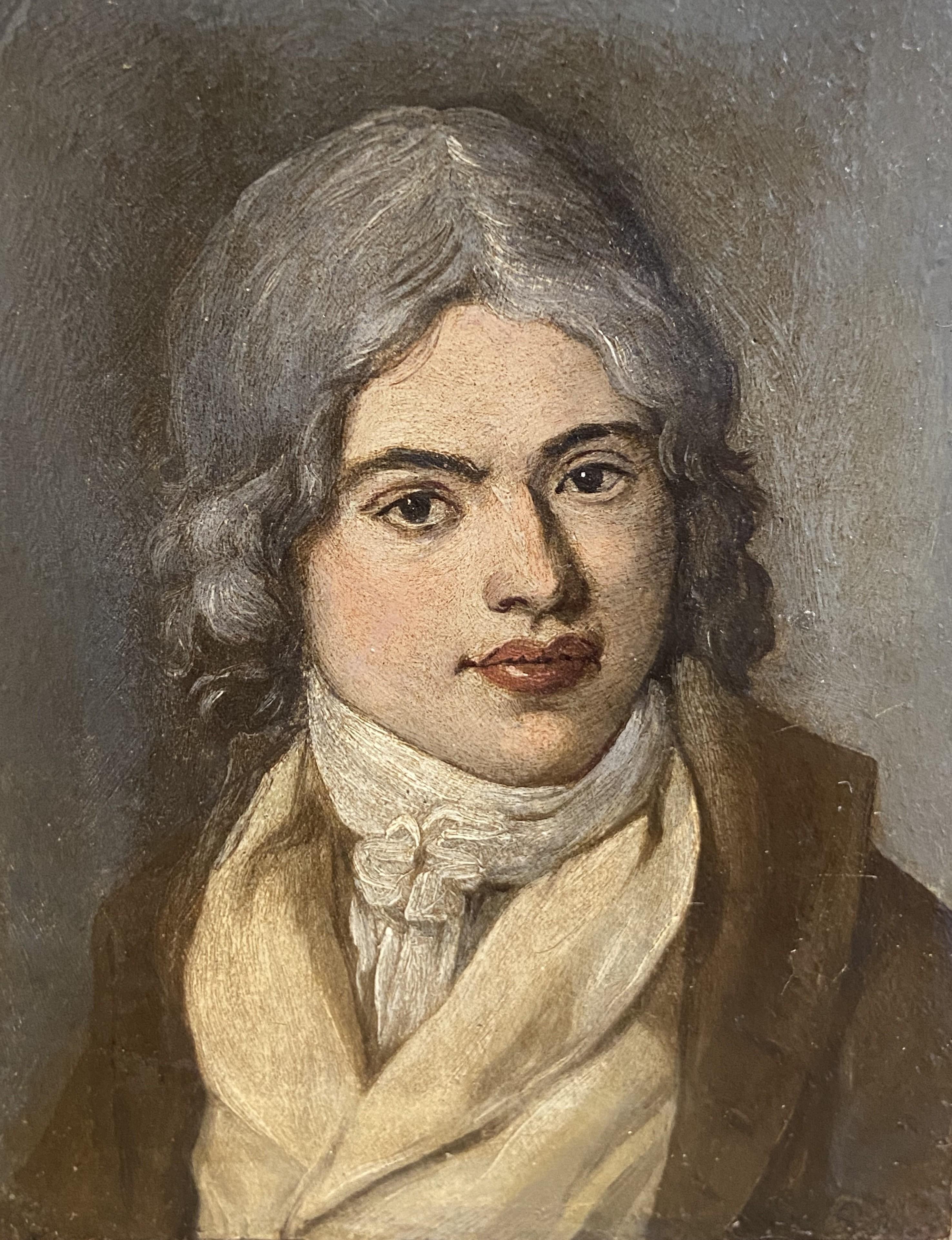
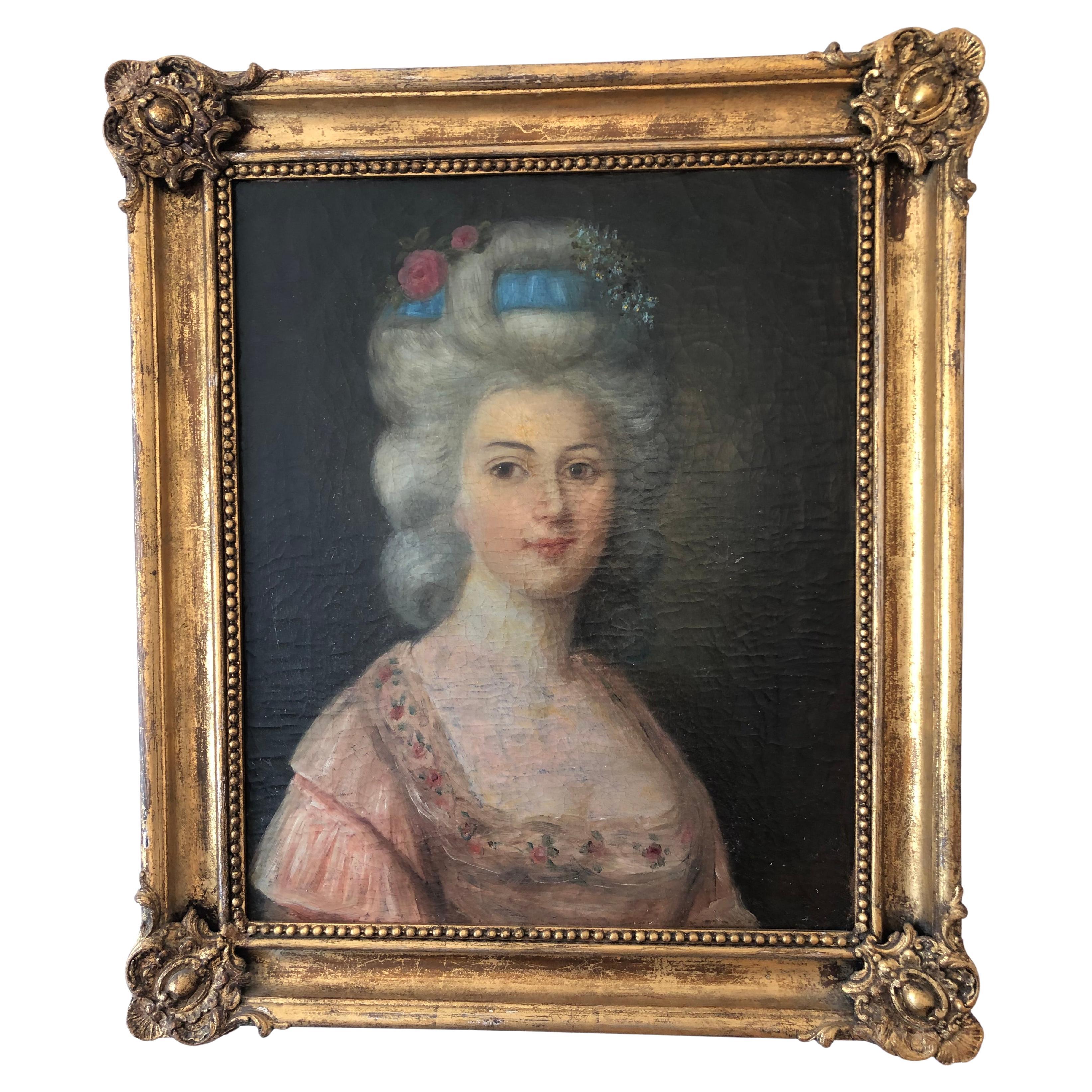
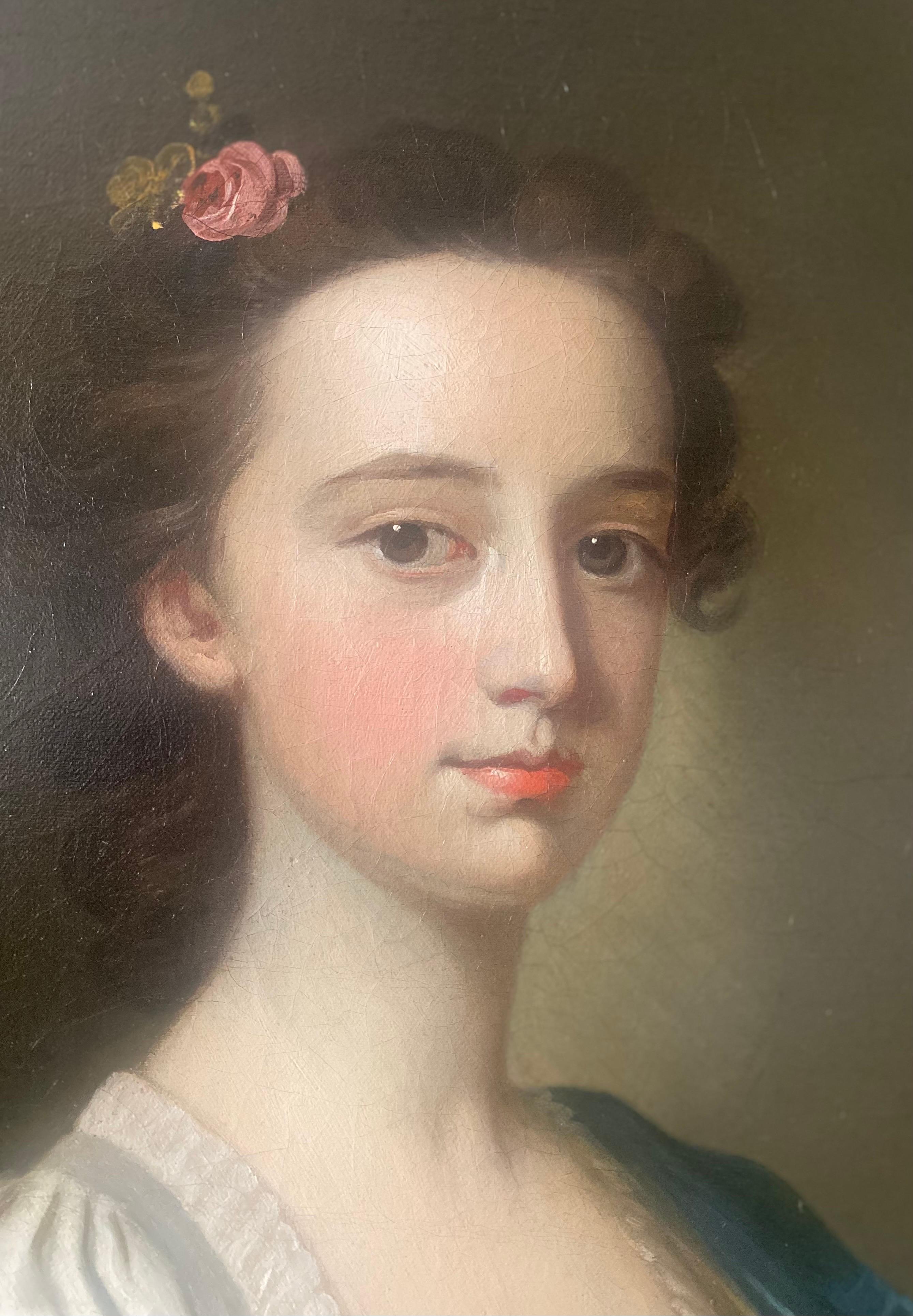
18th century portraiture transformed portrait painting from formal royal iconology into a dynamic medium reflecting Enlightenment philosophy, personal identity, class mobility, and artistic specialization. Across Europe, artists shifted from rigid Baroque court portraiture to intimate Rococo charm, grand aristocratic portraiture, and moralizing Neoclassical clarity, establishing portraiture as the dominant visual art form of the Enlightenment era.
The Cultural Shift: Enlightenment Ideals and the Function of the Portrait
During the eighteenth century, portraiture underwent a fundamental transition in function, patronage, and stylistic representation. At the start of the century, portraiture served primarily as an instrument of statecraft, dynastic recording, and ecclesiastical authority. Monarchs and aristocrats commissioned portraits to assert hereditary status, lineage, and territorial power through codified Baroque conventions, rich drapery, and symbolic regalia.
As Enlightenment thought gained traction across Europe, particularly in Britain, France, and Germany, the philosophical understanding of human identity evolved. Thinkers such as John Locke emphasized empirical observation and the concept of personal identity rooted in memory and consciousness rather than divine entitlement. Consequently, portrait painters began prioritizing the sitter’s individual psychology, intellectual character, and personal sensibility alongside their social standing.
This intellectual shift coincided with the rise of a prosperous merchant class, successful industrialists, and professional elites who sought validation through art. Portraiture was no longer reserved exclusively for royal courts; middle-class patrons commissioned likenesses to record family ties, mark professional success, or celebrate civic accomplishments. Artists adapted by developing versatile formats ranging from small, affordable pastel likenesses and portrait miniatures to expansive grand-manner canvases.
The institutionalization of art education through bodies like the French Académie Royale de Peinture et de Sculpture and the British Royal Academy of Arts further elevated portraiture's status. Although academic hierarchies traditionally rated history painting above portraiture, market demand compelled prominent artists to refine portrait technique, turning portraiture into both a lucrative enterprise and a vehicle for sophisticated aesthetic theory.
Major Artistic Movements and Regional Styles in 18th Century Portraiture
The visual language of eighteenth-century portraiture was far from monolithic. Regional cultural dynamics and broader aesthetic shifts gave rise to distinct regional schools and movement-specific styles throughout the century.
Rococo Intimacy and Elegance (France and Italy)
In early to mid-18th-century France, the death of Louis XIV in 1715 triggered a departure from heavy Baroque pomp toward the lighter, more ornamental Rococo style. Pastel portraiture flourished under artists like Rosalba Carriera, whose soft, luminous portraits became popular across European capitals. French portraitists like Jean-Marc Nattier popularized allegorical portraits, depicting noblewomen as mythological deities adorned with pastel silks and floral garlands. Concurrently, Jean-Siméon Chardin introduced an understated counter-narrative, capturing quiet, contemplative portraits of middle-class domestic life with subtle textures and grounded naturalism.
The British "Grand Manner" and Moral Realism
In Britain, portraiture dominated the national art market. Sir Joshua Reynolds, the founding president of the Royal Academy of Arts, codified the Grand Manner style. In his Discourses on Art, Reynolds advocated for elevating portraiture by combining classicizing poses derived from Antique sculpture and Renaissance masters with contemporary likenesses. Reynolds sought to endow his sitters with noble intellect and heroic stature.
Conversely, Thomas Gainsborough championed fluid brushwork, natural light, and harmonious integration of sitters within expressive landscape settings. Meanwhile, William Hogarth challenged foreign artistic dominance by producing candid, moralizing, and distinctly British portraits, such as his celebrated portrait of Captain Thomas Coram (1740), which substituted traditional aristocratic symbols with emblems of civic philanthropy.
- Early 18th C. Baroque/Rococo (Mythological, Pastel, Soft)
- Mid 18th C. Grand Manner (Heroic, Sculptural, Noble)
- Late 18th C. Neoclassical (Clear, Stern)
Neoclassical Realism and Revolutionary Idealism (Late 18th Century)
By the 1770s, the excavation of Pompeii and Herculaneum along with the critique of Rococo extravagance spurred the Neoclassical movement. Led by artists like Jacques-Louis David in France, late 18th-century portraiture embraced clean contours, austere compositions, and moral seriousness. David’s portraits of Enlightenment figures, such as the Portrait of Antoine-Laurent Lavoisier and His Wife (1788), emphasized rational thought, scientific inquiry, and civic virtue over decorative flourish.
Comparative Analysis of 18th Century Portraiture Styles
The table below outlines key differences between the primary styles of portraiture practiced across Europe during the eighteenth century:
| Portrait Style | Dominant Period | Key Visual Characteristics | Preferred Subjects | Representative Artists |
|---|---|---|---|---|
| Rococo Court Portraiture | 1715–1760 | Pastel palettes, shimmering fabrics, mythologized themes, delicate line work | Royalty, French court aristocrats, noblewomen | Jean-Marc Nattier, François Boucher, Rosalba Carriera |
| British Grand Manner | 1750–1790 | Classical poses, heroic scale, rich drapery, references to Antiquity | British peerage, military officers, scholars | Sir Joshua Reynolds, Allan Ramsay, George Romney |
| Naturalistic / Landscape Portraiture | 1760–1800 | Feathered brushwork, atmospheric outdoor settings, informal postures | Country gentry, families, children | Thomas Gainsborough, Henry Raeburn |
| Intimate Genre & Middle-Class | 1730–1780 | Earthy tones, quiet interior settings, realistic textures, psychological depth | Merchants, artisans, domestic workers, intellectuals | Jean-Siméon Chardin, William Hogarth |
| Neoclassical Portraiture | 1775–1800+ | Crisp draftsmanship, linear clarity, historical severity, restrained color | Scientists, political reformers, revolutionary leaders | Jacques-Louis David, Élisabeth Vigée Le Brun |
Master Portraitists of the 18th Century: Technique and Legacy
The eighteenth century produced portrait masters whose technical innovations influenced European art for generations.
Sir Joshua Reynolds (1723–1792)
Reynolds combined intellectual ambition with systematic studio organization. As head of the Royal Academy, he argued that portraiture must transcend mere mechanical imitation. Reynolds frequently borrowed postures from the Apollo Belvedere or Michelangelo's Sistine Chapel frescoes, applying them to British aristocrats. Technically, Reynolds experimented heavily with glazes, bitumens, and waxes—experiments that sometimes caused premature fading or cracking, yet produced rich, painterly atmospheric effects during his lifetime.
Thomas Gainsborough (1727–1788)
A fierce rival of Reynolds, Gainsborough preferred landscape painting to formal portraiture, yet earned his living through portrait commissions in Bath and London. Gainsborough’s technique relied on extraordinarily long brushes and thin, fluid glazes applied with swift, sketchy movements. His masterwork, The Blue Boy (c. 1770), demonstrated his mastery of cool tone harmonies and light reflection, directly challenging Reynolds’s theoretical rule that warm colors must always dominate the center of a painting.
Élisabeth Vigée Le Brun (1755–1842)
As one of the most prominent female painters in European history, Élisabeth Vigée Le Brun served as court painter to Queen Marie Antoinette. Admitted to the Académie Royale in 1783, Vigée Le Brun was renowned for her fresh color palette, fluid rendering of silks, and ability to make sitters appear approachable and natural. Her self-portraits and depictions of maternal intimacy softened formal royal portraiture, bridging Rococo charm and Neoclassical simplicity.
Jacques-Louis David (1748–1825)
David redefined European painting at the end of the century. Abandoning decorative Rococo mannerisms, he pioneered a austere Neoclassical style rooted in precise anatomical drawing, smooth surface finishing, and dramatic chiaroscuro. David’s portraiture captured the intellectual vigor of the Enlightenment and the political intensity of the French Revolution, creating iconic images of political figures, scientists, and bourgeois citizens.
Materiality and Technique: Pigments, Canvas Preparation, and Studio Practices
Understanding the technical composition of an 18th-century portrait requires examining the materials, studio structures, and physical practices of the era's workshops.
Ground Preparation and Supports
Eighteenth-century painters predominantly worked on linen canvases stretched over wooden strainers, though wood panels and copper plates remained in use for small-scale cabinet pictures. Canvases were typically prepared with a double ground layer: a lower coat of red or brown earth pigment bound with animal glue, followed by a lighter grey or buff layer of lead white and chalk in linseed oil. This middle-toned ground allowed artists to establish mid-tones quickly, building up dark shadows with transparent glazes and high lights with thick impasto.
Palette and Pigment Selection
The 18th-century painter’s palette expanded due to advances in chemical manufacturing and expanding trade routes. Common pigments included:
- Lead White: The universal base for opaque highlights, flesh tones, and mixing.
- Bone Black and Vine Black: Used for dark drapery and deep backgrounds.
- Prussian Blue: Invented around 1706, this synthetic pigment quickly replaced costly lapis lazuli for rich blues in drapery and skies.
- Vermilion and Red Lakes: Used to render flush cheeks, lips, and luxurious silk garments.
- Yellow Ochre, Raw Umber, and Burnt Sienna: Natural earth pigments essential for skin tones and shadow modeling.
Studio Operations and Drapery Painters
High-demand portrait painters operated busy commercial workshops. Prominent artists like Reynolds and Allan Ramsay routinely employed specialized drapery painters—most notably Peter Toms—to execute the clothing, backdrops, and secondary elements of a portrait. The master would paint the sitter's face and hands during live sittings (often requiring three to six sittings of an hour each), while a mannequin dressed in the sitter's costume was left in the studio for assistants to complete the garments and background.
- Sitter Poses
- Master Paints Face & Hands
- Mannequin Dressed
- Assistant Paints Drapery
- Master Retouches/Glazes
- Completed Canvas
Reading an 18th Century Portrait: Symbolism, Costume, and Pose
To correctly interpret an 18th-century portrait, modern viewers must decode the visual clues embedded within the sitter's clothing, gestures, and environment.
Costume as Social Currency
Clothing in 18th-century portraiture served as a direct indicator of wealth, trade, and social standing. Silk brocades, delicate lace, and ermine linings signaled aristocratic status, while unadorned wool waistcoats or simple muslin dresses reflected Enlightenment principles of simplicity and "sensibility." During the mid-to-late 18th century, the popularity of the Grand Tour—a rite of passage for young European elites—introduced Italianate garments, classicizing drapery, and Orientalist costumes (such as silk banyans and turbans) into portraiture to showcase international sophistication.
Posture and Body Language
Eighteenth-century deportment was highly stylized. Hand-in-waistcoat poses for men signified calm leadership, composure, and civic dignity. Women were frequently depicted holding books to signify education, musical instruments to demonstrate accomplishments, or holding children to emphasize maternal devotion—a trend influenced by Jean-Jacques Rousseau's writings on natural upbringing.
Landscape and Architectural Props
Architectural elements such as fluted Classical columns, marble busts, and heavy crimson curtains signaled permanence, classical education, and institutional authority. Conversely, informal parkland settings, sprawling oaks, and hunting hounds emphasized land ownership, rural retirement, and natural ease, a motif particularly popular among the British landed gentry.
Connoisseurship and Preservation: Evaluating 18th Century Portraits Today
For art historians, curators, and private collectors, assessing an 18th-century portrait requires careful technical examination, provenance research, and conservation awareness.
Key Authenticity and Attribution Markers
- Craquelure Patterns: Authentic 18th-century oil paintings develop an age-related network of fine cracks (craquelure) across the paint layer, conforming to the tension of the canvas weave and ground layer.
- Stretcher and Canvas Condition: Original 18th-century stretchers feature hand-planed wood, wooden pegs, and hand-forged iron nails or tacks. Canvases lined during the 19th or 20th centuries often show wax or animal glue adhesives on the reverse.
- Pigment Analysis: Non-destructive testing such as X-ray fluorescence (XRF) and infrared reflectography (IRR) can detect underdrawings, studio modifications (pentimenti), and confirm the presence of period-accurate pigments like Prussian blue or lead white while exposing modern synthetic additions like titanium white (available only after 1921).
Conservation Challenges
Portraits from this era frequently suffer from degraded varnish layers. Natural resins such as mastic and dammar yellow over time, distorting the original cool blues and subtle skin tones intended by the artist. Furthermore, paintings executed by artists who experimented with bituminous brown paints or excessive driers (such as Reynolds) may show severe traction crackle, darkening, or surface instability requiring specialist conservation treatment.
Detailed guidelines on conservation standards can be consulted through institutional bodies such as the International Council of Museums (ICOM).
Frequently Asked Questions About 18th Century Portraiture
Why did portraiture become so popular during the 18th century?
Portraiture expanded rapidly due to the growth of a wealthy merchant class, economic prosperity across Western Europe, and Enlightenment philosophy that prioritized individual identity. The establishment of public exhibitions and academies made portraits both a lucrative commercial commodity and a prestigious artistic genre.
What is the difference between Rococo and Neoclassical portraiture?
Rococo portraiture (dominant c. 1715–1760) features pastel tones, asymmetric decoration, lighthearted mythological themes, and expressive elegance. Neoclassical portraiture (dominant c. 1770–1810) emphasizes crisp draftsmanship, clear lighting, classicizing simplicity, restrained color palettes, and themes of civic duty or intellectual seriousness.
What was the "Grand Manner" style in British portraiture?
Pioneered by Sir Joshua Reynolds, the Grand Manner was an aesthetic approach that elevated portraiture by incorporating poses, compositions, and idealization from Classical Greco-Roman sculpture and Italian Renaissance masters into contemporary portraits, granting the sitter high status and nobility.
Did 18th-century portrait painters paint the entire canvas themselves?
Not always. Successful portrait painters frequently ran busy studios and employed drapery painters or apprentices to complete backgrounds, garments, and still-life elements. The master artist typically painted the face, hands, and final unifying glazes.
How did the Grand Tour influence portraiture in the 18th century?
Young European aristocrats embarking on the Grand Tour commissioned portraits in cities like Rome, Venice, and Florence—most notably from artists like Pompeo Batoni—to document their travels. These portraits typically featured sitters posing alongside famous ancient ruins, classical statues, or Italian landscapes.
How do art conservators clean 18th-century oil portraits?
Conservators analyze the paint layer and varnish composition under ultraviolet light before using customized solvent mixtures to selectively remove yellowed, aged varnish layers without disturbing the delicate original paint glazes beneath.
Navigating 18th Century Portraiture in Modern Collections
Whether researching 18th-century portraits for academic study, viewing institutional collections, or evaluating artworks for acquisition, follow these structured steps to deepen your analysis:
- Examine the Composition and Setting: Identify whether the portrait uses Grand Manner idealization, Rococo allegory, or Neoclassical clarity. Note the presence of architectural props, landscape elements, or domestic items.
- Analyze Costume and Posture: Cross-reference dress styles, hairstyles, and accessories with historical costume timelines to verify dating (e.g., powdered wigs, broad-skirted coats, or high-waisted Regency-style gowns).
- Investigate Provenance and Exhibition History: Trace the physical ownership record of the artwork through auction catalogs, family archives, and museum provenance databases such as the National Gallery Art Database.
- Conduct Technical Assessment: Consult professional art conservators to evaluate canvas integrity, inspect under UV light for retouching, and confirm pigment composition before making acquisitions or formal academic assertions.