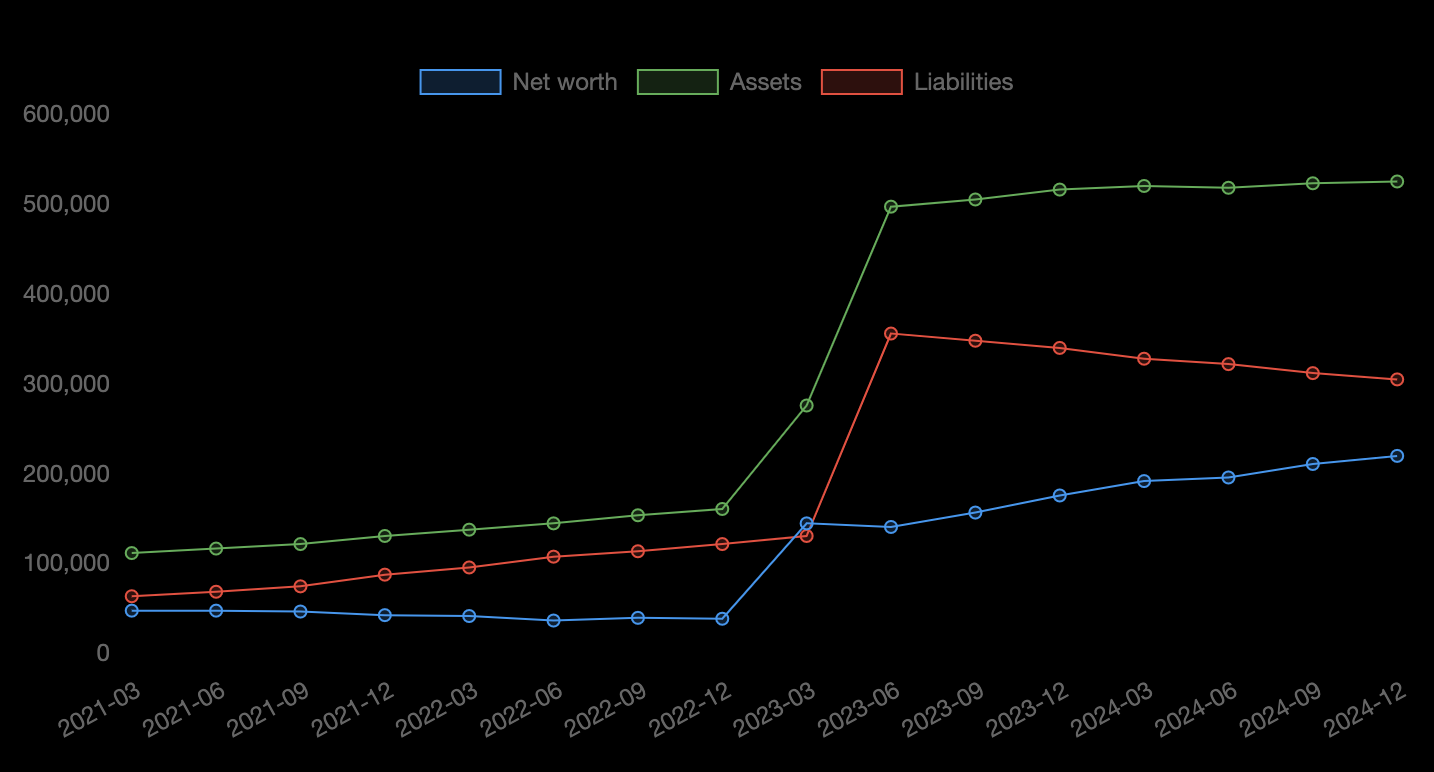
Reaching a $175,000 net worth by age 24 requires a deliberate combination of early high-income generation, an aggressive savings rate exceeding 50%, and consistent capital deployment into compounding market assets. By stacking specialized skills, minimizing fixed overhead, and leveraging tax-advantaged accounts early, young professionals can systematically accumulate six-figure wealth within three to five years.
Deconstructing the Math: What It Takes to Reach $175k by 24
Building a six-figure net worth before mid-twenties is a mathematical exercise driven primarily by contribution volume rather than market returns. While long-term compound interest is a powerful wealth accumulator, the time horizon between ages 18 and 24 (six years) or ages 21 and 24 (three years) means that direct contributions will account for approximately 80% to 90% of your total net worth.
To evaluate the mathematical feasibility, consider two distinct baseline scenarios starting from zero net worth:
- The Post-College Accelerated Track (Ages 21–24): If you enter the full-time workforce at age 21 after completing a degree or technical certification, you have 36 months to accumulate $175,000. Assuming a conservative 7% annualized return on invested capital, you must invest or save approximately $4,350 per month. Without accounting for investment growth, pure cash savings would require $4,861 per month.
- The Direct Workforce / High-Skill Track (Ages 18–24): If you begin earning right after high school—through software development, specialized skilled trades, or entrepreneurial ventures—you have 72 months. At a 7% average annual investment yield, reaching the target requires saving roughly $2,000 per month across six years.
Net Worth Growth Target Breakdown (3-Year vs. 6-Year Horizon)
| Time Horizon | Target Total | Est. Market Yield | Req. Monthly Contribution |
|---|---|---|---|
| 3 Years (21-24) | $175,000 | 7% Annualized | ~$4,350 / month |
| 6 Years (18-24) | $175,000 | 7% Annualized | ~$2,000 / month |
Net worth equals total assets minus total liabilities. Assets include bank deposits, brokerage balances, retirement fund equity, and real estate equity; liabilities include student loans, credit card debt, and vehicle loans. Therefore, your strategic blueprint must address both sides of the balance sheet: rapidly growing asset value while keeping debt near zero.
Phase 1: Maximizing Early Income and Skill Stacking
Saving $2,000 to $4,500 monthly is virtually impossible on an average entry-level salary without intentional income expansion. Reaching a high income early requires selecting industries with elevated starting salaries, rapid promotion tracks, or lucrative performance incentives.
Targeting High-Yield Entry Sectors
Certain career pathways provide the initial capital required to execute a hyper-savings strategy. Fields such as software engineering, cybersecurity, tech sales (business development representatives), investment banking, quantitative finance, and specialized engineering offer base compensation and bonuses that allow early-career workers to earn between $85,000 and $150,000 annually. Non-degree pathways such as commercial electrical work, plumbing, software bootcamps, and specialized logistics management can yield similar early earnings when combined with overtime or contract work.
Executing the Skill Stacking Strategy
Skill stacking involves combining two or more complementary capabilities to stand out in the marketplace faster than a generalist. For example, combining basic software coding skills with persuasive communication makes a candidate exceptionally effective in technical sales—a role with high commission ceilings. Pairing data analysis skills (SQL, Python, PowerBI) with domain knowledge in finance or marketing enables faster promotion cycles into senior analyst positions.
Scaling Side Revenue Streams
Relying solely on a primary job can extend the timeline. Adding secondary revenue streams accelerates progress toward the monthly contribution target. High-leverage side hustles include:
- Freelance Technical Consulting: Offering web development, graphic design, copywriting, or digital marketing to small businesses.
- Overtime and Shift Premiums: Taking advantage of weekend, holiday, or emergency dispatch rates in technical trades or healthcare fields.
- Digital Media and Content Operations: Building digital assets, niche content platforms, or e-commerce storefronts that generate passive or semi-passive cash flow.
Phase 2: Aggressive Savings and Low-Friction Budgeting
Increasing income without controlling expenditures leads to lifestyle inflation—the primary obstacle to early wealth accumulation. Reaching $175,000 by age 24 demands a structural commitment to living far below your financial means.
Implementing the 60/40 Hyper-Savings Budget
Conventional budgeting guidelines, such as the popular 50/30/20 rule (50% needs, 30% wants, 20% savings), are designed for general financial stability, not fast-track wealth building. To achieve six figures by 24, adopt an inverted hyper-savings budget:
- Savings and Investment (50%–70% of Net Income): Automatically routed to investment accounts and high-yield cash reserves on paydays.
- Essential Living Overhead (20%–35% of Net Income): Housing, basic groceries, utilities, and essential transit.
- Discretionary Spending (5%–15% of Net Income): Entertainment, dining out, and personal leisure.
Eliminating the Largest Fixed Expenses
Housing and transportation typically constitute over 60% of an individual's personal budget. Optimizing these two categories frees up thousands of dollars in monthly investable capital.
- Housing Optimization: Consider house hacking (buying a multi-family property with a low-down-payment loan and renting out units), living with family during early employment years, or sharing low-cost rental housing with roommates. Reducing rent to zero or a minimal fraction of income dramatically increases monthly savings.
- Transportation Control: Avoid purchasing or leasing new vehicles financed at high interest rates. Car payments, comprehensive insurance, and depreciation drain potential capital. Opt instead for reliable used vehicles purchased with cash, public transportation, or micro-mobility options whenever practical.
Phase 3: Strategic Asset Allocation and Portfolio Construction
Accumulating capital is only half the equation; preserving and growing that capital through effective asset allocation ensures your net worth keeps pace with inflation and compound market growth.
The Core-and-Explore Portfolio Strategy
For investors in their early twenties, time horizon is the single greatest advantage. A broad-market growth strategy balances equity upside with structural risk management.
FAST-TRACK PORTFOLIO STRUCTURE
- CORE HOLDINGS (70%-80%)
- Broad Market Index Funds (S&P 500)
- Total International Stock Index
- GROWTH ASSETS (10%-20%)
- Individual Tech/Growth Equities
- Sector-Specific ETFs / REITs
- LIQUIDITY BUFFER (5%-10%)
- High-Yield Savings Account (HYSA)
- Money Market / Cash Equivalents
- Core Holdings (70%–80%): Low-cost, total-market index funds or Exchange-Traded Funds (ETFs) tracking broad benchmarks like the S&P 500 or the Total Stock Market Index. These instruments provide broad exposure to proven public companies with expense ratios under 0.05%.
- Growth Assets (10%–20%): Higher-volatility allocations designed to capture rapid capital appreciation. This can include targeted sector ETFs, high-conviction individual equities, or specialized asset classes.
- Liquidity Buffer (5%–10%): A high-yield savings account (HYSA) or money market fund holding 3 to 6 months of basic living expenses to insulate your long-term investments from unexpected liquidations during market drawdowns.
Maximizing Tax-Advantaged Accounts
Tax efficiency significantly enhances net worth velocity. Deploying capital across tax-advantaged account structures minimizes personal income tax liabilities and capital gains taxes.
- Employer 401(k) / 403(b) Match: Always contribute enough to claim the full employer match. This provides an immediate 50% to 100% return on match-eligible funds.
- Roth Individual Retirement Account (Roth IRA): Contributions to a Roth IRA are made with post-tax dollars, but all growth and earnings are withdrawn tax-free in retirement. According to Internal Revenue Service guidelines, eligible individuals can contribute up to specified annual limits ($7,000 for tax year 2024–2026, subject to cost-of-living adjustments).
- Health Savings Account (HSA): If enrolled in an eligible High Deductible Health Plan (HDHP), an HSA offers a triple-tax advantage: tax-deductible contributions, tax-deferred growth, and tax-free withdrawals for qualified medical expenses. Funds can be invested in broad-market index funds for long-term growth.
Strategic Timeline and Wealth-Building Milestones
Tracking progress against structured annual milestones ensures early detection of shortfalls in savings rates or investment returns. The table below outlines a benchmark trajectory for an individual targeting a $175,000 net worth by age 24, starting from age 20.
| Age / Phase | Target Cumulative Net Worth | Primary Operational Focus | Recommended Savings Rate (% of Net) | Target Portfolio Composition |
|---|---|---|---|---|
| Age 20 | $15,000 – $25,000 | Skill acquisition, paid internships, establishing emergency cash reserve. | 30% – 40% | 50% HYSA Cash, 50% Broad-Market Index Funds |
| Age 21 | $45,000 – $60,000 | Securing full-time high-income role, maximizing 401(k) match, launching Roth IRA. | 50% – 60% | 20% Cash Buffer, 80% Equities (401k/Roth/Taxable) |
| Age 22 | $85,000 – $100,000 | Career advancement/promotion, side-income integration, housing cost reduction. | 55% – 65% | 10% Cash, 90% Equities / Tax-Advantaged Accounts |
| Age 23 | $130,000 – $145,000 | Income optimization, negotiating market adjustment, scaling investment contributions. | 60% – 70% | 5% Cash, 95% Diversified Growth Assets & Index ETFs |
| Age 24 | $175,000+ | Portfolio rebalancing, risk assessment, long-term wealth compounding transition. | 50% – 65% | Optimized Core Index Portfolio + Liquid Reserve |
Note: Figures assume continuous workforce participation, market performance consistent with historical long-term averages, and strict adherence to low overhead expenses.
Common Pitfalls That Derail Early Net Worth Growth
Achieving a six-figure net worth in early adulthood requires avoiding costly financial mistakes. Even high earners can undermine their progress by succumbing to standard behavioral traps.
High-Interest Consumer Debt
Carrying high-interest debt—such as credit card balances carrying 20%+ APRs or personal loans—cancels out potential investment gains. Prioritize paying off all high-interest liabilities before directing extra cash flow into standard taxable brokerage accounts.
Speculative Asset Exposure
Chasing meme stocks, unverified cryptocurrencies, day-trading options, or high-risk leverage schemes often leads to major capital losses. While aggressive growth is necessary, building wealth on high-risk speculation undermines long-term financial stability. Focus primary efforts on consistent income and low-cost index funds.
Over-Leveraging on Automobiles
Purchasing a luxury vehicle early in your career is one of the fastest ways to stall net worth growth. Between depreciation, elevated insurance premiums, interest charges, and monthly payments, a expensive car purchase can cost hundreds of thousands of dollars in lost compounding returns over a multi-year horizon.
Neglecting Liquid Emergency Funds
Investing 100% of available cash without maintaining a liquid emergency buffer leaves you vulnerable to short-term disruptions like job loss or medical expenses. Forced asset sales during a market downturn lock in capital losses and interrupt compounding.
Frequently Asked Questions
Is a $175,000 net worth by age 24 realistic without financial help from family?
Yes, but it demands an unconventional approach. Reaching $175,000 without an inheritance requires entering high-paying fields early, maintaining an aggressive savings rate above 50%, keeping housing and transit expenses exceptionally low, and systematically investing surplus cash into broad-market assets.
How much gross annual income is required to reach $175,000 by age 24?
If starting full-time work at age 21 with zero net worth, an annual gross income of $85,000 to $110,000 is typically required, assuming a net savings rate of 55% to 65%. Higher starting salaries reduce the time needed to reach the goal, while lower salaries require additional income from side hustles or lower living costs.
Should student loans be paid off completely before investing?
Focus first on high-interest debt (above 7% APR). Low-interest student loans (below 4%–5%) can be paid down on their standard amortization schedule while surplus capital is directed toward broad-market index funds, which historically yield higher long-term average returns.
What investment account sequence should be followed when starting from zero?
The standard priority order is:
- Contribute to an employer 401(k) up to the maximum match threshold.
- Build a 3- to 6-month liquid emergency fund in a High-Yield Savings Account.
- Maximize annual contributions to a Roth IRA.
- Maximize Health Savings Account (HSA) contributions if eligible.
- Direct remaining funds into a standard taxable brokerage account or additional 401(k) space.
How does income tax affect the net worth calculation by age 24?
Net worth reflects your balance sheet (assets minus liabilities), not total gross earnings. However, income taxes reduce the net cash available for saving and investing. Utilizing tax-advantaged accounts like traditional 401(k)s reduces current taxable income, while Roth accounts protect future capital gains from taxes.
Actionable Next Steps to Build Your Blueprint
Transforming a target net worth into reality requires immediate operational execution. Take the following concrete actions to establish your fast-track financial strategy:
- Calculate Your Current Baseline: Audit your current financial profile. Catalog all liquid assets, investment balances, and outstanding liabilities to establish your starting net worth.
- Automate Your Savings System: Set up automatic payroll deductions and direct deposits. Direct your target savings percentage into separate investment and high-yield savings accounts on paydays before paying discretionary expenses.
- Audit Fixed Living Overhead: Identify options to eliminate high housing and transit costs over the next 12 months. Explore options like living with family, acquiring roommates, or selling a vehicle with a high monthly payment.
- Establish Your Investment Infrastructure: Open a high-yield savings account, low-cost Roth IRA, and taxable brokerage account through established financial institutions like Vanguard, Fidelity, or Schwab. Select low-cost total market index funds to establish your core portfolio holdings.
Disclaimer: This guide is provided for educational and informational purposes only and does not constitute formal financial, investment, tax, or legal advice. Financial parameters and market conditions fluctuate. Consult with a qualified fiduciary financial planner or tax professional before making major investment decisions.