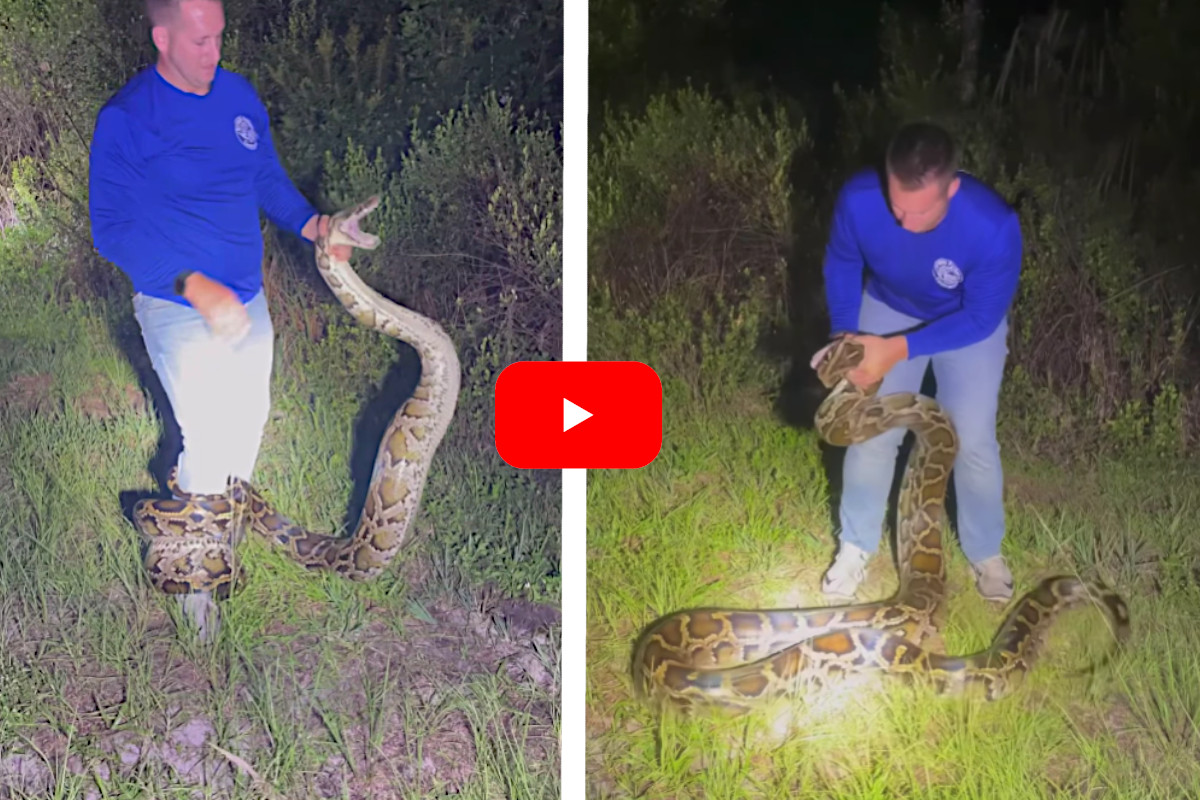
Burmese pythons (Python bivittatus) became established in South Florida through exotic pet releases and facility destruction during Hurricane Andrew in 1992. Giant specimens reaching 16 feet or more represent sexually mature adult females that disrupt local food webs. Spotting these invasive constrictors requires identifying their characteristic brown puzzle-like blotches, dark eye stripes, and thick body profiles.
The Origin and Spread of Florida's Burmese Python Invasion
The establishment of the Burmese python in South Florida is one of the most severe ecological invasions in North American history. Native to the tropical wetlands of Southeast Asia, the Burmese python entered the United States primarily through the international exotic pet trade during the late 20th century. Thousands of hatchlings and young snakes were imported into Florida ports to supply pet distributors nationwide.
The wild population expanded significantly due to two main factors: intentional releases by pet owners unable to care for adults exceeding 10 feet, and catastrophic facility damage. In August 1992, Hurricane Andrew struck South Florida as a Category 5 storm, destroying exotic reptile breeding facilities and holding centers near the Florida Everglades. This damage released hundreds of pythons directly into optimal wetland habitats.
- Pet Trade Imports (1970s–1980s)
- Accidental & Intentional Releases
- Hurricane Andrew (1992 Facility Damage)
- Established Breeding Population in Everglades
South Florida’s subtropical climate, vast marshland hydrology, abundant prey base, and lack of natural apex competitors allowed the species to thrive. Pythons spread from the interior marshes of Everglades National Park into Big Cypress National Preserve, the Water Conservation Areas, Biscayne National Park, and surrounding residential fringes across Miami-Dade, Broward, Monroe, and Collier counties.
Physical Characteristics: How to Identify a 16-Foot Burmese Python
Identifying a giant Burmese python in the wild requires recognizing specific physical traits that distinguish it from native wildlife. While young pythons measure 18 to 24 inches at hatching, mature adults—particularly females—frequently exceed 12 to 16 feet in length and can weigh between 100 and 200 pounds.
Burmese Python Head Features:
- Distinctive "Arrowhead" / Wedge Marking on Top of Head
- Dark Horizontal Stripe Running Through Eye to Jaw Angle
Patterning and Coloration
The most recognizable feature of a Burmese python is its dorsal coloration:
- Background Color: Ranges from light tan, cream, or yellowish-gold to medium brown.
- Blotches: Large, dark brown, irregular blotches cover the back and sides. These markings resemble puzzle pieces, giraffe spots, or map outlines. Each blotch is typically framed by a narrow border of gold or light yellow.
- Ventral Surface: The underside (belly) is cream-colored or off-white with small, irregular dark smudges along the edges.
Head and Facial Markings
The head structure provides reliable visual identification for field observers:
- Arrowhead Marking: A prominent, light-to-dark brown wedge or arrowhead-shaped mark extends from the snout backward over the top of the skull toward the neck.
- Eye Stripe: A distinct dark stripe runs horizontally across the side of the head, passing directly through the eye down to the back of the jaw.
- Pupil Shape: Like many nocturnal predators, pythons possess vertical, slit-like pupils rather than rounded pupils.
Scale Texture and Body Architecture
A 16-foot Burmese python exhibits immense girth, often measuring as wide as a telephone pole along its midsection. Unlike many native venomous snakes in Florida, which have rough or "keeled" scales with central ridges, a Burmese python has smooth, glossy body scales that reflect light when exposed to direct sun.
Distinguishing Burmese Pythons from Native Florida Snakes
Misidentifying native snakes as invasive pythons is a common issue for landowners and outdoor recreationalists. Native species such as the Eastern Diamondback Rattlesnake, Florida Cottonmouth, Florida Banded Water Snake, and Eastern Indigo Snake play vital roles in Florida's ecosystems and are protected under state wildlife laws. Killing native snakes harms the environment and reduces competition against invasive species.
| Species | Typical Adult Length | Scale Texture | Key Pattern & Coloration | Head Features |
|---|---|---|---|---|
| Burmese Python (Python bivittatus) | 10–16+ feet | Smooth, glossy | Dark brown irregular blotches framed in yellow/gold on tan background | Top arrowhead mark; dark horizontal eye stripe |
| Eastern Diamondback Rattlesnake (Crotalus adamanteus) | 4–6 feet | Strongly keeled (rough) | Dark brown/black diamonds with pale yellow borders | Broad triangular head; vertical pupils; tail rattle |
| Florida Cottonmouth (Agkistrodon conanti) | 3–5 feet | Keeled | Dark brown/black crossbands; body darkens significantly with age | Blocky head; dark facial mask; white mouth interior |
| Florida Banded Water Snake (Nerodia fasciata pictiventris) | 2–4 feet | Keeled | Reddish-brown, dark brown, or black crossbands over lighter body | Rounded head; round pupils; dark bands on upper lip |
| Eastern Indigo Snake (Drymarchon couperi) | 5–7 feet | Smooth | Solid iridescent blue-black throughout body; red/cream chin | Slender, rounded head; no distinct neck band |
Field Cues and Environmental Signs: How to Spot Pythons in the Wild
Because Burmese pythons are ambush predators with advanced camouflage, spotting a 16-foot snake requires looking for subtle physical indicators rather than searching for an exposed animal.
Key Visual Cues in the Field:
- Smooth, reflective shine against dull marsh grass
- Unusually wide, linear drag marks in mud or soil (6–10+ inches wide)
- Unnatural horizontal geometric shapes breaking vertical sawgrass patterns
- Large coiled masses along elevated levees during cold winter mornings
Visual Scanning Techniques
- Look for Unnatural Geometries: In dense sawgrass or underbrush, natural vegetation grows vertically or diagonally. A large python creates a continuous, heavy horizontal mass that breaks up vertical plant patterns.
- Scan for Surface Gloss: In bright sunlight, a python’s smooth scales produce a continuous shiny reflection. Native vegetation and rough-scaled snakes scatter light more evenly.
- Focus on Edge Habitats: Pythons frequently rest along transitional margins—where canal banks meet dense brush, or where hardwood hammocks transition into open marshland.
Track and Drag Line Identification
Due to their heavy body mass, giant pythons move primarily via rectilinear locomotion—a straight-line creeping movement driven by belly scales rather than the traditional lateral S-curves of smaller snakes.
- Drag Width: A 16-foot python leaves a flattened, continuous track ranging from 6 to more than 10 inches wide in mud, sand, or crushed vegetation.
- Vegetation Suppression: High-traffic movement paths show flattened, broken sawgrass stems pressed flat against the substrate, forming clear tunnels through dense brush.
Seasonal Activity Windows
- Winter Basking (December to February): Cold weather provides the best opportunity to spot giant pythons. When ambient temperatures drop below 60°F (15°C), cold-blooded pythons must absorb solar heat to maintain digestion. Look for them sunning on open canal levees, road shoulders, and elevated tree islands during mid-to-late mornings.
- Summer Nocturnal Movement (May to September): During hot summer months, pythons become strictly nocturnal to avoid overheating, spending daytime hours submerged in water or hidden inside mammal burrows and root cavities.
Ecological Consequences of Large Apex Constrictors
The impact of 16-foot Burmese pythons on Florida's native wildlife is severe. As generalist apex predators, adult pythons consume a wide variety of native mammals, birds, and reptiles.
Research published by scientific institutions and federal agencies—including the U.S. Geological Survey (USGS)—demonstrates clear link between python expansion and sharp population declines among South Florida mammals:
- Small and Mid-Sized Mammal Depletion: Studies in core Everglades areas show population declines exceeding 90% to 99% for raccoons, opossums, marsh rabbits, and bobcats compared to historical baselines recorded prior to python establishment.
- Impact on Endangered Species: Pythons prey directly on federally protected species, including the Key Largo woodrat (Neotoma floridana smalli) and the Wood Stork (Mycteria americana).
- Competition with Native Apex Predators: A 16-foot python can consume large prey items, including full-grown white-tailed deer and adult American alligators (Alligator mississippiensis). This creates direct resource competition with endangered Florida panthers (Puma concolor coryi) and native crocodilians.
Everglades Food Web Disruption:
- Invasive Burmese Python (Apex Predator)
- Consumes: Marsh Rabbits, Raccoons, Opossums (>90% population decline in core areas)
- Consumes: Wading Birds, Wood Storks, Waterfowl
- Competes With: American Alligators & Florida Panthers for Large Prey (White-Tailed Deer)
What to Do If You Spot a Giant Burmese Python in Florida
Encounters with large pythons require caution, deliberate action, and accurate reporting to state wildlife officials.
1. Maintain a Safe Distance
Burmese pythons are non-venomous, but a 16-foot constrictor possesses powerful physical strength and rows of sharp, rear-curving teeth designed to hold large prey.
- Do not attempt to catch, harass, or corner a large python unless you are a trained, licensed wildlife contractor.
- Maintain a minimum distance of 15 to 20 feet. Pythons can strike forward across a distance equivalent to roughly one-third of their total body length.
2. Record Precise Location Data
Accurate spatial data is essential for professional removal teams:
- Note exact GPS coordinates using a smartphone mapping application.
- Identify nearby landmarks, canal marker posts, or mile markers along highways like US-41 (Tamiami Trail) or I-75 (Alligator Alley).
- Take clear photograph or video footage from a safe distance to confirm the species identification.
3. Report the Sighting Immediately
Florida wildlife management agencies maintain rapid response networks to process invasive species sightings:
- IveGot1 Mobile Application: Use the official IveGot1 mobile app (developed by the University of Georgia Center for Invasive Species and Ecosystem Health) to upload photos and automatic GPS coordinates.
- Telephone Hotline: Call the Florida Fish and Wildlife Conservation Commission (FWC) Exotic Species Hotline at 1-888-IVE-GOT1 (1-888-483-4681).
- Online Reporting: Submit sightings directly via the FWC invasive species portal at MyFWC.com.
Sighting Response Protocol:
- Maintain Safe Distance (15–20+ ft)
- Capture Photo & Record GPS Coordinates
- Submit Sighting via IveGot1 App or call 1-888-IVE-GOT1
- Monitor Snake Location from Distance (if safe to do so)
Frequently Asked Questions
How big can Burmese pythons get in Florida?
In Florida, adult Burmese pythons routinely reach 10 to 13 feet in length. Large mature females can reach 16 to 19 feet, weighing over 150 pounds. The record specimen captured in Florida measured 19 feet in length.
Are 16-foot Burmese pythons dangerous to humans?
Burmese pythons generally avoid human interaction and will attempt to flee when approached. However, a 16-foot python is physically capable of inflicting serious injury through defensive bites and constriction if cornered, restrained, or provoked.
Can you legally kill a Burmese python in Florida?
Yes. Burmese pythons are an unprotected invasive species in Florida. On designated state-managed lands, wild pythons may be humanely killed without a hunting license or permit. However, all removal activities must comply with state cruelty laws, local discharge weapons ordinances, and specific land management rules.
Why are Burmese pythons so hard to spot in Everglades vegetation?
Their brown, pattern-disruptive coloration acts as natural camouflage in sawgrass, mud, and fallen leaf litter. Additionally, pythons spend much of their time semi-submerged in shallow water or concealed underground inside mammal burrows and tree root networks.
Do Burmese pythons have any natural predators in Florida?
Adult pythons measuring 16 feet have virtually no natural predators in Florida, outside of rare predatory interactions with large American alligators. Small juvenile pythons and eggs are occasionally consumed by birds of prey, raccoons, wading birds, and adult native snakes.
Practical Action Guidelines for Florida Outdoor Enthusiasts
Outdoor recreationalists, hikers, paddlers, and property owners in South Florida can take direct steps to help manage the python invasion and protect local ecosystems:
- Download Emergency Tools: Install the IveGot1 application onto your mobile device before entering wildlife management areas, state parks, or Everglades access points.
- Practice Vehicle Caution: Watch for large snakes crossing rural highways (such as US-41, SR-94, and SR-80) during cool winter mornings and warm summer evenings.
- Participate in Managed Programs: Experienced outdoorsmen interested in active conservation can apply for public contractor initiatives, such as the FWC Python Action Team or the South Florida Water Management District (SFWMD) Python Elimination Program.
- Secure Domestic Property: If you live adjacent to natural Everglades corridors, remove dense brush piles, secure outdoor pet enclosures, and eliminate small mammal habitat around outbuildings to decrease prey availability on your property.