At 15 months old, toddlers experience rapid advancements in physical mobility, communication, and cognitive understanding. Most children at this age can walk independently, use a few clear words, imitate adult actions, and participate in self-feeding. Pediatric development guidelines emphasize tracking motor milestones, maintaining structured sleep schedules, encouraging cup drinking, and monitoring language acquisition during routine medical checkups.
Physical and Motor Milestones at 15 Months
The 15-month mark represents a significant transition from infancy into active toddlerhood. Physical development during this window is characterized by increased balance, improved coordination, and refined hand-eye control. According to developmental screening benchmarks established by the Centers for Disease Control and Prevention, gross motor skills allow toddlers to explore their environment with far greater autonomy than in previous months.
Gross motor development at 15 months generally includes:
- Independent Walking: Taking steps without holding onto furniture or adult hands, though the gait may remain wide-based and occasionally unsteady.
- Squatting and Standing: Bending down to pick up a toy from the floor and returning to a standing position without falling over.
- Climbing: Attempting to climb onto low furniture, hearths, or stairs with assistance or supervision.
Fine motor skills also undergo noticeable maturation. Toddlers use their hands and fingers with greater intent and control, transitioning from a crude palmar grasp to a refined pincer grip and deliberate release mechanisms. Key fine motor indicators include:
- Object Manipulation: Stacking at least two small blocks or objects on top of one another.
- Utensil Usage: Attempting to feed themselves using a spoon or fork, even if food is frequently spilled.
- Scribbling: Holding a crayon or marker to make spontaneous marks on paper without needing a demonstration.
- Container Play: Dropping small objects into a cup or bin and successfully dumping them out.
While minor variation in skill acquisition is common, significant delays in gross or fine motor control warrant early evaluation. Parents should observe whether the child is consistently using both sides of the body equally and demonstrating progressive physical stability.
Language Acquisition and Social-Emotional Growth
Speech and emotional development expand significantly around 15 months. Children begin connecting auditory cues with concrete actions, objects, and emotions. Communication at this stage consists of a mixture of spoken words, vocalizations, expressive gestures, and body language.
| Communication Domain | 15-Month Communication Profile |
|---|---|
| Expressive | 1-3 Words + Gestures & Vocalizations |
| Receptive | Follows 1-Step Verbal Directions |
| Social | Shows Affection & Imitates Actions |
From an expressive language standpoint, a typical 15-month-old consistently uses between one and three words beyond "mama" and "dada," such as "ball," "dog," or "more." When formal words are lacking, toddlers rely heavily on gestures, such as pointing to objects of interest, shaking their head to indicate "no," or waving goodbye. Receptive language—what the child understands—is typically much more advanced than expressive speech. A 15-month-old child should be able to follow simple one-step commands accompanied by gestures, such as "give me the toy" or "come here."
Socially and emotionally, toddlers develop a stronger sense of self alongside an awareness of caregivers and peers:
- Affection and Attachment: Showing clear affection toward primary caregivers through hugs, kisses, or bringing toys to share.
- Imitative Play: Mimicking everyday household behaviors, such as sweeping, talking on a phone, or stirring a bowl.
- Joint Attention: Looking at an object when a caregiver points to it and turning back to look at the caregiver to share the experience.
- Functional Play: Playing with toys according to their intended purpose, such as pushing a toy car across the floor or pressing buttons on a music toy.
Clinical Note: Pediatricians use joint attention and response to name as critical early indicators of neurodevelopmental health. If a 15-month-old consistently fails to make eye contact, does not respond when their name is called, or shows no interest in communicating with caregivers, a formal screening with a developmental pediatrician or early intervention program is recommended.
Nutritional Requirements and Meal Planning
At 15 months, solid foods serve as the primary source of nutrition, supplying essential calories, vitamins, and minerals required for rapid growth. The American Academy of Pediatrics recommends offering toddlers three structured meals and two nutrient-dense snacks daily, totaling roughly 1,000 calories per day depending on growth rate and activity level.
| Category | Daily Nutritional Goals (15 Months) |
|---|---|
| Whole Cow's Milk or Fortified Alt | 16 to 24 oz max per day |
| Dietary Fiber (Fruits, Veg, Grains) | 19 grams per day |
| Protein Sources | 13 grams per day |
| Water | Offered throughout the day |
The transition away from infant formula should be complete by 15 months. Whole cow's milk (or a fortified plant-based milk recommended by a pediatrician) provides necessary dietary fats crucial for early brain development. However, milk intake should be capped at 16 to 24 ounces per day. Overconsumption of milk can displace iron-rich solid foods, increasing the risk of iron-deficiency anemia.
A balanced meal plan for a 15-month-old includes a variety of food groups:
- Proteins: Tender cooked meats, poultry, fish, eggs, tofu, beans, and nut butters spread thinly on bread.
- Healthy Fats: Whole milk yogurt, cheese, avocado, and olive oil used in cooking.
- Complex Carbohydrates: Whole wheat bread, oatmeal, brown rice, whole-grain pasta, and sweet potatoes.
- Produce: Soft, fresh, or steamed fruits and vegetables cut into manageable pieces.
To prevent choking, parents must prepare foods to match the child's chewing capabilities. Foods with high choking risks—such as whole grapes, cherry tomatoes, raw carrots, hot dog rounds, whole nuts, popcorn, and hard candies—must be thoroughly cooked, diced, or avoided entirely.
Transitioning from baby bottles to open cups or straw cups is another key goal at 15 months. Prolonged bottle use, especially bedtime bottles containing milk or juice, is directly associated with early childhood dental caries and reduced appetite for solid foods during daytime meals.
Sleep Patterns and Regressions
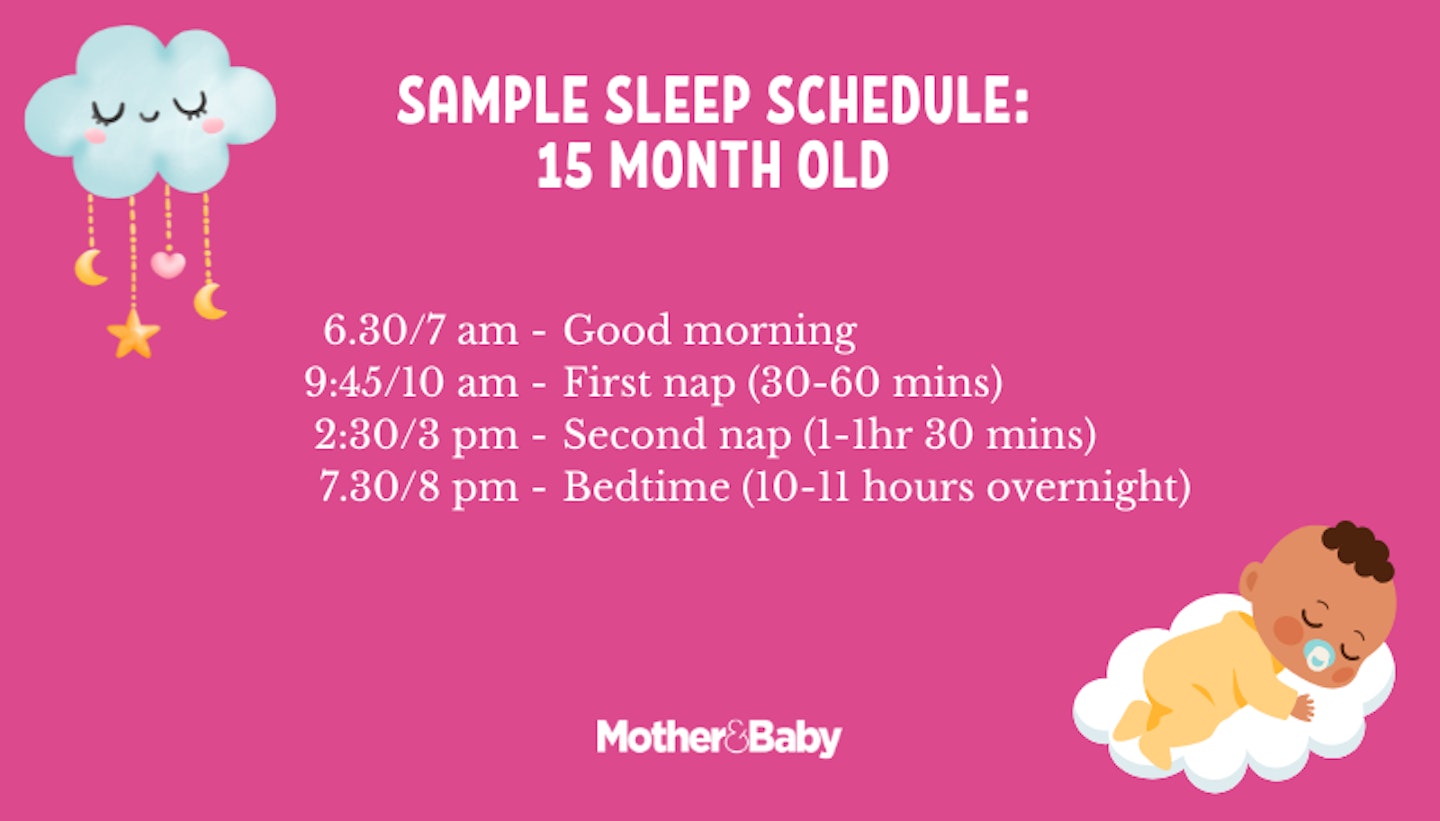
Establishing consistent sleep routines supports physical growth, emotional regulation, and cognitive development. Most 15-month-old toddlers require between 11 and 14 hours of total sleep per 24-hour period, which includes nighttime sleep and daytime naps.
At 15 months, many toddlers transition from a two-nap routine down to a single afternoon nap lasting 1.5 to 3 hours. Prematurely eliminating the morning nap can lead to overtiredness, increased night awakenings, and bedtime resistance. If a toddler exhibits consistent difficulty falling asleep for the morning nap or pushes the afternoon nap too late into the evening, a gradual transition to one midday nap is appropriate.
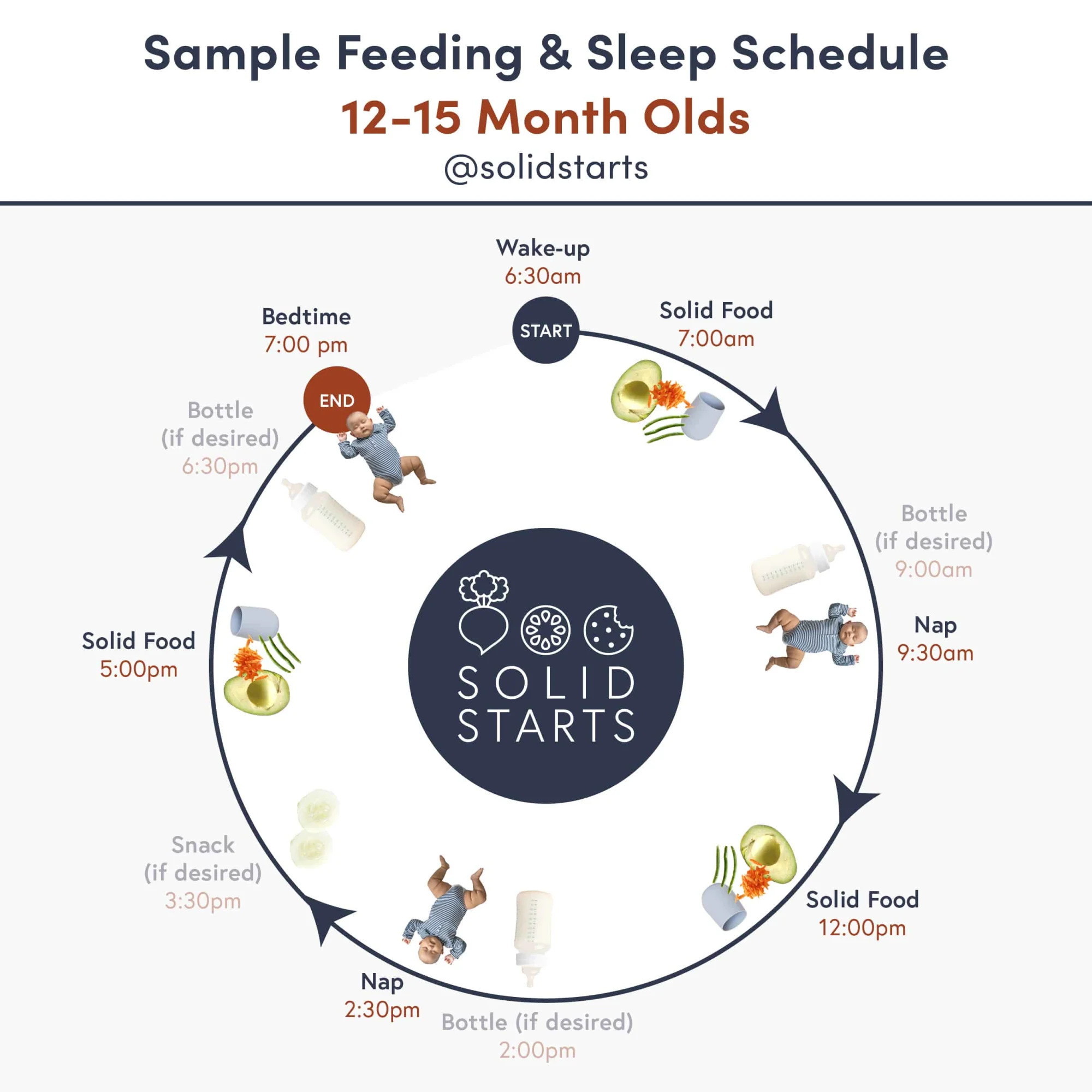
Sample 15-Month Daily Schedule (Single-Nap Pattern):
- 07:00 AM – Wake up and breakfast
- 09:30 AM – Morning snack and structured play
- 12:00 PM – Lunch
- 12:30 PM – Midday Nap (1.5 to 2.5 hours)
- 03:00 PM – Afternoon snack and outdoor activity
- 06:00 PM – Dinner
- 07:15 PM – Bedtime routine (bath, books, teeth brushing)
- 07:45 PM – Lights out
Sleep regressions frequently occur around 15 months due to major developmental strides, such as learning to walk, language surges, and early separation anxiety. Toddlers may resist falling asleep independently or awaken crying during the night. Maintaining a predictable, calming 20-to-30-minute bedtime routine—incorporating bathing, reading, and gentle soothing—helps regulate the child's circadian rhythm and reinforces sleep readiness.
15-Month Developmental Assessment Matrix
The following reference table outlines typical developmental capabilities alongside potential indicators that merit consultation with a healthcare provider.
| Developmental Area | Expected 15-Month Skills | Red Flag Indicators for Provider Consult |
|---|---|---|
| Gross Motor | Walks independently; squats to pick up items; steps onto low surfaces. | Inability to walk independently; persistent limping or toe-walking; muscle stiffness or floppiness. |
| Fine Motor | Stacks 2 blocks; holds spoon; scribbles; drops small items into containers intentionally. | Inability to grasp objects with fingers; asymmetry in hand or arm usage; severe hand tremors. |
| Speech & Language | Uses 1–3 words consistently; points to request or direct attention; understands simple commands. | Zero spoken words; lack of babbling; absence of pointing or gesturing to communicate. |
| Social & Emotional | Demonstrates affection; plays simple imitative games; turns when name is called. | Lack of eye contact; failure to respond to name; lack of interest in interacting with primary caregivers. |
| Cognitive & Play | Explores objects through cause-and-effect; uses objects for functional play (e.g., telephone). | Loss of previously acquired skills; inability to track moving objects visually; absence of functional play. |
Behavioral Guidance, Play, and Cognitive Stimulation
Toddlerhood introduces meaningful social exploration alongside early behavioral challenges. At 15 months, emotional expression often outpaces language skills, leading to frustration when a child cannot communicate their desires or exercise control over their environment.
Managing Toddler Tantrums
Temper tantrums are a normal component of social-emotional growth. When a toddler experiences a tantrum due to fatigue, hunger, or frustration, parents should apply calm, consistent strategies:
- Maintain Safety: Ensure the immediate area is free from hard or sharp objects where the child could injure themselves.
- Stay Calm: Maintain a neutral voice tone, as reacting with anger or heightened emotion often escalates the outburst.
- Provide Comfort without Reinforcing Demands: Offer a quiet physical presence or a comforting hug once the emotional intensity subsides.
- Redirection: Shift the child's focus to a new activity, object, or movement to assist in self-regulation.
Play and Cognitive Stimulation
Play is the main way toddlers build cognitive, motor, and social skills. Simple, interactive, screen-free activities provide optimal learning opportunities:
- Interactive Reading: Reading short, colorful board books daily expands receptive vocabulary. Point to pictures and ask simple questions, such as "Where is the dog?"
- Sensory Exploration: Offer safe sensory play, such as pouring water in a basin, playing with soft dough, or digging in small containers of rice or sand under direct adult supervision.
- Movement Games: Encourage outdoor walking, climbing on low grass mounds, pushing toy carts, and rolling balls back and forth.
- Imitative Pretend Play: Provide toy telephone sets, soft dolls, plastic dishes, or play brooms to encourage early imaginative play.
In alignment with guidelines from health authorities, screen media exposure (aside from live video chats with family) should be avoided at 15 months. Unstructured active play and direct human interaction are far more effective for early language acquisition and cognitive growth.
Environmental Safety and Childproofing Priorities
As 15-month-olds become faster, stronger, and more curious, home safety measures must adapt to prevent unintentional injuries. Toddlers at this age lack an understanding of physical danger and possess high mobility coupled with hand-to-mouth exploration behaviors.
| Home Safety Checklist: 15 Months |
|---|
| [ ] Heavy furniture and TVs anchored to wall studs |
| [ ] Safety gates secured at top and bottom of all stairs |
| [ ] Medications, cleaners, and pods in locked cabinets |
| [ ] Electrical outlets covered; blind cords tied high |
| [ ] Small objects, batteries, and magnets kept out of reach |
Critical safety priorities for the home environment include:
- Preventing Falls and Tip-Overs: Anchor all heavy dressers, bookcases, television stands, and appliances to wall studs using heavy-duty anti-tip straps. Ensure safety gates are locked securely at both the top and bottom of staircases.
- Poison Prevention: Store all household cleaners, laundry detergent pods, lawn care products, over-the-counter drugs, and prescription medications in high, locked cabinets out of reach and sight. Keep the Poison Control phone number readily available.
- Choking Hazards and Small Parts: Continually inspect floor spaces for small items such as loose coins, button batteries, small magnets, balloon fragments, or small toy parts. Button batteries and high-powered magnets are particularly hazardous if swallowed and require emergency medical attention.
- Water Safety: Never leave a 15-month-old unattended in a bathtub, near a swimming pool, or near open buckets of water, even for a few seconds. Drowning can occur rapidly in as little as one inch of water. Ensure pool barriers are fully fenced with self-closing, self-latching gates.
- Burn Prevention: Turn pot handles toward the back of the stove while cooking, keep hot beverages away from table edges, and install safety covers over stove knobs. Set household hot water heaters to a maximum temperature of 120°F (49°C) to prevent scalding injuries.
Frequently Asked Questions About 15-Month-Olds
How many words should a 15-month-old say?
Most 15-month-old toddlers consistently use between one and three meaningful words in addition to "mama" and "dada." Speech development varies widely, and children often communicate through gestures, babbling, and pointing alongside spoken words. If a child makes no speech sounds or fails to communicate using gestures by 15 months, a medical evaluation is recommended.
How much sleep does a 15-month-old child require each day?
A 15-month-old child typically requires 11 to 14 hours of total sleep per 24-hour period. This total usually consists of 10 to 12 hours of nighttime sleep and 1 to 3 hours of daytime sleep divided between one or two naps.
When should a toddler complete the transition from a bottle to an open cup?
The American Academy of Pediatrics recommends completing the transition from infant bottles to open or straw cups by 15 to 18 months of age. Transitioning off bottles prevents dental decay caused by prolonged exposure to natural sugars in milk and encourages appropriate solid food intake during regular mealtimes.
Is it normal for a 15-month-old to lose their appetite suddenly?
Yes, a mild or sudden decrease in appetite is common at 15 months. As physical growth naturally slows down after the first year of life, a toddler's caloric needs relative to body size decrease. Toddlers also experience shifts in preference and independence around food. As long as the child maintains energy levels and follows their established growth curve, fluctuating appetite is rarely a sign of medical illness.
How do you handle tantrums in a 15-month-old toddler?
Effective management of tantrums involves ensuring the child is safe from injury, remaining calm without yelling, and avoiding giving in to unreasonable demands. Using gentle redirection toward a new toy, game, or location often helps dissolve emotional distress quickly at this age.
Navigating the 15-Month Well-Child Checkup and Next Steps
The 15-month routine pediatric visit provides an essential opportunity to review growth parameters, evaluate developmental progress, and complete preventive health measures.
During this visit, the healthcare team will take physical measurements—including weight, height/length, and head circumference—and plot them on standardized growth charts. The clinician will conduct a physical examination and assess motor, language, and emotional development through direct observation and structured questionnaire tools filled out by caregivers.
Typical 15-Month Vaccination Schedule (Varies by region/provider):
- DTaP (Diphtheria, Tetanus, acellular Pertussis)
- Hib (Haemophilus influenzae type b)
- PCV (Pneumococcal Conjugate Vaccine)
- MMR (Measles, Mumps, Rubella - if not received at 12 months)
- Varicella (Chickenpox - if not received at 12 months)
- Hepatitis A (Second dose depending on initial dose timing)
- Annual Influenza / COVID-19 immunizations (seasonal)
Caregivers should prepare for the visit by compiling a list of questions regarding dietary intake, sleep transitions, developmental concerns, or behavior patterns. If any developmental delays, physical abnormalities, or growth deviations are identified, the pediatrician can arrange for targeted early intervention therapies or specialized pediatric referrals to support optimal growth.
Disclaimer: This guide is provided for educational and informational purposes only and does not constitute formal medical advice. Always consult a qualified pediatrician or primary healthcare professional for personalized medical guidance, diagnosis, or developmental evaluation.