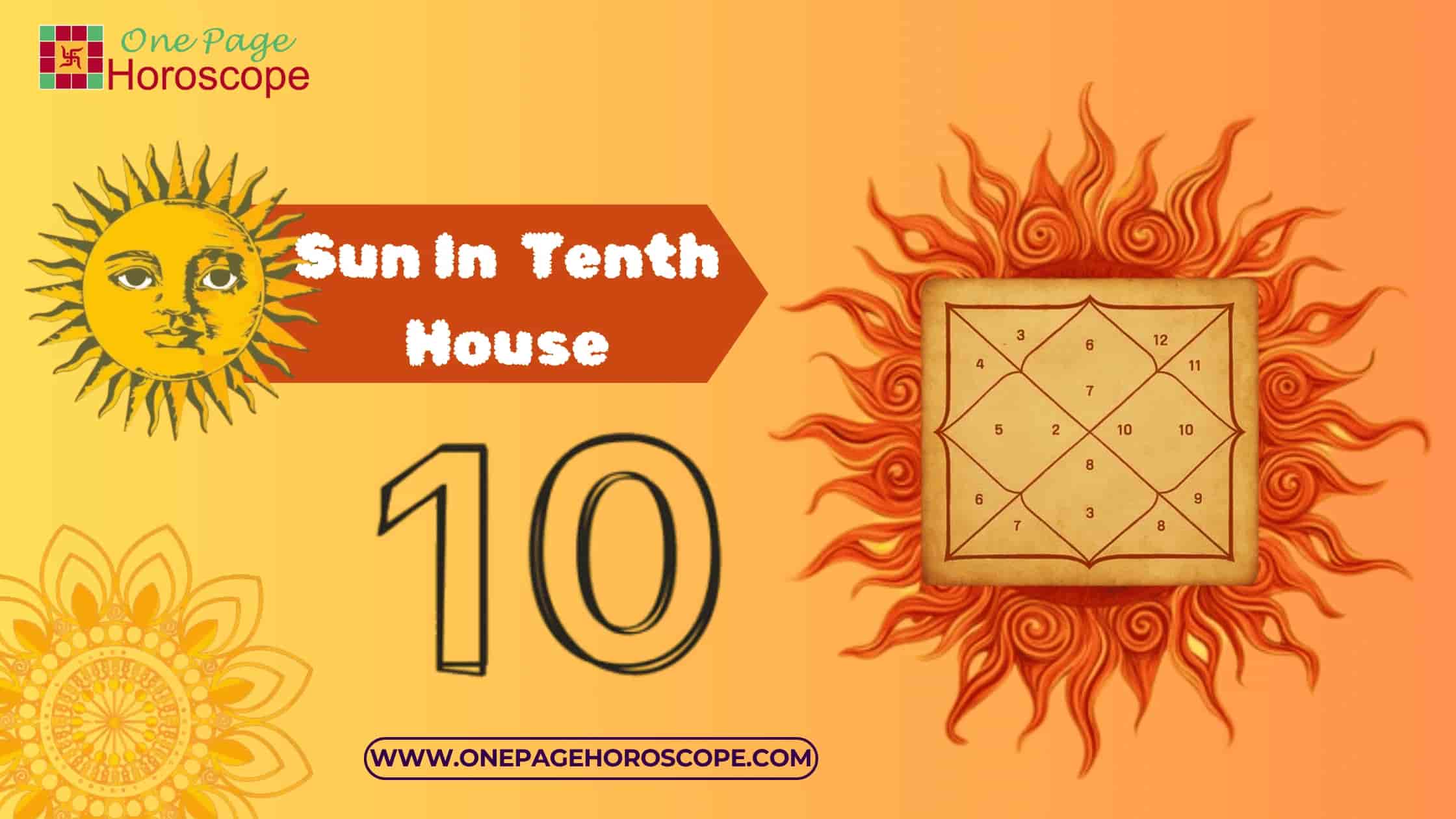
The 10th house in astrology represents the professional sphere, public reputation, and long-term career aspirations. By analyzing the signs and planets positioned within this sector of an individual’s birth chart, one can identify potential vocational inclinations, leadership styles, and the nature of one’s interaction with authority and societal structures.
Understanding the 10th House Framework
In the system of Hellenistic and modern astrology, the 10th house—also known as the Medium Coeli or Midheaven (MC)—functions as the highest point in the zodiacal wheel. Unlike the 2nd house, which deals with personal income and assets, or the 6th house, which governs daily work routines and service-oriented tasks, the 10th house is concerned with your legacy. It defines how the public perceives your professional persona and the overarching trajectory of your career.
When interpreting the 10th house, astrologers evaluate the sign residing on the cusp of the house, any planets located therein, and the condition of the planet that rules that sign. For instance, if the sign of Leo is on the 10th house cusp, the individual may find career success in roles requiring visibility, leadership, or creative expression, as the Sun (the ruler of Leo) dictates the flow of energy into that sector of the chart.
The Role of Planets in the 10th House
Planets located within the 10th house exert a significant influence on one’s professional identity and ambition. These celestial bodies act as drivers or modifiers for how an individual pursues their career goals.
- Sun: Often suggests a strong desire for recognition. Individuals with the Sun in the 10th house frequently thrive in positions of authority or roles where they are the center of attention.
- Moon: Indicates a career path that may be subject to flux or that involves working with the public, nurturing roles, or fields related to real estate and hospitality.
- Mercury: Points to a career centered on communication, writing, teaching, or analytical work where the ability to articulate complex ideas is paramount.
- Venus: Often associated with careers in diplomacy, the arts, aesthetics, or high-end luxury services, where social grace and harmony are professional assets.
- Mars: Drives an individual toward competitive or high-energy fields, such as medicine, law enforcement, entrepreneurship, or engineering.
- Jupiter: Suggests a career path involving expansion, education, philosophy, or international relations, often providing a "lucky" or protective influence in professional advancement.
- Saturn: Denotes a serious, disciplined, and long-term approach to one's craft. While success may come later in life, it is often characterized by stability and lasting status.
Determining Vocational Alignment
Identifying a career path requires looking at the "10th House Ruler"—the planet that governs the zodiac sign on the 10th house cusp. If the Midheaven is in Aries, Mars is the ruling planet. Its placement in other houses of the chart describes the circumstances under which professional success is attained. If Mars is in the 2nd house, for example, the individual’s career is closely linked to generating wealth. If Mars is in the 9th, their professional success may be tied to academia, publishing, or global travel.
It is a common misconception that the 10th house tells you exactly what "job" you should hold. Instead, it provides a thematic blueprint for the nature of your work. It describes your requirements for job satisfaction—whether you need autonomy, public prestige, or a quiet space to cultivate expertise.
Comparative Analysis of House Contributions
While the 10th house is the primary indicator of career and status, it does not function in isolation. The following table illustrates how different houses contribute to the professional life cycle.
| House | Focus Area | Impact on Career Development |
|---|---|---|
| 2nd House | Personal Assets | Defines your relationship with income and financial values. |
| 6th House | Daily Routine | Defines your work environment, skills, and service style. |
| 10th House | Public Status | Defines your long-term legacy and professional aspirations. |
| 11th House | Professional Networks | Defines your success through community, industry, and teams. |
Common Challenges and Adjustments
Navigating a career through the lens of the 10th house often involves reconciling personal desire with public expectation. One common mistake is ignoring the planet that rules the 10th house. If that planet is under significant strain from other aspects (such as a square from Pluto or Saturn), the individual may experience frequent changes in career direction or difficulties with authority figures.
Troubleshooting professional stagnation often involves re-evaluating the 6th house (daily habits) to ensure they are supporting the 10th house goals. If your 10th house suggests a career in leadership but your 6th house is occupied by planets indicating a desire for solitary work, you may need to seek leadership roles that offer a high degree of independence or virtual management.
Integrating Astrology into Professional Planning
Using the 10th house as a tool for career development is not a substitute for professional training, networking, or economic reality. Rather, it serves as a self-reflective framework. In 2026, as the professional landscape continues to shift toward hybrid models and global, skill-based economies, understanding your 10th house can help you prioritize which roles align with your internal drive for status and fulfillment.
If you are currently experiencing a transition, identify the sign on your Midheaven and research the archetypal activities associated with that sign. For instance, an Earth-sign Midheaven (Taurus, Virgo, Capricorn) often rewards pragmatic, tangible output, whereas a Fire-sign Midheaven (Aries, Leo, Sagittarius) typically favors roles that allow for innovation, risk-taking, and visible impact.
Frequently Asked Questions
Can the 10th house predict exactly what job I will get?
No. The 10th house provides thematic insights into your professional nature, such as your leadership style and relationship to status. It does not contain specific job titles, as the manifestation of these energies is subject to your educational background, personal choices, and the shifting demands of the 2026 job market.
What if I have no planets in my 10th house?
Having an empty 10th house is entirely normal. It simply means that your career path is primarily defined by the sign on the cusp and the location/aspects of the planet that rules that sign. You are not "destined" for a quiet career; you are simply less focused on high-visibility professional theatrics than someone with multiple planets in that sector.
Does the 10th house only apply to traditional "careers"?
The 10th house governs your public standing, which extends beyond paid employment. It encompasses how you are perceived in any long-term capacity, such as volunteer work, political activism, community leadership, or your reputation as a public intellectual.
How does the 10th house interact with the 6th house?
The 6th house governs the mechanics of your work—your daily tasks, health, and work environment. The 10th house governs the objective or the result of that work. Ideally, the skills developed in the 6th house serve as the foundation for the reputation and status achieved in the 10th house.
Is it possible to have two signs in the 10th house?
Yes, if your 10th house is large, it may contain an "intercepted sign." This suggests that the themes associated with the intercepted sign may take longer to manifest in your professional life or may require a more indirect approach to express fully.
Next Steps for Your Professional Development
To apply these principles, begin by generating a precise birth chart based on your exact time of birth. Identify the sign and any planets within the 10th house. Review your current professional responsibilities and assess whether they align with the needs of that placement. If you find a disconnect, focus on projects that allow you to embody the qualities of your 10th house sign—whether that is seeking more autonomy, engaging in more public-facing advocacy, or focusing on long-term skill mastery. Remember that professional growth is a lifelong process of iteration rather than a singular, static destination.