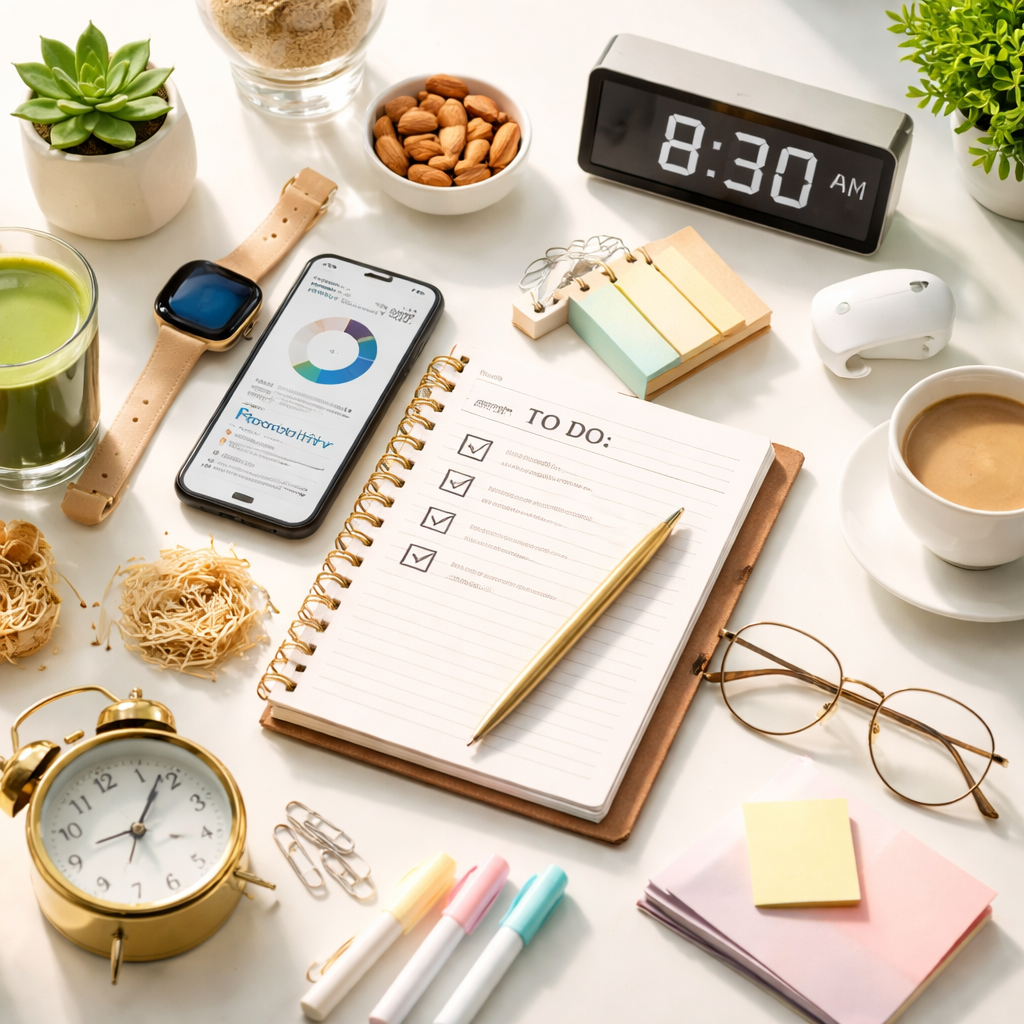
Achieving maximum efficiency in 2026 requires a strategic blend of high-level AI integration and disciplined cognitive management. By prioritizing deep work through chronotype-aligned scheduling, automating repetitive tasks with personal AI agents, and enforcing strict boundaries on asynchronous communication, professionals can reclaim significant portions of their day for high-value, creative output.
The Shift Toward Cognitive Energy Management
The traditional 9-to-5 model has largely been superseded by energy-based productivity frameworks. In 2026, the most successful professionals no longer focus solely on time management; they focus on managing their cognitive load and biological peaks. Productivity is no longer measured by the quantity of hours logged, but by the quality of the "Deep Work" sessions produced.
Understanding that human focus is a finite resource is the first step toward efficiency. When we treat our attention as a currency, we become more selective about how we spend it. This involves recognizing the difference between "shallow work"—logistical tasks like email and scheduling—and "deep work," which requires intense concentration and pushes our cognitive capabilities to their limit. The following hacks are designed to protect that focus while leveraging modern technological advancements to handle the mundane.
1. Implement AI-Agentic Workflows
By 2026, the use of simple chatbots has evolved into the deployment of autonomous AI agents. Instead of manually performing data entry, scheduling meetings, or summarizing long document threads, you should configure "agentic workflows." These agents operate in the background, performing multi-step tasks across different software platforms.
To implement this, identify tasks that follow a "if-this-then-that" logic but require a level of semantic understanding. For example, instead of manually triaging your inbox, an AI agent can analyze incoming requests, draft responses based on your historical tone, and only flag items that require a human decision. This shifts your role from "doer" to "editor," significantly reducing the friction of starting and finishing administrative tasks.
2. Biological Time-Blocking via Chronotypes
Time-blocking is a classic technique, but its most efficient version involves aligning your schedule with your circadian rhythm, or chronotype. Most people fall into four categories: Lions (early risers), Bears (follow the sun), Wolves (night owls), and Dolphins (irregular sleepers).
Maximum efficiency is achieved by scheduling your most cognitively demanding tasks—coding, writing, or strategic planning—during your biological peak. For a Lion, this is early morning; for a Wolf, it may be late afternoon.
- Peak Hours: Reserve for "Deep Work" (no meetings, no notifications).
- Trough Hours: Use for "Shallow Work" (emails, administrative filing).
- Recovery Hours: Use for collaborative work or brainstorming, where a slightly lower focus may actually facilitate creative "Aha!" moments.
3. The "Rule of Three" Daily Prioritization
Overwhelming to-do lists are a primary cause of decision fatigue. The Rule of Three dictates that at the start of each day, you identify exactly three outcomes you must achieve to feel successful. These are not tasks; they are results.
By limiting your focus to three core objectives, you prevent the "Zeigarnik Effect," where the brain stays stuck on unfinished, low-priority tasks. This hack forces a brutal prioritization that aligns with the Pareto Principle—the idea that 20% of your efforts produce 80% of your results. If you finish your three items early, you can move on to a secondary list, but the psychological "win" of completing the main three provides a dopamine boost that sustains long-term motivation.
4. Radical Asynchronous Communication
One of the greatest productivity killers in the modern workplace is the expectation of an immediate response to instant messages. In 2026, high-efficiency teams have moved toward "Radical Asynchronicity." This means defaulting to recorded video memos (like Loom), detailed project management comments, or long-form documents instead of "quick calls" or Slack marathons.
Asynchronous communication allows you to control when you consume information. Instead of being interrupted every 10 minutes, you can "batch" your communication checks. This prevents the "Context Switching Tax," which researchers have found can cost up to 40% of someone's productive time. When you switch from a complex task to an email and back, it takes your brain an average of 23 minutes to return to full focus.
5. Environmental Anchoring and Sensory Design
Your physical and digital environments act as cues for your brain. If you work in the same spot where you scroll social media or eat lunch, your brain struggles to enter a high-focus state. Environmental anchoring involves creating specific sensory triggers that signal "work mode."
- Visual Cues: Using a specific light color (via smart bulbs) or a specific desktop wallpaper only during deep work.
- Auditory Cues: Utilizing brown noise or "binaural beats" designed for focus. By 2026, spatial audio tools can create a "focus bubble" even in open-office environments.
- Digital Cues: Using "Focus Modes" on devices that hide all non-essential apps and notifications based on your GPS location or time of day.
6. Zero-Based Calendar Management
Much like zero-based budgeting, zero-based calendaring requires you to justify every minute of your workday. Rather than leaving open gaps that inevitably get filled by other people’s priorities, every hour of your day should be "spent" on a specific activity—even if that activity is "Rest" or "Unstructured Thinking."
When your calendar is empty, it is an invitation for others to steal your time. By proactively filling your calendar with blocks for specific projects, you create a visual representation of your capacity. This makes it easier to say "no" to low-value requests because you can see exactly what high-value task would have to be sacrificed to accommodate the new request.
7. Comparing Productivity Frameworks
Choosing the right system is essential for efficiency. Below is a comparison of the most effective frameworks currently utilized in 2026.
| Framework | Core Principle | Best For | Difficulty |
|---|---|---|---|
| Getting Things Done (GTD) | Capture everything in an external system to free up mental space. | High-volume administrative roles. | High |
| Eat the Frog | Do the most difficult, dreaded task first thing in the morning. | Chronic procrastinators. | Medium |
| Time Boxing | Assigning a fixed time period to each task. | Overachievers and perfectionists. | Low |
| Pomodoro 2.0 | Work in 50-minute sprints followed by 10-minute breaks. | Sustaining focus on long projects. | Low |
| Eisenhower Matrix | Categorizing tasks by Urgency and Importance. | Decision-makers and managers. | Medium |
8. Automating Decision Trees for Routine Tasks
Decision fatigue is a real physiological state where the quality of your decisions deteriorates after a long session of making choices. You can "hack" this by creating automated decision trees for your recurring responsibilities.
For example, if you are a manager, create a "Response Matrix" for your team. This document outlines exactly which types of problems require your immediate attention, which can wait for a weekly sync, and which the team is empowered to solve themselves. By pre-deciding these outcomes, you eliminate the mental energy required to process dozens of small requests throughout the week.
9. The "Shutdown Ritual" for Cognitive Closure
Productivity is as much about how you stop working as how you start. A shutdown ritual is a 10-to-15-minute process at the end of the workday where you review your accomplishments, update your "Rule of Three" for the next day, and clear your physical and digital workspace.
This ritual facilitates "Cognitive Closure." Without it, the brain continues to process work-related stressors during your rest periods, leading to burnout. By 2026, the boundary between work and home is more fluid than ever; a formal shutdown ritual creates a psychological "firewall" that protects your recovery time, ensuring you return the next day with full cognitive capacity.
10. Neuro-Incentivized Task Batching
Task batching involves grouping similar tasks together to minimize mental startup costs. Neuro-incentivized batching takes this further by pairing a high-effort task with a "dopamine reward."
If you have a batch of monotonous data verification to do, pair it with a specific playlist you love or a high-quality coffee you only have during that task. More importantly, batching should be done by mode of thinking. Group all "creative" tasks together on Tuesday and all "analytical/financial" tasks on Wednesday. This prevents the jarring shift between different parts of the brain, allowing you to maintain a "Flow State" for longer durations.
Troubleshooting Common Productivity Bottlenecks
Even with the best hacks, bottlenecks can occur. The most common in 2026 is "Tool Fatigue"—the tendency to spend more time setting up productivity apps than actually working. If you find yourself spending more than 30 minutes a week organizing your system, your system is too complex.
Another common issue is "False Urgency." In a hyper-connected world, everything feels like a priority. Use the Eisenhower Matrix (see table above) to ruthlessly filter tasks. If a task is urgent but not important, it should be delegated to an AI agent or a team member. If it is neither, it should be deleted.
FAQ
How do I start using AI agents for productivity?
Begin by identifying a repetitive, multi-step process that takes at least 30 minutes of your week. Use an integration platform to connect your primary tools (e.g., email, CRM, and project management software). Set a clear goal for the agent, such as "Extract all action items from this meeting transcript and add them to my task manager."
Can I change my chronotype to be more productive?
While you can shift your rhythm slightly through light exposure and meal timing, your chronotype is largely genetic. Instead of fighting it, it is significantly more efficient to "work with the grain" of your biology. If you are a Wolf, stop trying to do deep work at 8:00 AM; save that time for exercise or admin and push your focus work to the afternoon.
Is the Pomodoro Technique still effective with AI tools?
Yes, but it has evolved. In 2026, "Pomodoro 2.0" often uses longer cycles, such as 50 or 90 minutes, to account for the depth required in high-level knowledge work. AI tools can support this by automatically silencing all notifications the moment you start a timer.
What is the biggest mistake people make with time blocking?
The most common mistake is failing to account for "Buffer Time." People often schedule tasks back-to-back without leaving 10–15 minutes for transitions, biological needs, or unexpected interruptions. A productive calendar should be about 20% "empty" to account for the chaos of a standard workday.
How do I handle a boss who dislikes asynchronous communication?
Demonstrate the value through results. Start by providing comprehensive "End of Day" summaries that answer questions before they are asked. When you prove that asynchronous updates lead to fewer errors and higher output, most managers will eventually embrace the reduction in disruptive meetings.
Moving Toward Sustainable Efficiency
The ultimate goal of productivity is not simply to do more work, but to do the right work with less effort. To implement these hacks effectively, do not attempt to change your entire workflow overnight. Choose one "game-changer"—perhaps the AI-agentic workflow or the chronotype-aligned schedule—and test it for two weeks.
Once a hack becomes a habit, it no longer requires willpower to maintain. By systematically optimizing your environment, your tools, and your biological rhythms, you create a "frictionless" work existence. The result is a career defined by high-impact achievements and a personal life that is actually free from the mental clutter of the office.