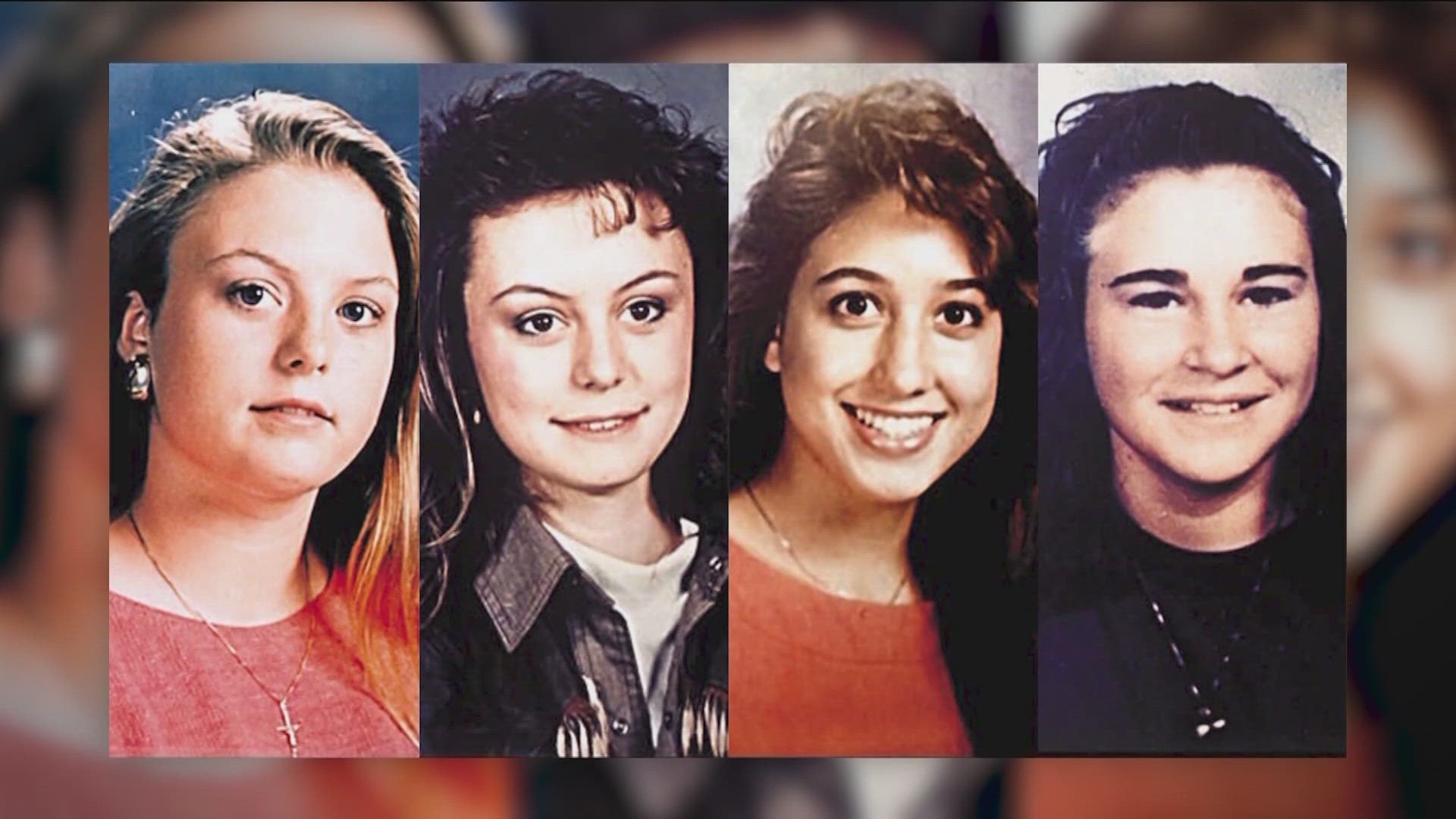
The 1991 Austin yogurt shop murders remain one of the most haunting cold cases in American history. On December 6, 1991, four teenage girls—Jennifer Harbison, Sarah Harbison, Eliza Thomas, and Amy Ayers—were found murdered inside an "I Can’t Believe It’s Yogurt!" shop in Austin, Texas. Despite several arrests, convictions, and subsequent exonerations, the case remains officially unsolved in 2026.
The Victims of the 1991 Austin Tragedy
Understanding the magnitude of this case requires recognizing the lives lost. The four victims were young women with deep ties to the Austin community, and their deaths fundamentally altered the city’s sense of safety.
Jennifer Harbison (17) and Sarah Harbison (15): The Harbison sisters were well-known in their local community. Jennifer was a senior at Lanier High School and worked at the yogurt shop. Sarah, her younger sister, was a freshman. On the night of the murders, Sarah had come to the shop to help Jennifer close so they could later go to a sleepover.
Eliza Thomas (17): Eliza was a close friend of Jennifer and a fellow employee at the shop. Described as outgoing and responsible, she was working the closing shift alongside Jennifer. Like Jennifer, she was a student at Lanier High School and was highly regarded by her peers and teachers.
Amy Ayers (13): The youngest of the four, Amy was a friend of Sarah Harbison. She had spent the evening with the sisters and was at the shop waiting for them to finish their shift. Her inclusion in the tragedy was a matter of circumstance, as she was simply waiting for a ride to their planned weekend activities.
The brutal nature of their deaths—each girl was bound with their own clothing, gagged, and shot in the head—shocked the nation. The perpetrators then set the shop on fire in an attempt to destroy forensic evidence, a tactic that complicated the investigation for decades to come.
Chronology of December 6, 1991: A Timeline of Events
The timeline of the murders is a sequence of mundane Friday night activities that spiraled into a nightmare. Forensic reconstruction and witness testimonies have allowed investigators to piece together the final hours of the victims.
- 10:00 PM: The shop, located at 2927 West Anderson Lane, was winding down. Customers were still coming in and out. Witnesses later reported seeing two men sitting in a booth near the back of the store, lingering after finishing their orders.
- 11:00 PM: The shop was scheduled to close. Jennifer and Eliza began their closing procedures, which included cleaning machines and counting the register. Sarah and Amy assisted or waited nearby.
- 11:15 PM – 11:45 PM: Investigators believe the crime occurred during this window. The shop was locked from the inside. At some point, the assailants forced the girls into the back storage room. Approximately $540 was taken from the cash register.
- 11:47 PM: A passing police officer noticed smoke rising from the building. He initially thought it was a small exterior fire, but upon further inspection, he realized the interior was ablaze.
- 12:00 AM (Dec 7): The Austin Fire Department arrived and extinguished the fire. While searching the building for the source of the blaze, firefighters discovered the bodies of the four girls in the rear of the shop.
- Early Morning (Dec 7): The crime scene was processed under difficult conditions. The heat from the fire and the water used to extinguish it had compromised much of the physical evidence, though some biological samples were preserved.
The Investigation and the "Austin Four"
The initial investigation was characterized by immense public pressure and a lack of immediate leads. It wasn’t until 1999—eight years after the murders—that Austin police announced a major breakthrough. Based on confessions obtained during intense interrogations, four men were arrested: Robert Springsteen, Michael Scott, Maurice Pierce, and Forrest Welborn.
The group became known as the "Austin Four." However, the case against them was built largely on the confessions of Springsteen and Scott, which they later claimed were coerced through aggressive interrogation tactics, including threats of the death penalty.
Robert Springsteen and Michael Scott: Both were convicted of capital murder in the early 2000s. Springsteen was sentenced to death, and Scott was sentenced to life in prison. Their trials were highly publicized, but legal experts raised concerns about the lack of physical evidence tying them to the scene.
Maurice Pierce and Forrest Welborn: Maurice Pierce, whom police alleged was the "mastermind" of the group, was held in jail for several years before charges against him were dropped in 2003 due to lack of evidence. Forrest Welborn was never indicted, as two separate grand juries failed to find enough evidence to proceed to trial.
The DNA Turning Point and Legal Reversals
In 2008, a massive shift occurred in the case. Advancements in forensic science allowed for the testing of a vaginal swab taken from Amy Ayers. This testing utilized Y-STR DNA analysis, which focuses specifically on the male Y-chromosome.
The results were explosive: the DNA profile found on the victim did not match Springsteen, Scott, Pierce, or Welborn. Furthermore, the profile belonged to an "Unknown Male 1," whose identity remains a mystery. This discovery completely undermined the prosecution's theory that the four arrested men were the sole perpetrators.
In 2009, the Texas Court of Criminal Appeals overturned the convictions of Robert Springsteen and Michael Scott. The court cited a violation of the Confrontation Clause, as the confessions of one were used against the other without the opportunity for cross-examination. Given the new DNA evidence that pointed away from the defendants, prosecutors eventually dismissed all charges against them in October 2009.
Comparison of Suspect Status and Legal Outcomes
The following table summarizes the legal trajectory of the primary individuals investigated in connection with the yogurt shop murders.
| Individual | Date of Arrest | Initial Legal Outcome | Current Legal Status (2026) |
|---|---|---|---|
| Robert Springsteen | 1999 | Convicted (Death Sentence) | Charges Dismissed (2009); DNA Excluded |
| Michael Scott | 1999 | Convicted (Life Sentence) | Charges Dismissed (2009); DNA Excluded |
| Maurice Pierce | 1999 | Charges Dropped (2003) | Deceased (2010); DNA Excluded |
| Forrest Welborn | 1999 | Grand Jury failed to indict | No Charges; DNA Excluded |
| Unknown Male 1 | N/A | Never Identified | Active Investigation (Cold Case) |
Maurice Pierce’s story reached a tragic end in 2010 when he was killed in a shootout with Austin police after a routine traffic stop escalated into a violent confrontation. His death effectively closed the door on any further interrogation of his potential involvement, though his DNA had already been ruled out as a match for the sample found at the crime scene.
Investigative Efforts and Forensic Status in 2026
As of 2026, the Austin Yogurt Shop Murders case is managed by the Austin Police Department’s Cold Case Unit in collaboration with the FBI. The focus has shifted entirely to identifying the person behind the "Unknown Male 1" DNA profile.
Investigative Genetic Genealogy (IGG)
The most significant development in recent years involves the use of Investigative Genetic Genealogy. This process involves uploading the unknown DNA profile to public and private databases (such as GEDmatch or FamilyTreeDNA) to find relatives of the suspect. By building out extensive family trees, investigators hope to narrow down the identity of the perpetrator. This is the same technology that led to the capture of the Golden State Killer.
The Challenge of Contamination and Sample Quality
One of the primary hurdles in 2026 remains the quality of the remaining evidence. The 1991 fire and subsequent water damage destroyed a significant amount of biological material. While the Y-STR profile was successfully extracted, it is a partial profile, which makes familial matching more complex than it would be with a full genomic sequence.
Continued FBI Involvement
The FBI continues to provide technical support, particularly in searching federal databases and utilizing advanced laboratory techniques that may not be available at the local level. There remains a standing reward for information leading to the arrest and conviction of those responsible, highlighting the city's commitment to finding justice for the Harbison, Thomas, and Ayers families.
FAQs About the Yogurt Shop Murders
Is anyone currently in prison for the yogurt shop murders?
No, there is currently no one in prison for these crimes. The "Austin Four" were either released after charges were dropped or had their convictions overturned due to a lack of physical evidence and the emergence of DNA evidence belonging to an unidentified male.
What happened to the yogurt shop building?
The shop at 2927 West Anderson Lane was repaired after the fire but did not reopen as a yogurt shop. Over the decades, the location has housed several different businesses, including a nail salon and other retail outlets. It remains a site of quiet remembrance for many Austin residents who lived through the tragedy.
Has the DNA been matched to anyone in CODIS?
As of 2026, the DNA profile of "Unknown Male 1" has been entered into CODIS (the Combined DNA Index System), but it has not generated a direct hit. This suggests that the individual may not have been convicted of a qualifying crime in a jurisdiction that mandates DNA collection, or they may have passed away before DNA collection became standard practice.
Could there be more than one unidentified suspect?
Yes. Based on the complexity of the crime—including the binding of four victims and the coordinated nature of the robbery and arson—investigators have long suspected that at least two or more individuals were involved. The DNA found belongs to one male, but it does not rule out the presence of accomplices whose biological evidence was destroyed by the fire.
How can the public help with the investigation?
The Austin Police Department continues to encourage anyone with information, no matter how small, to come forward. Cold cases are often solved when individuals who were previously afraid to speak finally feel safe doing so, or when new technology allows old tips to be re-evaluated.
Supporting Cold Case Resolutions and Victim Advocacy
For those following the case of the yogurt shop murders, the most effective next action is to support organizations dedicated to cold case resolutions and victim advocacy. The passage of time often diminishes public attention, but for the families involved, the need for closure remains constant.
Advocacy and Awareness: Organizations like the National Center for Missing & Exploited Children (NCMEC) and various "Justice for" foundations work to keep cold cases in the public eye. Supporting these groups helps fund the advanced DNA testing—such as Whole Genome Sequencing and SNP testing—that local police departments may not always be able to afford.
Legislative Support: In many jurisdictions, "Right to Know" laws and funding for backlogged DNA kits are critical. Staying informed about local and state forensic funding can help ensure that the Austin Cold Case Unit has the resources necessary to utilize 2026-era technology to its full potential.
The Austin Yogurt Shop Murders remain a somber reminder of the limitations of early 1990s forensics and the dangers of relying on confession-based testimony without physical corroboration. As investigative tools continue to evolve, the hope remains that "Unknown Male 1" will eventually be named, bringing a definitive end to one of Texas's most enduring mysteries.