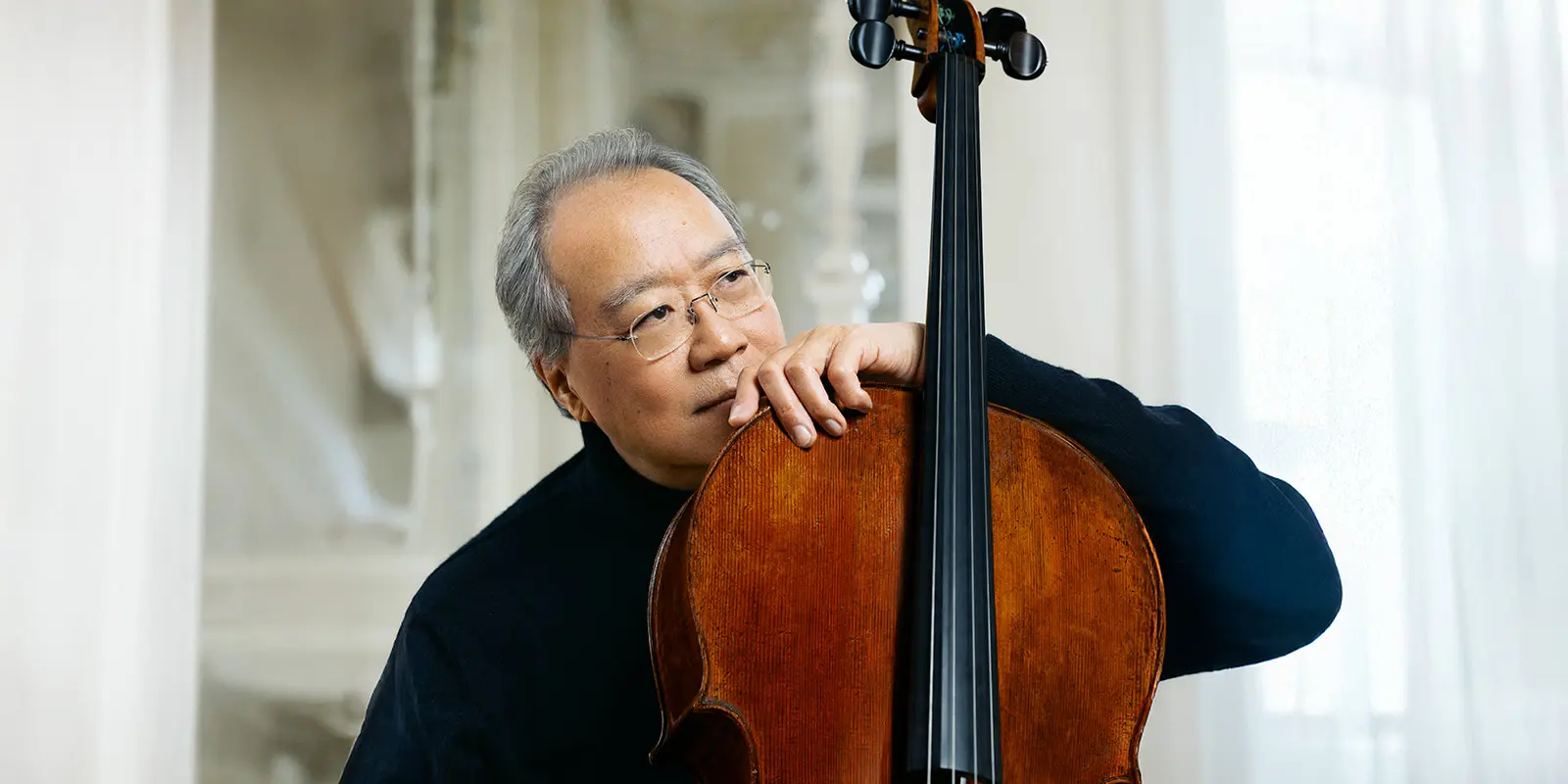
Yo-Yo Ma is a world-renowned French-born American cellist, humanitarian, and cultural ambassador whose career spans over six decades. As of 2026, he remains a titan of classical music with over 100 albums and 19 Grammy Awards. His estimated net worth is approximately $30 million, reflecting a lifetime of high-profile performances, recording royalties, and global philanthropic leadership.
The Formative Years: From Paris Prodigy to New York Stage
The story of Yo-Yo Ma begins in Paris on October 7, 1955. Born to Chinese parents—his mother, Marina Ba, a singer, and his father, Hiao-Tsiun Ma, a violinist and music professor—Ma was immersed in a pedagogical musical environment from birth. He began studying the violin and viola before settling on the cello at the age of four. His father’s unique teaching method, which involved learning small segments of music every day to build a formidable memory and technique, laid the foundation for his future virtuosity.
In 1962, the Ma family moved to New York City, a transition that would define the young cellist's trajectory. At just seven years old, Yo-Yo Ma performed for Presidents John F. Kennedy and Dwight D. Eisenhower in a televised fund-raising event conducted by Leonard Bernstein. This moment served as his introduction to the American public, marking him as a child prodigy of exceptional promise. He soon began studies at the Juilliard School under the mentorship of Leonard Rose, one of the most respected cellists of the 20th century.
Despite his technical brilliance, Ma’s path was not strictly limited to conservatory training. His teenage years were marked by a search for identity and a broader understanding of the world, leading him to question the rigid structures of classical music performance. This curiosity would eventually lead him away from the standard soloist's path and toward a more multidisciplinary approach to art.
Academic Pursuits and the Choice of Harvard
In a move that surprised many in the classical music world, Ma chose to enroll at Harvard University rather than focusing solely on a professional performance career after his time at Juilliard. He earned a Bachelor of Arts degree in 1976, majoring in anthropology. This decision was pivotal; it provided him with the intellectual tools to view music as a cultural artifact and a means of human connection rather than just a technical exercise.
His time at Harvard allowed him to explore the "why" behind the music. By studying human societies, evolution, and communication, Ma began to see the cello as a medium for dialogue. This period of academic rigor helped him develop his signature philosophy: that culture is a necessary tool for survival and understanding in a globalized world. It was during his university years that he also met his wife, Jill Hornor, with whom he would later raise two children, Nicholas and Emily.
Defining Career Highlights and Musical Innovations
Yo-Yo Ma’s career is characterized by its refusal to be pigeonholed. While he is a master of the standard classical repertoire, his willingness to collaborate across genres—bluegrass, traditional Chinese music, tango, and jazz—has redefined the role of a modern instrumentalist.
Iconic Recordings and the Bach Cello Suites
The cornerstone of Ma’s discography is his interpretation of Johann Sebastian Bach’s Six Unaccompanied Cello Suites. He has recorded these works three times: first in 1983, again in 1997 (accompanied by the "Inspired by Bach" film series), and most recently in 2018 as "Six Evolutions." Each recording represents a different stage of his life and a shifting philosophy on the music's meaning. The Bach suites are often cited as the definitive "bible" for cellists, and Ma’s interpretations are widely considered the benchmark for contemporary performance.
The Silk Road Project: A Cultural Bridge
In 1998, Ma founded the Silk Road Project (now known simply as Silkroad). This nonprofit organization was designed to promote collaboration among artists and institutions from the various countries along the historical Silk Road trade route. By bringing together instruments like the pipa, duduk, and sheng with Western strings, Ma created a "musical laboratory" that produced multiple albums and educational programs. The Silk Road Ensemble became a symbol of globalism and cross-cultural empathy, earning Ma a Grammy for Best World Music Album for Sing Me Home in 2017.
Crossover Success and "Songs of Comfort"
Beyond the concert hall, Ma found immense success with projects like Appalachia Waltz and Appalachian Journey, collaborations with fiddler Mark O'Connor and bassist Edgar Meyer. These albums blended classical precision with American folk traditions, reaching audiences far beyond the typical classical demographic. During the global pandemic of the early 2020s, Ma launched #SongsofComfort, a social media initiative where he shared videos of himself playing to provide solace to a grieving world. This initiative reinforced his status as "the world's cellist," using his platform for humanitarian purposes during times of crisis.
The Tools of the Trade: Famous Cellos and the "Taxi Incident"
A professional of Ma’s caliber requires instruments of historical and acoustic significance. Throughout his career, he has primarily performed on two extraordinary instruments:
- The 1733 Montagnana Cello: Known as "Petunia," this cello was crafted in Venice. It is prized for its rich, powerful bass and sweet upper register. Ma famously left this multi-million dollar instrument in the trunk of a New York City taxi in 1999; fortunately, it was recovered unharmed by the police later that night.
- The 1712 "Davidoff" Stradivarius: Formerly owned by the legendary Jacqueline du Pré, this instrument is one of the most famous cellos in existence. It is known for its clarity and complexity, though Ma has noted it can be "temperamental" depending on the weather and humidity.
In addition to these antiques, Ma frequently uses a carbon-fiber cello for outdoor performances or in environments where a delicate 18th-century instrument might be at risk. This practicality underscores his focus on the music and the audience over the preciousness of the object.
Summary of Career Milestones and Awards
| Year | Milestone / Award | Significance |
|---|---|---|
| 1962 | Performance for JFK | Launched his career as a child prodigy on a national stage. |
| 1978 | Avery Fisher Prize | Confirmed his status as a premier solo artist in the U.S. |
| 1985 | First Grammy Award | Won for Best Classical Performance (Bach: Unaccompanied Cello Suites). |
| 1998 | Silk Road Project | Founded a multidisciplinary global cultural initiative. |
| 2001 | National Medal of Arts | Awarded by the U.S. government for contributions to the arts. |
| 2011 | Presidential Medal of Freedom | Recognized for his cultural and humanitarian impact. |
| 2020 | Songs of Comfort | Used digital platforms to provide global healing during COVID-19. |
| 2026 | Continuing Global Tours | Remains an active performer and educator at age 70. |
Financial Overview and Estimated Net Worth in 2026
As of 2026, Yo-Yo Ma’s net worth is estimated to be approximately $30 million. While classical musicians rarely reach the astronomical wealth of pop icons, Ma’s financial standing is exceptional for an instrumentalist. His wealth is derived from several diverse streams:
- Performance Fees: Top-tier soloists like Ma command fees ranging from $75,000 to $150,000 per concert. With an active touring schedule that often includes over 50 dates a year, this remains a primary source of income.
- Recording Royalties: With a catalog of over 100 albums on Sony Classical, Ma continues to earn significant royalties from physical sales and digital streaming. His recordings of the Bach Suites and crossover projects remain perennial best-sellers.
- Speaking and Special Events: Ma is a frequent guest at prestigious summits, including the World Economic Forum in Davos. His insights on culture and society make him a sought-after speaker for corporate and educational institutions.
- Philanthropic Reinvestment: It is important to note that a significant portion of Ma’s earnings is funneled back into the Silkroad nonprofit and other music education initiatives. His lifestyle is notably modest compared to his earning potential, as he prioritizes social impact over personal luxury.
Philanthropy and Global Impact as a Messenger of Peace
Ma’s influence extends far beyond the stage. Since 2006, he has served as a United Nations Messenger of Peace, a role through which he advocates for the UN’s Sustainable Development Goals and promotes cross-cultural understanding. He has also been a member of the President's Committee on the Arts and the Humanities.
His humanitarian work is rooted in the belief that "the arts can help us navigate the challenges of our time." Whether performing at the 10th anniversary of the September 11 attacks, the inauguration of Barack Obama, or in small community centers in rural America, Ma views his presence as a service. In 2026, he continues to advocate for "culture as the social soul of the world," pushing for music programs in schools and using his fame to highlight the plight of marginalized communities and the environment.
Why did Yo-Yo Ma choose to study anthropology instead of music?
Ma wanted to understand the "why" behind human behavior and culture. He believed that to be a better musician, he needed to understand the people for whom he was playing. Anthropology provided him with a broader context for the history and evolution of the societies that produced the music he performed.
How many Grammy Awards has Yo-Yo Ma won?
As of 2026, Yo-Yo Ma has won 19 Grammy Awards across various categories, including Best Classical Instrumental Solo, Best Chamber Music Performance, and Best World Music Album. He has been nominated over 30 times, making him one of the most decorated classical musicians in the history of the Recording Academy.
What happened to Yo-Yo Ma’s cello in 1999?
Ma accidentally left his 1733 Montagnana cello, valued at $2.5 million at the time, in the trunk of a New York City taxi. He had been exhausted from a performance and simply forgot it. The instrument was recovered within hours by the NYPD after the taxi driver found it in his garage and contacted authorities.
Is Yo-Yo Ma still performing in 2026?
Yes, Yo-Yo Ma remains an active performer in 2026. While he has slightly reduced his heavy touring schedule to focus more on educational projects and the Silkroad initiative, he continues to headline major festivals and perform with the world’s leading orchestras.
Practical Guidance for Aspiring Musicians and Collectors
To truly appreciate Yo-Yo Ma’s legacy in 2026, one should look beyond his technical skill and focus on his method of engagement. For those looking to follow in his footsteps or simply engage with his work, consider the following actions:
- Explore the "Songs of Comfort" Archive: For those seeking the emotional power of music, Ma’s digital archives provide a masterclass in how to use art for healing.
- Study the Silkroad Model: Musicians interested in world music should study the Silk Road Ensemble’s arrangements to understand how to blend disparate musical traditions with respect and authenticity.
- Prioritize Cultural Citizenship: Ma’s greatest lesson is that an artist’s primary job is to be a citizen of the world. Aspiring performers should seek to engage with their local communities and use their art to address social needs, much as Ma has done through his various UN and educational roles.