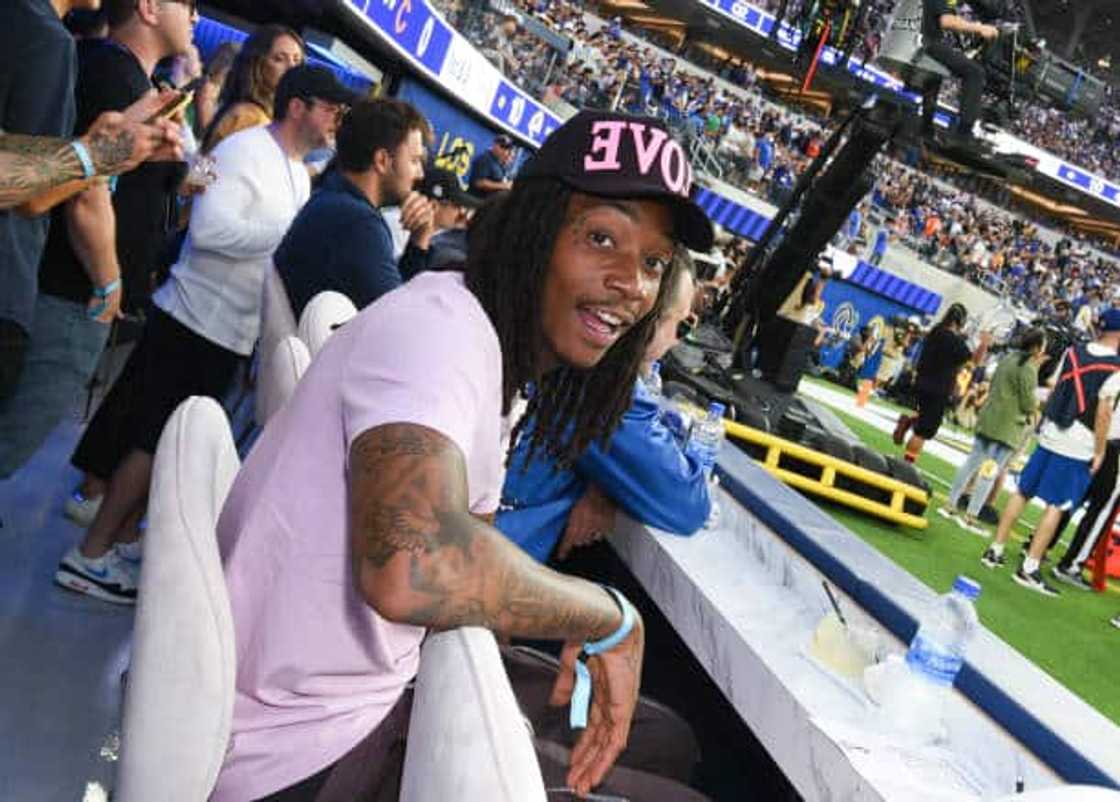
Wiz Khalifa transformed his physique by gaining nearly 40 pounds of lean muscle through a combination of Mixed Martial Arts (MMA) and consistent weight training. Starting as a "hardgainer," he utilized Brazilian Jiu-Jitsu, Muay Thai, and high-volume hypertrophy exercises to build a functional, athletic body that significantly evolved from his original lean frame.
The Evolution of the Wiz Khalifa Physique
For the majority of his career, Wiz Khalifa was synonymous with a very lean, "lanky" aesthetic. Standing at 6'4", the rapper’s weight hovered around 140 pounds for years, a classic example of an ectomorph body type. However, around 2017, a shift occurred when he began training at the Unbreakable Performance Center in West Hollywood, founded by Jay Glazer. This transition wasn't merely about vanity; it was a lifestyle overhaul driven by a desire for functional strength and mental discipline.
As of 2026, Khalifa has maintained the muscular foundation he built during that transformative period. The most striking aspect of his change is the development of his posterior chain, shoulders, and core. Unlike traditional bodybuilders who focus solely on muscle size, Khalifa’s muscles are the byproduct of "combat fitness." This means his routine prioritizes explosive power, flexibility, and endurance over simple bicep measurements.
The "hardgainer" label is often used as an excuse for lack of progress, but Khalifa’s journey proves that with a caloric surplus and high-intensity resistance training, even the fastest metabolism can be overcome. His transformation has served as a blueprint for tall, thin individuals looking to add mass without losing their athletic agility.
Wiz Khalifa Body Stats and Physical Profile
Understanding the scale of his transformation requires looking at the raw data. Being 6'4" presents unique challenges in weightlifting; the longer limbs mean longer levers, which can make certain movements like the bench press or squat more difficult to load heavily compared to shorter athletes.
| Attribute | Measurement (Approximate) |
|---|---|
| Height | 6'4" (193 cm) |
| Weight (Pre-Training) | ~140 lbs (63.5 kg) |
| Current Weight (2026 Status) | ~175 - 180 lbs (79 - 82 kg) |
| Body Fat Percentage | 8% - 10% |
| Chest Size | 42 inches |
| Waist Size | 32 inches |
| Biceps | 15 inches |
His low body fat percentage is a hallmark of his physique. Even as he added significant muscle mass, he maintained visible abdominal definition. This is largely attributed to the high metabolic demand of his MMA training sessions, which burn a significant amount of calories even after the workout is finished through the "afterburn effect" or Excess Post-exercise Oxygen Consumption (EPOC).
The "Unbreakable" Training Philosophy
Wiz Khalifa's training is heavily influenced by Jay Glazer’s "Unbreakable" methodology. This approach treats celebrities like professional athletes. Instead of three sets of ten on a chest press machine, the routine involves "grind sessions" that mix heavy compound lifting with mixed martial arts drills.
The Role of Mixed Martial Arts (MMA)
Khalifa is famously dedicated to Brazilian Jiu-Jitsu (BJJ) and Muay Thai. BJJ is a grappling-based martial art that focuses on ground fighting and submission holds. From a fitness perspective, it provides an incredible full-body workout that emphasizes "isometric strength"—the ability to hold a position under resistance. Muay Thai, the "Art of Eight Limbs," adds a massive cardiovascular component through striking (kicking, punching, elbows, and knees).
Strength and Conditioning
While MMA provides the "shredded" look, the "muscle" comes from the weight room. His routine focuses on functional movements that translate to the cage. This includes:
- Compound Lifts: Deadlifts, squats, and overhead presses to build a strong frame.
- Explosive Movements: Med ball slams, box jumps, and kettlebell swings to increase fast-twitch muscle fiber activation.
- Core Stability: Not just sit-ups, but anti-rotational movements like Paloff presses to protect the spine during grappling.
A Sample Wiz Khalifa Workout Routine
While his actual daily schedule varies based on his touring and recording commitments, his training generally follows a 5-to-6-day split. He often trains twice a day: once for martial arts and once for strength and conditioning.
Day 1: Upper Body Power and Muay Thai
The focus here is on building the "V-taper" (wide shoulders and a narrow waist).
- Morning: 60 minutes of Muay Thai (Pad work, heavy bag drills, and clinching).
- Afternoon: Weight training.
- Incline Barbell Bench Press: 4 sets of 8-10 reps.
- Weighted Pull-Ups: 4 sets to failure.
- Military Press: 3 sets of 10 reps.
- Dumbbell Rows: 3 sets of 12 reps per arm.
- Face Pulls: 3 sets of 15 reps (for shoulder health).
Day 2: Lower Body Strength and BJJ
Leg day is crucial for a 6'4" athlete to avoid a "top-heavy" appearance and to provide a base for grappling.
- Morning: 90 minutes of BJJ (Drilling and live rolling).
- Afternoon: Weight training.
- Trap Bar Deadlift: 4 sets of 5-8 reps (easier on a tall person’s lower back than a traditional barbell).
- Bulgarian Split Squats: 3 sets of 10 reps per leg.
- Leg Press: 3 sets of 15 reps.
- Hanging Leg Raises: 4 sets of 15 reps.
Day 3: Active Recovery or Conditioning
This isn't a "day off" but rather a day to move the body without heavy loading.
- Swimming or Light Jogging: 30-45 minutes.
- Yoga or Mobility Work: Focus on hip and shoulder mobility, which is often a weak point for tall lifters.
Day 4: Hypertrophy (Muscle Growth) Focus
The goal here is strictly to add volume to the muscles.
- Dumbbell Chest Flyes: 3 sets of 12 reps.
- Lateral Raises: 4 sets of 20 reps (to widen the shoulders).
- Bicep Curls (EZ Bar): 3 sets of 12 reps.
- Tricep Pushdowns: 3 sets of 15 reps.
- Sled Pushes: 5 rounds of 30 yards (for metabolic conditioning).
Nutritional Strategy for the Hardgainer
You cannot train like a professional athlete while eating like a casual listener. For Wiz Khalifa, the biggest hurdle wasn't the gym; it was the kitchen. To gain 40 pounds of muscle, he had to maintain a consistent caloric surplus.
Caloric Intake and Macros
To sustain his 6'4" frame and intense activity level, his daily caloric intake likely ranges between 3,500 and 4,000 calories.
- Protein: Essential for muscle repair. He focuses on lean sources like grilled chicken, turkey, fish, and plant-based protein shakes.
- Carbohydrates: The fuel for his MMA sessions. Complex carbs like sweet potatoes, brown rice, and oats provide sustained energy.
- Fats: Necessary for hormone production. Avocados, nuts, and olive oil are staples.
The "Clean Bulk"
Unlike "dirty bulking" where an individual eats anything to gain weight, Khalifa emphasizes quality. High-protein meals are spaced out every 3 hours to keep the body in an anabolic state (muscle-building state). He has also spoken about the importance of hydration, especially given his lifestyle, to ensure muscles remain full and recover quickly.
Critical Training Facts and Insights
- Consistency Over Intensity: One of the most important facts about his training is that he didn't miss days. Even while traveling, he finds local MMA gyms or uses hotel facilities to maintain his rhythm.
- The Martial Arts Mindset: Khalifa has credited martial arts with changing his perspective on discipline. The "ego death" that occurs when grappling with someone more skilled has translated into a more focused approach to his music and business.
- Tall Man Adaptations: He utilizes tools like the Trap Bar for deadlifts and Dumbbells for pressing. These allow for a more natural range of motion for someone with a 6'4" wingspan, reducing the risk of joint impingement.
- Recovery and Longevity: By 2026, he has integrated more recovery tech, such as cryotherapy and infrared saunas, to handle the physical toll of MMA.
FAQ: Common Questions About Wiz Khalifa’s Fitness
Does Wiz Khalifa still smoke while training?
Yes, he is open about his cannabis use. However, he has noted that he uses it primarily for recovery and focus. From a physiological standpoint, smoking can affect lung capacity, which he counters with high-intensity cardiovascular training like Muay Thai. Many athletes in the BJJ community use cannabis for its purported anti-inflammatory properties, though its impact varies by individual.
How long did it take for him to see results?
Visible changes were apparent within the first 6 to 12 months of consistent training at Unbreakable. However, the full "40-pound gain" was a multi-year process. True natural muscle growth is a slow journey, especially for someone starting from such a low baseline weight.
Can a beginner follow his routine?
A beginner should not jump directly into a 2-a-day pro-athlete split. Someone looking to emulate his results should start with basic strength training (3 days a week) and 1 or 2 days of a martial art to build a foundation of "work capacity" before increasing the volume.
What is his favorite exercise?
While he enjoys the complexity of BJJ, in the weight room, he has shown a preference for movements that highlight his functional strength, such as weighted pull-ups and explosive medicine ball work.
Recommendations for Emulating the Transformation
If you are looking to replicate the Wiz Khalifa transformation, focus on three pillars: Mass, Martial Arts, and Macro-management.
- Prioritize Compound Movements: If you are naturally thin, stop focusing on "curls for the girls." Spend your energy on deadlifts, squats, and presses. These movements trigger the greatest hormonal response for muscle growth.
- Find a Functional Sport: Join a BJJ or Muay Thai gym. The community aspect and the functional nature of the workout will keep you motivated far longer than a standard treadmill run.
- Track Your Calories: Most "hardgainers" aren't actually hardgainers; they simply don't eat as much as they think they do. Use a tracking app to ensure you are consistently hitting a 300-500 calorie surplus above your maintenance level.
- Allow for Recovery: Muscle grows while you sleep, not while you're lifting. Ensure you are getting 7-9 hours of quality sleep, especially if you are incorporating high-impact martial arts into your routine.