Understanding the precise moment of sunrise in New York City is essential for urban planning, photography, energy grid management, and circadian health optimization. In 2026, the sunrise in New York is determined by the city's specific longitudinal and latitudinal coordinates—approximately 40.7128 degrees North and 74.0060 degrees West—adjusted for the Eastern Time Zone (ET) and the specific shifts of the 2026 calendar year.
The Mechanics of Sunrise Calculation in the NYC Metropolitan Area
The variation in sunrise times is governed by the Earth's axial tilt and its elliptical orbit around the sun, which results in the Equation of Time—the discrepancy between "apparent" solar time and mean clock time. Because New York City sits at a mid-latitude location, it experiences significant fluctuations between the winter solstice and the summer solstice.
In 2026, observers must account for two primary variables that dictate local solar arrival:
- Temporal Calibration: Daylight Saving Time (DST) in 2026 begins on March 8 and concludes on November 1. Clocks "spring forward" one hour in March, creating an artificial jump in sunrise times, and "fall back" in November, causing an earlier sunrise relative to the clock.
- Geospatial Precision: While official sunrise times are often calculated for Central Park, variations occur based on your exact longitude within the five boroughs. Moving further east (e.g., toward Montauk or eastern Brooklyn) results in a slightly earlier sunrise, while moving west (e.g., toward Jersey City) results in a slightly later sunrise, usually by a margin of 1 to 2 minutes.
Seasonal Sunrise Benchmarks for New York City 2026
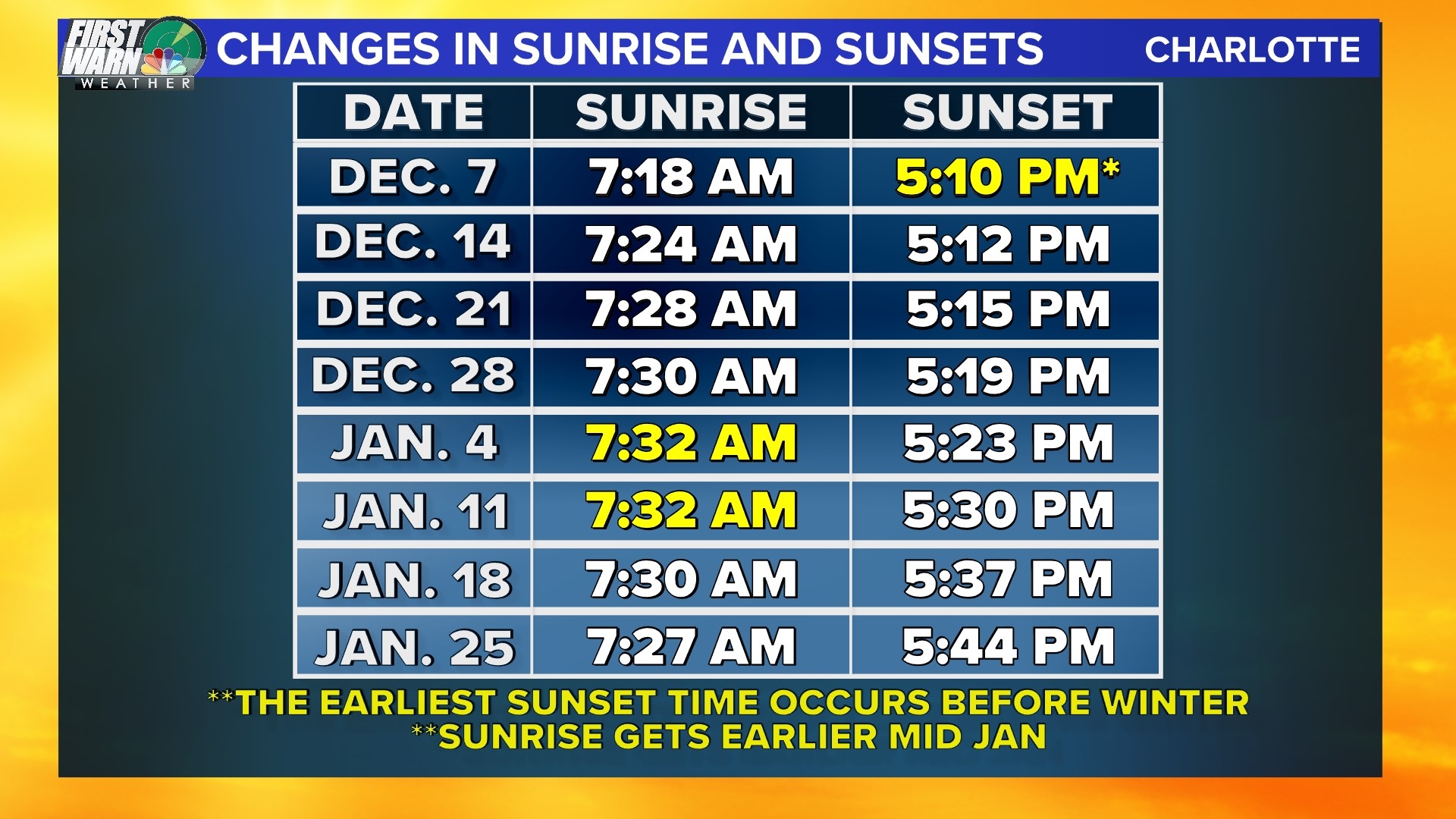
To effectively manage schedules—whether for outdoor construction, professional photography, or natural light harvesting—stakeholders should refer to the following projected benchmarks for 2026. These figures represent the approximate solar emergence at the horizon for the first day of each month.
| Date (2026) | Approximate Sunrise (ET) | Seasonal Context |
|---|---|---|
| January 1 | 7:20 AM | Post-Winter Solstice recovery |
| February 1 | 7:07 AM | Gradual lengthening of days |
| March 1 | 6:35 AM | Pre-DST transition |
| April 1 | 6:40 AM | Post-DST shift impact |
| May 1 | 5:52 AM | Rapid increase in photoperiod |
| June 1 | 5:25 AM | Approaching Summer Solstice |
| July 1 | 5:27 AM | Peak solar intensity |
| August 1 | 5:53 AM | Transition toward late summer |
| September 1 | 6:23 AM | Approaching Equinox |
| October 1 | 6:54 AM | Shorter days, cooling temps |
| November 1 | 7:28 AM | Post-DST impact begins |
| December 1 | 7:04 AM | Approaching Winter Solstice |
Factors Affecting Visual Sunrise Perception
While astronomical sunrise is defined as the moment the upper limb of the sun appears to cross the horizon, urban residents often experience "visual sunrise" differently due to the city’s dense physical environment.
Topographic and Structural Obstructions
In dense urban canyons like Midtown Manhattan, the sunrise is often delayed by massive architectural structures. Residents in tall residential towers may see the sun minutes earlier than those at street level in narrow corridors. Professional photographers often calculate the "canyon effect" by adding 5 to 15 minutes to standard sunrise tables to account for buildings obstructing the low-angle light.
Circadian Impacts and Urban Health
Exposure to natural light at sunrise is a primary regulator of the human circadian rhythm. For New Yorkers, managing exposure to early morning light is a critical strategy for mitigating Seasonal Affective Disorder (SAD) and optimizing sleep hygiene.
During the winter months in 2026, when the sunrise occurs after 7:00 AM, the biological drive to stay awake may be delayed. Health practitioners recommend the following strategies:
- Light Therapy: Use 10,000-lux light boxes during the dark early morning hours to simulate sunrise for biological clock synchronization.
- Window Placement: If possible, prioritize workspaces or bedrooms with eastern-facing windows to maximize natural light exposure as soon as the sun breaks the horizon.
- Gradual Wake-up: Utilize smart-lighting systems that slowly increase color temperature (from warm amber to cool blue) over the 30 minutes leading up to the official sunrise time.
Frequently Asked Questions Regarding NYC Sunrise
Why does the sunrise time change daily in New York?
The sunrise changes daily because the Earth is tilted on its axis at 23.5 degrees as it orbits the sun. This shift means that as the Earth moves, the sun's angle relative to New York's latitude changes constantly, affecting when the horizon blocks or reveals the sun.
How do I calculate the exact sunrise for my specific address?
For precise data, you should use the official United States Naval Observatory (USNO) online calculator. By inputting your specific latitude and longitude coordinates, you can account for the exact topography of your block rather than using city-wide averages.
Does the sunrise time include atmospheric refraction?
Yes, standard sunrise calculations account for atmospheric refraction. The Earth’s atmosphere bends light rays near the horizon, allowing the sun to be visible to the human eye approximately 2 to 3 minutes before it geometrically crosses the horizon line.
How does Daylight Saving Time affect sunrise in New York?
In 2026, Daylight Saving Time causes a sudden, artificial shift in the sunrise time. On March 8, when clocks move forward, the sunrise will appear to occur one hour later on the clock than the previous day. This shift remains in effect until November 1, when the clocks return to Eastern Standard Time.
Is the sun always visible exactly in the East at sunrise?
No, the sun only rises due East during the Equinoxes (around March 20 and September 22). During the summer, it rises north of East, and during the winter, it rises south of East. This is why the path of the sun (the "arc") changes drastically throughout the year in New York.
Expert Strategy for Leveraging Solar Data
For those requiring precise solar positioning for professional needs—such as solar panel efficiency testing, architectural shadow analysis, or event planning—relying on annual averages is insufficient. Always ensure your planning tools are updated for the 2026 calendar, specifically accounting for the shift in Daylight Saving Time dates. If you are conducting site surveys, utilize a solar pathfinder tool or an augmented reality application that maps the path of the sun over your specific GPS coordinates. This ensures that environmental variables, such as building heights or local topography, are correctly factored into your solar arrival projections.