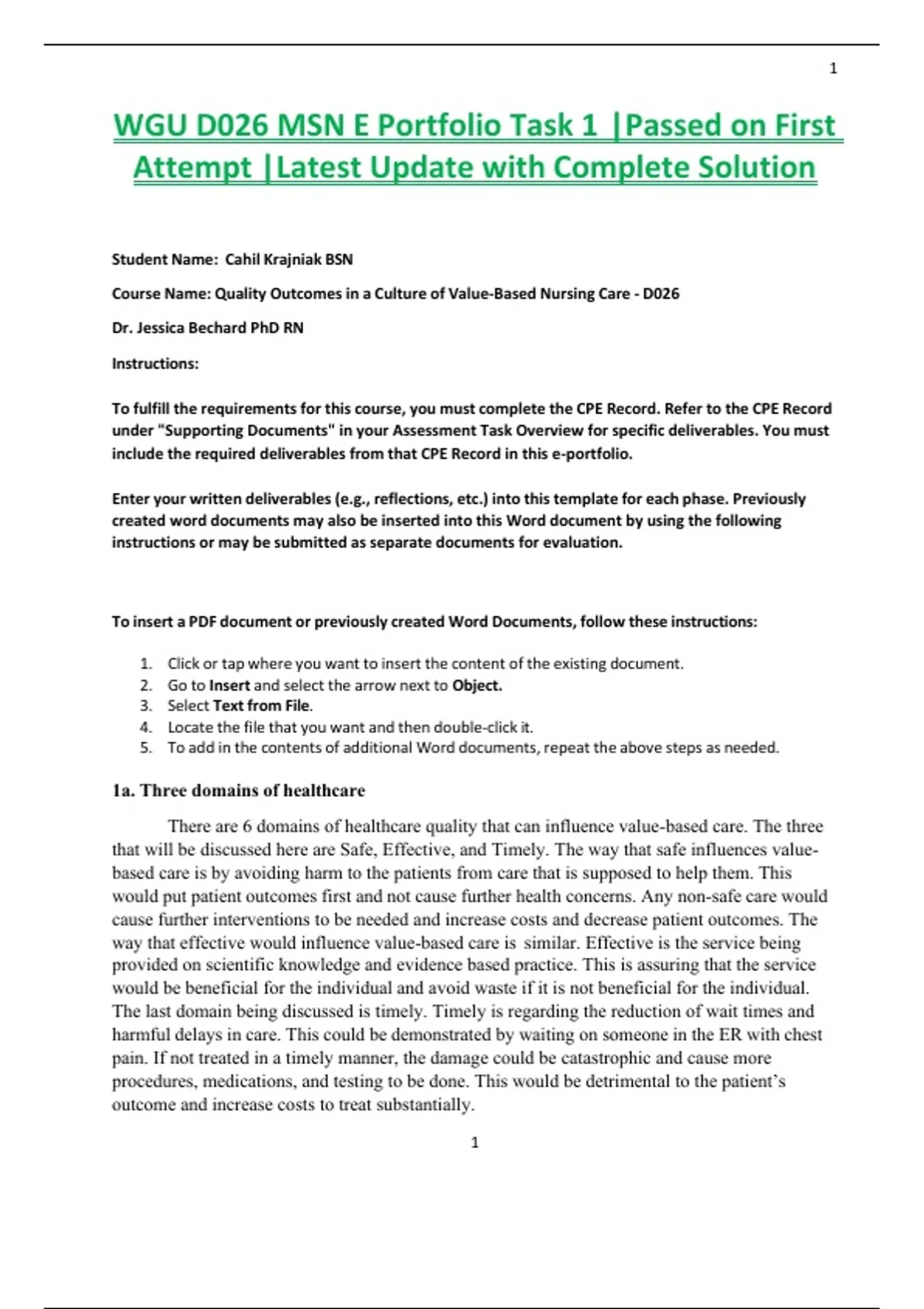
Western Governors University (WGU) continues to stand as a prominent leader in competency-based education for the 2026 academic year. For registered nurses (RNs) seeking to advance their careers, the Master of Science in Nursing (MSN) program at WGU offers a distinct, accelerated path designed for working professionals who prioritize flexibility, affordability, and practical application over traditional, credit-hour-based constraints.
Understanding the Competency-Based Model for 2026 Nursing Standards
The core differentiator of the WGU MSN program is its competency-based model. Unlike traditional universities that mandate a specific number of "seat hours" per course, WGU measures progress through demonstrated mastery of subject matter. In 2026, as clinical demands increase, this model allows nurses to leverage their existing professional experience to accelerate through familiar material while dedicating more time to complex clinical or leadership concepts.
Students receive access to comprehensive learning resources, and once they demonstrate mastery through assessments, they can immediately progress to the next module. This methodology is particularly effective for working nurses balancing 12-hour shifts or administrative roles, as it eliminates the rigidity of semester-based deadlines and weekly discussion board quotas.
2026 MSN Program Specializations and Career Pathways
As of 2026, WGU has refined its MSN specializations to align with the evolving healthcare landscape, focusing heavily on leadership, informatics, and education. The program is intentionally designed for those who possess an active, unencumbered RN license and a Bachelor of Science in Nursing (BSN).
The primary tracks available include:
- MSN Nursing Leadership and Management: Designed for nurses transitioning into administrative, managerial, or executive healthcare roles. It focuses on organizational strategy, fiscal management, and interdisciplinary collaboration.
- MSN Nursing Education: Prepares nurses to transition into academic or clinical educator roles. The curriculum covers curriculum design, advanced physiology, and instructional technology.
- MSN Nursing Informatics: Focuses on the integration of nursing science with information technology. This role is increasingly critical in 2026 for managing electronic health records (EHR), data analytics, and patient safety systems.
Comparative Analysis of MSN Delivery Models
Choosing a graduate program requires evaluating the balance between pedagogical structure and professional life. The following table provides a comparison between WGU’s competency-based model and traditional university structures prevalent in 2026.
| Feature | WGU Competency-Based | Traditional University |
|---|---|---|
| Progress Metric | Demonstrated Mastery | Credit Hours (Seat Time) |
| Pacing | Self-Paced (Accelerated) | Fixed Semester Dates |
| Tuition Structure | Flat-Rate (Per 6-Month Term) | Per Credit Hour |
| Required Attendance | Asynchronous / Independent | Often Synchronous / Scheduled |
| Clinical Requirements | Project-Based / Virtual | Direct / In-Person |
Clinical and Practicum Requirements in the Modern Healthcare Environment
A common question regarding the WGU MSN program involves the clinical or practicum experience. Because the WGU MSN tracks—Leadership, Education, and Informatics—are non-clinical in terms of patient-facing primary care (unlike a Nurse Practitioner track), the practicum requirements are structured differently.
In 2026, students are expected to identify a preceptor within a healthcare or educational organization who can supervise their capstone projects. The project must solve a real-world problem within the student's area of specialization. This ensures that the degree is not merely theoretical but serves as a tangible value-add to the student's current employer or future organization.
Financial Considerations and ROI for the 2026 Graduate
WGU utilizes a flat-rate tuition model that significantly impacts the overall cost of attendance. By charging per six-month term rather than per course, motivated students who complete their degree faster effectively lower their total cost of education.
Strategic Financial Planning for 2026
Tuition Efficiency: Because the flat-rate covers all courses taken within a term, students who transfer in relevant credits or test out of courses rapidly can complete the MSN in 12 to 18 months.
Employer Reimbursement: Most major hospital systems in 2026 maintain tuition reimbursement policies that favor WGU due to its accreditation status. It is essential to verify current internal HR policies regarding degree requirements and eligible expenses before enrollment.
Frequently Asked Questions
Is the WGU MSN program accredited for 2026 clinical standards? Yes, WGU's nursing programs are accredited by the Commission on Collegiate Nursing Education (CCNE). This accreditation is the industry standard in 2026 and ensures that your degree is recognized by major healthcare employers and regulatory bodies across the United States.
Does WGU offer a Nurse Practitioner (NP) track? No, WGU does not offer Nurse Practitioner tracks as of 2026. The MSN program is strictly focused on non-clinical roles such as leadership, nursing education, and informatics.
How does WGU handle the clinical practicum search? Students are responsible for securing their own practicum sites and preceptors, though WGU provides a dedicated Clinical Placement team to assist in navigating site approvals and documentation.
Can I accelerate my degree if I have extensive experience? Yes, the competency-based nature of WGU is built for the experienced nurse. If you can prove mastery of the competencies in a course, you can pass the assessment and proceed to the next course without waiting for the term to finish.
What are the computer and technology requirements? In 2026, students must have a reliable high-speed internet connection, a webcam for proctored examinations, and a computer that meets updated specifications for modern Learning Management Systems (LMS).
Initiating Your Advanced Nursing Journey
Advancing to an MSN is a significant career milestone that positions you for higher-tier leadership and specialized non-clinical roles in the 2026 healthcare market. By aligning your professional goals with a competency-based model, you retain control over your timeline and financial investment. To begin the transition, ensure your RN license is in good standing, request your official transcripts for evaluation, and schedule a conversation with a WGU enrollment counselor to determine your projected graduation date based on your existing nursing experience.