The President of the United States serves as the head of state and head of government, wielding executive authority defined primarily by Article II of the Constitution. This multi-faceted role involves leading the military, managing foreign policy, and ensuring federal laws are faithfully executed, serving as the central figure in the American political system.
The Constitutional Mandate of the Executive Branch
The U.S. Presidency was established by the Constitutional Convention of 1787 to provide a strong, unitary executive that could act with more vigor and dispatch than the previous system under the Articles of Confederation. Article II of the Constitution outlines the core powers and responsibilities of the office, though it is notably more concise and less specific than Article I, which defines the Legislative Branch. This brevity has allowed the office to expand significantly over the centuries through precedent and necessity.
The primary constitutional duty of the President is encapsulated in the "Take Care" clause, which mandates that the President "shall take Care that the Laws be faithfully executed." This responsibility grants the President the authority to oversee the vast federal bureaucracy, including all executive departments and agencies. In 2026, this translates to the management of millions of federal employees and a budget reaching into the trillions of dollars.
The President also serves as a critical check on the Legislative Branch. Through the power of the veto, the President can reject legislation passed by Congress, requiring a two-thirds majority in both the House of Representatives and the Senate to override. This dynamic forces a continuous negotiation between the executive and legislative branches, ensuring that major policy shifts typically require broad consensus.
Defining the Five Major Roles of the President
The modern presidency is defined by five primary roles that have evolved from the original constitutional text. Understanding these roles is essential for grasping how the executive branch functions in a modern context.
1. Chief of State
As Chief of State, the President acts as the ceremonial head of the U.S. government. This role involves representing the American people at official events, awarding medals, and hosting foreign dignitaries. While ceremonial, this role is vital for national unity and symbolic leadership during times of crisis or celebration.
2. Chief Executive
The President is the "boss" of the executive branch. This role includes the power to appoint heads of executive departments (the Cabinet), federal judges, and other high-ranking officials, often with the advice and consent of the Senate. In 2026, the President manages fifteen executive departments, ranging from the Department of State to the Department of Homeland Security.
3. Chief Diplomat
The Constitution grants the President the power to negotiate treaties and recognize foreign governments. As the primary architect of American foreign policy, the President directs the nation’s interactions with other countries, appoints ambassadors, and participates in international summits. Treaties negotiated by the President require a two-thirds vote in the Senate for ratification.
4. Commander-in-Chief
The President holds supreme command over the U.S. Army, Navy, Air Force, Marine Corps, Space Force, and Coast Guard. While only Congress has the formal power to "declare war," the President’s role as Commander-in-Chief allows for the rapid deployment of troops to protect national interests. This tension is managed by the War Powers Resolution of 1973, which requires the President to notify Congress within 48 hours of committing armed forces to military action.
5. Chief Legislator
Though the President cannot introduce legislation directly, they significantly influence the lawmaking process. Through the annual State of the Union address, the President outlines a legislative agenda for the coming year. By using the "bully pulpit," the President can appeal directly to the public to pressure Congress to pass specific bills.
Eligibility, Term Limits, and the Election Framework
The requirements for becoming President are specifically outlined in the Constitution to ensure that the individual leading the nation is deeply rooted in the American experience.
Formal Qualifications
To be eligible for the presidency, an individual must meet three primary criteria:
- Natural-born Citizenship: The candidate must be a citizen of the United States by birth.
- Age: The candidate must be at least 35 years old.
- Residency: The candidate must have been a resident of the United States for at least 14 years.
The 22nd Amendment and Term Limits
Initially, the Constitution did not limit the number of terms a President could serve. This changed following the four-term presidency of Franklin D. Roosevelt. In 1951, the 22nd Amendment was ratified, strictly limiting a President to two elected terms. A person who serves more than two years of a term to which someone else was elected can only be elected to one additional term of their own.
The Electoral College System
The President is not elected directly by the popular vote but through the Electoral College. Each state is assigned a number of electors equal to its total congressional representation (House members plus two Senators). As of 2026, there are 538 total electors, with 270 required to win the presidency. This system was designed as a compromise between a popular vote and a vote by Congress, aiming to balance the interests of high-population and low-population states.
Historical Evolution of Executive Power
The scope of presidential power has expanded dramatically since George Washington took the oath of office in 1789. This evolution is often categorized into distinct historical eras.
The Early Republic (1789–1830s)
The first few presidents focused on establishing the legitimacy of the office. George Washington set many precedents, such as the two-term limit (which remained a tradition until FDR) and the formation of the Cabinet. Andrew Jackson later expanded the role by framing the President as the direct representative of the common people, frequently using the veto for political rather than just constitutional reasons.
The Crisis of the Union (1861–1865)
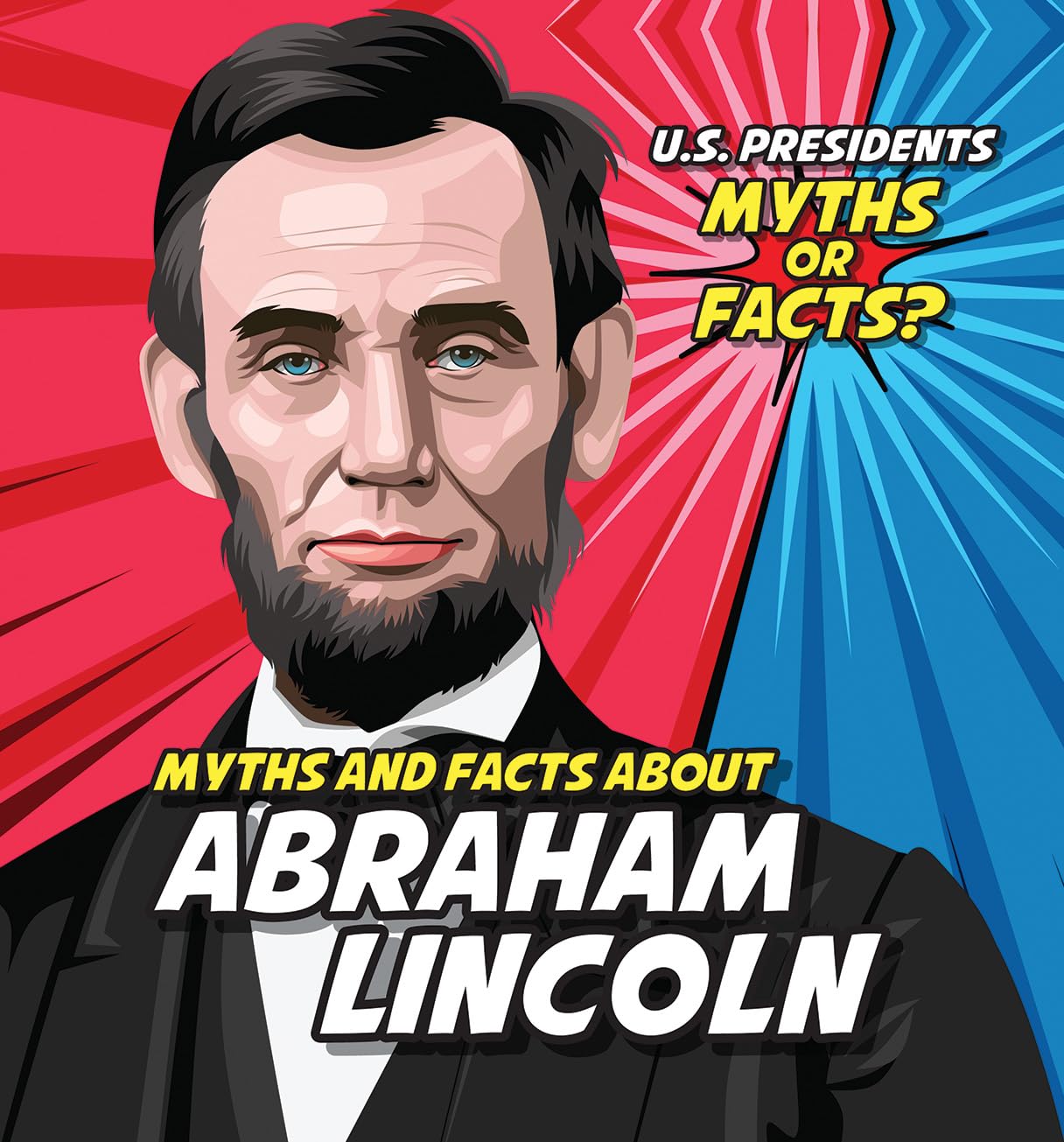
Abraham Lincoln fundamentally altered the presidency during the Civil War. By invoking "war powers," Lincoln took unprecedented executive actions, including the suspension of the writ of habeas corpus and the issuance of the Emancipation Proclamation. His presidency demonstrated that in times of existential threat, executive power can expand significantly to preserve the nation.
The Modern Presidency (1932–Present)
The Great Depression and World War II marked the birth of the "modern presidency." Franklin D. Roosevelt’s "New Deal" led to a massive expansion of the federal bureaucracy. Following WWII, the United States' emergence as a global superpower further solidified the President's role as a dominant figure in international affairs. In the 21st century, the use of executive orders—directives issued by the President that have the force of law without requiring congressional approval—has become a standard tool for implementing policy.
| Authority Type | Source/Basis | Practical Example |
|---|---|---|
| Veto Power | Article I, Section 7 | Rejecting a spending bill passed by Congress. |
| Pardon Power | Article II, Section 2 | Granting legal forgiveness for federal crimes. |
| Appointment Power | Article II, Section 2 | Selecting a new Supreme Court Justice. |
| Executive Order | Article II (Implied) | Directing federal agencies to prioritize specific regulations. |
| Treaty Power | Article II, Section 2 | Negotiating a trade agreement with another nation. |
Checks, Balances, and the Impeachment Process
The U.S. system is designed to prevent any one branch of government from becoming too powerful. The Legislative and Judicial branches hold significant checks over the President.
Legislative Checks
Congress controls the "power of the purse," meaning the President cannot spend money unless it is appropriated by law. Additionally, the Senate must confirm major appointments and ratify treaties. The most severe legislative check is impeachment. Under Article II, Section 4, the President can be removed from office for "Treason, Bribery, or other high Crimes and Misdemeanors." The House of Representatives has the sole power to impeach (charge), while the Senate holds the trial and has the power to convict and remove.
Judicial Checks
The Supreme Court and other federal courts can practice "judicial review," a power established in Marbury v. Madison (1803). If a President’s executive order or action is found to violate the Constitution, the courts can declare it unconstitutional and unenforceable. This serves as a vital legal boundary for executive authority.
Presidential Succession
The 25th Amendment, ratified in 1967, clarified the process of presidential succession. If the President dies, resigns, or is removed, the Vice President becomes President. It also provides a mechanism for the Vice President to serve as "Acting President" if the President is temporarily incapacitated, such as during a medical procedure.
Vital Statistics and Historical Key Facts
The presidency is an institution steeped in data and unique historical markers. As of 2026, the office continues to operate under established compensation and logistical frameworks.
- Compensation: The President receives an annual salary of $400,000, along with a $50,000 expense allowance, $100,000 non-taxable travel account, and $19,000 for entertainment. These figures were last adjusted by Congress in 2001.
- The White House: The official residence and workplace, located at 1600 Pennsylvania Avenue in Washington, D.C., has served as the home for every President except George Washington.
- Air Force One: This is the radio call sign for any Air Force aircraft carrying the President. It serves as a mobile command center, ensuring the President can lead from anywhere in the world.
- Firsts in History:
- First President: George Washington (1789–1797).
- Longest Serving: Franklin D. Roosevelt (12 years, died shortly into his fourth term).
- Youngest Elected: John F. Kennedy (43 years old).
- Youngest to Serve: Theodore Roosevelt (42 years old, following the assassination of William McKinley).
The Cabinet serves as the President's advisory body, currently consisting of the Vice President and the heads of 15 executive departments. These individuals are in the line of succession, following the Vice President, the Speaker of the House, and the President Pro Tempore of the Senate.
Common Questions Regarding the U.S. Presidency
What happens if a President is incapacitated but doesn't resign?
The 25th Amendment allows the Vice President and a majority of the Cabinet to notify Congress that the President is "unable to discharge the powers and duties of his office." In this scenario, the Vice President immediately becomes Acting President. If the President later disputes this, Congress must decide the issue by a two-thirds vote.
Can a President be elected to more than two terms?
No, the 22nd Amendment prohibits anyone from being elected to the office of the President more than twice. This amendment was a direct response to Franklin D. Roosevelt's four terms, codifying the two-term tradition that had existed since George Washington.
What is the difference between an Executive Order and a law?
A law is passed by Congress and signed by the President. An Executive Order is a directive issued by the President to federal agencies that does not require congressional approval. While Executive Orders have the force of law, they are limited to the scope of executive authority and can be overturned by the courts or revoked by a future President.
How many U.S. Presidents have been impeached?
As of 2026, three Presidents have been impeached by the House of Representatives: Andrew Johnson, Bill Clinton, and Donald Trump (twice). However, no President has ever been convicted by the Senate and removed from office through the impeachment process. Richard Nixon resigned before he could be formally impeached.
Who is next in line after the Vice President?
According to the Presidential Succession Act of 1947, the Speaker of the House of Representatives is second in the line of succession, followed by the President Pro Tempore of the Senate. After those legislative leaders, the line of succession follows the heads of the executive departments in the order they were created, starting with the Secretary of State.
Deepening Your Knowledge of Executive History
To gain a more nuanced understanding of how the U.S. Presidency functions, it is highly recommended to study the founding documents at the National Archives, specifically Article II of the Constitution. For those interested in the day-to-day operations and the current administration’s priorities in 2026, the official White House website provides comprehensive press releases, executive orders, and briefing materials. Visiting presidential libraries, which are part of the National Archives system, offers a unique opportunity to view original records and artifacts from specific administrations, providing a deeper look at the decisions that shaped American history.