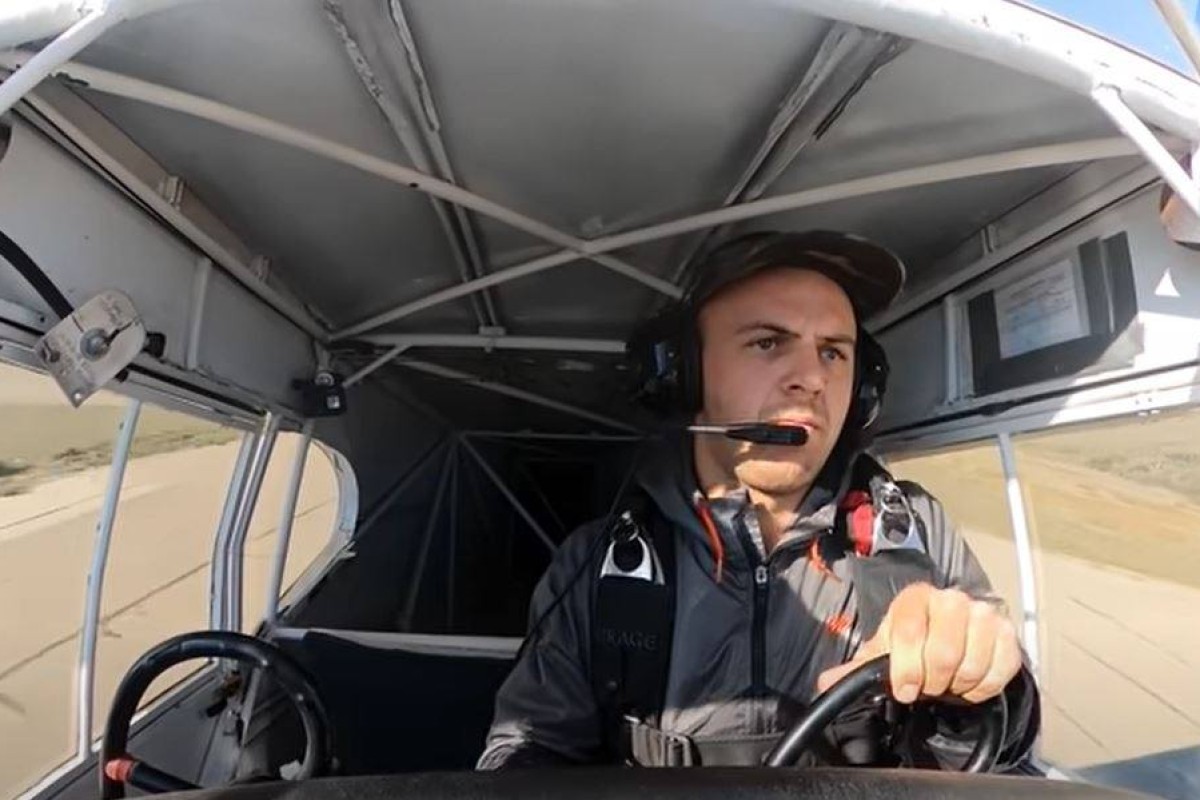
Trevor Jacob is a former Olympic snowboarder and social media content creator who gained international notoriety in 2021 for intentionally crashing his airplane to generate viral content. His actions resulted in a federal investigation, the revocation of his pilot certificate by the Federal Aviation Administration (FAA), and a criminal conviction for destruction and concealment of evidence with the intent to obstruct a federal investigation.
Contextual Background and the 2021 Incident
In November 2021, Trevor Jacob uploaded a video to his YouTube channel titled "I Crashed My Airplane." The video depicted Jacob flying a single-engine Taylorcraft over the Los Padres National Forest in California. During the flight, Jacob claimed the engine failed, leading him to bail out of the aircraft with a parachute, recording the entire event with cameras mounted on the plane and a selfie stick. The aircraft subsequently crashed into the remote forest area.
The video sparked immediate skepticism within the aviation community. Pilots and flight enthusiasts noted that Jacob was wearing a parachute before the flight—a highly unconventional practice for a routine local flight—and that he made no apparent attempt to glide the aircraft to a safe landing site or contact air traffic control to declare an emergency. These irregularities prompted an investigation by the National Transportation Safety Board (NTSB) and the Federal Aviation Administration (FAA).
FAA Regulatory Action: Certificate Revocation
The FAA maintains strict standards for pilot conduct, categorized under Title 14 of the Code of Federal Regulations. Following the incident, the FAA conducted an investigation and determined that the operation was conducted in a "careless or reckless manner so as to endanger the life or property of another."
In April 2022, the FAA issued an emergency order revoking Jacob’s private pilot certificate. The agency cited several specific violations:
- Reckless Operation: The intentional abandonment of a functioning aircraft in a populated or forested area posed a significant risk to persons and property on the ground.
- Failure to Exercise Due Care: Jacob’s lack of attempt to troubleshoot the engine or contact authorities demonstrated a disregard for standard aviation safety protocols.
- Improper Aircraft Disposal: Jacob did not comply with regulations regarding the reporting of an accident or the salvage of the wreckage, which he later removed from the forest under the guise of "cleaning up" the crash site.
This revocation meant Jacob was stripped of all piloting privileges and barred from exercising any of the rights associated with a private pilot certificate, a significant professional and personal consequence for a licensed aviator.
Federal Criminal Proceedings and Legal Consequences
Beyond the regulatory administrative penalties, the Department of Justice pursued criminal charges. The investigation revealed that Jacob had lied to federal investigators about the location of the wreckage.
In 2023, Jacob pleaded guilty to one count of destruction and concealment with the intent to obstruct a federal investigation. Key details from the federal proceedings included:
- Premeditation: Evidence showed that Jacob planned the crash for the purpose of monetizing the video.
- Obstruction of Justice: Jacob utilized a helicopter to recover the wreckage from the crash site and subsequently destroyed the aircraft parts in an effort to hide evidence from investigators, including the NTSB.
- Deceptive Statements: Jacob initially told investigators he did not know the location of the downed aircraft, despite having retrieved the wreckage and destroyed it shortly after the incident.
In December 2023, Jacob was sentenced to six months in federal prison. This sentencing highlighted the seriousness with which federal authorities view the obstruction of investigations, particularly when the destruction of physical evidence interferes with the ability of the NTSB to determine the cause of an aviation accident.
Comparison of Regulatory vs. Criminal Penalties
| Penalty Type | Issuing Body | Primary Focus | Consequence |
|---|---|---|---|
| Administrative | FAA | Air safety and pilot competency | Revocation of pilot certificate |
| Civil/Regulatory | NTSB | Accident investigation | Required reporting and evidence preservation |
| Criminal | Department of Justice | Legal compliance and obstruction | Prison sentence and supervised release |
Impact on Aviation Safety Standards and Media Ethics
The Trevor Jacob case served as a high-profile case study in the intersection of digital content creation and public safety. His actions triggered a wider conversation regarding the "attention economy" and the lengths to which individuals might go to increase their social media engagement.
Aviation safety experts noted that the case brought unwanted attention to general aviation, an industry that relies heavily on voluntary adherence to safety protocols. By intentionally creating an emergency, Jacob undermined the credibility of genuine emergency reports and forced federal agencies to expend significant resources on a "staged" accident that could have resulted in a fatality had the plane struck populated areas or if the parachute deployment had failed.
Compliance and Evidence Preservation Requirements
For pilots and aviation enthusiasts, the incident underscores the legal requirements for handling aircraft accidents. Under federal law, the owners and operators of aircraft have a clear mandate regarding incident management:
- Immediate Notification: Any aircraft accident must be reported to the NTSB as soon as possible, as defined by 49 CFR Part 830.
- Preservation of Evidence: The wreckage, or any part thereof, must not be disturbed or moved except to prevent further damage, protect the public, or remove injured persons.
- Cooperation with Authorities: Owners are legally obligated to assist in the investigation, which includes providing flight logs, data from avionics, and the physical remains of the aircraft.
Attempting to "sanitize" an accident scene, as Jacob did, is a direct violation of these statutes and can turn a standard accident investigation into a felony criminal case.
Frequently Asked Questions
Was Trevor Jacob allowed to reapply for his pilot certificate?
Following the revocation of his certificate in 2022, Jacob was prohibited from holding a pilot certificate for a significant period. While the FAA provides pathways for individuals to reapply after a revocation, the process is rigorous and typically requires the applicant to demonstrate a significant change in character, complete new flight training, and pass all required written and practical examinations.
How did investigators prove the crash was intentional?
Investigators utilized a combination of forensic analysis and digital evidence. This included reviewing the flight path data, identifying that Jacob was wearing a parachute before takeoff, and documenting the fact that he made no attempts to land the plane safely. Furthermore, Jacob’s own admission of guilt during the plea agreement provided the final confirmation of his intent.
Does the NTSB still investigate incidents like this?
Yes. The NTSB is mandated by Congress to investigate all civil aviation accidents. Regardless of whether an event is suspected to be staged, the agency must initiate an investigation to verify the facts, ensure public safety, and prevent future accidents.
What are the consequences of interfering with an NTSB investigation?
Interfering with an NTSB investigation is a federal crime. Actions such as destroying wreckage, concealing parts, or providing false statements to investigators can lead to fines and imprisonment under obstruction of justice statutes, as demonstrated by the six-month sentence imposed on Jacob.
Recommended Next Steps for Pilots
Pilots operating in the United States must prioritize the integrity of the safety culture that governs the national airspace. If an emergency occurs:
- Aviate, Navigate, Communicate: Follow the established priority list. Maintain control of the aircraft, navigate to a safe area, and communicate with ATC.
- Documentation: If an incident occurs, preserve all logs and documentation immediately.
- Professional Counsel: In the event of an investigation, consult with an aviation attorney who understands the nuances of both FAA administrative law and federal criminal statutes before making any statements to investigators.