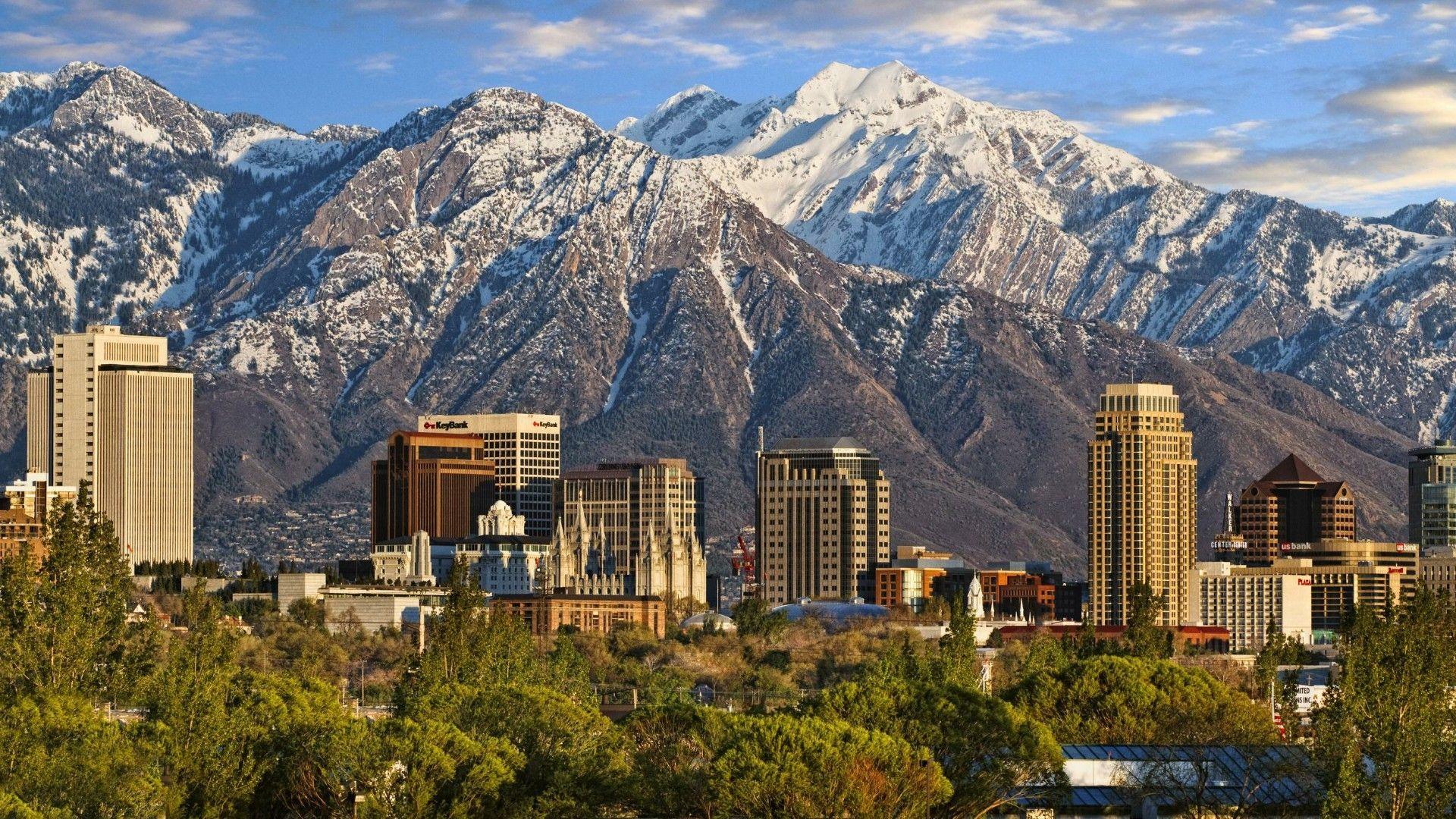
This technical analysis and guide provide the exact temporal specifications for Salt Lake City, Utah, focusing on the calendar year 2026, including Daylight Saving Time transitions, UTC offsets, and regional operational impacts.
Maintaining synchronization with Salt Lake City (SLC) is critical for stakeholders in the "Silicon Slopes" tech corridor, logistics managers at the Salt Lake City International Airport (SLC), and the burgeoning financial sector along the Wasatch Front. As of 2026, Salt Lake City operates within the Mountain Time Zone, alternating between Mountain Standard Time (MST) and Mountain Daylight Time (MDT) to maximize solar utility and align with federal timekeeping standards.
The Technical Framework of Time in Salt Lake City
Salt Lake City utilizes the IANA Time Zone Database identifier America/Denver. This identifier ensures that all digital systems, from cloud computing clusters in the nearby NSA Data Center to local municipal infrastructure, maintain a uniform temporal reference point.
In 2026, the transition between standard and daylight time follows the established North American pattern. Precision is vital for automated systems and high-frequency trading platforms operating out of the Utah regional offices.
2026 Daylight Saving Time Schedule
The shift in 2026 follows the Second Sunday in March and the First Sunday in November rule. Failure to account for these shifts can lead to significant discrepancies in scheduling, log file analysis, and international communication.
- Daylight Saving Time Begins: Sunday, March 8, 2026. At 2:00:00 AM, clocks are advanced one hour to 3:00:00 AM local daylight time.
- Daylight Saving Time Ends: Sunday, November 1, 2026. At 2:00:00 AM, clocks are turned backward one hour to 1:00:00 AM local standard time.
Technical Synchronization Note
Modern operating systems and network hardware utilize the Network Time Protocol (NTP) to maintain accuracy within milliseconds. For organizations in Salt Lake City, it is standard practice to sync with Stratum 1 or Stratum 2 time servers. These servers derive their time from atomic clocks, ensuring that "time in Salt Lake City right now" remains consistent across all distributed nodes in the 2026 network environment.
Salt Lake City Global Time Comparisons
Understanding the temporal delta between Salt Lake City and other major global hubs is essential for the 2026 business landscape. Salt Lake City acts as a bridge between the West Coast tech hubs and the Eastern financial markets.
| Global City | Standard Time Zone | Offset from SLC (MDT) | Offset from SLC (MST) |
|---|---|---|---|
| London, UK | GMT / BST | +7 Hours | +7 Hours |
| New York, USA | EST / EDT | +2 Hours | +2 Hours |
| Los Angeles, USA | PST / PDT | -1 Hour | -1 Hour |
| Tokyo, Japan | JST | +15 Hours | +16 Hours |
| Sydney, Australia | AEST / AEDT | +16 Hours | +17 Hours |
| Frankfurt, Germany | CET / CEST | +8 Hours | +8 Hours |
Note: The offsets listed above account for the 2026 MDT (UTC-6) and MST (UTC-7) periods. Because different regions change their clocks on different dates (e.g., the UK changes later in March), there are brief windows where these offsets may fluctuate by one hour.
Legislative Status: Permanent Daylight Saving Time in 2026
As of 2026, the conversation regarding the Sunshine Protection Act remains a focal point for Utah legislators. While Utah passed S.B. 59 in previous years—which would move the state to permanent Daylight Saving Time—this change is contingent upon federal approval and the participation of at least four other Western states.
As of the current 2026 calendar year, federal law still mandates the biannual switch. Consequently, Salt Lake City continues to toggle between MST and MDT. Business leaders in the region must continue to plan for the "spring forward" and "fall back" events to avoid disruption in automated manufacturing and logistics chains.
Regional Operational Hours and Time Sensitivity
Salt Lake City is a primary logistical hub for the Intermountain West. The timing of operations at key facilities is strictly governed by Mountain Time.
Salt Lake City International Airport (SLC)
By 2026, the SLC airport expansion (Phase 3 and 4) is fully operational. Flight schedules are optimized for Mountain Time, with heavy peak volumes occurring between 7:00 AM and 9:30 AM MDT for eastbound departures. International arrivals from Europe typically peak in the late afternoon, requiring precise coordination with UTC.
Silicon Slopes Tech Sector
The tech corridor stretching from Salt Lake City to Provo operates on a 24/7 global support model. However, core business hours are generally 8:00 AM to 5:00 PM MDT. Due to the proximity to the Pacific Time Zone, many Utah-based firms align their "core hours" with California (9:00 AM to 4:00 PM) to facilitate seamless collaboration with Silicon Valley partners.
Financial and Banking Services
Major institutions like Goldman Sachs and Zions Bancorporation maintain significant operations in downtown Salt Lake City. These entities operate on a schedule that bridges the gap between the New York Stock Exchange (NYSE) opening at 7:30 AM MDT and the close at 2:00 PM MDT.
Solar Metrics and Natural Light in 2026
For those visiting or living in Salt Lake City, the solar position significantly affects daily life, from commute safety during winter months to the recreational window for skiing in the Wasatch Mountains.
- Winter Solstice (December 2026): Sunrise occurs at approximately 7:48 AM MST, with sunset at 5:01 PM MST. This provides roughly 9 hours and 13 minutes of daylight.
- Summer Solstice (June 2026): Sunrise occurs at approximately 5:56 AM MDT, with sunset at 9:02 PM MDT. This provides over 15 hours of daylight, which is a major driver for the local tourism and outdoor recreation economy.
The "Golden Hour" in Salt Lake City is particularly noted by photographers and filmmakers due to the reflection off the Great Salt Lake and the illumination of the Wasatch Range. In 2026, expect the evening Golden Hour to begin roughly 60 minutes before sunset.
Implementation Guide: Synchronizing Your Systems to SLC Time
For developers and systems administrators managing infrastructure in the 2026 landscape, following these steps ensures temporal integrity:
- Configure Localized Time: Use the
tzdatapackage on Linux systems to set the timezone toAmerica/Denver. - Hardware Clock Alignment: Ensure the hardware clock (RTC) is set to UTC. This prevents "clock drift" during the DST transitions on March 8 and November 1.
- NTP Selection: Utilize the
pool.ntp.orgproject or specific regional servers likeutah.edutime servers for lower latency within the Salt Lake valley. - Database Storage: Always store timestamps in UTC (ISO 8601 format) and convert to Mountain Time only at the application's presentation layer.
Frequently Asked Questions
What is the exact time zone for Salt Lake City in 2026?
Salt Lake City uses Mountain Daylight Time (MDT) from March 8 to November 1, 2026, which is UTC-6. During the remainder of the year, it uses Mountain Standard Time (MST), which is UTC-7.
Salt Lake City is part of the Mountain Time Zone, the third of the four major US time zones. In 2026, the city continues to observe the seasonal shift, ensuring that summer evenings have extended daylight for the high volume of outdoor activities common in Utah.
Does Salt Lake City change time in 2026?
Yes, Salt Lake City will change its clocks twice in 2026. The clocks move forward one hour on March 8 and back one hour on November 1.
The transition occurs at 2:00 AM local time on both dates. While there is ongoing legislative interest in Utah to move to a permanent time setting, current federal regulations in 2026 require the continuation of Daylight Saving Time practices.
How does Salt Lake City time compare to Eastern Time?
Salt Lake City is exactly 2 hours behind Eastern Time (New York/DC). When it is 12:00 PM in Salt Lake City, it is 2:00 PM in New York.
This two-hour gap is consistent throughout 2026 because both the Mountain and Eastern time zones observe Daylight Saving Time on the same schedule. This makes Salt Lake City an ideal location for national service centers, as they can cover both East and West coast business hours effectively.
What is the current UTC offset for Salt Lake City?
During the summer (MDT), Salt Lake City is UTC-6. During the winter (MST), it is UTC-7.
The UTC offset is a critical metric for international aviation and global IT operations. In 2026, any system communicating with Salt Lake City must be programmed to handle this offset shift automatically to prevent data desynchronization.
Is Utah moving to permanent Daylight Saving Time in 2026?
As of 2026, Utah has not yet moved to permanent Daylight Saving Time. While the state government has expressed a preference for it, federal law must change first.
Utah is one of several states that have "triggered" legislation ready to go. If the U.S. Congress passes the necessary federal changes, Utah would likely stop the biannual clock change immediately, but for the duration of 2026, the standard seasonal shifts remain in effect.
Professional Summary of Temporal Logistics
Navigating "time in Salt Lake City right now" involves more than a simple glance at a clock. For those operating within the 2026 economic environment, it requires an understanding of UTC offsets, legislative status, and the logistical pulse of the Intermountain West. Whether you are landing at SLC International, syncing a server in a West Valley data center, or scheduling a meeting with a Silicon Slopes executive, maintaining precise alignment with Mountain Time is a foundational requirement for success in the region.