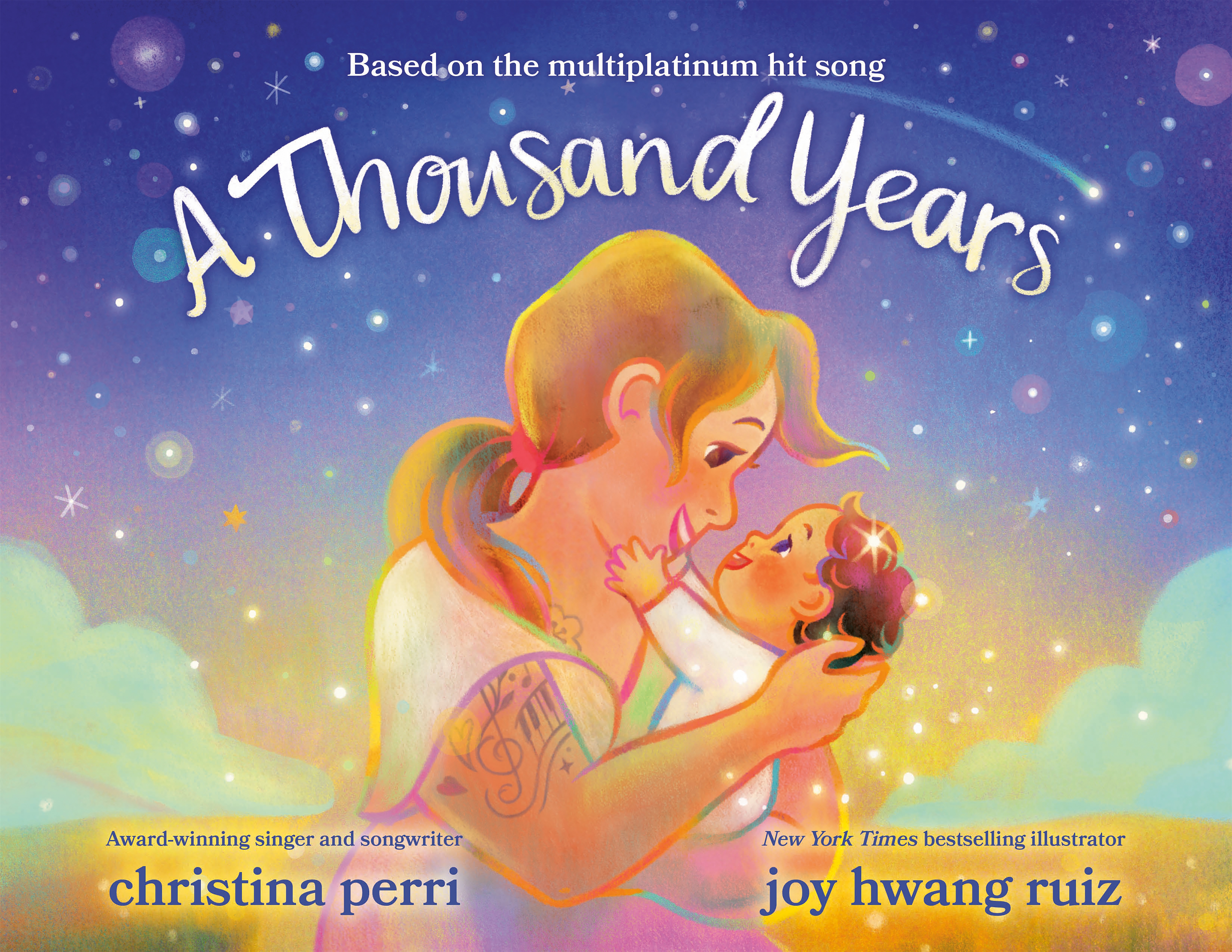
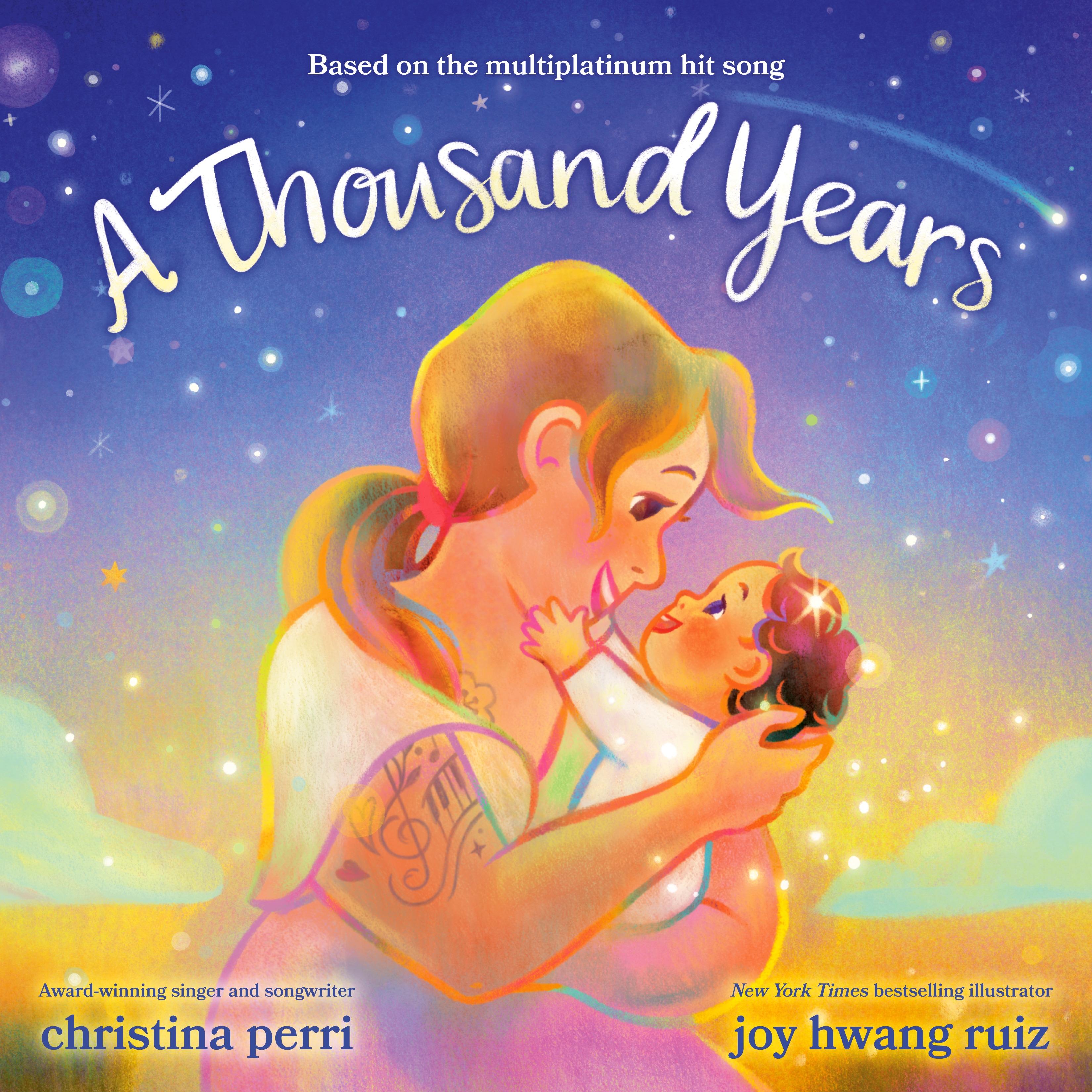
"A Thousand Years" is a multi-platinum pop ballad by American singer-songwriter Christina Perri, originally released in 2011 for The Twilight Saga: Breaking Dawn – Part 1 Original Motion Picture Soundtrack. Written by Perri and David Hodges, the song is celebrated for its themes of eternal love and has become one of the most popular wedding songs of the 21st century.
The Origins of a Modern Classic
The inception of "A Thousand Years" is a rare example of a commercial commission aligning perfectly with an artist's personal passion. In 2011, Christina Perri was invited to an early screening of The Twilight Saga: Breaking Dawn – Part 1. Having been a dedicated fan of the Stephenie Meyer book series, Perri was deeply moved by the narrative arc of the protagonists, Edward Cullen and Bella Swan. Following the screening, she immediately collaborated with David Hodges to capture the essence of the characters' timeless devotion.
The song was not merely a job for hire; it was an emotional response to a story that had resonated with millions. This authenticity is often cited as the reason for the song's longevity. While many soundtrack singles fade as the film's marketing cycle ends, "A Thousand Years" gained a life of its own. In the years following its release, it transcended its cinematic origins to become a standalone anthem for commitment. By 2026, the track remains a staple on streaming platforms, serving as a benchmark for the "romantic ballad" genre in the digital era.
Perri has frequently discussed the "gift" of the song, noting that it was written in a state of flow. The simplicity of the melody, paired with the gravity of the lyrics, created a "lightning in a bottle" moment for her career. Following the massive success of her debut single "Jar of Hearts," "A Thousand Years" solidified her status as a premiere voice in contemporary adult contemporary music.
Musicality and Technical Structure
From a technical perspective, "A Thousand Years" is crafted to evoke a sense of sweeping, cinematic romance. The song is written in the key of B-flat major and follows a moderate tempo of approximately 47 beats per minute in a 6/8 time signature. This compound meter is crucial to its feel; the "waltz" rhythm provides a swaying, dance-like quality that naturally lends itself to bridal processionals and first dances.
The arrangement begins with a delicate piano motif, which provides the harmonic foundation for the entire track. As the song progresses, it incorporates a lush orchestral swell, featuring prominent cello and violin sections that mirror the emotional stakes of the lyrics. The vocal delivery is intentionally intimate, with Perri utilizing a breathy, vulnerable tone in the verses that builds into a powerful, resonant belt during the chorus.
Harmonic Progression
The chord progression (Bb - F/A - Gm - Eb - Bb - F) is classic and accessible, relying on familiar resolutions that provide the listener with a sense of comfort and inevitability. This predictability is not a flaw but a feature of the ballad; it creates a "safe" emotional space that allows the listener to focus entirely on the lyrical sentiment. The bridge introduces a slight harmonic tension before resolving back into the triumphant final chorus, a structural choice that mimics the resolution of a long-awaited reunion.
Lyrical Analysis and Themes of Eternal Devotion
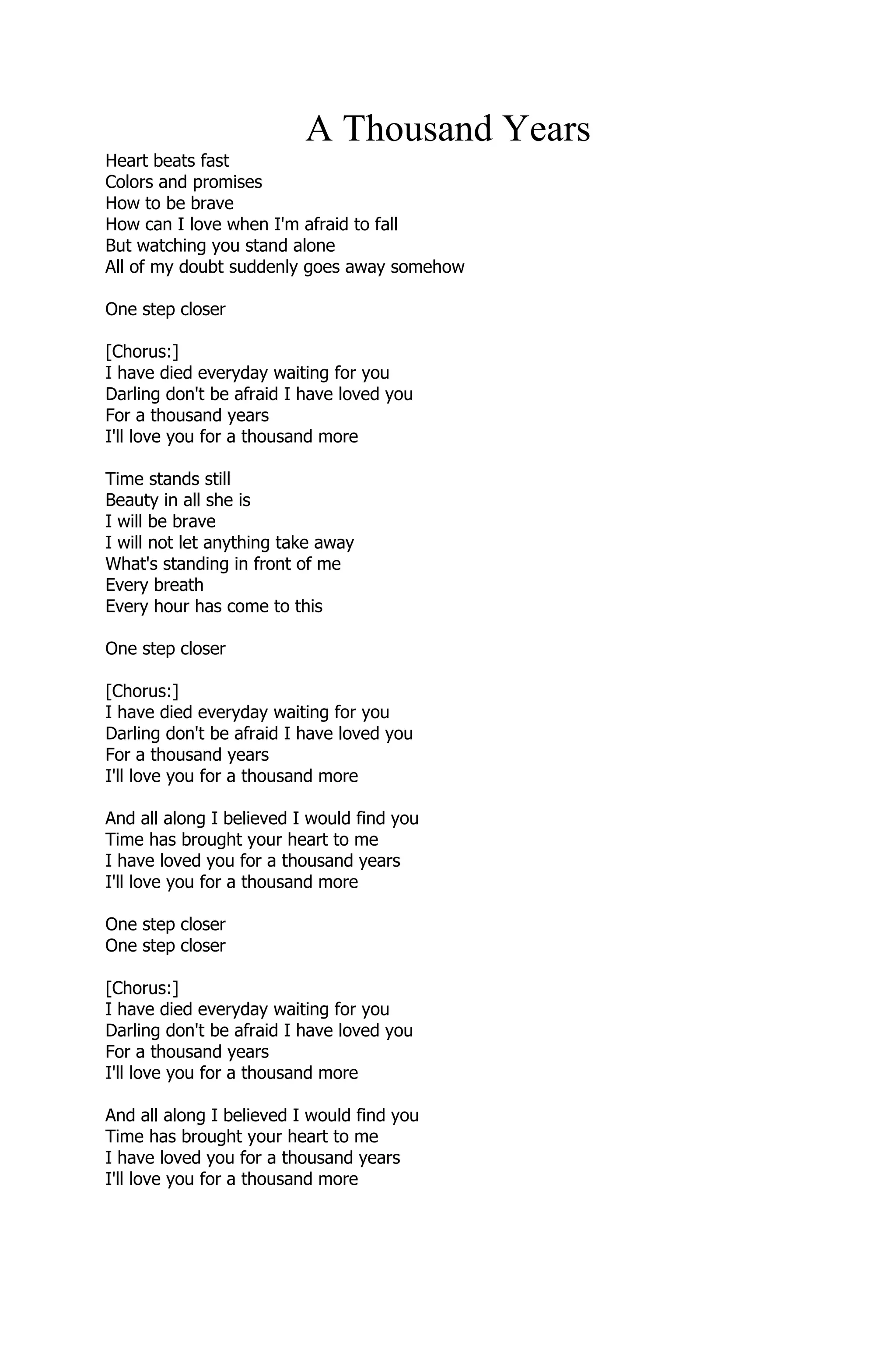
The lyrics of "A Thousand Years" deal with the concepts of patience, fear, and the transcendence of time. The opening lines, "Heart beats fast / Colors and promises / How to be brave? / How can I love when I'm afraid to fall?" set the stage for a narrative about overcoming the vulnerability inherent in deep affection.
The core hook—"I have loved you for a thousand years / I'll love you for a thousand more"—resonates because it speaks to an aspirational form of love that is not bound by the constraints of human mortality. While this was a literal reference to the vampiric themes of The Twilight Saga, it translated seamlessly into the human experience of long-term partnership.
Key Thematic Pillars:
- The Courage to Love: The song acknowledges that love is a risk. It portrays the act of "stepping out" and "falling" as a courageous feat rather than a passive occurrence.
- Patience and Waiting: The recurring mention of waiting ("I have died every day waiting for you") emphasizes the idea that true connection is worth any duration of solitude.
- Timelessness: By using the specific metric of "a thousand years," the song pushes the boundaries of the "until death do us part" vow, suggesting a spiritual or eternal continuity.
Cultural Impact and the Wedding Industry
Perhaps no other song of the 2010s has had a more profound impact on the wedding industry than "A Thousand Years." By 2026, it has been categorized alongside classics like Etta James’s "At Last" and Elvis Presley’s "Can’t Help Falling in Love." Its popularity in this niche is driven by its lyrical suitability and its adaptable arrangement.
The song’s 6/8 time signature makes it an ideal choice for a "slow waltz" first dance. Furthermore, the instrumental versions—ranging from solo piano to string quartets—are frequently used for the bridal entrance. The gradual build of the song allows for a dramatic "reveal" moment as the bride or groom reaches the altar.
Commercial Achievements
The song’s commercial performance is a testament to its ubiquitous nature. It has been certified Diamond by the RIAA, signifying over 10 million units moved in the United States alone. On YouTube, the official music video has surpassed billions of views, a feat rarely achieved by ballads of its era. This enduring popularity is supported by its constant presence on "Most Romantic" and "Top Wedding" playlists globally.
| Feature | Original Version (2011) | Part 2 (ft. Steve Kazee) |
|---|---|---|
| Release Date | October 18, 2011 | November 13, 2012 |
| Associated Film | Breaking Dawn – Part 1 | Breaking Dawn – Part 2 |
| Vocal Arrangement | Solo (Christina Perri) | Duet (Perri & Kazee) |
| Key Instrumentation | Piano, Strings, Acoustic Guitar | Piano, Orchestral Strings, Harmony |
| Primary Theme | Individual yearning and devotion | Mutual, shared eternal love |
| Tempo | ~47 BPM | ~47 BPM |
Comparing the Versions: Part 1 and Part 2
While the original solo version is the most recognized, a second version, titled "A Thousand Years, Pt. 2," was released for the final film in the Twilight franchise. This version features actor and singer Steve Kazee. The duet format changes the dynamic of the song from a soliloquy of devotion to a mutual conversation between two lovers.
The addition of Kazee’s masculine counterpoint to Perri’s feminine lead adds a layer of harmonic complexity. In "Pt. 2," the lyrics remain largely the same, but the arrangement is slightly more robust, reflecting the "grand finale" nature of the film series. Many couples prefer the duet version for weddings as it symbolizes the union of two voices and two lives.
Notable Covers and Media Appearances
The song’s influence extends into televised singing competitions and viral social media content. It has been covered by hundreds of artists, including notable versions by The Piano Guys and Boyce Avenue. The Piano Guys' rendition, which features a lush cello and piano arrangement, helped the song cross over into the "classical crossover" genre, making it popular in professional settings and sophisticated ceremonies.
On platforms like TikTok and Instagram, "A Thousand Years" remains a "go-to" audio track for milestones such as anniversaries, proposals, and even memorial tributes. This versatility—being able to represent both the start of a life together and the remembrance of a life lost—is the hallmark of a truly universal composition.
Frequently Asked Questions
What is the time signature of "A Thousand Years"?
The song is written in 6/8 time, which gives it a distinct "waltz" feel. This triple-meter pulse is what makes the song feel flowing and romantic, as opposed to the more driving 4/4 time signature found in most pop music.
Is "A Thousand Years" only about the Twilight movies?
While it was written specifically for the Twilight soundtrack, Christina Perri wrote the lyrics to be universal. The song focuses on the themes of waiting for "the one" and the courage to love, which allows it to resonate with listeners who have never seen the films.
How did the song perform on the charts?
"A Thousand Years" was a major international hit. It reached the top 40 on the Billboard Hot 100 and achieved high rankings in the UK, Australia, and Canada. Its success was defined more by its "long tail"—staying on charts and playlists for years—than by a sudden #1 peak.
Can this song be played on solo instruments?
Yes, the song is highly adaptable. It is one of the most downloaded pieces of sheet music for piano, guitar, and violin. Its clear melody and standard chord progression make it accessible for intermediate-level musicians.
Why is it so popular at weddings?
The combination of its 6/8 "walking" rhythm, the build-up of the orchestration, and lyrics that explicitly mention "loving you for a thousand years" makes it a literal and figurative match for wedding vows and ceremonies.
Incorporating the Song into Modern Events
For those planning to use "A Thousand Years" in 2026, whether for a wedding, a digital tribute, or a live performance, the key is choosing the right arrangement. The solo piano version offers an intimate, understated feel, while the full orchestral version provides the "epic" scale required for large venues.
If you are performing the song, pay close attention to the dynamics. The song’s power lies in its growth—starting quietly and building to a crescendo. For wedding planners, it is often recommended to time the "thousand years" lyric with the most significant visual moment of the ceremony, such as the exchange of rings or the first kiss, to maximize the emotional impact for the audience.