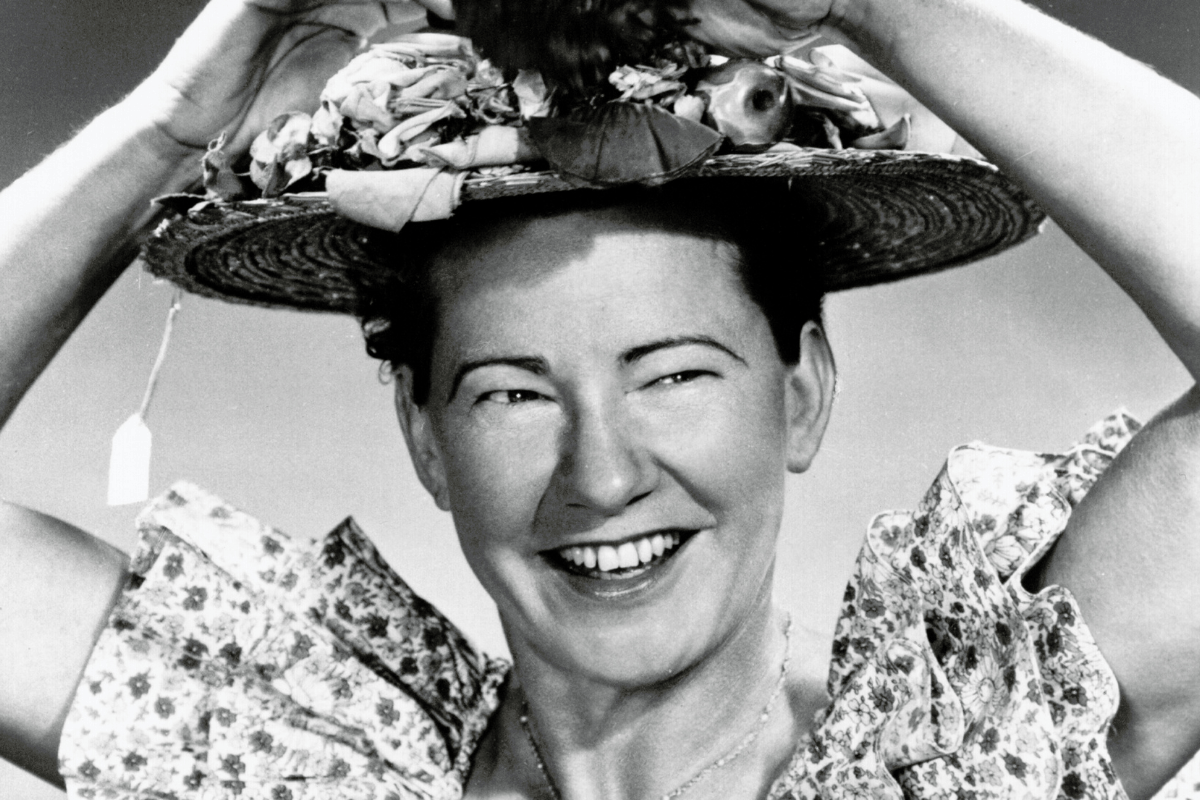
Minnie Pearl, the beloved "Queen of Country Comedy," stood 5 feet 6 inches (168 cm) tall. While her physical height was slightly above average for women of her generation, her comedic stature was monumental, spanning over five decades at the Grand Ole Opry and a legendary tenure on the television variety show Hee Haw.
The woman behind the character, Sarah Ophelia Colley Cannon, was a sophisticated, educated performer who transformed a rural caricature into a symbol of Southern hospitality and sharp-witted humor. As of 2026, her influence remains a cornerstone of American entertainment history, particularly within the realms of country music and female-led comedy. Understanding Minnie Pearl requires looking past the $1.98 price tag on her hat to examine the meticulous craft of Sarah Cannon and the lasting philanthropic legacy she left behind.
The Physical Presence of Sarah Ophelia Colley Cannon
In an era where many female performers were categorized by their delicate frames or "glamour girl" aesthetics, Minnie Pearl’s 5'6" stature allowed her to command the stage with a blend of physical comedy and relatable charm. She was neither exceptionally tall nor diminutive, yet she possessed a stage presence that filled the cavernous Ryman Auditorium.
Her height was often accentuated by her iconic Mary Jane shoes and the "prim and proper" yet slightly oversized gingham dresses she wore. These costumes were designed to make her appear as a simple country girl from the fictional town of Grinders Switch. In photographs where she stands alongside country music giants like Hank Williams or Roy Acuff, her height is notable, often matching or nearly matching many of her male counterparts. This physical parity perhaps subtly aided her in navigating a male-dominated industry where she was frequently the sole female comedian on the bill.
The contrast between Minnie Pearl and Sarah Cannon is vital to understanding her physical presentation. While Minnie was loud, boisterous, and intentionally unrefined, Sarah Cannon was known for her grace, tailored suits, and elegance. Her height contributed to a dignified bearing in her private life, which she often suppressed on stage to achieve the "gawky" and enthusiastic movements that defined her character.
The Genesis of Grinders Switch: Creating a Legend
The character of Minnie Pearl was not a product of Nashville’s marketing machines but rather a result of Sarah Cannon’s background in theater and her keen observation of Southern life. Born in Centerville, Tennessee, in 1912, Sarah was the daughter of a prosperous lumberman. She attended the prestigious Ward-Belmont College, where she studied theater and dance.
Her path to comedy began while working as a drama coach for a touring company. While traveling through Alabama, she met a mountain woman whose unique mannerisms and speech patterns fascinated her. This encounter became the blueprint for Minnie Pearl. By 1939, Sarah had refined the character, complete with the signature "How-w-w-DEE-E-E-E!" greeting, which she reportedly lengthened over time based on audience reaction.
The town of "Grinders Switch" was a real location near Centerville, but in Sarah’s hands, it became a mythical landscape populated by characters like Brother, Uncle Nabob, and her elusive beau, "Heck." By the time she joined the Grand Ole Opry in 1940, Minnie Pearl had become more than a routine; she was a fully realized persona that resonated with audiences who recognized their own neighbors and relatives in her stories.
The Iconic Costume: The Story of the $1.98 Price Tag
No discussion of Minnie Pearl’s career is complete without mentioning her hat. The straw hat, adorned with plastic flowers and a hanging $1.98 price tag, is one of the most recognizable artifacts in entertainment history. It was a happy accident; Sarah had purchased the hat and forgotten to remove the tag before a performance. When the audience laughed at the oversight, she realized the tag perfectly symbolized Minnie’s desire to look "fancy" despite her modest means.
The price tag became a permanent fixture, remaining $1.98 for over 50 years, even as inflation made the figure anachronistic. In many ways, the tag represented the "rube" character’s innocent pride. Minnie Pearl was never the butt of the joke because she was poor or rural; she was the hero of the story because she was unapologetically herself, finding joy in the small triumphs of life in Grinders Switch.
Minnie Pearl on Television: The Hee Haw Era
While the Grand Ole Opry established her as a country music staple, the television show Hee Haw made Minnie Pearl a household name across North America. Joining the cast at its inception in 1969, she spent 22 years as a primary cast member. On Hee Haw, her height and expressive face were utilized to great effect in short sketches and musical numbers.
She often appeared in the "Gossip Girls" segment, where she would trade rhyming rumors with other cast members. Her role on television was crucial because it bridged the gap between traditional radio comedy and the visual demands of a modern audience. She proved that the character of Minnie Pearl was timeless, surviving the transition from the golden age of radio to the era of color television without losing her relevance or her "folksy" appeal.
Philanthropy and the Sarah Cannon Legacy
Beyond the laughs, Sarah Cannon used her success to fuel a profound legacy of service. In 1991, after battling breast cancer, she allowed her name to be used for the Sarah Cannon Cancer Center (now the Sarah Cannon Research Institute). This was a significant move for a woman of her generation, as public discussions about cancer—especially breast cancer—were still somewhat taboo.
As of 2026, the Sarah Cannon Research Institute remains a global leader in clinical trials and cancer research. Sarah Cannon’s decision to lend her name to the cause transformed her from a beloved entertainer into a symbol of hope and progress in the medical field. She often stated that she wanted Sarah Cannon to do the serious work that Minnie Pearl could never do. This duality—the hilarious "rube" and the dedicated philanthropist—is what makes her legacy so enduring.
Key Milestones in the Career of Minnie Pearl
The following table outlines the significant moments in the life and career of Sarah Cannon, illustrating her transition from a regional performer to a national treasure.
| Year | Milestone | Significance |
|---|---|---|
| 1912 | Birth of Sarah Ophelia Colley | Born into a wealthy family in Centerville, TN. |
| 1939 | Debut of Minnie Pearl | Character first performed in Aiken, South Carolina. |
| 1940 | Joined Grand Ole Opry | Started a 50-year tenure with the legendary radio show. |
| 1969 | Hee Haw Premiere | Introduced Minnie Pearl to a massive national TV audience. |
| 1975 | Country Music Hall of Fame | First comedian to be inducted as a member. |
| 1987 | Pioneer Award | Received from the Academy of Country Music. |
| 1991 | Sarah Cannon Cancer Center | Established a lasting legacy in medical research. |
| 1992 | National Medal of Arts | Awarded by President George H.W. Bush. |
| 1996 | Passing of Sarah Cannon | Died at age 83, leaving a legacy of comedy and service. |
The Enduring Influence on Female Comedians
Minnie Pearl was a pioneer for women in the male-dominated field of comedy. Before the rise of modern stand-up, she demonstrated that a woman could be funny without being a "straight man" to a male comedian. She didn't rely on being a sex symbol or a traditional housewife character; instead, she created a character that was self-deprecating but never weak.
Comedians from Carol Burnett to Dolly Parton (who often cites Minnie as a primary influence) have noted how Sarah Cannon paved the way for women to own the stage. She taught female performers how to use a persona to navigate complex social and professional landscapes. Her comedy was "clean," yet it possessed a sharp social intelligence that mocked pretension and celebrated authenticity.
Why Minnie Pearl Matters in 2026
In a world of rapidly changing trends, Minnie Pearl remains relevant because her humor was rooted in universal human experiences: the desire to belong, the humor in family dynamics, and the importance of community. Her "Grinders Switch" was a precursor to modern sitcom settings—a place where everyone knew your business, but everyone also had your back.
As we look back from the perspective of 2026, we see her as a master of branding long before the term existed. She knew the value of a catchphrase, a signature look, and a consistent message. However, more importantly, she knew that fame was a tool to be used for the greater good.
FAQ: Common Questions About Minnie Pearl
How did Minnie Pearl get her name?
Sarah Cannon chose the name "Minnie" because it was a common, friendly name of the era, and "Pearl" added a touch of perceived elegance to a rural character. The combination was designed to sound like someone you would meet at a church social or a town square in rural Tennessee.
Was Grinders Switch a real place?
Yes, Grinders Switch is a real railroad switch located just outside of Centerville, Tennessee. While the town described in Minnie’s routines was a fictionalized version filled with eccentric characters, the name itself was a tribute to Sarah Cannon’s hometown roots.
What was the meaning behind the "How-w-w-DEE-E-E-E!" catchphrase?
The greeting was meant to be an exaggerated, enthusiastic welcome that immediately signaled Minnie's friendly and boisterous personality. Over the decades, it became a call-and-response moment between Minnie and her audience, fostering a sense of immediate connection.
Did Minnie Pearl ever record music?
While primarily a comedian, Minnie Pearl did record several albums and singles, often featuring comedic monologues interspersed with songs. Her most famous recordings, such as "Giddyup Go - Answer," showcased her ability to blend storytelling with the musical traditions of the Opry.
How much would $1.98 be worth in 2026?
Adjusted for inflation, $1.98 in 1940 (when Minnie joined the Opry) would be equivalent to approximately $45 in 2026. Despite the massive change in purchasing power, Minnie kept the price tag at $1.98 to maintain the character's frozen-in-time charm and to honor the original "accident" that made the hat famous.
Honoring the Legacy of the Queen of Country Comedy
To truly appreciate the legacy of Minnie Pearl, fans and historians should look toward the Country Music Hall of Fame in Nashville, where her costumes and artifacts are preserved. Visiting the Sarah Cannon Research Institute website or supporting cancer research is perhaps the most practical way to honor the woman behind the hat.
For those interested in the craft of comedy, studying Sarah Cannon’s timing and character development provides a masterclass in how to build a persona that lasts a lifetime. Whether you remember her from the radio, the Opry stage, or Hee Haw reruns, Minnie Pearl remains a towering figure—not just at 5 feet 6 inches, but as a giant of American culture who taught us that the best way to greet the world is with a loud "How-w-w-DEE-E-E-E!" and a genuine smile.