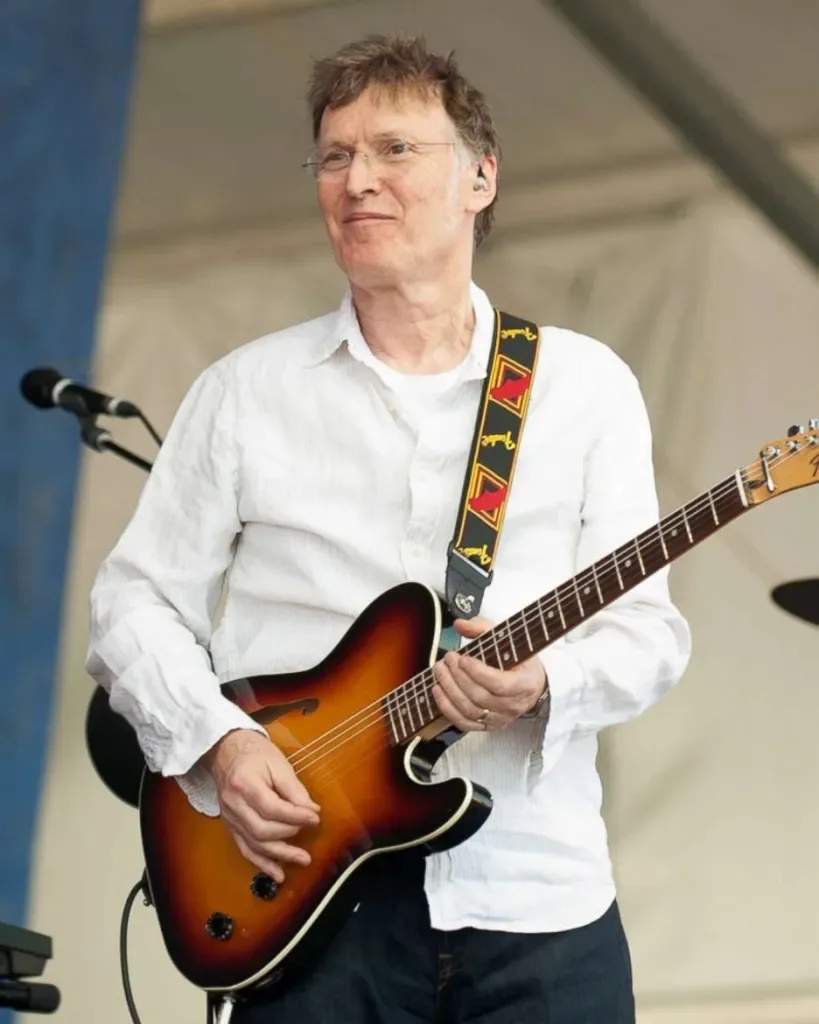
As of 2026, legendary English musician Steve Winwood is 77 years old (born May 12, 1948) and holds an estimated net worth of approximately $60 million to $70 million. His six-decade career spans groundbreaking work with The Spencer Davis Group, Traffic, and Blind Faith, alongside a multi-Grammy-winning solo era dominated by multi-platinum hits like "Higher Love" and "Roll With It."
Steve Winwood's Current Age and Personal Background
Born Stephen Lawrence Winwood on May 12, 1948, in Handsworth, Birmingham, England, Steve Winwood established himself as a prodigy at an unusually young age. Raised in a musical household—his father was a semi-professional musician who played saxophone and clarinet—Winwood began playing piano at age four and soon mastered the organ, guitar, and bass. By his early teens, he was already performing alongside established American blues legends touring the United Kingdom, including Muddy Waters, John Lee Hooker, and Howlin' Wolf.
As of 2026, Winwood is 77 years old and will celebrate his 78th birthday in May 2026. His career stands out not only for its longevity but for the sheer variety of musical movements he helped shape. Winwood emerged during the British Invasion of the mid-1960s, led the psychedelic and folk-rock movements of the late 1960s and early 1970s, and later transitioned into a massive solo pop star during the 1980s.
Throughout his personal life, Winwood has maintained a relatively private existence outside of his musical endeavors. He married his wife, Eugenia Crafton, in 1987, and the couple has four children. Winwood's musical roots remain grounded in the English countryside, where he has maintained homes in Gloucestershire and Nashville, Tennessee, spending decades balancing active touring with private studio recording.
Estimated Net Worth and Financial Overview
Steve Winwood's net worth is estimated between $60 million and $70 million. This financial standing reflects more than 60 years of continuous revenue generated across multiple revenue streams, including song publishing, record sales, live performances, and session Work.
Unlike many artists of his generation who signed unfavorable early recording agreements, Winwood retained significant song writing credits and publishing equity across key phases of his career. As the primary vocalist, co-writer, or multi-instrumentalist behind world-famous standards, Winwood continues to earn substantial publishing royalties.
Primary Drivers of Steve Winwood's Wealth
- Catalog and Songwriting Royalties: Classics such as "Gimme Some Lovin'", "Dear Mr. Fantasy", "Can't Find My Way Home", "Higher Love", and "Roll With It" generate worldwide radio play, streaming revenue, and synchronization fees in film, television, and advertising.
- Solo Album Sales: Winwood's 1986 album Back in the High Life achieved multi-platinum certification in the United States alone, selling over three million copies. Its 1988 follow-up, Roll With It, earned triple-platinum status, solidifying his commercial viability.
- Supergroup Discography: His participation in high-profile ensembles like Traffic and Blind Faith yielded classic rock staples whose album sales and broadcast rights remain lucrative.
- Live Touring: Across several decades, Winwood headlined major international arena tours, festival appearances, and high-profile co-headlining runs alongside long-time collaborator Eric Clapton.
| Financial & Career Summary | Details |
|---|---|
| Full Name | Stephen Lawrence Winwood |
| Date of Birth | May 12, 1948 |
| Birthplace | Handsworth, Birmingham, England |
| Current Age (2026) | 77 years old (turns 78 on May 12, 2026) |
| Estimated Net Worth | $60 Million – $70 Million |
| Primary Bands | The Spencer Davis Group, Traffic, Blind Faith, Go |
| Major Solo Albums | Arc of a Diver (1980), Back in the High Life (1986), Roll With It (1988) |
| Key Accolades | 2 Grammy Awards (1987), Rock and Roll Hall of Fame Inductee (2004) |
Chronological Career Timeline: From Prodigy to Rock Icon
Steve Winwood's professional journey spans over six decades, divided into several distinct and influential eras. From a teenage vocalist astonishing veteran bluesmen to a solo artist topping the global charts, his timeline illustrates a rare degree of artistic evolution.
1963–1967: The Spencer Davis Group and Early Prodigy Years
At age 14 in 1962, Winwood joined guitar player Spencer Davis, alongside his elder brother Muff Winwood on bass and Pete York on drums, to form The Spencer Davis Group. Despite his youth, Winwood served as the group's lead vocalist, organist, and primary musical driving force. His raw, soulful voice earned immediate comparisons to American R&B giants like Ray Charles.
- 1965: The band scored its first UK number-one hit with "Keep On Running", written by Jackie Edwards.
- 1966: Winwood co-wrote and sang "Gimme Some Lovin'", which became an international smash hit, peaking in the top 10 in both the UK and the United States.
- 1967: The group released "I'm a Man", another top-10 single showcasing Winwood's distinctive Hammond B-3 organ playing and soul-infused vocal style.
Despite the band's rapid success, Winwood felt creatively constrained by standard R&B song structures and departed the group in 1967 at the age of 18 to seek greater musical freedom.
1967–1969: Traffic and the Psychedelic Revolution
In early 1967, Winwood teamed up with drummer Jim Capaldi, woodwinds player Chris Wood, and guitarist Dave Mason to form Traffic. The group retreated to a secluded cottage in Aston Tirrold, Oxfordshire, to live, write, and experiment together, setting a precedent for communal rock band retreats.
- 1967: Traffic released their debut singles, "Paper Sun" and "Hole in My Shoe", followed by their critically acclaimed debut album, Mr. Fantasy. The record blended blues, jazz, folk, and psychedelic rock.
- 1968: The band released their self-titled second album, Traffic, which featured classic tracks like "Feelin' Alright?" (written by Dave Mason) and "Pearls Before Swine". Internal tensions, particularly between Mason's pop sensibilities and the rest of the band's improvisational direction, led to brief breakups and line-up changes.
1969: Blind Faith and the Supergroup Era
Following Traffic's initial breakup in early 1969, Winwood began jamming with guitarist Eric Clapton, who had recently left Cream. Joined by former Cream drummer Ginger Baker and bassist Ric Grech, they formed Blind Faith, widely regarded as one of rock music's first official "supergroups."
- August 1969: Blind Faith released their self-titled debut and only studio album, Blind Faith. The album topped both the UK and US charts.
- Key Contributions: Winwood composed the legendary acoustic track "Can't Find My Way Home" and co-wrote "Had to Cry Today".
- Dissolution: Overwhelmed by immense public expectation, chaotic stadium tours, and creative pressures, Blind Faith disbanded after less than a year together.
1970–1974: The Traffic Reunion and Creative Zenith
Initially planning a solo album titled Mad Shadows, Winwood invited Jim Capaldi and Chris Wood to assist with recording sessions in 1970. The project naturally evolved into a full Traffic reunion.
- 1970: Traffic released John Barleycorn Must Die, which became their most successful album to date, reaching the US top 5 and earning gold certification.
- 1971: The band released The Low Spark of High Heeled Boys, an influential blend of progressive rock and jazz fusion. The title track, with its extended organ solos and atmospheric tone, became an FM radio staple.
- 1973–1974: Traffic released Shoot Out at the Fantasy Factory (1973) and When the Eagle Flies (1974) before officially disbanding. Winwood subsequently stepped away from full-time touring due to severe peritonitis and exhaustion.
1977–1989: Solo Dominance, Grammys, and Pop Stardom
After working as an in-demand session musician for artists like George Harrison, Toots and the Maytals, and Fela Kuti, Winwood launched his solo career in earnest.
- 1977: Winwood released his self-titled debut solo album, Steve Winwood, which received critical praise but modest commercial success.
- 1980: Arc of a Diver proved to be a massive commercial breakthrough. Recorded entirely by Winwood himself—who played every instrument and produced the album at his home studio—it featured the hit single "While You See a Chance" and went platinum in the United States.
- 1982: He released Talking Back to the Night, another self-performed solo album featuring the original version of "Valerie".
- 1986: Winwood achieved global pop superstardom with Back in the High Life. Driven by the chart-topping single "Higher Love" (featuring backing vocals by Chaka Khan), the album sold millions of copies worldwide. At the 29th Annual Grammy Awards in 1987, Winwood won Record of the Year and Best Male Pop Vocal Performance for "Higher Love".
- 1988: Signing with Virgin Records, Winwood released Roll With It. The album and its title track both reached number one on the US Billboard charts simultaneously, solidifying his position as one of the dominant pop-rock figures of the late 1980s.
1990s–2020s: Collaborations, Hall of Fame, and Enduring Legacy
Throughout the 1990s and 2000s, Winwood transitioned away from mainstream pop radio soundscapes to revisit his organ-driven blues, R&B, and jazz roots.
- 1994: Winwood reunited with Jim Capaldi to record the Traffic album Far from Home and embarked on a major supporting tour.
- 1997–2003: Released solo projects Junction Seven (1997) and About Time (2003), the latter issued on his independent label, Wincraft Music, showcasing an organ-trio setup focused on jam-oriented groove tracks.
- 2004: Winwood was inducted into the Rock and Roll Hall of Fame as a member of Traffic, alongside Jim Capaldi, Chris Wood, and Dave Mason.
- 2008: He released Nine Lives, featuring a collaboration with Eric Clapton on the track "Dirty City". That same year, Winwood and Clapton performed a series of acclaimed concerts at Madison Square Garden, resulting in a live album and DVD.
- 2010s–2020s: Winwood maintained a selective touring schedule, sharing stages with artists like Tom Petty and the Heartbreakers and Steely Dan, while preserving his extensive archive and live legacy through retrospective releases like Steve Winwood Greatest Hits Live (2017).
Major Hits, Discography, and Financial Drivers
Steve Winwood’s long-term financial stability stems from his expansive catalog of timeless recordings. The table below details his major career milestones, commercial highlights, and notable achievements across his various musical projects.
| Era / Project | Major Albums / Songs | Year | Commercial & Industry Impact |
|---|---|---|---|
| The Spencer Davis Group | "Gimme Some Lovin'", "I'm a Man" | 1966–1967 | Top-10 international singles; established Winwood as a vocal prodigy at age 18. |
| Traffic | Mr. Fantasy, John Barleycorn Must Die, The Low Spark of High Heeled Boys | 1967–1974 | Gold/Platinum albums; cornerstone of FM album-oriented rock and jazz-fusion. |
| Blind Faith | Blind Faith ("Can't Find My Way Home") | 1969 | #1 album in US and UK; multi-platinum landmark supergroup release. |
| Solo Breakthrough | Arc of a Diver ("While You See a Chance") | 1980 | Multi-platinum solo record written, played, and produced entirely by Winwood. |
| Pop Stardom Peak | Back in the High Life ("Higher Love") | 1986 | Triple-platinum US sales; won 2 Grammy Awards including Record of the Year. |
| Chart Peak | Roll With It ("Roll With It") | 1988 | Dual #1 on Billboard 200 albums and Hot 100 singles charts. |
| Hall of Fame | Traffic Induction | 2004 | Recognized by the Rock and Roll Hall of Fame for contribution to modern music. |
Frequently Asked Questions
What is Steve Winwood's current age in 2026?
Steve Winwood is 77 years old as of early 2026. He was born on May 12, 1948, in Handsworth, Birmingham, England, and will turn 78 in May 2026.
What is Steve Winwood's estimated net worth?
Steve Winwood's net worth is estimated to be between $60 million and $70 million. His fortune was built over six decades through songwriting royalties, multi-platinum album sales, publishing ownership, international touring, and collaborations with major artists like Eric Clapton and Chaka Khan.
How old was Steve Winwood when he sang "Gimme Some Lovin'"?
Steve Winwood was 18 years old when "Gimme Some Lovin'" was released in late 1966 with The Spencer Davis Group. He had joined the group at age 14, earning early recognition as a musical prodigy for his soulful vocals and organ playing.
What instruments does Steve Winwood play?
Steve Winwood is a multi-instrumentalist. He is best known for his soulful lead vocals and his mastery of the Hammond B-3 organ and keyboards, but he also plays electric guitar, acoustic guitar, bass guitar, drums, mandolin, and various percussion instruments on his studio recordings.
Did Steve Winwood win any Grammy Awards?
Yes, Steve Winwood has won two Grammy Awards. Both came at the 29th Annual Grammy Awards in 1987 for his single "Higher Love," which won Record of the Year and Best Male Pop Vocal Performance.
Was Steve Winwood in Blind Faith with Eric Clapton?
Yes, Steve Winwood co-founded Blind Faith in 1969 alongside Eric Clapton, Ginger Baker, and Ric Grech. The short-lived supergroup released one highly successful self-titled album featuring Winwood's classic composition "Can't Find My Way Home" before disbanding later that year.
Exploring Steve Winwood's Legacy Today
For music enthusiasts and historians looking to explore Steve Winwood's vast musical discography, the best entry points depend on the specific style preferred:
- For Soul & R&B Classics: Start with The Very Best of The Spencer Davis Group to hear Winwood's early vocal work on "Gimme Some Lovin'" and "I'm a Man".
- For Progressive & Psychedelic Rock: Listen to Traffic’s 1970 masterpiece John Barleycorn Must Die and 1971’s The Low Spark of High Heeled Boys, both available across modern digital streaming platforms and remastered vinyl reissues.
- For Supergroup Acoustic Roots: Explore Blind Faith (1969), paying special attention to "Can't Find My Way Home" and "Had to Cry Today".
- For 1980s Pop and Production Perfection: Stream Back in the High Life (1986) and Roll With It (1988), which showcase Winwood's peak commercial work and Grammy-winning songwriting.
Official updates regarding catalog reissues, archival live releases, and official merchandise can be verified directly through Steve Winwood's official website and verified public channels.