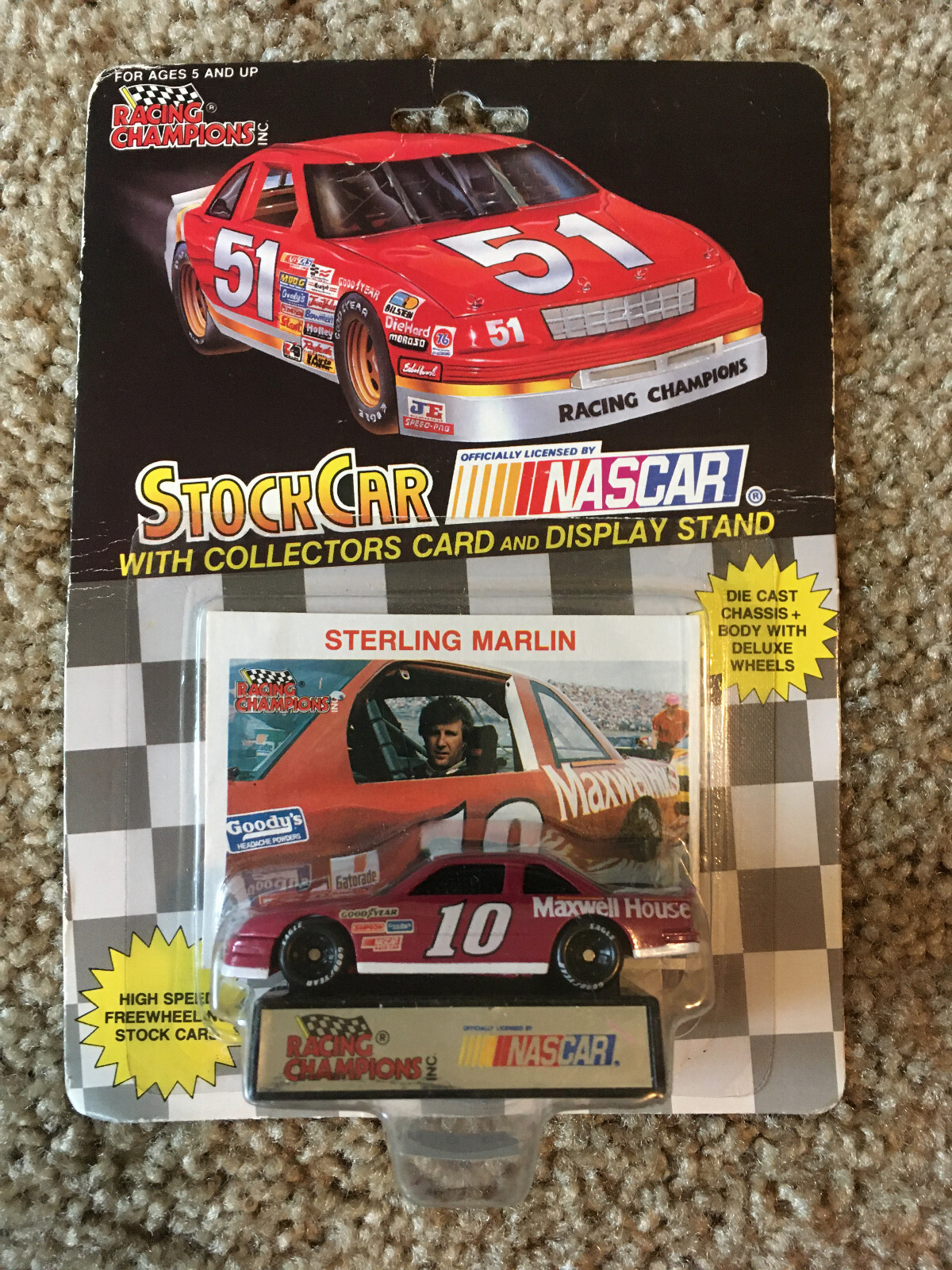
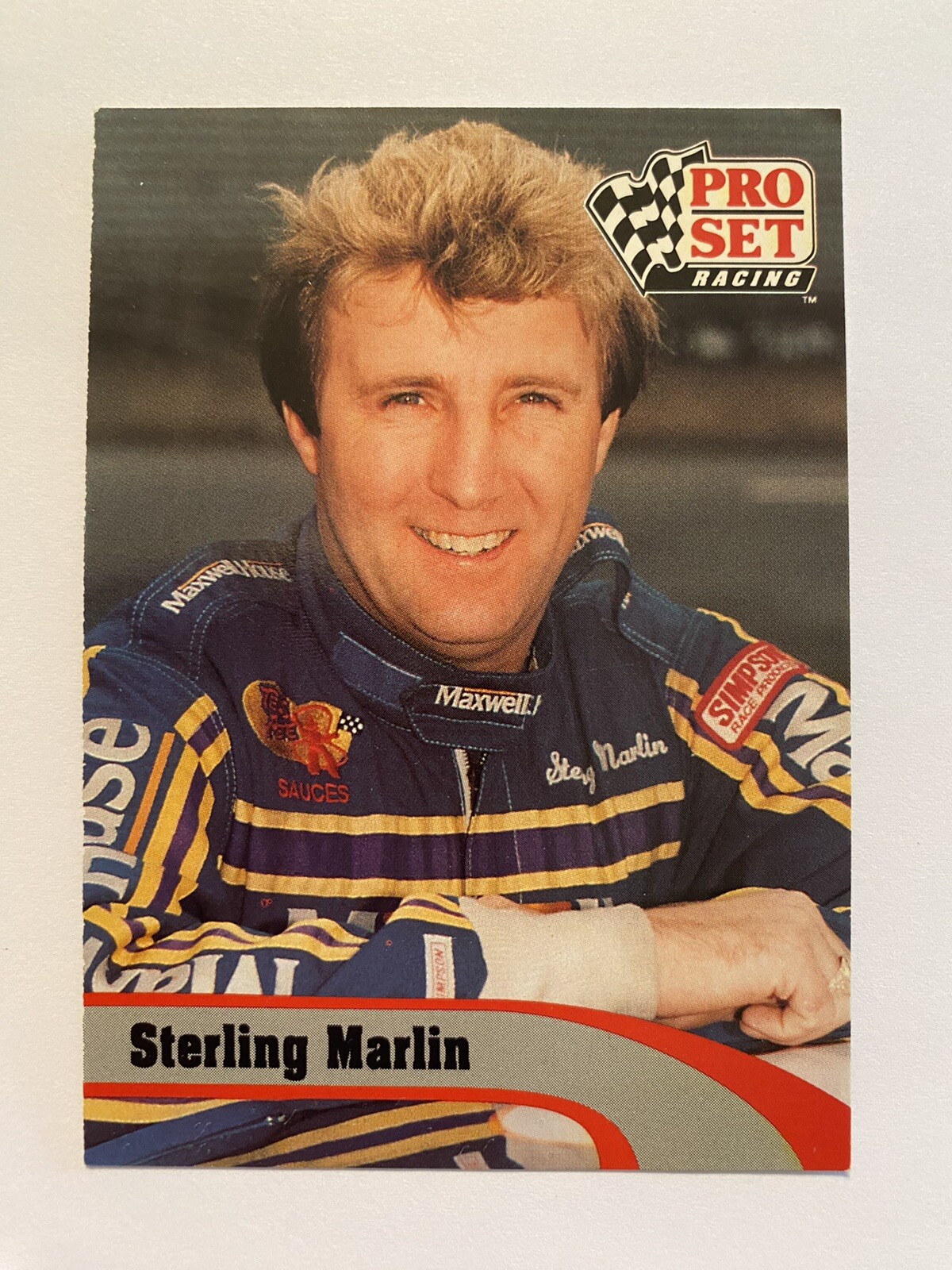
Sterling Marlin is a celebrated American stock car racing driver who achieved legendary status in the NASCAR Cup Series across a career spanning more than three decades. Best known for back-to-back Daytona 500 victories in 1994 and 1995, Marlin amassed 10 career Cup Series wins and spent 25 consecutive weeks leading the championship standings in 2002.
Early Life and Tennessee Racing Roots
Sterling Marlin was born on June 30, 1957, in Columbia, Tennessee, into a family deeply embedded in southeastern stock car culture. His father, Clifton "Coo Coo" Marlin, was a respected NASCAR driver and a fixture at regional tracks throughout the 1960s and 1970s. Growing up around garages and pit lanes, the younger Marlin developed an early mastery of mechanical setups and chassis dynamics.
Marlin began his competitive career at Fairgrounds Speedway Nashville, a historic short track known for producing elite racing talent. Demonstrating exceptional car control and patience, he captured four consecutive track championships at Nashville between 1979 and 1982. This local dominance established his reputation as one of the premier short-track racers in the region, paving the way for his transition to national competition.
Marlin made his NASCAR Cup Series debut in 1976 at his home track in Nashville, finishing 29th while driving for his father’s team. Throughout the late 1970s and 1980s, he operated as a talented driver seeking a stable, top-tier ride. He drove for several prominent team owners, including Hoss Ellington, Junior Johnson, and Billy Hagan. Despite showing impressive speed and securing numerous top-five finishes, an official victory in NASCAR's top division eluded him for nearly two decades.
The Breakthrough Years and Daytona 500 Glory
Marlin’s career trajectory changed dramatically prior to the 1994 season when he signed with Morgan-McClure Motorsports to drive the iconic No. 4 Kodak Chevrolet. Led by crew chief Tony Glover and engine builder RCR/Lou LaRosa specs, the team was renowned for its superspeedway engine program and aerodynamic refinement.
- 1976–1993: Early Career & Regional Success
- 1994–1997: Morgan-McClure Motorsports Era
- 1994 Daytona 500 Victory (1st Career Win)
- 1995 Daytona 500 Victory (Back-to-Back)
- 1998–2005: SABCO / Chip Ganassi Racing Era
- 2001–2002 Multi-Win Seasons (#40 Silver Bullet)
- 2002 Championship Contender (Led 25 Weeks)
- 2006–2010: Later Years & Cup Series Transition
The 1994 Daytona 500 Victory
After 278 winless Cup Series starts—the longest drought before a driver's first victory at the time—Marlin earned his first win on racing's grandest stage: the 1994 Daytona 500. Starting from the fourth position, Marlin outmaneuvered Ernie Irvan in the closing laps, taking the checkered flag under green-flag conditions. The victory broke his career-opening winless streak and established him as an elite restrictor-plate strategist.
Back-to-Back Daytona 500 Wins (1995)
Marlin proved his 1994 triumph was no fluke by winning the 1995 Daytona 500. Facing a late-race restart, Marlin held off Dale Earnhardt to capture his second consecutive "Great American Race." With this victory, Marlin joined Richard Petty and Cale Yarborough as only the third driver in NASCAR history to win back-to-back Daytona 500s (a feat later matched only by Denny Hamlin).
During his tenure with Morgan-McClure Motorsports from 1994 through 1997, Marlin earned six of his ten career victories, including major wins at Talladega Superspeedway and the 1996 Pepsi 400 at Daytona. His smooth steering inputs and ability to read drafting lines made him one of the most feared plate racers of his generation.
The Chip Ganassi Racing Era and the 2002 Championship Run
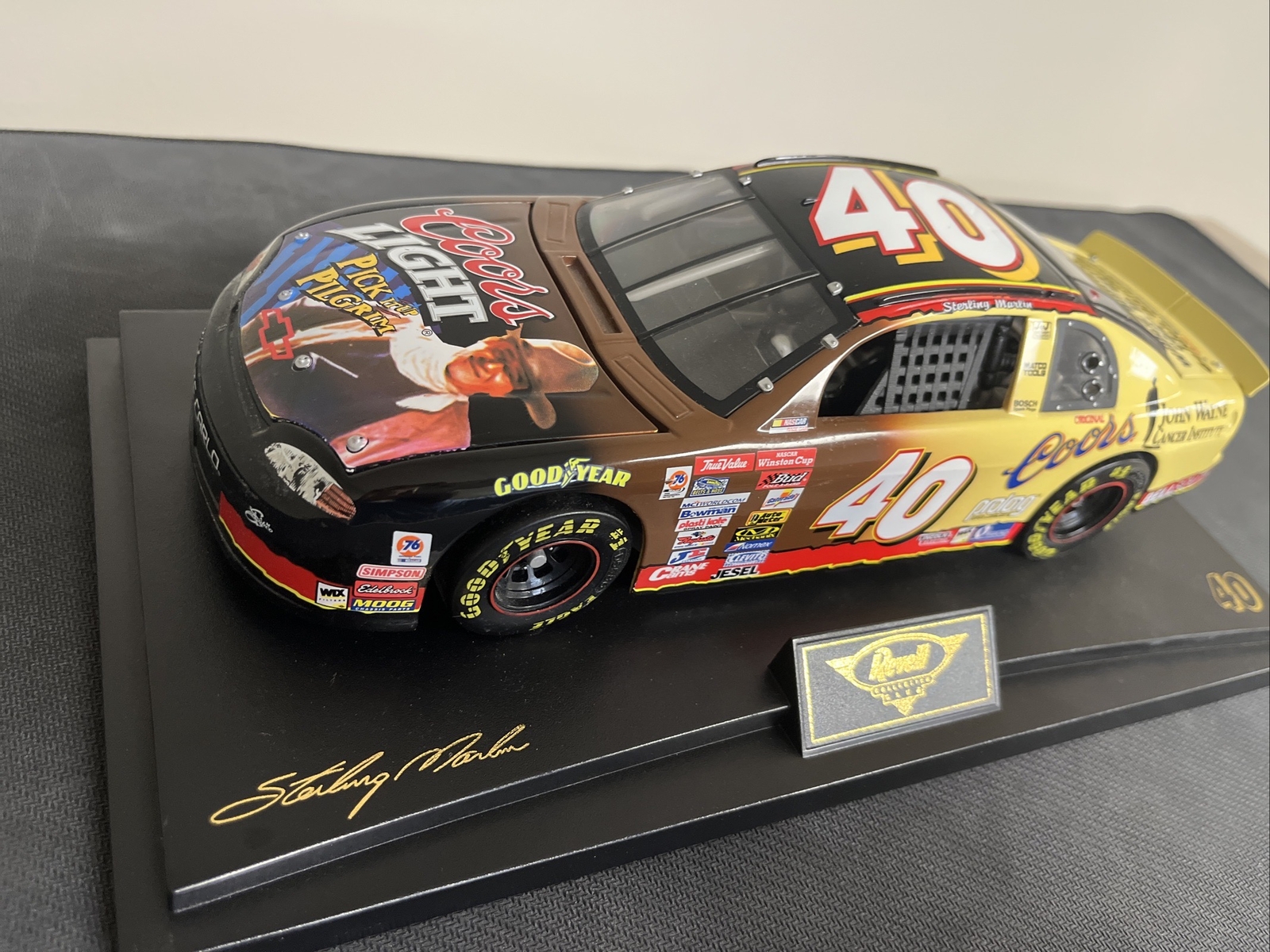
In 1998, Marlin transitioned to Team SABCO, which was later acquired by open-wheel racing legend Chip Ganassi ahead of the 2001 season to form Chip Ganassi Racing. Paired with crew chief Lee McCall and driving the famous No. 40 Coors Light "Silver Bullet" Dodge, Marlin re-emerged as a major force in the series.
The 2001 Season and Drafting History
The 2001 season marked Dodge's return to NASCAR Cup Series competition, and Marlin served as the brand's primary flagship driver. He snapped a five-year winless streak by winning at Michigan International Speedway in August 2001, followed by a victory at Talladega Superspeedway in October.
The season was also marked by the tragedy of the 2001 Daytona 500. On the final lap, Marlin was racing three-wide with Dale Earnhardt and Ken Schrader when contact occurred between Marlin's bumper and Earnhardt's car, triggering Earnhardt's fatal crash into the turn four wall. Despite receiving misplaced backlash from some misinformed fans, Marlin was entirely exonerated of fault by NASCAR officials, drivers, and the Earnhardt family. Dale Earnhardt Jr. publicly supported Marlin, emphasizing that the contact was a routine, unavoidable drafting incident.
The 2002 Championship Campaign
The 2002 NASCAR Cup Series season represented the peak of Marlin’s driving performance. Winning early-season races at Las Vegas Motor Speedway and Darlington Raceway, Marlin took over the championship points lead after the fifth race of the season.
He held the points lead for 25 consecutive weeks, demonstrating remarkable consistency across all track types. However, a series of late-season misfortunes eroded his lead. The championship bid came to a devastating end during the 26th race at Kansas Speedway, where Marlin was involved in a hard crash that resulted in a fractured neck vertebra.
Forced to sit out the final seven races of the season on medical grounds, Marlin relinquished his title bid to Tony Stewart, ultimately finishing 18th in the final standings despite missing nearly a quarter of the schedule.
Career Statistics and Milestone Accomplishments
Marlin's racing record highlights his resilience and performance across multiple generations of stock car technology, transitioning smoothly from carbureted, high-downforce cars to modern suspension geometry.
| Metric / Event | Career Statistic | Details / Highlights |
|---|---|---|
| Cup Series Starts | 748 | Spanning from 1976 through 2009 |
| Career Wins | 10 | Including 2 Daytona 500s and 2 Talladega wins |
| Top 5 Finishes | 83 | Consistent front-runner across 3 decades |
| Top 10 Finishes | 216 | Over 28% career top-10 finishing rate |
| Career Pole Positions | 11 | First pole achieved at Talladega (1991) |
| Best Points Finish | 3rd (1995) | Led points for 25 weeks in 2002 prior to injury |
| Daytona 500 Victories | 2 (1994, 1995) | One of four drivers to win back-to-back Daytona 500s |
Post-NASCAR Life, Late Model Racing, and Health Battle
After recovering from his 2002 neck injury, Marlin returned to race full-time for Chip Ganassi Racing through 2005. He later spent seasons with MB2/Ginn Racing and Phoenix Racing before making his final NASCAR Cup Series start in 2009. He retired from national touring competition with 748 career Cup starts, ranking him among the most durable competitors in stock car history.
Following his departure from NASCAR, Marlin returned to his grassroots origins. He continued to compete regularly in Late Model events at Fairgrounds Speedway Nashville, mentoring younger drivers and earning additional local victories well into his fifties.
- 2009: Official Cup Series Retirement
- 2012: Parkinson's Disease Diagnosis
- 2019: Deep Brain Stimulation (DBS) Surgery
- Present: Advocacy, Nashville Racing & Family Legacy
Parkinson's Disease Diagnosis and Advocacy
In 2012, Marlin publicly revealed that he had been diagnosed with Parkinson's disease, a progressive neurological disorder. Characteristically resilient, Marlin refused to let the diagnosis immediately halt his life or racing activities.
- Surgical Intervention: In 2019, Marlin underwent Deep Brain Stimulation (DBS) surgery at Vanderbilt University Medical Center in Nashville to manage severe tremors and physical symptoms.
- Public Awareness: He became an active voice for Parkinson's awareness, partnering with regional healthcare organizations to raise funds for medical research and patient support networks.
- Community Involvement: Marlin remains a frequent guest at motorsports events across Tennessee and continues to oversee operations at his family farm in Columbia.
Key Takeaways for Racing Historians and Fans
For enthusiasts examining Sterling Marlin’s place in racing history, his career provides critical insights into the evolution of modern NASCAR:
- Superspeedway Mastery: Marlin stands alongside Dale Earnhardt, Jeff Gordon, and Michael Waltrip as one of the premier plate racers of the 1990s and early 2000s, utilizing precise positioning rather than raw horsepower to secure victories.
- The Perseverance Factor: Holding the record for the most starts before a first victory (278) at the time of his 1994 Daytona 500 win, Marlin demonstrated the value of veteran patience in top-tier motorsports.
- Dodge's Renaissance: Marlin served as the focal point for Dodge's successful return to NASCAR in 2001, providing the manufacturer with its initial wins and first sustained championship charge in over two decades.
- Grassroots Heritage: Marlin represents one of the final links to NASCAR's traditional roots, transitioning seamlessly from local Southern short tracks to corporate, multi-car operations without losing his straightforward, country personality.
Frequently Asked Questions
How many Daytona 500 races did Sterling Marlin win?
Sterling Marlin won the Daytona 500 twice, capturing back-to-back victories in 1994 and 1995 while driving the No. 4 Kodak Chevrolet for Morgan-McClure Motorsports. He is one of only four drivers in NASCAR history to win the event in consecutive years.
Did Sterling Marlin ever win a NASCAR Cup Series championship?
No, Sterling Marlin never won a Cup Series championship. His best overall season finish was third place in 1995. He seemed poised to win the championship in 2002 after leading the points standings for 25 consecutive weeks, but a fractured neck vertebra sustained in a crash at Kansas Speedway forced him to miss the final seven races.
What car numbers and sponsors is Sterling Marlin best known for?
Marlin is most famous for two specific combinations: the No. 4 Kodak Film Chevrolet (Morgan-McClure Motorsports) during the mid-1990s, and the No. 40 Coors Light "Silver Bullet" Dodge (Chip Ganassi Racing) during the early 2000s.
What happened between Sterling Marlin and Dale Earnhardt at the 2001 Daytona 500?
On the final lap of the 2001 Daytona 500, Marlin was running low on the track in a three-wide battle when minor contact occurred between his front bumper and Dale Earnhardt’s rear quarter-panel. The contact destabilized Earnhardt's car, leading to the fatal crash in turn four. Official NASCAR investigations and physical evidence confirmed that Marlin was blameless, treating the contact as a standard, unavoidable superspeedway racing incident.
What is Sterling Marlin’s current health status?
Sterling Marlin was diagnosed with Parkinson's disease in 2012. After undergoing successful Deep Brain Stimulation (DBS) surgery at Vanderbilt University Medical Center in 2019, his tremors improved significantly. He remains active in his hometown of Columbia, Tennessee, supporting local racing and Parkinson's research initiatives.
Preserving the Legacy of Sterling Marlin
For fans, collectors, and motorsports historians seeking to engage with Sterling Marlin's legacy, several key avenues offer authentic coverage and historical archives:
- Visit Fairgrounds Speedway Nashville: Experience the historic short track where Marlin developed his craft and captured four local track championships.
- NASCAR Hall of Fame Archives: Explore official race-used artifacts, including championship trophies and winning restrictor-plate cars from Marlin's 1994 and 1995 Daytona 500 victories, preserved at the Hall of Fame in Charlotte, North Carolina.
- Support Parkinson's Research: Engage with regional organizations such as the Vanderbilt Health Parkinson's Disease Center, where Marlin received treatment, to support ongoing neurological research and patient care initiatives.